Review 2192: Act of Oblivion

It’s hard to know where sympathies might lie in this historical novel set right after the Restoration, in 1665. On the one hand, there is Richard Nayler (a fictional character), tasked with finding and taking to trial (or later, just plain executing) those deemed responsible for killing Charles I. A mighty task, but he performs it so zealously, not minding a dirty trick or two.

On the other hand, there are Colonel Edward Whalley and his son-in-law Colonel Will Goffe (historical characters), on the list because they signed the King’s death warrant after an illegal trial. They have escaped to America, but Nayler blames them for the death of his wife (in premature labor after they broke in on a religious service on Christmas Day, deemed illegal under Cromwell, and arrested people) and is determined to catch them.

Robert Harris states that this hunt for the regicides was the greatest manhunt of the 17th century so we may assume that’s his motivation for the book. Although I’m not particularly interested in the Puritan period of New England history, certainly there are interesting things I didn’t know disclosed in this novel, like the history of New Haven. In addition, Harris depicts the wildness of New England at this time more vividly than anything else I’ve read.

Harris manages to raise the tension of the novel at the end, when Nayler, long after everyone else has lost interest, finally locates Goffe, but overall, I was too turned off by the deeds on both sides of the English Civil War (usually I favor the Royalists, but he shows just how brutal both sides were) to care much about these antagonists. I read this book for my Walter Scott Prize Project.

Related Posts

Beheld

The Witches: Salem, 1692

An Officer and a Spy

Review 2177: Fortune

Fortune, shortlisted for the Walter Scott Historical Fiction Prize, is set in late 1920’s Trinidad. People have been jumping out of windows in New York, but there is an oil boom in Texas, and Eddie Wade foresees another one in Trinidad.

Sonny Chatterjee has oil seeping into the soil of his cocoa plantation, and his plants are dying. Charles Macleod of Apex Industries has been trying to get an oil lease from him, but he has seen the destruction caused by the large oil companies and refuses to let that happen to the land his father worked so hard to buy. However, Eddie convinces him that his smaller company will take more care and give Sonny a better deal, so Sonny agrees that if Eddie can come up with the $10K to get started, he can. The trouble is, Eddie has no money.

Eddie’s truck breaks down on the way into town, so he walks. Local businessman Tito Fernandes picks him up and trusts him instantly. Even though Tito is in serious difficulties because of his stock market investments, he finds the money Eddie needs.

The back cover of the novel makes clear that the fly in the ointment will be provided by Tito’s much younger wife Ada, and the affair that begins between her and Eddie. This novel is based on a real event—a fire in 1928. Smyth has changed the name of one historical person from Bobbie to Eddie, but it’s not clear just how much else is fictional. Certainly, I found the love triangle aspect uninteresting and unimaginative, but I guess if it really happened . . . .

The fact is that I didn’t actually care about any of these characters. Further, the writing is close to being spare, but it lacks the specificity and vividness of most spare writing, so I can only call it trimmed. It’s more mundane in nature. The setting itself occasionally comes to life but more often does not. I didn’t feel like I knew what it was like to be in Trinidad at this supposedly exciting time.

Related Posts

Sugar Money

The Lacuna

Washington Black

Review 1895: The Magician

Although I’ve only read one work by Thomas Mann, I still found The Magician, based on Mann’s life and writings, interesting. Although Mann himself often seems inert in this novel, he lived in interesting times, during both world wars.

The novel covers Mann’s life from a young man who is dispossessed by his father to his relocation from California to Switzerland in his 70’s. It examines the thinking behind his greatest works and although fairly meditative in tone, has some excitement during the Mann’s flight from Nazi Germany.

In some ways The Magician is reminiscent of The Master, Tóibín’s novel about Henry James, with Mann fantasizing about young men but never acting on those fantasies after a couple of abortive encounters. The difference is that James seemed almost unaware of his own proclivities. Mann still managed to have a long, successful marriage with his wife Katia.

Tóibín’s biographical fiction always seems intuitive and thoughtful to me. I enjoyed this one despite my lack of knowledge about its subject. I read this novel for my Walter Scott Prize project.

Related Posts

The Master

Nora Webster

Lady Gregory’s Toothbrush

If I Gave the Award

I’ve now reviewed all the shortlisted books for the 2021 Walter Scott Prize for Historical Fiction, so it’s time for my feature where I decide whether the judges got it right. In this case, I can’t begin with the book I disliked most, because I liked all of them. In fact, that’s the difficulty, to choose between these worthy candidates.

I very recently reviewed The Tolstoy Estate by Steven Conte, about the German occupation of Tolstoy’s estate during World War II. I enjoyed this novel but didn’t like the letters that skipped ahead of the plot and felt the novel was somehow slight.

I also enjoyed The Dictionary of Lost Words by Pip Williams, which explored the ways that gender influenced the making of the Oxford English Dictionary and looked at the women who helped create the dictionary. I found the novel touching and interesting, although a few of the plot points were predictable.

The freshest book in my memory of is A Room Made of Leaves by Kate Grenville. I found this novel about how a woman learns how to work within a difficult marriage and helps found the sheep industry in Australia vivid and deeply interesting. Of course, the husband gets all the credit.

One of my favorite writers is Maggie O’Farrell. Her novel Hamnet is about the death of William Shakespeare’s and Anne Hathaway’s son and its influence on the writing of Hamlet. I found it to be deft and sensitive, although at first I wasn’t comfortable with how much O’Farrell was making up about Hathaway.

But speaking of favorite authors, along with many people, I was waiting for the last entry in Hilary Mantel’s trilogy about Thomas Cromwell. That book, The Mirror and the Light, follows Cromwell’s life as he serves Henry VIII and tries to keep him from his worst excesses. It begins with the beheading of Anne Boleyn and of course, ends with his own death. It had me in tears, which is my best gauge of how much I enjoy a book. This novel was the winner of the award for 2021, and I think the judges got it right.

Review 1852: A Room Made of Leaves

Even from the Editor’s Notes of what purports to be Elizabeth Macarthur’s memoirs, we get a hint of what’s coming—the husband getting the credit for establishing the wool industry in Australia while the wife did all the work. The husband revered as an important founder of the nation when he was actually disliked and hated during his life and was away for many years.

As Elizabeth grows, she loses her family—her beloved father to death, her mother to a second marriage, her grandfather to her own marriage. She learns to hide her real self behind a docile, submissive mask. When she meets Ensign James Macarthur, part of her sees him for who he is, but she is curious and has no prospects, and her curiosity ends in her pregnancy. Her first lesson in her husband’s character comes before marriage—James is more interested in the pursuit than the capture.

James is in fact ferociously ambitious, but his touchiness about his lack of breeding makes him angry enough to work against himself. Elizabeth learns he is vengeful and likes to weave vast conspiracies to advance himself and bring down others. But his judgment is poor.

Posted to Gibraltar, James sees the possibility of a posting at the newly established prison in New South Wales as an opportunity and believes the brochures extolling the new colony. Elizabeth is skeptical, but she handles James poorly and finds herself on her way, again pregnant and with a new baby. However, eventually she discovers opportunity when James finagles 100 acres of Australian land by his manipulations of the governor. She and her two convict servants begin establishing a herd of sheep.

I found this novel vivid and deeply interesting, as Elizabeth learns how to handle her horrible husband and make a satisfying life for herself and her children. The novel evokes the raw early days of the 18th century colony as well as, occasionally, its beauties. I read it for my Walter Scott project and liked it very much.

Related Posts

Salt Creek

Rush Oh!

A Town Like Alice

Review 1831: The Tolstoy Estate

Paul Bauer, an army surgeon during the World War II German invasion of Russia, finds himself stationed at Yasnaya Polyana, the ancestral estate of Leo Tolstoy. It is set up as a field hospital.

The men are startled to find a woman on the estate—Katerina Trubetzkaya, the Head Custodian. She and the estate workers refuse to leave. Bauer, who speaks a little Russian and is an admirer of Tolstoy, finds himself almost immediately falling in love with her.

This novel details the six weeks of the German army’s occupation of Yasnaya Polyana. Toward the middle, the book jumps ahead in the form of letters to tell what happened to the characters.

I enjoyed this novel. I thought that the descriptions of the field hospital and the characters’ activities seemed convincing. Particularly convincing seemed the descriptions of the cold. Conte does a good job of humanizing the German soldiers while still including some inflexible and dogmatic soldiers and some true Fascists. For example, the commander, Julius Metz, is slowly becoming unhinged from treatments of amphetimines.

Despite the novel being described in grandiose terms on the cover, I felt there was something slight about it. The love affair it was centered on wasn’t very convincing, for one thing, and I didn’t like how the letters broke the forward action of the plot and somehow seemed to trivialize the story. They certainly destroyed any suspense about whether the main characters would survive.

Since Tolstoy seems to be important to Conte, perhaps he could have found some way to sustain this importance. He says in the acknowledgements that both the Soviet and German soldiers were “acutely conscious of the site’s cultural, ideological, and even metaphysical significance,” but in the novel, of the Germans only Bauer and Metz, in his weird way, seem to be. I read this for my Walter Scott prize project.

Related Posts

The Girl from the Channel Islands

Abigail

The Zone of Interest

If I Gave the Award

Having reviewed the last book from the 2020 Walter Scott Prize for Historical Fiction shortlist, it’s now time for my feature where I decide whether the judges got it right. Frankly, 2020 was an odd year, with several books that, while interesting, really didn’t do it for me. In fact, quite a few of them cultivated distance between the reader and the work.

As I often do, I’ll start with the books I liked least. One is The Parisian by Isabella Hammad. This novel covers the beginning of the fight for Arab nationalism and the First World War, so it should have been interesting. However, Hammad writes it from the point of view of a man who distances himself from the action by the persona he invents for himself.

Another distancing book was The Narrow Land by Christine Dwyer Hickey, which was the winner for 2020. It is about the relationship between the artist Edward Hopper and his wife Jo. It is slow moving and mostly a character study about a self-absorbed man who seemed to live his life in the interior of his own mind. I felt that although Jo was depicted as jealous and demanding, she was upset about something understandable—her career coming so much secondary to his and in fact his disdain of her work.

To Calais, In Ordinary Time by James Meek is a little more experimental than the other nominees. It is about a 14th century journey from the Cotswolds to Calais, and it is written only in words in use at the time. It also reflects, in tone and plot, its medieval inspirations. However, Meek doesn’t do much with his characters, so I had difficulty becoming involved in the novel.

The Redeemed by Tim Pears was the third book in his West Country Trilogy, and it is set during the last years and the aftermath of World War I about a man who has to make his own way after becoming homeless as a boy. Having spent three books with these characters, I found the conclusion of the trilogy anti-climactic. I actually thought the first book was best.

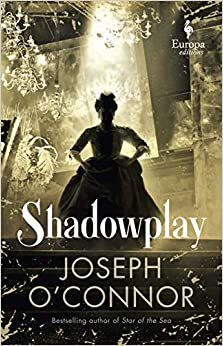
Joseph O’Connor has written a novel about 30 years in the life of Bram Stoker, with Shadowplay. I found this novel involving and interesting. It’s about Stoker’s work with the Lyceum Theatre and his relationship with two famous actors, Ellen Terry and Henry Irving. It even has just a bit of a supernatural influence.

Although it took me a while to get into A Sin of Omission by Marguerite Poland, I found it absolutely heart-rending by the end. It is based on the life of a native Anglican missionary to South Africa, about a man whose upbringing sets him apart from his own people as well as his English white patrons. This novel is my choice for the 2020 award.

Review 1728: A Sin of Omission

A Sin of Omission opens with Stephen Mzamane making a long journey to see his best friend, Albert Newnham, across the region known in the 19th century as Kaffraria on the Cape of South Africa. During this journey, the novel looks back on his life.

Picked up as a starving child in the bush by Reverend Basil Rutherford, Stephen is raised at a mission to become an Anglican priest. Once his family learns where he is, his father brings his older son, Mzamo, there too, reasoning that the boys will not succeed unless they learn to be English. The Ngqika tribe has been driven off its lands by the British, and because of a prophecy that foretold the British would leave if the people destroyed their crops and animals, his father has killed his cattle and burned his crops. Although he is an important man, he has to work on the roads to avoid starving.

The Church is making it a practice to raise the sons of important natives as British clerics in an attempt to convert the people. Both Stephen and Mzamo are intended for this program. However, Mzamo is rebellious while Stephen is dedicated and devout, so Mzamo is ejected from the program.

Stephen is eventually sent to Canterbury to be educated at the Missionary College. There, although he is a fish out of water, he becomes best friends with a fellow student, Albert Newnham. Unfortunately for this friendship, Albert eventually chooses to marry a girl who is completely unsuited to be a missionary’s wife and is racist.

Things begin to go wrong after the young men take an ill-considered shortcut so as not to be late for tea, but Stephen only begins to learn the fruits of this event when he returns to Africa. Although he still needs to pass Greek and Latin exams to become a priest, unlike his white fellows, he is given a post far from any libraries or tutors. The job he expected to get working at the missionary college with his beloved Mfundisi Turvey, principal of that college, eventually goes to Albert. Instead of being give a post together, as promised, they are separated. In fact, Stephen is alone because the nearest cleric to his post is racist.

Stephen is also no longer a part of his own people, although his brother plays a large part in his fate. The major events of this novel are initiated when he learns of his brother’s death.

This novel is partially based on the life of Stephen Mtutuko Mnyakama, a missionary of the Anglican Church of the Holy Trinity. Although it didn’t initially pull me in, I eventually found it absorbing and heart-rending. This is a novel I probably wouldn’t have discovered had it not been for my Walter Scott project.

Related Posts

Things Fall Apart

The House Gun

Sex and Stravinsky

Review 1726: To Calais, In Ordinary Time

It’s 1348, two years after the battle of Crécy, which won Calais back from the French to the English. Will Quate is betrothed to Ness, the prettiest girl in his Cotswold village, but his liege lord, Sir Guy, wants him to join a group of archers on their way to defend Calais. Will would rather stay, but he bargains for a document showing he’s a free man. Sir Guy tells him he will send along the paper with Captain Laurence Haket in exchange for five pounds once he has won his fortune.

Will agrees to go. In fact, his attitude toward Ness seems ambivalent. He doesn’t seem to care that she had an affair with Haket and became pregnant. Will’s friend Hab is plainly in love with him, but Will doesn’t seem inclined.

Sir Guy’s daughter Bernadine is incensed that Sir Guy has betrothed her to a man his own age when she is in love with Laurence Haket. Inspired by La Roman de la Rose, she feels she is entitled to a more romantic life, so she runs away, following Haket on his way to Calais.

Another voice on the journey is Thomas Pitkerro, a proctor, who is sent along with the archers on his way to his home in Avignon to give last rites, if needed. Thomas is afraid of the plague, which is said to be moving north from Italy and France.

To Calais, In Ordinary Time echoes its medieval inspirations with its tale of adventures while on a journey. It does so in more than just plot, however, for it is written with only words in use in the time it was set. Thomas, who is writing letters and keeping a diary, writes in a stiff, bombastic style that thankfully loosens up . The novel is narrated in a style a little less formal than the speech of Bernadine, which contains some French modes of expression. Several times the point is made that her workers do not understand many of the words. The speech of Will and the characters around him is littered with expressions native to the Cotswolds.

This attempt is similar to that of Paul Kingsnorth in The Wake, which I read several years ago—written to be readable to modern audiences but to have the feel of Old English (in the case of The Wake, that is). This effort doesn’t seems as likely to me except in the speech of the characters of the lowest status, which has a flow to it. The dialogue between characters of higher status seems overly elaborate, even pretentious, and perhaps echoes written work of the time.

Meek doesn’t do much to get readers interested in his characters, so at first I had difficulty becoming involved in the novel. After a while, I got more interested. I read this novel for my Walter Scott prize project.

Related Posts

The Wake

The Last Hours

The Illuminator

Review 1713: The Narrow Land

As a young child, Michael Novak was rescued during World War II and sent to the States as part of a program for orphaned children. There, he was adopted by the Novaks. At 10, he is still extremely fearful and full of routines he follows to calm himself. So, he is resistant when Mrs. Novak tries to put him on a train, the first step in a journey to spend the summer on Cape Cod with the Kaplans. Finally, he decides to go.

On the island in 1950 live the artist Edward Hopper and his wife Jo. Although they tend to be standoffish with the vacationers, Michael forms a friendship of sorts with Jo. And it’s really the relationship between Edward and Jo that this book is about.

Edward has been having a dry spell, and he seems preoccupied with trying to find a woman he painted a few years before. She is right under his nose in the person of Katherine Kaplan, Mrs. Kaplan’s daughter, who is dying of cancer. He has seen her and noted the resemblance, but she is no longer dyeing her hair blond. He is an introvert who spends most of his time in his own head.

Jo is extremely jealous of him and thinks he pays too much attention to Olivia, Mrs. Kaplan’s daughter-in-law, when it is really Olivia paying attention to him. Jo is in fact irrationally and violently angry at times, particularly when she feels she had to abandon her career when she became his wife. Although Jo has some moments of self-awareness, I really think Hickey treats her harshly as a character. Granted, I know nothing about the couple’s life, but Hickey shows her making a fool of herself at a party with her airs and graces and spiteful remarks about other people.

Hopper is not very nice to Jo and belittles her art, although I read about that and found she had some standing as an artist.

This novel, which I read for my Walter Scott project, was slow moving, and for a long time I couldn’t tell whether it was going anywhere. Sometimes that doesn’t bother me, but in this case I had a hard time staying interested. The novel does have a payoff in the end, but it is more character study than plot-based.

Related Posts

That Old Cape Magic

The Blazing World

Suzanne