Day 1229: The Streets

Cover for The StreetsIt is Victorian London. David Wildeblood has obtained a job as a gatherer of information for “The Labouring Classes of London,” a weekly paper owned by Mr. Marchmont. He is assigned the neighborhood of Somers Town, where he observes what is going on and makes calls to gather information about the households.

David doesn’t do well at first, because he doesn’t understand the dialect spoken in Somers Town. He is also robbed twice and almost killed when he tries to pursue the second robber. But an encounter with a young coster, Jo, saves him.

Slowly, David begins to realize that something is going on in the neighborhood. First, he helps protest against the landlords, who are charging the poor exhorbitant rents for ruinous quarters, by finding out who the owners are. As it turns out that the owners are on the council in charge of taking tenant complaints, that raises the storm. But eventually, David learns that something even more corrupt and disturbing is going on.

The blurb of this book compares it to Dickens, and that comparison has some validity. Although this novel doesn’t teem with humor and colorful characters, it does contain effective descriptions of London neighborhoods and the city’s poor. It is well written and nicely paced, and I enjoyed reading it. This book was another one I read for my Walter Scott Prize project.

Related Posts

David Copperfield

The Devil in the Marshalsea

Smith, The Story of a Pickpocket

If I Gave the Award

Cover for The Long SongHaving finally reviewed the last book on the shortlist for the 2011 Walter Scott Prize for Historical Fiction, it is time to write this recurring feature, where I give my opinion about which book I feel deserved the award.

This was a year with several entries that were unusual and one that I felt was not actually a very good novel. Let’s start with that one, To Kill a Tsar by Andrew Williams. This novel about a plot to assassinate Tsar Alexander II was presented wrapped around an unlikely and uninteresting love story. I was never sure whether I was supposed to feel sympathy for the plotters or not. I didn’t.

The winner for that year was The Long Song by Andrea Levy. Although this is an interesting novel about the last days of slavery in Jamaica, I felt it was somewhat distancing from its characters. However, this sad story is told with humor and lightness.

Heartstone by C. J. Sansome is an entry in his Matthew Shardlake series set in Tudor England. Although this series is outstanding for its thorough immersion in the Tudor world, this novel was impeded in its effectiveness, I thought, by the subplot involving Ellen Fettiplace.

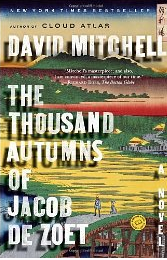
Cover for The Thousand Autumns of Jacob De ZoetC by Thomas McCarthy is an unusual story of the life of a young man, set in the early 20th century and ending during World War I. Again, this novel, which wanders about among many different pursuits of its main character, was interesting but seemed detached from its subject, as was I.

One of the most beautifully written entries for that year is Ghost Light by Joseph O’Connor. This is the story of the poet John Millington Synge and Molly Allgood. Characterization is more important in this novel than the historical setting, which I think is vital for a novel considered for an award for historical fiction.

That leaves one of my favorite books of all time, The Thousand Autumns of Jacob de Zoet by David Mitchell. This novel is set in 18th century Nagasaki, Japan, during the first opening of Japan to the West. Jacob de Zoet becomes one of the first Europeans to be allowed to set foot off the island called Dejima where all the Europeans are restricted to live. This novel was full of the flavor and customs of 18th century Japan as well as a good story about corruption in the Dutch East India Company.

Although several of the books on this year’s list are worthy of the award, my personal choice is The Thousand Autumns of Jacob de Zoet.

Day 1223: To Kill a Tsar

Cover for To Kill a TsarI have such a struggle with reading eBooks that I often put them aside while I’m charging my iPad and pick up a paper book, only to not return to the eBook until I finish the paper one. This is what happened with To Kill a Tsar, which was the paper book I picked up. Sometimes, the reason for continuing with the paper book is that I’m engrossed in it, but this time, it was just because I was finding the eBook no better.

The main character of To Kill a Tsar, Dr. Frederick Hadfield, is a Russian of British ancestry whose uncle is high up in Russian political circles. Hadfield has recently returned from studying in Switzerland and has liberal tendencies, which in Russia makes him a radical.

At a radical social event, he meets Anna Kovalenko and agrees to help her on Sundays at a free clinic. He is drawn to her, but he realizes very soon that she is part of a political group who just attempted to assassinate Tsar Alexander II. Does he avoid her despite his belief in nonviolence? No, of course not.

For me, this is one of the many places where the novel breaks down. To keep us interested in this story about terrorists, we are presented with a wholly unconvincing love story. Then, there is the question of what the author is asking of us. Are we supposed to sympathize with these people, who don’t care how many people are killed, as long as they make their point? Certainly, Williams doesn’t spend enough time revealing the characters of the police for us to sympathize with them. In fact, there is a subplot of an informer inside the police, but when his identity was revealed, I didn’t even know who he was.

I honestly couldn’t figure out what Williams was thinking when he made his choices. There were lots of things he could have done to make this novel interesting. He could have, for example, worked more to make us sympathize with one side or the other instead of assuming, in this age of terrorism, that we would think “No rights? Of course, kill the tsar!” never mind that, as tsars go, Alexander II was one of the most liberal. If Williams simply wanted to report what happened without following a side, he could have left out the lame love affair and spent equal time with both sides. If he wanted us to sympathize more with Hadfield, then make his reactions more understandable.

This is one of the books on my Walter Scott Prize list that I didn’t enjoy that much. That has happened before, but in this case, I also didn’t think it was a very good novel. I don’t think that has happened before.

Related Posts

The House of Special Purpose

Eye of the Red Tsar

The Idiot

Day 1220: Tightrope

Cover for TightropeYet again, I had no idea that Tightrope, which I read for my Walter Scott project, was a sequel until I went into Goodreads to indicate I had started reading it and saw that it was “Marian Sutro #2.” In this case, the novel seemed to recap the events of the first novel rather heavily, so I don’t think I missed anything by skipping the first book except maybe some feeling for Marian.

I found Mawer’s The Glass Room to be icy in its distance from the characters, so I wasn’t excited about reading Tightrope. It turned out to be better than I expected but not much.

Tightrope begins toward the end of World War II, when Marian Sutro returns to England. She was one of the women sent over to infiltrate Europe during the war, where she worked with the French resistance. But she was betrayed and spent the last two years in Ravensbrück. Shortly before the liberation, she and some other women managed to escape.

Because of Marian’s background, she is of interest to the British secret service. She is of interest to the Russians, too, primarily because her brother Ned is a nuclear physicist. Her own beliefs that knowledge of nuclear weapons must be shared to maintain peace also draws her into the midst of the Cold War.

This novel is narrated by Sam, the son of one of Marian’s friends, and his story contains lots of details he couldn’t have known, even though he had access to her file and she tells him parts of her story. This narrative also allows Mawer to insert a certain amount of salacious detail, as Sam has a mad adolescent crush on Marian. I think I mentioned Mawer’s fascination with labia in my last review.

Marian is essentially an unknowable character, which kept me, as a reader, from becoming very engaged with her story. It didn’t help that she seemed to be the product of some adolescent idea of a perfect woman—a beautiful woman who sleeps with just about every man she meets and cares for none of them. Yet we are to believe she cares for one, even though there is little evidence for it. I found the book blurb, which says “Marian must risk everything to protect those she loves . . .” laughable.

Quotes on the cover call Mawer “a true master of literary espionage” and call the novel “gripping.” If you want gripping, try John Le Carré or Robert Harris instead.

Related Posts

The Glass Room

Sweet Tooth

Code to Zero

Day 1213: A Country Road, A Tree

Cover for A Country Road, A TreeBest of Five!
I know little about Samuel Beckett except that he was Irish, and I have the most basic knowledge of Waiting for Godot and Krapp’s Last Tape. (“A country road, a tree” is his setting for Godot.) So, I would not be able to say whether the novel at all conveys a true sense of what Becket was like. I can say, though, that I’ve read other works of biographical fiction that felt as if they gave a false or poor sense of their main character. A Country Road, A Tree is much more plausible in depicting Beckett.

The novel does not cover his entire life but concentrates on the war years, 1939-1945. Beckett is already a published writer, although probably not to much attention. He is friends with James Joyce and other writers and artists in Paris.

At the beginning of the war, Beckett is in Ireland. He feels stifled there, though, and chooses to return to Paris despite the instability. There he lives an increasingly stressful and straitened existence with his lover, Suzanne. At first, he has no papers, which complicates things when he and Suzanne are forced to evacuate Paris with the German invasion. Later, he decides to work with the French underground, which makes their lives even more precarious. Finally, they must flee to the countryside again.

Although this novel does not concentrate on the literary side of Beckett’s life—in fact, during much of it he is unable to write—it grabs your attention and keeps it. It also provides some insight into the man who produced his later works. I loved Jo Baker’s Longbourne and have been waiting for her to produce a work equal to it. This is that work, which I read for both my Walter Scott Prize and my James Tait Black projects.

Related Posts

Longbourn

The Mermaid’s Child

Ghost Light

Day 1211: Days Without End

Cover for Days Without EndI so much enjoyed Sebastian Barry’s On Canaan’s Side when I read it for my Walter Scott Prize project that I was excited to see his Days Without End on the shortlist, too. Again, his protagonist is an Irish immigrant to the U. S., but this time a man, Tom McNulty.

Tom and his best friend, John Cole, enlist in the army sometime in the mid-nineteenth century. Their job in Daggsville has disappeared with the miners. That job, which they have had since they were boys, was to dress up like women and dance with the miners.

Tom and John enjoy the army but have some difficult experiences when their unit is sent west to deal with Native Americans. After some brutal experiences, they leave the army, taking with them a little Native American girl they call Winona. Although she is purportedly their servant, they treat her as a daughter.

Tom and John are lovers, and they have adventures that have raised some skepticism among other bloggers, particularly when Tom goes back to cross dressing to entertain miners in Grand Rapids. Some commenters did not believe this act would be accepted so easily during that time. I’m not sure what I think about that, except that Barry presented it in a convincing way.

In Tom, Barry creates an engaging character, and his descriptions of events, many of them horrific, as Tom and John go from serving in the Indian Wars to the Civil War, is masterful. However, none of the other characters in the novel were fully developed, including John.

This lack, and my doubts about the probabilities of some of the situations in which the pair find themselves lessened my enjoyment in this novel. It is certainly worth reading, but I didn’t like it as much as On Canaan’s Side.

Related Posts

On Canaan’s Side

Neverhome

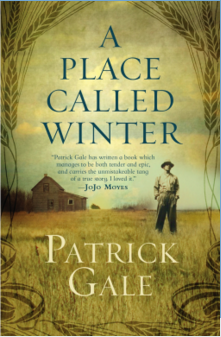
A Place Called Winter

Day 1206: The Good People

Cover for The Good PeopleBest of Five!
Hannah Kent seems to be fascinated with historical true crime cases. Her Burial Rites was about a woman found guilty of murder in Iceland. The Good People is about the inhabitants of a poor, superstitious valley in Ireland in 1825.

Nóra Leahy has had a year of misfortune. Not long ago, her son-in-law arrived to tell her and her husband, Martin, that their only daughter had died. He brought with him their grandson, Micheál, to care for.

Unfortunately, Micheál at four is not the bright, babbling toddler he was the only other time they saw him. He does not seem to be able to use his limbs and does not talk. Instead, he screams all the time to be fed.

Martin cares for Micheál and gives him affection, but Nóra hides him away from the neighbors. Then Martin dies, falling down suddenly at a crossroads.

The manner of Martin’s death provokes comment but so does the hidden child.

Even after Nóra brings home a hired girl to help with the work of caring for the child, Micheál seems an unbearable burden. Nóra begins to believe that her grandson was “swept away” by the fairies, the Good People, and that she has a fairy child in his place. She consults Nance Roche, an old wise woman who treats the villagers’ ailments.

Nance herself has enemies in the valley. In particular is Kate Lynch, because Nance refuses to help her with a piseóg, or curse, against Kate’s husband, who beats her. Although Nance refuses to deal in curses, Kate leads others to talk of strange dealings when things begin to go wrong for the valley. Also, the new priest, Father Healy, has begun speaking against Nance at mass.

All of this builds a feeling of dread. Kent has beautifully evoked the way that superstition plays a part in the people’s everyday lives. We know something bad will happen; we’re just not sure what.

Although I would have read The Good People anyway, it is a novel for my Walter Scott Prize project. I found it mesmerizing.

Related Posts

Burial Rites

The Wonder

Harvest

Day 1199: Salt Creek

Cover for Salt CreekBest of Five!
Ten years after she left Australia in 1862, Hester Finch recollects the seven years her family spent in the Coorong, at Salt Creek, southeast of Adelaide. Her father brought the family there after all of his other business ventures had failed.

Originally from genteel stock, Mrs. Finch is appalled by the rusticity of the station, as are her children. Mrs. Finch, who moved to Australia for the sake of her husband, is depressed and apathetic, so Hester, the oldest girl, must take her place doing the housework and educating the younger children. Mr. Finch considers himself a godly man who must do his duty by bringing the natives to Christianity, so they take in a mixed race boy named Tully.

Life is difficult, and it slowly gets worse. Although Hester falls in love with Charles, a young artist doing a survey of the area with his father, she decides that she will never allow her fate to be determined by another.

As Hester tries to figure out a way to leave Salt Creek without abandoning her younger brothers and sisters, events occur that make the family understand the kind of man their father is.

Some readers may need patience for the beginning of this novel, as it is mostly setting the stage for events to come. I found the plaintive tone of the novel at first a little depressing. However, just before the halfway point, events get going, and the novel becomes absolutely gripping.

Although Treloar states that the novel is based very loosely on her family’s beginnings, the characters in the novel are completely fictional except for four of them. Those characters make up a subplot that involves an actual murder.

I felt the novel lacked descriptions that would give ideas of the appearance of the place (references are made to its beauty, but I was unable to form a mental picture), but the daily existence of the characters is fully realized. This is at times a harrowing read for my Walter Scott Prize project, but it is certainly worth it.

Related Posts

The Orchardist

Rush, Oh!

All the Birds, Singing

Day 1195: The Long Song

Cover for The Long SongSeveral years ago, I greatly enjoyed Andrea Levy’s Small Island. So, I was happy when I saw that The Long Song was in both my Walter Scott Prize and Man Booker Prize projects.

July is fathered upon her slave mother, Miss Kitty, by the overseer on Amity, a Jamaican sugar plantation. It is early in the 19th century, so July is a slave, too.

July and Miss Kitty are field slaves, but when July is nine years old, the master’s sister, Caroline Mortimer, takes a fancy to her. She takes July away from Miss Kitty to train her as a house slave and calls her Marguerite. The novel is written as July’s memoir, as she recalls the final days of slavery on the island and its transition to freedom.

At first the tone of this novel bothered me. It seemed too sprightly and playful for subject matter that is sometimes appalling. It really tears into its white characters, too, who are portrayed at best as hypocrites but more often much worse. Eventually, though, its sly sense of humor got to me, and I laughed out loud. Still, I did not feel as involved by this novel as I did with Small Island.

Related Posts

Beloved

Jade

The Quality of Mercy

Day 1186: Toby’s Room

Cover for Toby's RoomI know I’ve talked about this before, but I find it interesting to see what the blurb writer finds to comment about a book versus the book itself. In the case of Toby’s Room, the blurb says something about a family torn apart by war. Well, World War I begins well into the novel, and the family is fairly well torn apart already.

The novel begins in 1912 when, in a weekend break from Slade, where Elinor is an art student, her relationship with her older brother Toby undergoes a shocking change. She and Toby have always been close, but they have difficulty closing the gap after this incident.

Later, shortly after the war begins, the family receives a telegram stating that Toby is missing, presumed dead. Elinor feels there is something not right about the letters she receives from his commanding officer and the chaplain. Letters to her friend Kip, who served with Toby, receive no answer. Elinor asks her friend Paul, who is home wounded, to help her find out what happened.

That makes the book sound like a mystery, but it isn’t. It is more about Elinor’s unresolved feelings for her brother, and latterly about the horrors of war.

Although Toby’s Room is a sequel to Barker’s Life Studies, and I have not read the first book, I felt myself immersed in this fully realized world. This is another situation, like with The Quality of Mercy, where I was reading the novel for my Walter Scott prize project and chose not to read the first one. Unlike The Quality of Mercy, though, I don’t think my not having read the first book affected my appreciation of the second. Although I do wish the Walter Scott prize judges would stop putting sequels on their short list, I enjoyed Toby’s Room. It examines serious issues while still capturing our attention.

Related Posts

The Quality of Mercy

The Stranger’s Child

C