Day 1195: The Long Song

Cover for The Long SongSeveral years ago, I greatly enjoyed Andrea Levy’s Small Island. So, I was happy when I saw that The Long Song was in both my Walter Scott Prize and Man Booker Prize projects.

July is fathered upon her slave mother, Miss Kitty, by the overseer on Amity, a Jamaican sugar plantation. It is early in the 19th century, so July is a slave, too.

July and Miss Kitty are field slaves, but when July is nine years old, the master’s sister, Caroline Mortimer, takes a fancy to her. She takes July away from Miss Kitty to train her as a house slave and calls her Marguerite. The novel is written as July’s memoir, as she recalls the final days of slavery on the island and its transition to freedom.

At first the tone of this novel bothered me. It seemed too sprightly and playful for subject matter that is sometimes appalling. It really tears into its white characters, too, who are portrayed at best as hypocrites but more often much worse. Eventually, though, its sly sense of humor got to me, and I laughed out loud. Still, I did not feel as involved by this novel as I did with Small Island.

Related Posts

Beloved

Jade

The Quality of Mercy

Day 1186: Toby’s Room

Cover for Toby's RoomI know I’ve talked about this before, but I find it interesting to see what the blurb writer finds to comment about a book versus the book itself. In the case of Toby’s Room, the blurb says something about a family torn apart by war. Well, World War I begins well into the novel, and the family is fairly well torn apart already.

The novel begins in 1912 when, in a weekend break from Slade, where Elinor is an art student, her relationship with her older brother Toby undergoes a shocking change. She and Toby have always been close, but they have difficulty closing the gap after this incident.

Later, shortly after the war begins, the family receives a telegram stating that Toby is missing, presumed dead. Elinor feels there is something not right about the letters she receives from his commanding officer and the chaplain. Letters to her friend Kip, who served with Toby, receive no answer. Elinor asks her friend Paul, who is home wounded, to help her find out what happened.

That makes the book sound like a mystery, but it isn’t. It is more about Elinor’s unresolved feelings for her brother, and latterly about the horrors of war.

Although Toby’s Room is a sequel to Barker’s Life Studies, and I have not read the first book, I felt myself immersed in this fully realized world. This is another situation, like with The Quality of Mercy, where I was reading the novel for my Walter Scott prize project and chose not to read the first one. Unlike The Quality of Mercy, though, I don’t think my not having read the first book affected my appreciation of the second. Although I do wish the Walter Scott prize judges would stop putting sequels on their short list, I enjoyed Toby’s Room. It examines serious issues while still capturing our attention.

Related Posts

The Quality of Mercy

The Stranger’s Child

C

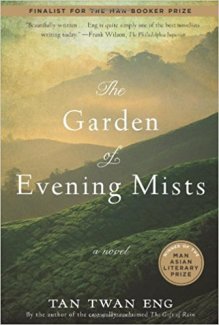
Day 1184: The Garden of Evening Mists

Cover for The Garden of Evening MistsBest of Five!
Yun Ling Teoh, a Malayan federal judge of Chinese descent, has decided to retire early. She has been diagnosed with a neurological ailment that will cause more and more frequent episodes of aphasia and will eventually destroy her language abilities. She decides to return to Yugiri, a Japanese garden in Malaya that she inherited from its creator, Aritomo.

On the advice of her friend Frederik, the owner of a nearby tea plantation, Yun Ling decides to record her memories. She begins in 1951, when she went to Aritomo to ask him to design a garden in memory of her sister, Yun Hong, who died in a Japanese labor camp during World War II. Yun Ling also was in the camp, and her hatred of the Japanese makes it difficult for her to ask for Aritomo’s help. But her sister loved Japanese gardens.

Aritomo refuses her request but makes her a different offer. If she will take on the job of apprentice, he will teach her enough to design her own garden. She decides to accept the offer, having quit her job as prosecutor.

It is a difficult time in Malaya. No sooner did the war end than the government began fighting Communist guerillas, who were attempted to take over the country. And Akitomo has his secrets. He came to Malaya before the war, having resigned as the Japanese emperor’s gardener, but Yun Ling occasionally hears that he played a role for Japan during the war. He had some kind of influence, because he saved his neighbors from the Japanese labor camps. Yun Ling, we find, has her own secrets.

The Garden of Evening Mists is the best kind of historical fiction, immersing me in its time and place while informing me of events I was formerly unaware of. I found it deeply interesting and affecting. The descriptions are delicate and evocative, and the characters feel real yet mysterious. This novel was part of both my Walter Scott Prize and Man Booker Prize projects, as well as the winner of the Man Asian Literary Prize. It is a powerful novel.

Related Posts

The Glass Palace

The Narrow Road to the Deep North

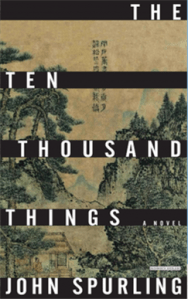
The Ten Thousand Things

If I Gave the Award

Cover for The Ten Thousand ThingsLast week I posted my last review of the shortlisted books for the 2015 Walter Scott Historical Fiction Prize. That means it’s time for this feature, where I give my opinion about whether the judges got it right.

The shortlist for 2015 is a tough one to like. There were seven books on the shortlist, but for various reasons, four of them just didn’t float my boat at all: Zone of Interest by Martin Amis, In the Wolf’s Mouth by Adam Foulds, Arctic Summer by Damon Galgut, and A God in Every Stone by Kamila Shamsie.

Cover for Viper WineOf the other three nominations, Viper Wine by Hermione Eyre is the most inventive in approach and is well grounded in its historical background. Looking back at my review, I think I enjoyed it more than I remembered. The Ten Thousand Things, that year’s winner by John Spurling, is probably the book that most qualifies as literary fiction, and it certainly conveys both a historical context and a sense of time and place. It had such a detached viewpoint, however, that I was never fully engaged with it. For me, The Lie by Helen Dunmore was the most engaging, but of these three, it conveyed the least about its historical time. So, for this year’s prize, taking into consideration both how involving the book was and its reflection of its time and place, I guess I would have picked Viper Wine, with a plus for its wildly inventive approach.

Day 1181: The Zone of Interest

Cover for The Zone of InterestIn Martin Amis’s The Zone of Interest, the Zone is a Nazi factory and concentration camp in Poland. Interestingly, Amis makes this setting a source of some very black humor.

The novel is written from the points of view of several characters, mostly Nazis, but it is mainly from that of Thomsen, an officer in charge of production at the rubber factory. He is a womanizer, but he begins to have feelings for Hannah Doll, the commandant’s wife.

Doll himself is a vile human being. He has his rival for Hannah imprisoned and uses threats against inmates’ relatives to force them to do things.

In fact, most of the characters are vile. And that’s the difficulty with this novel. First, is the Holocaust fodder for humor? I’m not sure it is in general, but it isn’t for me. Also, even though Thomsen is the least criminal of the characters because he’s working subtly against the war effort, these are people busily explaining away their own terrible actions.

Amis’s goal, I think, is to give some insight into the behavior of these people. Whether you want to read a novel on this subject probably depends on whether you’re interested in that insight. It made me a little queasy. This is one of the books I read for my Walter Scott Prize project that I didn’t really enjoy.

Related Posts

Maus I

Great House

The History of Love

Day 1179: In the Wolf’s Mouth

Cover for In the Wolf's MouthAnother book for my Walter Scott Prize project, In the Wolf’s Mouth is very different from the last novel I read by Adam Foulds. It is about the incompetent “liberation” of Sicily by the Allies during World War II, from the point of view of two characters. Will is a British field security officer who is ambitious to accomplish something. Ray is an Italian-American soldier who gets accidentally detached from his unit.

Although the plot of this novel is disjointed, it hinges upon the use by the American army of Sicilian exiles in its capture of Sicily. Unfortunately, some of these exiles are mafioso who fled the island 20 years before under threat from the Fascists. Ciró Albanese is one of these men, and under the auspices of the American army, he begins taking charge of his old activities. He considers Angilú one of his enemies, as the ex-shepherd took over his job and his house after he was kicked out. He also wants his wife back, even though she has remarried after thinking him dead. Eventually, Will gets wind of his activities.

Although this story is coherent enough, Ray’s story has very little to do with it. His is one of a soldier suffering from too much exposure to violence. His story is loosely connected by place and a link to the Princess, daughter of Angilú’s employer. This looseness gives the novel a disjointed feeling. After enduring a certain amount of tension through the problems of Angilú, we end with a fizzle, with Ray.

Finally, none of the characters are very knowable. We only really see one or two facets of their personalities. The sense of place depends on a few descriptions and a general aura of confusion. Although the novel kept my interest, I felt frustrated by it.

Related Posts

The Quickening Maze

The Information Officer

Siracusa

If I Gave the Award

I recently posted my last review of the books on the shortlist for the 2010 Walter Scott Prize for Historical Fiction. So, as usual, it’s time for my feature, If I Gave the Award, when I tell you if I think the jury got it right.

Cover for Conspirata2010 was a strong year for historical fiction, and the shortlist reflects that. Of the seven books on that year’s list, I really enjoyed four of them, liked one other, and didn’t enjoy two others as much. Of the weakest entries, I felt that The Glass Room by Simon Mawer was cold and withdrawn, and I did not enjoy the subject matter of Hodd by Adam Thorpe, although it was effective at evoking the historical period. The Quickening Maze by Adam Foulds was interesting, but I still felt removed from the subject.

Cover for Wolf HallThe strongest entries, in my opinion, were Sacred Hearts by Sarah Dunant, Lustrum by Robert Harris (published as Conspirata in the U.S.), Stone’s Fall by Iain Pears, and the winner, Wolf Hall by Hillary Mantel. Sacred Hearts, Lustrum, and Wolf Hall were best at evoking a sense of period and place, while Stone’s Fall had a great mystery.

If you follow my blog closely, however, you can probably guess which one I will pick. Wolf Hall was on my Best Books list for the year 2012. It is, in fact, one of my favorite books ever. So, I agree with the jury this time.

Day 1168: Hodd

Cover for HoddI was never one for the romantic legends of Robin Hood. I always thought that, if he did exist, he was probably just the leader of a gang of thugs. And such, apparently, is indicated by the older ballads about him. In Hodd, Adam Thorpe weaves a story of the man that is closer to that told by the older ballads.

This novel is all about the manuscript, as the text of Hodd is supposedly the find of a medieval manuscript, written by a 13th century monk. The narrator, who remains unnamed, is writing the story of his youth. The novel includes scholarly notes from its translator and comments by its discoverer, a soldier in World War I. Some of these notes are funny, and some, I think, are meant to be parodic.

The narrator is about 14 when he is traveling with his master, a monk named Thomas, to Nottingham. They are held up by Hodd’s men and the narrator’s harp is stolen. He decides to go back and get it and is captured by Robert Hodd and his men.

Hodd is actually a sort of lunatic cult leader, who believes that there is no sin and that he is better than God. His followers believe him. He keeps himself intoxicated and has constant visions. He and his men are utterly ruthless and cruel. But rather than killing the narrator, Hodd decides to keep him as one of his men. He is a musician, and he can write songs about Hodd.

The narrator tells a parallel story of his education and upbringing by a holy hermit. This story continues throughout the book and comes in strongly at the end.

I think Thorpe realistically imagines the workings of the medieval mind, showing us strange beliefs. As such, this is a very unusual novel. I could have done without some of the religious moralizing, which filled the novel, as it would a medieval manuscript.

If you are a reader who needs a character to like, this is probably not the book for you, for even the relatively innocent narrator is perfidious. He so much wants to be loved that his jealousy turns him against people.

This is another interesting book I read for my Walter Scott Prize project.

Related Posts

Ulverton

The Scottish Chiefs

The Owl Killers

Day 1158: Mrs. Engels

Cover for Mrs. EngelsBest of Five!
Lately, I’ve realized that the novels I enjoy most have a strong narrative voice or sense of character. Mrs. Engels, the debut novel of Irish writer Gavin McCrea, is one of these. I had the fortune to read it as part of my Walter Scott Prize Project.

Lizzie Burns is the Irish mistress of Frederick Engels, long accepted as Mrs. Engels. She has a lot to put up with. Although Engels supports Karl Marx’s entire household, liberally, so that Marx can work on his book, he is very careful about what is spent on his own household. Further, Lizzy suspects him of yearning for her sister, Mary, who was his mistress before she died. And Lizzy is aware that Frederick is not faithful. Finally, he is completely devoted to a Communist revolution, so he often opens the house to his comrades or sends Lizzy on errands for the cause.

Mrs. Engels is a vivid imagining of Lizzy’s life, beginning in 1870 and looking backward to the past. A poor worker in Engels’s cloth mill, she leads a penurious life until Mary takes up with Frederick Engels. She becomes involved with the Fenian movement through her lover, Moss Óg. All in all, she’s a strong presence, funny and putting up with no nonsense. As she becomes more involved with the Marx family after she and Engels move to London, she begins to learn more about Frederick and what he will do for the cause, which to him means Marx.

This novel is beguiling, drawing me, at least, into a topic that I wasn’t much interested in. It tells Lizzy’s story with wit and creates a wonderfully realized setting and character.

Related Posts

Shirley

Z: A Novel of Zelda Fitzgerald

Charlotte and Emily

If I Gave the Award

Cover for On Canaan's SideHaving reviewed the last book on the Walter Scott Prize shortlist for 2012, it is time for me to give my opinion on whether the judges got it right. Of all the books in the shortlist, would I have picked On Canaan’s Side to be the winner?

For me, this is a much more clear-cut decision than for my last feature, where I compared the books on the shortlist for 2014. For that list, I felt that all the books were excellent, but I chose Life After Life for its combination of inventiveness and sense of history, acknowledging that the winner, An Officer and a Spy, was an excellent historical novel.

Cover for PureFor 2012, however, I can honestly say that I didn’t enjoy most of the books on the shortlist, or I enjoyed them only mildly. The one book that I enjoyed wholeheartedly was that year’s winner, On Canaan’s Side by Sebastian Barry, about an Irish woman emigrating to the United States during the Troubles. I also thought that Pure was very interesting and showed a strong sense of the period. The books I enjoyed least were The Stranger’s Child and The Sisters Brothers.

So, for 2012, I agree with the judges. If I had picked the winner from this group, it would be On Canaan’s Side.