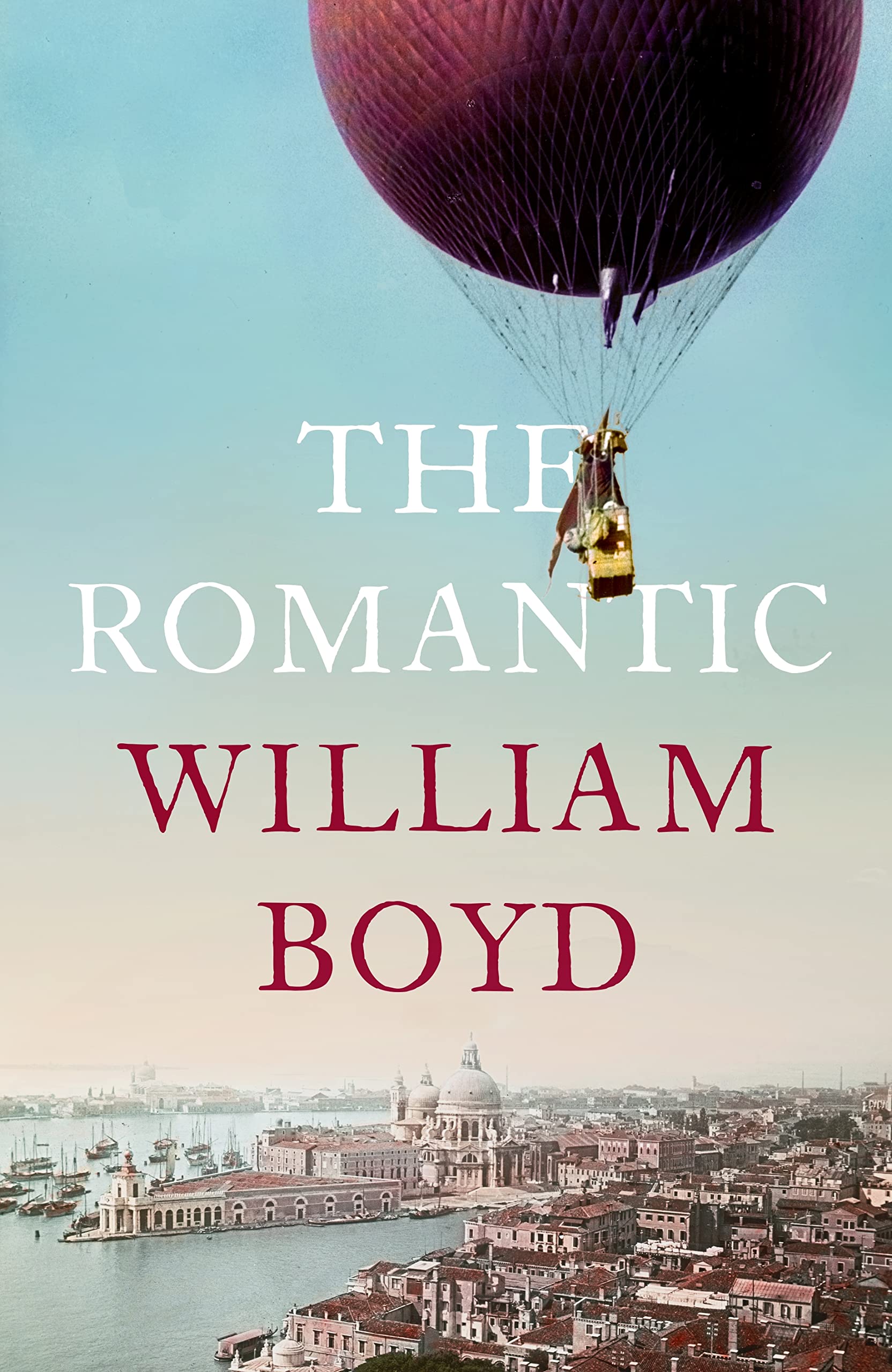
Review 2278: The Romantic

In the 19th century, Cashel Greville grows up in Ireland under the care of his aunt, who is governess to Sir Guy Stillwell’s family. But it’s clear to the reader, if not to Cashel, that all is not what it seems. Sure enough Cashel’s aunt moves them to Oxford, where they take up residence with Sir Guy under the name of Ross, and Cashel’s aunt Elspeth gives birth to twins, Hogan and Buckley. It is not until Cashel is 15 that Elspeth reveals she is his mother and Sir Guy his father.

Outraged, Cashel runs away from home and joins the army as a drummer boy. If you think I’m giving too much away, this all happens within the first 50 pages of this 450-page book, in which Cashel is on the field at Waterloo, hangs out with the Shelleys and Lord Byron, writes a best-selling novel but is cheated by his publisher and ends up in the Marshalsea, attempts to form a commune in Massachusetts, and so on. Oh yes, he also meets the love of his life in Ravenna, Italy, but she is married to a rich old man.

Cashel’s eventful and perhaps not altogether believable life (he claims to have discovered the source of the Nile before Speke and to have thwarted an antiquities smuggling scheme with the help of Sir Richard Burton) is supposedly documented by an autobiography and other papers that came into Boyd’s possession. With this claim, Boyd begins another of his “whole life” novels, maybe the most picaresque and least believable.

I usually like Boyd’s novels—in fact, some of them I have loved—but I had trouble connecting with this one. I’m not sure why, especially since it received uniformly positive reviews. It is fast moving despite its length. Maybe too fast. I didn’t feel like I got to know Cashel or really any of the characters. All of the women are ciphers, even Cashels’ great love. Boyd spends more pages on a sexual encounter with her than on Cashel’s marriage and its subsequent breakup.

Given Boyd’s plans for the adventures in this novel, maybe he needed to make it a lot longer.

Related Posts

Love Is Blind

Sweet Caress

Passion: A Novel of the Romantic Poets

Day 1104: Vanity Fair

Cover for Vanity FairVanity Fair is a reread for me for my Classics Club list. It has been a long time since I’ve read it, though, and I was curious about whether I would have the same reaction to it.

The novel, of course, is Thackeray’s famous satire of society that follows two English girls through their launches into society and later lives. One is Amelia Sedley, the gentle, conventional heroine who has been the only girl to befriend Rebecca Sharp, the charity student. Amelia is only eager to marry George Osborne, her long-betrothed fiancé. Rebecca is determined to be a success and marry a rich man.

It may be perhaps predicted that good, honest Amelia suffers much more than conniving Becky. Early in the book, Amelia’s marriage to George is threatened when her father loses his fortune. Even though we readers already know that George cares for no one more than himself, Amelia goes into a decline.

Meanwhile, Becky makes her own improvident marriage. She runs off with Rawdon Crawley, the heir to her employer’s fortune, thinking that she will be able to bring Miss Crawley around.

The early days of both marriages are set against the backdrop of the battle of Waterloo, as both George Osbourne and Rawdon Crawley are serving officers. With them is George’s best friend, Dobbin, who falls madly in love with Amelia at first sight and helps her throughout the novel.

As a girl, I thought Amelia was completely insipid and admired Becky Sharp. But it must be said—Becky has no morals. This time through, although I still found Amelia a bit tiresome, I found myself sympathizing more with Rawdon and Dobbin.

In any case, this novel is often funny and always entertaining. Although Thackeray presents us with a conventional heroine for the time in Amelia, you can’t help thinking he had some admiration for the unsinkable Becky. By following her adventures, Thackeray shows us the foibles of members of polite society: the fights over inheritance, the sycophancy, the treatment of people as their fortunes wax and wane.

Related Posts

Viper Wine

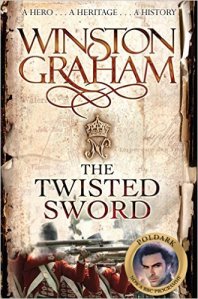
The Twisted Sword

The Black Count: Glory, Revolution, Betrayal, and the Real Count of Monte Cristo

Day 1069: The Twisted Sword

Cover for The Twisted SwordA short side note before starting my review for today. The shortlist for the 2017 Man Booker prize was recently announced. You can see the shortlist on my Man Booker Prize Project page. I am getting behind on that project, having read hardly any of the books for the most recent years. I have one excuse besides too many books, too little time, and that is that some of them have been hard to locate.

* * *

It was a nice change to have most of this penultimate novel of the Poldark Saga be more about Ross and Demelza than their children. It is 1815, more than 30 years since the start of the series. At the beginning of the novel, Ross is summoned to London.

The Napoleonic Wars have been a backdrop to most of the series and come to the fore in this one. Although Napoleon is exiled to Elba, the British government is getting conflicting reports about the loyalty of the French army toward the Bourbon government. England is depending upon the stability of France, so the Prime Minister wants Ross to travel with his family to Paris as an independent observer and make visits to various army regiments.

Ross and Demelza take their two youngest children and ask Dwight and Caroline to join them later. The family enjoys Paris despite Demelza’s fears about her social skills and lack of French. Ross finds that one of the sore points in the French army is the return of the aristocrats, who demand their old positions from men who have been fighting for years. Of course, no one knows that Napoleon is shortly due to escape from Elba.

I enjoyed this novel, with its focus on well-known characters, more than I have the last two or three. I think this enjoyment is mostly because I don’t find the Poldark’s children very interesting, and they certainly don’t make good decisions. We spend time with some of them, though, particularly Clowance and her husband Stephen, as Stephen finds that George Warleggan’s help isn’t what it appears to be.

All in all, I am happy to be nearly finished with this series. It started out very good, but now I am just determined to finish it.

Related Posts

The Loving Cup

The Miller’s Dance

The Stranger from the Sea