
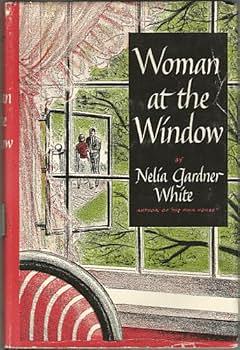
Although Elizabeth Burke leads a simple life, she enjoys it. She is looking forward to her new job in a bookstore when her brother-in-law Adrian calls. Her sister Anna has been told she won’t walk again. We’re never told what happened to her, but she has undergone two surgeries and refused a third that was supposed to either kill or cure her. Now Anna has asked Liz to come take care of her.
Liz is reluctant to go, citing a fear of losing her independence, but her issues are more complicated than that. And that’s one thing I liked about this book—everything is nuanced and complex, nothing black and white. Her friend and neighbor Lollie advises her not to go, but within a few pages, she has arrived at Anna’s home in Lakeville, New York.
There she finds a disturbing setup—Adrian is exhausted and seems to dislike her, having misunderstood her reluctance. Bunce, the cook and housekeeper, also shows dislike. Johnny, Adrian and Anna’s five-year-old son, avoids Anna’s room and spends most of his time by himself. Anna, who is charming to everyone else, is cold to Johnny. Adrian’s mother stays in her room all the time and doesn’t seem to notice Johnny much.
The crux of the novel is the relationship between the two sisters and between Anna and everyone else. Anna is charming and everyone loves her. Her bedroom receives visitors constantly. She talks affectionately to Liz but calls her her pony to other people. LIz has always adored Anna but previously Anna never seemed to heed her very much. She has seen Anna tire of people and doesn’t want her to tire of herself.
Liz is self-conscious about her looks and dresses badly while Anna is described as looking like Alice in Wonderland, fragile and beautiful. But Liz doesn’t understand her own qualities. There are a few instances, for example, when her intervention or comment helps another person, but she always attributes the help to Anna.
I disliked Anna. I could see that under her much-vaunted charm she sometimes makes knowingly hurtful remarks. Liz, although sometimes abrupt, is much more attuned to other people’s feelings. The situation becomes more intense when a friend gives Anna a mirror, to be put outside her house so that from the window she can see everyone who goes by. She becomes relentless about ferreting out people’s secrets, and she doesn’t seem to understand that she has no right to know them. Twice, she makes it appear that Liz has divulged someone’s secret when she has not and causes trouble by letting people know she knows their secret or by telling it to someone else.
Liz has a secret she doesn’t want Anna to discover. It’s that she’s fallen in love on sight with Huxley Reals, an employee of Adrian’s company. But Huxley is Anna’s devoted slave, coming constantly to visit her.
As Liz gets acquainted with the community, her influence begins to help particularly the people in their house. She pays attention to Johnny and he slowly opens up. She says something to get his grandmother to spend time with him. She cautiously makes some friends. But she believes she will be leaving, even continuing to pay rent on her old room, and everything in her life is overshadowed by her complex relationship with her sister.
I liked this book, which was published in 1951, a lot. I sympathized with plain, abrupt Elizabeth and felt she underrated herself and overrated Anna. I liked several other characters in the novel as well and thought it was an interesting character study.

