Review 1581: Somewhere in England

When I received a review copy of Somewhere in England from Furrowed Middlebrow, I realized that it was a sequel. So, I ordered the previous book, the delightful Nothing to Report, to read and review first.

To introduce the plot of Somewhere in England, I have to include a spoiler or two for the previous book. The novel begins with 18-year-old Pippa Johnson, who is about to take a position in a war hospital established in the family home of Mary Morrison, the main character of the previous book. In between novels, Mary Morrison married Kit Hungerford, who had purchased her family home. Now, Mary Hungerford is administering the hospital.

The first part of the novel has to do with Pippa meeting the hospital staff and villagers. It is more concerned with the social side of things than the war work as we meet familiar characters again. Elisabeth, who made her debut the summer of 1939 in the previous book, is a nurse whose fiancé has died, and she is rude to young Pippa. Lalage is friendly and will make a good nurse, but her sister Rosemary and mother Marcelle continue with their selfish ways. Most people, though, are occupied with some kind of war work.

The second part of the novel returns to the point of view of Mary, who is constantly dealing with difficult situations all the while worried for her husband overseas.

I enjoyed this novel, but it is hard to describe. It was fun to revisit the characters of Nothing to Report and see how they’re doing during the war. I think that as a sequel it stands well enough alone, but my enjoyment was enhanced by having read Nothing to Report first.
Related Posts

Nothing to Report

Northbridge Rectory

Atonement

Review 1538: Miss Boston and Miss Hargreaves

Rachel Malik’s investigation into the life of her grandmother has resulted in a gentle and touching story of friendship and love. It is an unusual one, too.

Rene Hargreaves leaves her difficult marriage to sign on as a land girl during World War II. She is assigned to work on a remote farm named Starlight owned by Elsie Boston. Elsie is a little peculiar and uncomfortable with strangers, but the two form a close friendship.

When a law is passed allowing the agricultural board to take charge of poorly run farms, Elsie’s greedy neighbors on the board use it to cheat her out of her farm, even after the examiner rates it “fair.” As a result, Elsie must leave the farm. Rene goes with her, and they become itinerant workers.

A promise Rene made to an old friend puts their lives in peril when Elsie is nearing old age and Rene is middle aged. Rene promised Bertha she would take care of her in old age, but it is Bertha who dies, leaving her difficult and senile husband Ernest with no place to go, so the two women take him in.

Although the two women live unremarkable lives for most of the novel, something about their story is compelling. Ultimately, it takes a turn I didn’t expect at all, despite its opening. I read this novel for my Walter Scott prize project.

Related Posts

White Houses

The Paying Guests

The Danish Girl

Review 1514: The Sum of Things

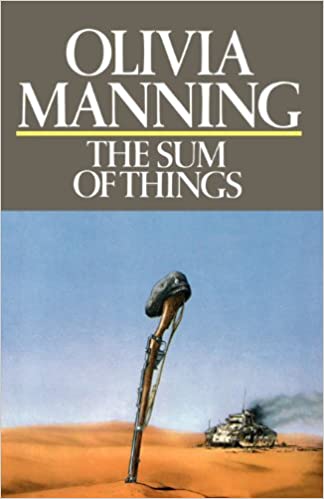
The Sum of Things is the last book in Olivia Manning’s The Fortunes of War, the third volume of The Levant Trilogy. Like the last two volumes, the novel alternates point of view between the young soldier, Simon Boulderstone, and the young wife, Harriet Pringle. In this last volume, we also get Guy Pringle’s point of view.

At the end of the last book, Harriet was to set sail unwillingly on the Queen of Sparta to return home. Guy thought it would be best for her health, and Harriet only agreed because she was despairing of her marriage. However, at the last minute she did not embark, instead taking a transport to Syria with an acquaintance to visit Adrian Pratt.

She doesn’t know that the Queen of Sparta was torpedoed with only one passenger surviving. Back in Cairo, Guy believes her to be dead and starts to realize he neglected her.

Also at the end of the last book, Simon hit a mine. He finds himself in a hospital for paraplegics with the fear that he may be permanently paralyzed.

When Harriet reaches Syria, she finds Adrian Pratt gone, transferred to another post. Only then does she begin to wonder what she will do, as she has very little money.

This was a satisfying and effective conclusion to the six-volume series about the adventures of Guy and Harriet during the war. Although I started out not liking Harriet, the characters grew on me and I was always interested to see what would happen to them.

Related Posts

The Danger Tree

The Battle Lost and Won

The Spoilt City

Review 1503: The Battle Lost and Won

The second novel in Manning’s Levant Trilogy, The Battle Lost and Won begins one day after The Danger Tree ended. Simon Boulderstone continues his leave after finding out that his brother Hugo has been killed. He tags along with Harriet and her friends for an evening in Cairo, but when he hears that the big push is coming up, he returns to his unit hoping to be in on the action.

This book continues the pattern of its predecessor by alternating the points of view of Harriet and Simon. Simon becomes more closely involved in the second battle of El Alamein while Harriet becomes more frustrated with her husband Guy. As usual, Guy occupies all his time with projects and saves none for her, nor does he agree to anything she asks for. He is generous with anyone but her. Without any job or other occupation, she gets dragged into the love lives of her flatmates Angela and Edwina.

Like many middle novels, this one does not have its own climax but works its way to the final volume. Still, I am interested to see what happens to Guy and Harriet, and to some extent, Simon.

Related Posts

The Danger Tree

Friends and Heroes

The Map of Love

Review 1498: The Danger Tree

The Danger Tree is the first volume of The Levant Trilogy, the second half of Olivia Manning’s Fortunes of War. It begins with the adventures of a new character, Simon Boulderstone, a subaltern in the army who has missed his transport to his unit in Egypt. During the course of a day in Cairo, he meets Harriet Pringle, who seems at first as though she is going to be a minor character.

However, the book alternates chapters between Simon’s experiences in the desert and Harriet and Guy Pringle’s in Cairo and Alexandria. The last book of the Balkan Trilogy left the Pringles in Cairo after they fled Athens. It’s a year later. When they arrived in Cairo, Guy found Colin Gracey, his nemesis from Athens, in charge of the Organization, for which Guy works. Gracey is neglectful of his position, a characteristic that Guy despises, and has gone off traveling, so Guy has trouble meeting with him to ask about a position. Gracey has again employed the unqualified Dubedat and Toby Lush while ignoring the very qualified Guy.

Guy stupidly then offends Gracey by writing a limerick about him, which he hears of. As a result, Guy is finally posted to an unimportant school in Alexandria nearer to the front, and Harriet is stuck in Cairo living in one room in a pension and working for the American embassy.

The focus of Harriet’s portion of the book is the uncertainty in Cairo, as the Europeans wait for an attack from Rommel. For Simon’s section, it is the confusion he finds at the front.

This book made an interesting start to the second trilogy. I’m happy to follow Guy and Harriet a while longer as they make their way through World War II.

Related Posts

The Great Fortune

The Spoilt City

Friends and Heroes

Review 1488: Akin

Noah Selvaggio is an octogenarian widower about to set forth on a trip to his birthplace of Nice when he is contacted by a social worker. His eleven-year-old great nephew Michael, whom he has never met, is in need of a temporary place to stay. Michael’s father, Noah’s nephew, has been dead for a while; his mother is in jail; and his grandmother, who was his guardian, has just died. Michaels’s other grandmother, Noah’s sister, has been dead for some years. Rosa, the social worker, asks that he take Michael while she tries to contact an aunt.

Noah tries to make his trip a reason not to take Michael, but Rosa is able to get Michael a passport and permission from Amber, his mother, to take him. So, Noah reluctantly agrees to take charge of Michael.

Once in Nice, Noah begins to try to track down the origins of some photos he thinks may have belonged to his mother, Margot. During World War II, his father went to the States, leaving Margot and Noah in Nice under Nazi occupation. Later, she sent Noah ahead, following in a year or two. The explanation has always been that she stayed to take care of her father, a famous photographer. But Noah thinks there is some mystery.

Although the pair have lots of arguments, Michael gets interested in helping Noah seek the truth about his mother.

I found this book a quick, interesting read, and a bit more touching than some of Donoghue’s other books. I was interested in the search for the truth and in the characters of the protagonists.

Related Posts

Lilac Girls

The Alice Network

The Nightingale

Review 1457: The Alice Network

I would estimate that 90% of the recent historical novels I’ve read in the last two years—and I’ve read a lot of them—are dual timeframe novels. Although I have read some excellent ones (The Weight of Ink comes to mind), I’m beginning to feel that they often indicate laziness on the author’s part. Why write a carefully researched novel about one period when you can write two hastily researched ones?

In post-World War II England, Charlie is on her way to Switzerland to a clinic for unmarried pregnant women when she ditches her mother to try to search out what became of her cousin Rose during the war. This all sounds very well, but the flippant first-person narrative style undermines everything serious about this section, turning it into, well, a historical romance.

She finds Eve, whose name as a preparer was on the reports her father received about Rose. And what are the odds that Eve is going to handle a report that mentions a name important to both her and Rose’s fates? Not too likely, I’m guessing, but that’s what happens.

In any case, then we plunge into the story of Eve, a spy during World War I, and back and forth we go for a book that is about 100 pages longer than it should be and very repetitive.

Worse, some of the detail and conversations, especially in the spy section, seem unlikely. I felt as if the characters were being put through their paces in benefit of the plot rather than evolving more organically. Characters are given traits to round them out, but these traits are just sort of thrown into the mix. For example, Charlie is supposedly a math whiz, but the most complicated thing she does is figure a tip or quote the Pythagorean Theorum (which I learned in 7th grade, and I think kids learn even earlier now). Neither is exactly high mathematics.

I know this book was very popular, and I think the subject matter is interesting, but I am not a fan of the execution of this novel. I wasn’t that drawn in by Manhattan Beach, but compared to this and some of the other World War II-based novels I’ve read lately, it was a masterpiece.

Related Posts

Lilac Girls

Salt to the Sea

Manhattan Beach

Review 1421: Death Has Deep Roots

I usually give older crime novels more leeway than modern ones, because the genre has evolved. Some of the older novels concentrate on the puzzle to the detriment of character, for example, or even plausibility. Not so with Death Has Deep Roots by Michael Gilbert, published in 1951.

Gilbert, rather than having an all-knowing detective, has recurring characters in his novels, apparently. Although Goodreads lists this novel as Inspector Hazlerigg #5, he is only a minor character. Instead, the novel rests on the combined efforts of the Rumbolds, father and son solicitors; Macrae, the barrister; and Major McCann, a former soldier and pub owner.

Victoria Lamertine is charged with murdering Major Eric Thoseby, once her British contact when she was in the French Resistance, in his hotel room. The police case is built around the fact that she had been trying to contact him and that no one else could have committed the crime based on who was in the reception area of the hotel. The police think that Thoseby was the father of her child, who died just after the war, that being deserted by her lover was her motive.

Victoria claims that in fact Lieutenant Wells was the father and that Thoseby had been helping her search for him, as he was last seen when the Gestapo raided the farm near Angers where he was hiding. Victoria herself was taken in that raid.

Nap Rumbold thinks the links to the crime lie in France and the war, so he goes off to investigate. McCann investigates Lieutenant Wells in England, hoping to verify Vicky’s story about the parentage of her child. They only have a few days to find the facts while Macrae mounts his defense.

This novel is an unusual combination of legal and action thriller, Rumbold’s part providing the action. It has compelling characters, an interesting plot, and zips along nicely. I think it’s the best of the British Library Crime Classics I’ve read so far. I’ll be looking for more Michael Gilbert, whom I wasn’t familiar with before.

I received this book from the publishers in exchange for an honest review.

Related Posts

Murder in the Mill-Race

Weekend at Thrackley

The Murder of My Aunt

Review 1414: Lilac Girls

I would like to say to some writers, If you are going to use multiple narrators (please don’t), they must have their own voices. If they don’t sound like different people, this technique doesn’t work. Unfortunately, either Martha Hall Kelly doesn’t know this or can’t do it. I’m not talking about expressed concerns or interests here but actual tone and mode of expression.

Lilac Girls reminds me very much of Salt to the Sea. If you remember my review of that book, you know that’s not a good thing. There’s the World War II setting, the alternating chapters with different narrators, one of whom is the evil Nazi. There is also the unconvincing narrative change, the poor characterization, and the mediocre writing.

Caroline Ferriday is a New York socialite who works for the French Consulate and is involved in charities to help French children. In summer of 1939, there are already lots of refugees fleeing from France. We guess she’s going to become involved in that; however, the first hundred pages of the novel concern her growing relationship with Paul Rodierre, an actor whose wife is trapped in France. Not very interesting, since Hall doesn’t get us to care about Caroline or Paul.

Kasia Kuzmerick is a Polish teenager living in Lublin. When the Nazi attack, she witnesses their planes firing on camps of refugees. Later on, she begins running errands for the resistance.

Herta Oberhauser is a young doctor who has bought the Nazi vision despite having difficulty getting a job because women are expected to be wives and mothers. She finally gets a job working at Ravensbrück, a concentration camp for women.

Not only did I think the characterization was poor, I felt the behavior of characters was at times unlikely. For example, Kasia is old enough to understand that her mother is being forced to have an affair with a Nazi, yet she makes a dangerous public scene with her about it. Herta is an ambitious doctor who cannot find a job because she is a woman, yet she buys the ideals of the Nazi party that is keeping her down.

I admit I did not finish this novel, which was taking a long time to get anywhere (another problem with such frequent switches in narration). I read about a quarter of the book then decided to quit wasting my time. The story of Ravensbrück is important, but this writer is not up to the task.

Related Posts

Salt to the Sea

All the Light We Cannot See

The Nightingale

Review 1393: Friends and Heroes

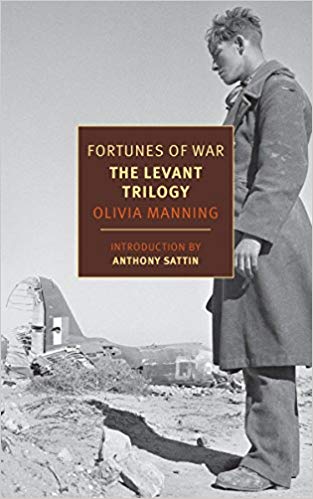
Cover of Fortunes of WarAt the end of the previous book of Olivia Manning’s Balkan Trilogy, Harriet Pringle flew out of a besieged Bucharest without knowing whether Guy would be able to follow. She ends up in Athens, and the first person she meets is Prince Yakimov. Although he betrayed the Pringles to the Germans through his foolishness, Harriet is happy to see a friendly face.

Guy does arrive in Athens in the hope of getting a teaching job at the Academy. He finds Duderat and Toby Lush ensconced there as teachers. Although he employed them in Bucharest despite their lack of credentials, they do not repay his kindness with assistance. Instead, they lie to the director about him to prevent him getting a position. The director will not allow the Pringles to live at the Academy, so they find themselves with only a room to stay in and no money.

Even after they manage to establish themselves, Harriet feels alone. She understands that Guy considers her part of himself, but he therefore expends himself in work and helping others and hardly thinks of her. Out of loneliness, she finds herself attracted to a young soldier.

I didn’t like the turn the plot took with the soldier, whom I thought tiresome, but I have found this series more and more interesting. Although Friends and Heroes is the third book in the Balkan Trilogy, it ends with another evacuation and feels incomplete, so I feel compelled to read the second trilogy in the series Fortunes of War, the Levant Trilogy.

Related Posts

The Great Fortune

The Spoilt City

Munich