Day 1004: Half-Blood Blues

Cover for Half-Blood BluesIn 1939 Paris after the German occupation, Sid Griffiths and the members of the Hot Time Swinger’s American Band have just finished cutting a record when Hiero Falk, German but black, is picked up by the Gestapo and never seen again. In 1992, Falk, now considered a jazz legend on the basis of that one recording of the “Half-Blood Blues,” is being honored with the opening of a documentary in Berlin. Sid quit playing years ago, but Chip Jones, another member of the band, talks him into attending.

Chip has been Sid’s frenemy since childhood. He’s a great musician, but he’s also a liar. When he and Sid get up at the opening to talk about Hiero, Chip blindsides Sid with terrible lies about him and Hiero to the audience. The problem is, Sid did do something shameful to Hiero, just not what Chip accuses him of.

After the presentation, Chip talks the reluctant Sid into traveling to Poland. He has found out Hiero is alive and has even corresponded with him. As the two travel by bus into Poland, Sid thinks back to the events of 1939.

This novel is written in African-American vernacular that sounds fairly modern, even for the part from World War II. It takes a little getting used to, although I am not sure if it is accurate for the time. Certainly, the novel effective re-creates the feeling of the time and place, and the precarious existence of these young musicians.

This novel was on both my Walter Scott Prize and Man Booker Prize lists. It was another book that I may not have chosen on my own but that I enjoyed reading.

Related Posts

Suite Française

In the Garden of the Beasts

The Good Lord Bird


Day 984: A Tale for the Time Being

Cover for A Tale for the Time BeingMonths after the Japanese tsunami, Ruth, of Japanese descent, finds a barnacle-covered package on the beach of the island in British Columbia where she lives. The package contains a Hello Kitty box with the diary of a young Japanese girl.

Ruth gets involved in reading this diary. The girl, Nao, tells a difficult story of having been raised in Sunnyvale, California, until her father lost his job at a technology company. The family was forced to return to Japan, where her father has been unable to find work and is suicidal. Nao, seen as an outsider by her classmates, is viciously bullied. Nao, too, is considering suicide.

The only bright spot in the girl’s life seems to be Jiko, her 104-year-old great grandmother, a Zen Buddhist nun. Jiko has taught Nao a few of the fundamentals of Zen Buddhism, which help support her. Nao has stated an intention of writing about Jiko’s life, but she actually writes about whatever occurs to her, including the story of her uncle, a World War II kamikaze pilot.

This story is punctuated with scenes from Ruth’s quiet life on a small island with her husband Oliver, a biologist. Both stories dip into philosophy, Buddhist beliefs, and even a little magical realism. Ruth and Oliver become involved in Nao’s story and wonder if she committed suicide, if she survived the tsunami, and where she is.

At first I resisted this novel a bit. I probably wouldn’t have read it if it was not on my Man Booker Prize list. I wasn’t completely convinced by Nao’s voice, and I felt that the story was a way to sneak in lessons about Buddhist teachings. Eventually, though, I got sucked in and became just as interested in Nao’s fate as Ruth was.

However, in tackling its many subjects—suicide, bullying, the trash in the ocean, the nature of time, the tsunami, World War II, just to name a few—I sometimes felt this novel was all over the place. It is entertaining but kind of mind boggling.

Related Posts

The Brief Wondrous Life of Oscar Wao

We Need New Names

The Life and Death of Sophie Stark

Day 949: Traitor’s Purse

Cover for Traitor's PurseA man awakens in a hospital to realize that he remembers nothing about who he is or what has happened to him. Then he overhears a nurse and policeman talking. Someone has killed a policeman. Thinking they are talking about him, he escapes in the outfit of a fireman.

We soon learn that the escaping man is Albert Campion. Although he is picked up outside the hospital by his fiancée Amanda, he soon realizes that something important is happening and everyone is looking to him for instruction. He must stop something from happening, but he doesn’t know what.

This mystery, which is set during World War II, has to do with a plot to destroy the foundations of the country. All Campion knows is that it involves the mysterious Institute of Bridge, an organization called the Masters, and the number 15.

In this novel, we understand a little more about Campion’s thinking, precisely because he’s not behaving in character. I believe he is normally supposed to be somewhat inscrutable, because he’s frequently described as “wooden-faced.” Because of the unique situation of the novel, it is truly suspenseful.

Related Posts

The Tiger in the Smoke

The Singing Sands

At Bertram’s Hotel

Day 937: Suite Française

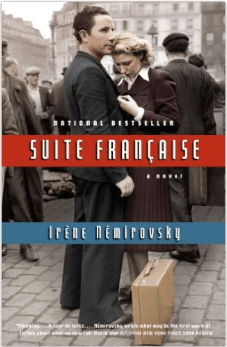
Cover for Suite FrancaiseI tried to read Suite Française when it first came out in the early 2000’s, but I was completely turned off by its characters, whom I found petty and vicious. But that’s exactly the point, I find, picking up the book again because of a book club. Although a well-known writer who had lived in France for half her life, Némirovsky was denied French citizenship presumably because she was Jewish. She was inspired to write the novel because of the behavior she witnessed during the evacuation of Paris in World War II. She never finished this ambitious novel because she was deported to Auschwitz in 1942 by the French government and died there a month later.

Suite Française consists of the first two parts of what was to be a five-part novel. “Storm in June” follows various Parisians as they evacuate Paris with the rumor of the German advance. They have left it very late, but even so, Mrs. Péricard delays, waiting for her linen to be returned from the launderer. Later, she scours a small village trying to find sweets to refill her supply that she has passed out to starving fellow evacuees, but when she learns that everyone is out of everything, she snatches back some of her treats to save them for her family. Even later, in a rush to catch a train to safety, she actually forgets her ailing father-in-law, who dies alone in a hospice.

Charles Langelet abandons Paris in his car filled with his collection of porcelain. When he runs out of gas, he persuades a young couple that they can rest and he will watch their car, which he steals.

Gabriel Corte is a famous writer who evacuates with his mistress, Florence. Throughout the chaos, he behaves with extreme selfishness and expects special treatment.

The only sympathetic characters are the Michauds, who work in a bank. They have been instructed by their boss, Corbin, to meet him with their things in front of the bank, where employees who are needed in Tours can share rides. He himself has promised a ride to the Michauds, but when they get to his car, his mistress is there with her dog, even though he has already told her he can’t take her. After an argument, the Michauds are abandoned, with no recourse except to walk to Tours. All the while, they are worried about their son Jean-Marie, a soldier at the front. When they are forced to return to Paris because the road to Tours is closed, Corbin fires them.

The spiteful, satiric tone of “Storm in June” subsides a bit for “Dolce.” This volume examines the fate of two families in the village and countryside nearby where many of the evacuees ended up stranded before they returned to Paris. It is now months later.

One family is the Sabaries, the country folk who tended Jean-Marie when he was wounded. Although their foster daughter Madeleine fell in love with Jean-Marie, she has married the son of the family, Benoît, and has had a baby. A young German officer has been billeted on the family and pays attention to her. Although she is afraid of the German, Benoît is jealous.

In the village, Lucile Angellier is shut up in the dark house with her mother-in-law, who dislikes her. (The Angelliers briefly took in the Péricard family during the evacuation.) Lucile was pushed into her marriage by her father and found out soon afterwards that her husband has a mistress. In her loneliness, she becomes attracted to the German lieutenant billeted in their house.

My strongest reaction was to the first book, which I found a bit shocking. Despite a review comment on the back of the book about its “indictment of French manners and morals,” I wasn’t sure if the social commentary was meant to be more general or specifically against the French. According to Némirovsky’s own notes, it was against the French.

As to the second book, it seemed as if it was intended to build toward ramifications later in the novel, which, of course, was never finished.

Related Posts

The Book Thief

All the Light We Cannot See

In the Garden of the Beasts

Day 906: Enchanted Islands

Cover for Enchanted IslandsEnchanted Islands is a novel based on the lives of Frances and Ainsley Conway, an American couple who lived on the Galapagos Islands in the late 1930’s and the 40’s. Although based on two memoirs written by Frances Conway, Amend has expanded the novel to cover most of Frances’s life and her friendship with Rosalie Mendel, all presumably fictional.

This book is a rather odd one. It begins with Frances and Rosalie in their old age and then returns in time to their childhood in Wisconsin. It spends some time there, following them until Frances’s late teens, when she discovers Rosalie with her own boyfriend and flees. Then it glosses over the next 20 years until Frances meets Rosalie again in California and later marries Ainsley. After that, Frances and Ainsley go on a spying mission for the Navy, something Frances is never able to tell her friends about.

The result creates a sort of divided effect. First, sections of the novel are either full of Rosalie or have no Rosalie, which made me wonder, why even bother with her? Why not just write about Galapagos? The other parts seem to belong to a different novel.

Then there is Galapagos, which Amend simplifies to the island Floreana when actually the Conways lived on three different islands. The existence there seems harsh, bleak, and lonely. There is little description of scenery or anything else to make us understand why, according to Amend, they came to love it. In fact, there is very little going on there, even including the spying.

I felt a distance from all these characters. Although we learn a lot about Frances, we don’t ever feel as if we understand her, and Ainsley is a sort of charming enigma. Most of the time, we don’t even like Rosalie.

link to NetgalleySo, a middling reaction to this novel. I was interested enough to finish it, but only mildly interested. I thought there was no sense of place in any of the settings. The characters didn’t seem like real people. The cover of the novel is lovely, but the islands seemed in no way enchanting. Did Amend bother to visit them, or is she just not good at description? Or are they not lovely?

Amend comments that she is a novelist first and only a mediocre historian. That remark irritated me, because I think that’s what’s wrong with with many historical novels. If authors aren’t willing to do the research to bring a time and place to life, maybe they should stick to contemporary fiction.

Related Posts

Exposure

Euphoria

Midnight in Europe

Day 894: Everyone Brave Is Forgiven

Cover for Everyone Brave Is ForgivenJust before I read Everyone Brave Is Forgiven, I began a couple of advance reading copies that were varying degrees of bad. I did not finish either one, but the characteristic that stood out most for me was that both were written without a shred of humor. That is not to imply that all books should be humorous, but humor certainly helps me enjoy a book.

So, as I seemed to be on a run of bad fiction, my hopes for Everyone Brave Is Forgiven were not high, even though I enjoyed Cleave’s previous Little Bee. Although I’ll sometimes read one delightful book after another, this was not one of those periods. Thank goodness, I found Cleave’s book not only interesting, but at times funny, at other times touching.

Cleave starts out with some information about his grandfather, who was stationed during World War II in Malta. He has used the relationship between his grandparents as a jumping-off point for his novel.

Mary North is a young socialite who wants to do something for the war. She envisions the war office sending her on some important mission, but she finds she has been assigned to be a school teacher. She enjoys teaching, but her methods are unorthodox. When her school is evacuated to the countryside, her headmistress decides they can do without her.

Tom Shaw isn’t really interested in going to war, but when the children in the school district he administers are evacuated, he starts wondering about his role. After his good friend Alistair Heath enlists, he tries to sign up but is found to be performing an essential job.

By then he has already met Mary, who comes to him asking for a class to teach. Although most of the children are gone, there are still some about, mostly kids who weren’t wanted by the people in the country. Finally, Tom lets her conduct a small class of children, mostly handicapped, and the American negro boy from her old class, Zachary.

Tom falls madly for Mary, who is bright, beautiful, and funny. Mary also cares for Tom, who although older and more steady is also more naive. When Alistair returns, already a bit damaged from the war, Tom and Mary arrange a double date with her friend Hilda. But it is clearly Mary that Alistair is struck by, and she with him. Still, she stays true to Tom.

Alistair is stationed on Malta, which was Britain’s sole air base in the Mediterranean for much of the war. Nothing much grows on it, though, and after it is blockaded, the soldiers starve.

link to NetgalleyWe like Tom, but it is clear from the first that Mary and Alistair are meant for each other. How they will end up together is one thread of this story, but it has others. It’s about racism in World War II, about how Mary comes to reassess some of her values, about the horrors of war.

The conversations and exchanges of letters in this novel are light and amusing. The themes of the novel are more serious, but it still fits in the category of light fiction. I really enjoyed this novel. Mary is a determined character, light in approach but trying to do the right thing, even if it seems eccentric to others. Alistair is fairly shattered by his war experiences but still amusing.

Related Posts

Little Bee

The Disorderly Knights

The Information Officer

Day 868: Flight of Dreams

Cover for Flight of DreamsI liked Ariel Lawhon’s first book only moderately but enough so that I was willing to give her second book a try. Since the ending of the first book redeemed what I initially considered a mediocre novel, I was trying to hold out for the ending of this one. That being said, after more than 160 pages, I gave up on Flight of Dreams.

The novel is about the flight of the Hindenburg on its way from Germany to the U. S. on the trip that ends with its explosion. The novel has a large cast of characters, passengers and crew. Many of the characters have secrets, including a couple on some sort of mission, a thief who has deeper motives, and a Jewish woman attempting to leave Germany.

In what Lawhon was attempting, this novel reminded me of Dead Wake, Erik Larson’s nonfiction book about the sinking of the Lusitania. Frankly, Dead Wake built up a lot more suspense. The pace of this novel truly drags. At more than 400 pages, we follow practically every second of four days. By page 168, where I stopped, the book had only reached breakfast on the second day. Since the Hindenburg departed in the evening, I knew I was in trouble.

Perhaps there are too many characters in the novel. We see the actions from five points of view, but there is no distinct voice that differentiates them one from the other. Each narrative point of view sounds the same. Further distance is created by the chapter names, which continue to refer to the characters by their roles (the American, the Stewardess) even after we know their names.

What I’m trying to say is that I didn’t care about Max and Emilie’s romance or what was going on with the Adelts or what the American was up to. I keep making this complaint, but it seems as though some authors don’t know that part of their job is to get readers to care about what happens, not just put characters through their paces. The most notable novels I have read in recent years (or maybe ever) have all shared one trait—they have all had a distinctive voice.

link to NetgalleyFinally, some of the scenes between people play like TV melodrama. I’m thinking of the fight between the Adelts over Gertrud going to the bar and a scene where Emilie kisses a man she doesn’t care for in front of Max. These scenes seem like simply (hackneyed) devices to move the plot, not as if they are originating from the realistic behavior of a character. As far as I was concerned, the Hindenburg could have blown up 300 pages earlier.

Related Posts

The Wife, the Maid, and the Mistress

Dead Wake

Midnight in Europe

Day 862: The Remains of the Day

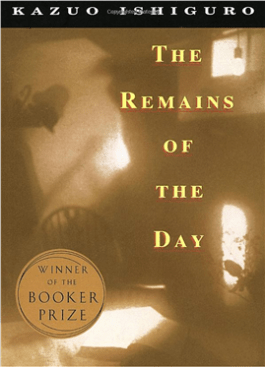
Cover for The Remains of the DayBest Book of the Week!
Having seen the movie The Remains of the Day years ago, I think it is just as well I waited so long to read it. Even so, some of the book’s scenes made me envision the movie, though I had forgotten most of it.

Stevens is the butler for Darlington House in the 1950’s. Lord Darlington, whom he served for 30 years, is gone, and now Stevens works for Mr. Farraday, an American. At Mr. Farraday’s suggestion, he has decided to take a holiday to visit the former Miss Keaton, who used to be the housekeeper in Darlington House. He surmises that her marriage is not altogether happy. She has split from her husband, and Stevens hopes she will agree to return to Darlington House as housekeeper. As he travels, he keeps a diary reflecting his thoughts on the journey.

To Stevens, his professional capabilities are the most important areas of his life. He reflects a great deal on such concepts as what dignity consists of. He has removed himself emotionally from the events of his own life, so much so that when his father is dying in the house, he won’t leave the dinner party he is serving. Stevens’ dedication is taken to such an extreme that when he sees in Mr. Farraday a disposition to banter with him, he, who has no sense of humor, begins to practice witticisms.

The Remains of the Day is the striking portrait of a unique individual as he comes to consider some of his life’s decisions. He has devoted his life to the service of Lord Darlington, whose political decisions before World War II left him a ruined man. Stevens thought he was helping Lord Darlington do important work, but later he had to re-evaluate that idea. In the meantime, Stevens ignored a possible other life for himself with Miss Keaton.

This novel tells a sad, sad story. Stevens is not always a reliable narrator for us, as his perceptions are as limited as his point of view. This is a novel of depth and brilliance, intricate as a puzzle box, as we delve the depth of Stevens’ psyche.

Related Posts

The Buried Giant

Life After Life

A God in Ruins

Day 841: Night

Cover for NightHere is my review of my Classics Club spin choice for Spin #11!

Night is Elie Wiesel’s spare and harrowing description of his and his father’s time spent in a series of concentration camps during World War II. He begins his story in 1944, where in the town of Sighet, Transylvania, the war did not seem to have touched the Jewish population. They had heard of problems in Budapest, but they knew nothing of the larger Nazi activities aimed at their people.

The first indications came from Moishe the Beadle, a man with whom Elie has been studying the Kabbalah. As a foreign Jew, Moishe was deported to a work camp. But he came back to tell everyone that all of the deportees were driven to Poland where they were forced to dig trenches and then shot. Moishe was wounded but managed to get away and returned to warn them. No one believed him, however. They naively refused to believe the Germans could behave that way. Elie and his family could have gotten a visa out of the country, even at that late date, but they stayed.

Next, all the Jews were rounded up into two ghettos, and not much longer after that, they were shipped out to Auschwitz. Once the women and girls were separated from the men and boys at the camp, Wiesel never saw his mother or sister again. He was 15 and probably only lived because an inmate told him to say he was 18.

At only 120 pages, this is a short but affecting description of his experiences in the camps. It does not dwell overly much on the horrific conditions, but we understand how terrible it was. The book also deals with Wiesel’s spiritual landscape, as he changed from a devout boy to a man who no longer believes.

This book is not a testament to human fortitude, for Wiesel makes it clear that humans under evil conditions behave badly. Instead, it is an important documentation of a black time in human history.

Related Posts

The Narrow Road to the Deep North

Unbroken: A World War II Story of Survival, Resilience, and Redemption

The Book Thief

Day 815: No Ordinary Time

Cover for No Ordinary TimeNo Ordinary Time tells of the contributions of Franklin and Eleanor Roosevelt to the conduct of the United States before and during its participation in World War II. The book relates how Franklin Roosevelt exercised his acute political awareness of public opinion to nudge the U.S. out of isolationism during the war, foreseeing as he did how the world would be changed if Germany succeeded and how assisting England against the Axis powers allowed the U.S. to ramp up for war. While Roosevelt was concentrating on the war, Eleanor remained his social conscience, attempting to hold on to the social advances of the New Deal, taking up the causes of women and their right to work and of African-Americans and their right to equal treatment.

The book also treats of the relationship between Franklin and Eleanor. Although they were always friends and companions, Eleanor had been devastated much earlier in their marriage to find out that Franklin had been having an affair with her own secretary, Lucy Mercer. This discovery ended certain aspects of their marital relationship. Eleanor’s relationship with her mother-in-law was difficult, too. In many ways, Eleanor was never at home in her own house. When she had to find a way to be of use as First Lady, since the traditional role of hostess didn’t suit her, she began to make a life for herself as Franklin’s eyes and ears around the country. So successful was she at this that when Franklin wanted to rekindle their relationship later in life and asked her to stay home more, she didn’t want to give up her active life.

These were two remarkable people, although they had their faults. At times, Eleanor’s zeal for a cause made her oblivious to Franklin’s need at the end of the day for relaxation. She found it difficult to unbend, always wanting to be active. Franklin, although charming and seemingly affectionate, was occasionally selfish and seemed sometimes to have no care for people who had given him unstinting care and friendship.

Reading this book made me feel as if I really knew these people, a feeling I seldom get from nonfiction. This is a fascinating story, sometimes thrilling, sometimes sad, about an important period in our history.

Related Posts

The Bully Pulpit: Theodore Roosevelt, William Howard Taft, and the Golden Age of Journalism

Team of Rivals: The Political Genius of Abraham Lincoln

Unbroken: A World War II Story of Survival, Resilience, and Redemption