
Review 2480: Glory

I tried really hard to finish this book, as it is on my Booker Prize project list. I read more than half the book, but it was really not for me. Despite raves by critics, for me it was a DNF.

The novel fairly straightforwardly covers the recent history of Zimbabwe, beginning with the overthrow of Robert Mugabe but then going back in time to show the beginning of his reign of terror. The twist is that all the characters are animals. Everyone is giving the nod to Animal Farm, but Bulawayo credits a cultural background of using talking animals in stories. Both novels are satires and deal with the use of language, though.

Although using animals as characters does nothing for me, I also felt as if it did nothing for the book except make the characters emblematic—hence, undeveloped and one-sided. What was worse for me was being subjected to so much political and religious speech. The first chapter is 30 pages long and consists almost entirely of one speech after another lauding the Father of the Nation, known as Old Horse, on the occasion of the anniversary of the revolution.

In the next chapter we learn that Dr. Sweet Mother, his wife, intends to take the position from him. Only there is a coup by the vice president, Tuvius Delight Shasha, and at least in the next 200 pages, we never hear from her again.

Next, there is supposed to be a free and fair election, so everyone gets excited, but you can guess how that turns out.

I quit because the plot finally seemed to be moving a little with the return of a goat named Destiny who has been missing for 10 years, but then we got yet another chapter where the different views of the election are aired. I just couldn’t take it. I wasn’t enjoying one word.

This is going to be a book you either love or hate, although in glancing at some reviews, I was astonished to see a five-star review by a person who only read 50 pages and then blamed her dislike on herself. At 400 pages, this novel is extremely repetitive, going over and over the same tropes, sometimes repeating a word or phrase many times for emphasis, and using the word “tholukuthi,” which is a word for emphasis, sometimes several times in the same sentence.

The characters have no depth and there is no real character development. There are lots and lots of political speeches and sermons.

This novel is deemed important because of its look in the recent history of Zimbabwe. Maybe it would have been too difficult to read with people as characters, but it would have been much more readable and relatable for me.
Related Posts

We Need New Names

This Mournable Body

Afterlives

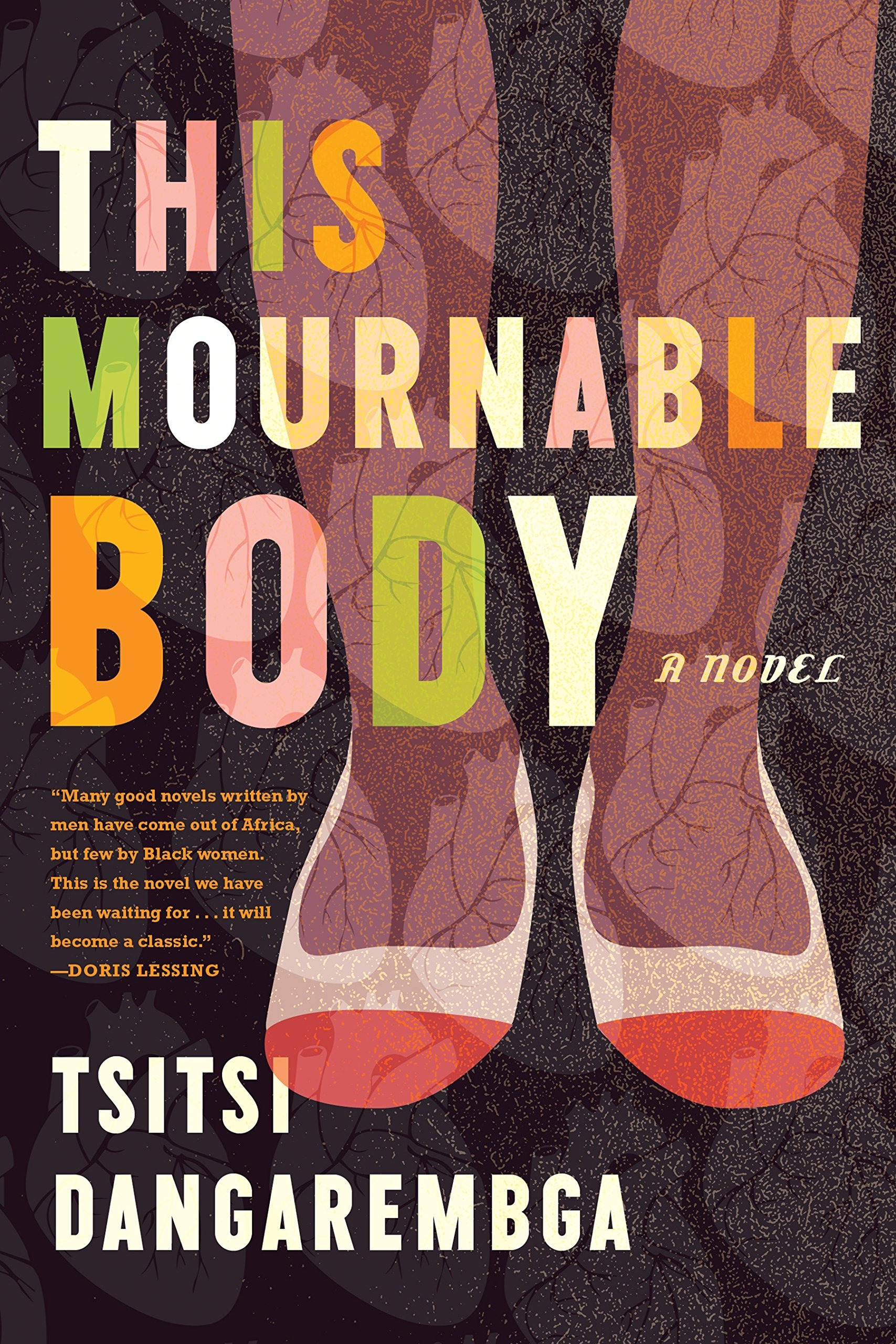
Review 2199: This Mournable Body

I have already complained about the tendency of Walter Scott Prize judges to pick novels for their shortlist that are in the middle of a series. Now I find the Booker Prize judges selecting the third book in a series. I understand that reading the first two books would have helped me understand this one, but I am not sure my spirit could stand up to two more.

Set in 1990s Zimbabwe during the Mugabe dictatorship, This Mournable Body follows the struggles of Tambudzai, an embittered and sometimes unstable woman. At the beginning of the novel, she is unemployed and living in a youth hostel that she’s too old for, having quit her job as a copywriter for an advertizing agency because credit for her work was going to white employees. Right away, after a disturbing incident where she is turned away from an interview for lodging by a servant, we see an unpleasant side of her when she joins a mob attacking one of her hostel mates because of her short skirt.

Tambodzai makes two moves hoping to improve her lot. She takes a room in the crumbling compound of a rich widow, and she takes a job as a teacher in a girls’ school. Because of her education, she feels she deserves a better position in life, and that’s all she thinks about. She is embarrassed and depressed by her surroundings and sees her teaching job as a comedown. Finally, she has a breakdown in class.

Permeating this novel are references to the recent war, with war veterans complaining that the country, which is poor and struggling, and of course led by a corrupt government, is not what they fought for. But to me many things just seemed vicious. Women are assaulted by strangers, mobs, their husbands and basically told to get over it. The success of one businesswoman who opens a popular store is rewarded by a mob trying to threaten her. Later, when our heroine gets a new opportunity and is enjoying her work in ecotourism, the farm where they lodge tourists is taken over by war veterans with government approval, presumably because it is owned by a white family but perhaps not.

Tambudzai herself is not a nice person for most of the novel, until she experiences some self-revelation. More, though, is that there is a lot of this book I didn’t understand, about people’s attitudes and about the oblique references to the government. The ending provides a small lift; otherwise, I found the novel depressing and hard to stick with.

Related Posts

In the Shadow of 10,000 Hills

When Rain Clouds Gather

Travelers

Day 773: We Need New Names

Cover for We Need New NamesI wanted to like We Need New Names more than I did. It is about an interesting topic and is vividly written, sometimes with striking images. But like some of the commenters on Goodreads, I agree that it seems to be trying to deal with too many issues at once. Somehow, I did not get as involved as I expected.

Darling is a tween girl running with her friends from Paradise, a slum of tin shacks in Zimbabwe. They spend their time playing games and stealing guavas from a richer neighborhood called Budapest. Darling’s father has been away in South Africa for years, trying to find work, but they haven’t heard from him or received any money. While Darling’s mother is traveling to sell things, Darling stays with her grandmother, Mother of Bones.

Eventually we learn that Darling’s family used to live a middle class life in a brick house, but the government knocked down their neighborhood. So, they came to live in Paradise.

Bulawayo’s tale is focused enough until, after a vote against the corrupt government results in retaliation, things become too dangerous and she is sent to live with her aunt in Detroit. Perhaps the last third of the novel reflects Darling’s confusion as a teenager, but it packs in scenes of typical teenage years conflated with growing awareness of issues back home, the disconnected feelings of immigrants, the war in Afghanistan, some sneers at the U.S., and her own homesickness. At some times it feels as if Bulawayo thinks America should be responsible for the welfare of all nations, which it can’t possibly do.

Related Posts

Unaccustomed Earth

Once Upon a River

Under the Lemon Trees