Review 1730: #ThirkellBar! August Folly Recap

It’s time for our reviews of August Folly, the fourth book in Angela Thirkell’s Barsetshire series. I just reviewed this book last April, so I’ll link back to my original review for most of my comments and the plot synopsis. My post covers some other observations I have after my reread.

First, I was struck by Thirkell’s depiction of Richard Tebbins, because it is so typical of adolescent behavior. His mother adores him to the neglect of his (more deserving) sister Margaret, but of course he is embarrassed by everything his parents do and then feels guilty about his rudeness to them. His passion for Mrs. Dean is absurd but, I think, very true to the behavior of an infatuated youth, and he finally begins to grow up later in the novel.

Of the two love affairs, the novel concentrates more on the one between Margaret and Laurence Dean, but I was more interested in the one between Charles Fanshawe and the much younger Helen Dean.

There are lots of comic characters in this novel. The managing Mrs. Palmer is almost unbearable at times (as is the fussing Mrs. Tebbins), but both of them show other sides. And that’s what I like about Thirkell. She creates some hilarious characters, but most of them, except perhaps Moxon, the curate, show other, more sympathetic sides, or the humor is gentle, not mocking. I wasn’t much taken with the conversations between the donkey and the cat, but that’s a minor criticism and a very small part of the book.


Related Posts

The Demon in the House

Wild Strawberries

High Rising

Review 1729: The Witch Hunter

Here’s another one for RIP XVI!

Best-selling author Roger Koponen is appearing on the other side of the country when his wife Maria is murdered and posed in a black evening gown with a gruesome smile. When Jessica Niemi’s department has him driven home by a police officer, the car is later found burnt out with two dead bodies inside. While the team is beginning to believe that the murders are connected to Koponen’s books, two more women in black evening dresses are found, one under the ice in the lake behind Koponen’s house and one popping up from the hole, alive but barely. All of the women look a lot like Jessica.

I am not sure what attracted me to this book, possibly its setting in Finland, but it is just terrible. Let me count the ways:

  1. The main character (Jessica) is a millionaire who hides her wealth by pretending to live in a barely furnished studio apartment while actually living in a large apartment next door. How ridiculous is that?
  2. The characters, including Jessica, are completely flat. They have traits, not personalities. Some of them don’t even have those.
  3. The reason behind the string of crimes seems to have nothing to do with the bizarre crimes themselves. A manifesto is mentioned but never explained.
  4. The interactions between the teams are stunningly unprofessional, and often conversational exchanges don’t make much sense. What a person replies doesn’t always seem to have anything to do with what was said to him or her.
  5. The actual investigation seems haphazard and is unconvincing.
  6. Much space is devoted to a summer in Murano when Jessica is 19. It has nothing to do with anything.
  7. The writing or translation (or both) is mediocre and full of clichés. Some turns of phrase are odd and not idiomatic.
  8. The whole plot is overcomplicated and just plain silly.
  9. The blurb on the back of the book both misinterprets and overly reveals the plot.
  10. Jessica hardly does anything.
  11. The big thriller climax is resolved by Jessica waking up in a hospital. The end.

Related Posts

The Redbreast

Unspoken

The Seven Deaths of Evelyn Hardcastle

If I Gave the Award

Having reviewed the last book from the 2020 Walter Scott Prize for Historical Fiction shortlist, it’s now time for my feature where I decide whether the judges got it right. Frankly, 2020 was an odd year, with several books that, while interesting, really didn’t do it for me. In fact, quite a few of them cultivated distance between the reader and the work.

As I often do, I’ll start with the books I liked least. One is The Parisian by Isabella Hammad. This novel covers the beginning of the fight for Arab nationalism and the First World War, so it should have been interesting. However, Hammad writes it from the point of view of a man who distances himself from the action by the persona he invents for himself.

Another distancing book was The Narrow Land by Christine Dwyer Hickey, which was the winner for 2020. It is about the relationship between the artist Edward Hopper and his wife Jo. It is slow moving and mostly a character study about a self-absorbed man who seemed to live his life in the interior of his own mind. I felt that although Jo was depicted as jealous and demanding, she was upset about something understandable—her career coming so much secondary to his and in fact his disdain of her work.

To Calais, In Ordinary Time by James Meek is a little more experimental than the other nominees. It is about a 14th century journey from the Cotswolds to Calais, and it is written only in words in use at the time. It also reflects, in tone and plot, its medieval inspirations. However, Meek doesn’t do much with his characters, so I had difficulty becoming involved in the novel.

The Redeemed by Tim Pears was the third book in his West Country Trilogy, and it is set during the last years and the aftermath of World War I about a man who has to make his own way after becoming homeless as a boy. Having spent three books with these characters, I found the conclusion of the trilogy anti-climactic. I actually thought the first book was best.

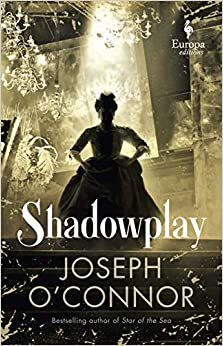
Joseph O’Connor has written a novel about 30 years in the life of Bram Stoker, with Shadowplay. I found this novel involving and interesting. It’s about Stoker’s work with the Lyceum Theatre and his relationship with two famous actors, Ellen Terry and Henry Irving. It even has just a bit of a supernatural influence.

Although it took me a while to get into A Sin of Omission by Marguerite Poland, I found it absolutely heart-rending by the end. It is based on the life of a native Anglican missionary to South Africa, about a man whose upbringing sets him apart from his own people as well as his English white patrons. This novel is my choice for the 2020 award.

Review 1728: A Sin of Omission

A Sin of Omission opens with Stephen Mzamane making a long journey to see his best friend, Albert Newnham, across the region known in the 19th century as Kaffraria on the Cape of South Africa. During this journey, the novel looks back on his life.

Picked up as a starving child in the bush by Reverend Basil Rutherford, Stephen is raised at a mission to become an Anglican priest. Once his family learns where he is, his father brings his older son, Mzamo, there too, reasoning that the boys will not succeed unless they learn to be English. The Ngqika tribe has been driven off its lands by the British, and because of a prophecy that foretold the British would leave if the people destroyed their crops and animals, his father has killed his cattle and burned his crops. Although he is an important man, he has to work on the roads to avoid starving.

The Church is making it a practice to raise the sons of important natives as British clerics in an attempt to convert the people. Both Stephen and Mzamo are intended for this program. However, Mzamo is rebellious while Stephen is dedicated and devout, so Mzamo is ejected from the program.

Stephen is eventually sent to Canterbury to be educated at the Missionary College. There, although he is a fish out of water, he becomes best friends with a fellow student, Albert Newnham. Unfortunately for this friendship, Albert eventually chooses to marry a girl who is completely unsuited to be a missionary’s wife and is racist.

Things begin to go wrong after the young men take an ill-considered shortcut so as not to be late for tea, but Stephen only begins to learn the fruits of this event when he returns to Africa. Although he still needs to pass Greek and Latin exams to become a priest, unlike his white fellows, he is given a post far from any libraries or tutors. The job he expected to get working at the missionary college with his beloved Mfundisi Turvey, principal of that college, eventually goes to Albert. Instead of being give a post together, as promised, they are separated. In fact, Stephen is alone because the nearest cleric to his post is racist.

Stephen is also no longer a part of his own people, although his brother plays a large part in his fate. The major events of this novel are initiated when he learns of his brother’s death.

This novel is partially based on the life of Stephen Mtutuko Mnyakama, a missionary of the Anglican Church of the Holy Trinity. Although it didn’t initially pull me in, I eventually found it absorbing and heart-rending. This is a novel I probably wouldn’t have discovered had it not been for my Walter Scott project.

Related Posts

Things Fall Apart

The House Gun

Sex and Stravinsky

Review 1727: The Dark Angel

Here’s another review for RIP XVI!

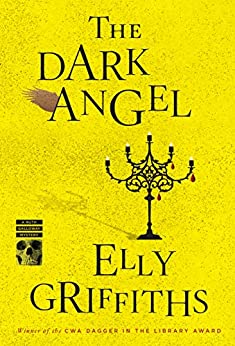
Forensic anthropologist Ruth Galloway has been having a rough time lately. On the same day that it looked like Harry Nelson, the father of her daughter Kate, might split up with his wife Michelle for her, Michelle told him she was pregnant. Ruth’s mother died shortly thereafter. Now, after Detective Tim Heathfield sees her at a colleague’s wedding, he confesses to her that he is in love with Michelle and her baby might be his.

So, when she gets a call from colleague Angelo Morelli asking her to come look at some bones in Italy, she decides to go there for vacation. Angelo will put her and Kate up in an apartment in Castello degli Angeli, and her friend Shona decides to come along with her young son.

Ruth finds that Angelo’s request is mostly a ploy to get the producers of a television show he hosts interested again in his dig. However, she finds the atmosphere of the little medieval town strange, still full of enmities dating back to World War II.

For his part, Nelson is mildly concerned about the release from prison of Micky Webb, a man who paid to have his wife and children burned to death in their house. Nelson has seen Webb lurking in his neighborhood, but when he confronts him, Webb claims to be following a program that requires him to beg forgiveness of those he has wronged. He says he came to do that with Nelson but didn’t have the courage to knock. Soon, however, Nelson’s attention to this problem shifts when he learns there has been an earthquake in Italy where Ruth and Kate are staying. He and Cathbad jump on a plane for Italy.

In this novel, the emotional dynamics seemed almost more important than the mystery. However, I continue to find these characters interesting and enjoyed this installment in the series.

Related Posts

The Ghost Fields

The Woman in Blue

The Chalk Pit

Review 1726: To Calais, In Ordinary Time

It’s 1348, two years after the battle of Crécy, which won Calais back from the French to the English. Will Quate is betrothed to Ness, the prettiest girl in his Cotswold village, but his liege lord, Sir Guy, wants him to join a group of archers on their way to defend Calais. Will would rather stay, but he bargains for a document showing he’s a free man. Sir Guy tells him he will send along the paper with Captain Laurence Haket in exchange for five pounds once he has won his fortune.

Will agrees to go. In fact, his attitude toward Ness seems ambivalent. He doesn’t seem to care that she had an affair with Haket and became pregnant. Will’s friend Hab is plainly in love with him, but Will doesn’t seem inclined.

Sir Guy’s daughter Bernadine is incensed that Sir Guy has betrothed her to a man his own age when she is in love with Laurence Haket. Inspired by La Roman de la Rose, she feels she is entitled to a more romantic life, so she runs away, following Haket on his way to Calais.

Another voice on the journey is Thomas Pitkerro, a proctor, who is sent along with the archers on his way to his home in Avignon to give last rites, if needed. Thomas is afraid of the plague, which is said to be moving north from Italy and France.

To Calais, In Ordinary Time echoes its medieval inspirations with its tale of adventures while on a journey. It does so in more than just plot, however, for it is written with only words in use in the time it was set. Thomas, who is writing letters and keeping a diary, writes in a stiff, bombastic style that thankfully loosens up . The novel is narrated in a style a little less formal than the speech of Bernadine, which contains some French modes of expression. Several times the point is made that her workers do not understand many of the words. The speech of Will and the characters around him is littered with expressions native to the Cotswolds.

This attempt is similar to that of Paul Kingsnorth in The Wake, which I read several years ago—written to be readable to modern audiences but to have the feel of Old English (in the case of The Wake, that is). This effort doesn’t seems as likely to me except in the speech of the characters of the lowest status, which has a flow to it. The dialogue between characters of higher status seems overly elaborate, even pretentious, and perhaps echoes written work of the time.

Meek doesn’t do much to get readers interested in his characters, so at first I had difficulty becoming involved in the novel. After a while, I got more interested. I read this novel for my Walter Scott prize project.

Related Posts

The Wake

The Last Hours

The Illuminator

Review 1725: Cluny Brown

Best of Ten!

Mr. Porritt, the plumber, is worried about his niece, young Cluny Brown, because, he says, she does not know her place. Why, the other day she went to the Ritz just to see what it was like. When he catches Cluny about to take a bath in a gentleman’s lovely bathtub after she made a plumbing call, Mr. Porritt decides to take advice and send Cluny into service.

She ends up as a parlor maid in Devonshire for Lady Carmel and Sir Henry. There, although she’s not very adept at being a parlor maid, she finds she likes the country and she befriends a golden lab belonging to Colonel Duff-Graham, who allows her to take the dog out for walks.

In the meantime, Lady Carmel’s son Andrew has met Mr. Belinski, an eminent man of letters who has had to abruptly flee Poland and is barely getting by. Andrew invites Mr. Belinski to stay at his parents’ manor, where he can write. Andrew himself is preparing to propose to the beautiful Betty Cream.

Cluny is struck by Mr. Wilson, the chemist, and he rearranges his shop’s closing day to take walks with her. There’s something about Cluny, who is direct and forthright and doesn’t seem to understand customary boundaries.

This is a wonderful comic novel, absolutely delightful, and my first by Margery Sharp (I have reviewed one that I read after this one). I’ll be looking for more.

The Stone of Chastity

Beneath the Visiting Moon

Joanna Godden

Review 1724: The Mist

Here’s another book for RIP XVI.

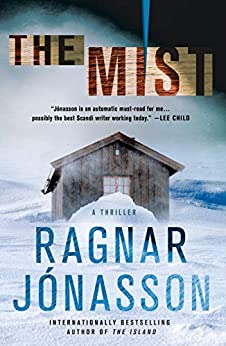
I didn’t realize until just now that The Mist is the third book in a trilogy. Having not read the other two books, I’m not sure how much it would have affected my reading if I had read them.

Detective Hulda Hermannsdóttir is back at her desk after a traumatic experience. She is having trouble focusing, however, on the case of a missing young woman. Then she is called out of the office to investigate bodies found on a remote farm in the east of Iceland.

The story goes back three months to show what happened to Hulda and on the farm. Erla and her husband Einar are snowbound at the farm just before Christmas when a mysterious man appears at their door, claiming to be separated from his friends on a hiking trip. Erla is immediately suspicious of him, and he certainly acts suspiciously. But Einar invites him to stay until the snowstorm stops.

This novel is complicated and at times suspenseful, but I had some problems with it. First, it’s obvious almost immediately what’s wrong with Hulda’s teenage daughter. Second, most of the action of the novel is triggered when a character receives a letter. The next obvious step would have been for him to take it to the police, whom he is already working with. But does he? Of course not. There wouldn’t be much of a story if he did, but novelists should avoid such silly pitfalls.

Related Posts

Jar City

The Cruel Stars of the Night

Unspoken

Review 1723: A Fugue in Time

Godden attempts something unusual in A Fugue in Time. She makes a house that has held the same family for a century into a sort of conscious entity and tells the story of the family in collapsing time.

It’s World War II, and old Rolls Dane has received notice that the 99-year lease on his house has elapsed and the owners want it back. The house was the one his parents moved into upon their marriage, and it has been the scene of many events, including his own unhappy love affair.

Rolls has been leading a reclusive life with only one servant left in the big house, and he is not pleased when his great niece, Grizel, an American officer, comes to ask if she can stay in the house. Later, Pax Masterson, an RAF officer being treated for burns, comes to visit the house that he’s heard about all his life from his mother, Lark, the girl Rolls’s father brought home many years before after her parents died in a railway accident.

Although I eventually got involved in this novel, its basic premise seemed at first affected and I didn’t think it was going to work. Early on, for example, there is a five- or six-page description of the house that slowed momentum to a standstill. Then, the shifts in time sometimes take place within the same paragraph, and at first it’s hard to grasp the when. There are some cues, for example Rolls’s name changes from Roly to Rollo to Rolls.

This is not one of my favorite Godden books, but the idea behind it is an interesting one. It reminded me a little of A Harp in Lowndes Square, in which images and sounds of the future and past reside in a house.

Related Posts

A Harp in Lowndes Square

The Lady and the Unicorn

Pippa Passes

Review 1722: Punishment

Here’s another book for RIP XVI.

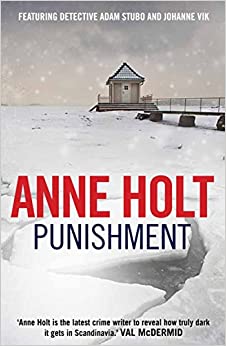
I thought maybe I had read an Anne Holt mystery years ago, but it appears not. In any case, I got interested in reading her Stubo/Vik series after watching Modus, a Swedish television series based on her Norwegian characters. It’s interesting, having seen the television series first, to notice the changes they’ve made.

Johanne Vik, a university researcher doing work on convicted criminals who maintain their innocence, is contacted by an old lady who has long been convinced of a miscarriage of justice. In 1988, Aksel Seier was convicted of the rape and murder of a young girl based on flimsy evidence. After he served nine years, he was mysteriously released from prison and all the case paperwork disappeared. The woman wants Johanne to find out if Seier was innocent. Although this is not the kind of work Johanne does, she becomes interested in the case and agrees to help.

At about the same time, Detective Adam Stubo sees Johanne on television and asks her to help brainstorm the case of a series of kidnapped and murdered children. At first, she refuses but is drawn in by his persistence.

All along, we follow the story of Emilie, one of the kidnapped children who has not been killed, as well as the thinking of the murderer. This lends an extra layer of suspense about whether she will be saved.

I think this is a complex and well-plotted novel with interesting characters. There are a couple of huge coincidences at the end that I’m not sure of, but I am more than willing to continue the series.

Related Posts

The Redbreast

The Water’s Edge

The Indian Bride