
Day 827: Flood of Fire

Cover for Flood of FireBest book of the week!
In the third book of his Ibis trilogy, Flood of Fire, Amitav Ghosh slowly draws most of his characters to China during a momentous period in history. The only major character missing from the first book is Deeti, making a home on Mauritius. And of course Bahram Modi, who died at the end of River of Smoke.

It is with the absent characters that we start, in a way, for at the beginning of the novel, Kesri Singh, Deeti’s brother, is unaware of what has happened to her. It is through Kesri that Deeti’s family met her husband, for he was brother to Subedar Nirbhay Singh, the highest-ranking sepoy in the battalion to which Kesri belongs. Kesri is a new character, and we go back in time to learn how Deeti helped him join the battalion and how Kesri, although wary of the character of Deeti’s proposed husband, encouraged the match to further his own ambitions. As those who have been following the series know, that did not turn out well.

Shireem Modi, Bahram’s wife, is finding her life uncomfortable since her husband died. Because his opium was confiscated by the Chinese government, she is left with nothing, dependent upon her own family. But soon her husband’s friend Jadig Karabedian arrives and tries to talk her into traveling to China to represent herself in the opium sellers’ claims against the Chinese government; otherwise, her claim may be disregarded. He also finds it necessary to tell her about Ah Fat, her husband’s illegitimate son.

Zachary Reid has finally been acquitted of blame for the incident on the Ibis but finds himself assessed fees that he cannot pay because his mate’s license has been suspended. He goes to work for the mysterious Mr. Burnham (who, although barely present, seems to affect all the events in the series) restoring a boat. There he is led into a dangerous relationship with Mrs. Burnham.

Neel, the rajah who ended up in prison for his father’s debts because of Mr. Burnham’s desire for his property, is still in China working at an English-language press. As the British Empire draws together a force to invade China, bringing most of the other characters there, Neel begins working for the Chinese government as a translator.

This trilogy clearly depicts Britain, driven by the greed of the opium growers and sellers, as the bully of Asia. Sea of Poppies shows how the Indian farmers were forced to abandon food crops to grow opium poppies, and how then the price of opium was manipulated to make them subsistence farmers. River of Smoke shows British efforts to force the Chinese to import opium, including the lies conveyed back to the British public about the behavior of the emperor. Flood of Fire draws all of our friends back to China to culminate in the First Opium War, when the British stuff opium down the throats of the Chinese.

Overall, I was very satisfied with this series. Ghosh is able to get you completely involved with his characters and is playful and inventive with language. Although I was not happy with the evolution of the character of Zachary Reid from a naive young man to the person he becomes, this is a great series.
Related Posts

Sea of Poppies

River of Smoke

The Siege of Krishnapur

Day 826: The Unlikely Pilgrimage of Harold Fry

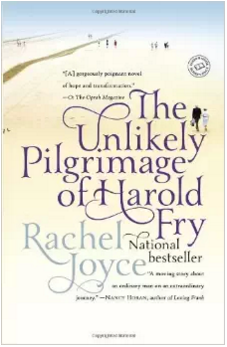
Cover for The Unlikely Pilgrimage of Harold FryI know that many people enjoyed reading The Unlikely Pilgrimage of Harold Fry. Unfortunately, I’m not one of them. The reason? I think that this novel is manipulative, pulling out all the stops to make you feel for its characters. What it didn’t do is make them convincing.

Harold Fry is retired, but since his retirement he’s done virtually nothing. He and his wife are estranged over a series of misunderstandings followed by a tragedy. He is an ineffective person who blames himself for lack of action at important times during his life.

One morning Harold receives a letter from a former coworker, Queenie Hennessy. Harold feels guilty about Queenie because he wronged her in some way, but we don’t find out why for some time. Queenie tells him she is in a hospice in Berwick-upon-Tweed, dying of cancer.

Harold, who is not good at self-expression, writes her a stiff letter and sets off to the post office to mail it. But he feels reluctant to return home and makes an excuse to walk to the next post office. Soon, Harold finds himself walking from Kingsbridge in far southern England to Berwick-upon-Tweed on the Scottish border.

This novel is about Harold’s self-redemption through the accomplishment of a difficult goal. It is a feel-good novel that uses all kinds of tricks, including a dead child, to make us feel sorry for Harold and sympathetic to his wife Maureen. But I did not find Harold’s journey very involving, and all along I felt manipulated, probably because, as I said before, the characters in the novel don’t seem to be real. They are instead types. This novel just doesn’t have much depth. It seems to be catering to the audience for “quirky,” saccharine, feel-good stories, which I am not a part of, and I didn’t find it very interesting.

Related Posts

My Wish List

Pastoral

This Is Your Life, Harriet Chance!

Day 825: The Cricket on the Hearth

Cover for The Cricket on the HearthA year ago I reviewed two of Charles Dickens’ Christmas stories at Christmas time, and since I have a book containing all of them, I thought I’d continue the tradition.

We first meet the Peerybingles in their home, made cheerful by a bustling wife and a cricket on the hearth. John Peerybingle is an honest carter, quite a few years older than his wife. They have a baby and a clumsy maid named Miss Slowboy.

The plot is simple. It is the eve of the marriage of Mr. Tackleton to a much younger bride, May. He comes to invite the Peerybingles to the wedding as an example of a happy May-December union. But the wedding is set for the couple’s anniversary, and they have plans to spend it alone. Still, they include May in a visit to the house of their friend Caleb Plummer and his blind daughter Bertha. An unexpected visitor is with them—a deaf old man who accepted a ride in John’s cart but seems to have nowhere to go.

Mr. Tackleton is not a nice man. He’s been a grasping employer and landlord to Caleb, and it is clear that May is reluctant to marry him. At a point in the evening, Mr. Tackleton takes John aside and shows him something that makes him think his wife has deceived him.

This story is not one of Dickens’ best. Its pleasures are in its scenes of idealized domestic happiness in the Peerybingle home. But since we can’t reconcile our first glimpses of the Peerybingles with any such betrayal as alleged, we’re not in much doubt that everything will turn out to be a misunderstanding. Most of the characters are mere sketches, the only ones even slightly developed are the Peerybingles and Caleb and Bertha Plummer.

Since I recently read Dickens’ biography, though, I was interested in his little fantasy about marriage, particularly it being between two people so disparate in age, years before his affair with Nelly Ternan but only a few years after his wife’s younger sister, Georgina, moved in to live with them.

Related Posts

Two Christmas Novels by Dickens

Oliver Twist

Mr. Timothy

Day 824: The Optimist’s Daughter

Cover for The Optimist's DaughterLaurel McKelva Hand, a widow from Mississippi who now designs fabrics in Chicago, is called to New Orleans, where her elderly father is undergoing an eye operation. Laurel is anxious. Her experiences with the health issues of her mother were not good; there is a sense that something about her mother’s final illness wasn’t handled well.

Judge McKelva’s new wife, Fay, younger than Laurel, is vulgar, frivolous, and stupid. She objects to the procedure. But the judge has a cataract in his other eye, and without the operation at this time, he would end up blind. Dr. Courland thinks the operation will save the judge’s sight, so it is performed.

While the judge struggles to recover, Fay complains about missing Mardi Gras and goes shopping. Unfortunately, as they say, the operation is successful but the patient dies. Although the judge is ordered not to move, his wife shakes him, later saying she was trying to “shake him into life.”

Back home for the funeral in the small town of Mount Salus, Mississippi, Laurel is greeted by old friends who are preparing for the funeral. Fay arrives later and is obviously upset at what she views as an intrusion. It soon appears that Becky, Judge McKelva’s first wife, is the elephant in the room, along with the genteel friends’ incomprehension of what led the judge to marry Fay.

Since Fay has told everyone she has no family, they are surprised when the Chisoms arrive from Texas for the funeral. They are obliviously and cheerfully vulgar, and they add a good deal of macabre humor to the funeral. Fay is so determined that the judge will not be buried next to Becky that she buries him in the unpleasant newer part of the cemetery, right next to the new interstate.

When Fay leaves briefly for a visit with her family, she makes it clear that she expects Laurel to be out of her house when she returns a few days later. Laurel must reconcile herself to the loss of all her parents’ belongings and her childhood home as well as residual pain about both her parents’ and her husband’s death.

This very short novel, written in 1972, is considered Welty’s best, although I confess to a preference for the more lovable The Ponder Heart. The Optimist’s Daughter compresses a lot in just a few pages. At times, the Southern darkness almost reminds me of the grotesque humor of Flannery O’Connor, who is a bit too much for me, but Welty is kinder to her characters.

Related Posts

Wise Blood

The Mansion

The Collected Stories of Carson McCullers

Day 823: Black River

Cover for Black RiverWes and Claire Carver have been living in Spokane since they left Black River, Montana, 30 years before. But when Claire realizes she is dying from cancer, she asks Wes to take her home to Black River. She also asks him to play to her, which he cannot do, because his fingers were broken years before.

Although Wes plans to take her the day after Claire’s request, she dies during the night. So, Wes prepares to return her ashes to Black River.

Wes has not been there nor seen his stepson Dennis since he and Claire left, although Claire has been back to see her son. Their leaving was after a horrendous series of events. First, there was a riot in the prison where Wes worked. He was held prisoner by a convict, Bobby Williams, for more than a day, and tortured, his fingers ruined. Later, in an argument with teenage Dennis, Dennis pulled a gun on him. That was when he demanded that Claire choose between him and Dennis.

Added to his grief and the difficulties of seeing Dennis again, Wes has heard that Bobby Williams is up for parole. Williams claims to have found God and to be a different person than he was when he held Wes captive. Wes doesn’t believe that people can change. In fact, his beliefs go farther than that, the source of the problems between him and his stepson. Dennis’ father was a criminal, and Wes has always watched for criminal tendencies in Dennis. Finally, Williams robbed Wes of one thing, his gift as a talented fiddler, that made him believe true faith was possible.

Like the modern Western novels of Kent Haruf, which inspired this one, Black River is a quiet story about ordinary people. Although Hulse is not Haruf’s equal as a stylist, she shows herself as an accomplished storyteller.

Related Posts

The Hour I First Believed

Empire Falls

The Burgess Boys

Day 822: Miss Pettigrew Lives for a Day

Cover for Miss PettigrewBest book of the week!
This novel is a confection. It is absolutely delightful.

Miss Pettigrew is a poor, middle-aged governess with no family who has been haunting an employment agency hoping for a job. This morning she is in luck. The agency has two openings, one for a maid and one for a nursery maid. The agency sends her off to interview with Miss La Fosse (by mistake).

Miss Pettigrew is received by a beautiful young woman in a negligee. She is clearly entertaining a young man. Miss Pettigrew has been brought up to be a proper lady, but instead of being shocked, she is entranced by this glimpse of an exotic lifestyle.

Without even inquiring who Miss Pettigrew is, Miss La Fosse asks her to find a way of getting her friend Phil to leave before her other friend Nick arrives. Miss Pettigrew is successful in doing this and begins to discover in herself an untapped capacity for organization. Soon, she is responding to Miss La Fosse’s pleas to stay with her during Nick’s visit. Miss Pettigrew sees that Nick is an attractive but dangerous man.

Over the period of a day, Miss La Fosse and her friends involve Miss Pettigrew deeper in their affairs. She is fascinated by this view into a more Bohemian existence, even though her mother would have considered her new friends vulgar. Attracted by their affectionate natures and their colorful lives, she decides that for one day she will enjoy herself and worry about the future tomorrow.

I thoroughly enjoyed this lovely novel about a timid spinster who learns to unfurl her petals. It is a Cinderella story with a 1930’s edge.

Related Posts

The Making of a Marchioness

Nightingale Wood

Love in a Cold Climate

Day 821: Broadchurch

Cover for BroadchurchMaybe because I so enjoyed the British TV mystery series Broadchurch, it wasn’t such a great idea to read the book. It’s one thing to read the book a series or movie is based on and another to read one based on the series. However, the novel was written by a good British suspense writer, Erin Kelly, so I thought I’d give it a try.

An 11-year-old boy is found dead on a beach in a small town early one morning. Because his paper route gets him out of the house early, his parents haven’t missed him yet.

On the same morning, Detective Sergeant Ellie Miller returns to work from vacation eager to take over her new job as head of investigations. When she arrives, though, she finds the position has gone to a man, Detective Inspector Alec Hardy. Worse, she soon remembers he was lead in a murder case in Sandbrook that went terribly wrong.

Beth Latimer doesn’t realize that her son Danny is missing until she takes his lunchbox to school, thinking he forgot it. His teacher and school mates haven’t seen him. On the drive home, the traffic to the beach is blocked because of a police investigation. Some instinct makes her stop her car and run to the beach.

While the small town tries to cope with the idea that someone among them has murdered the boy, Ellie Miller and Alec Hardy work the evidence trying to find the killer. Alec is brusque and rude and constantly reminds Ellie that she can’t trust people. Ellie thinks her strength lies in her knowledge of these people, particularly the Latimers, who are her family’s best friends. As the town’s suspicions turn from one person to another, she has to reassess this idea.

A stranger to town is also looking for trouble. Reporter Karen White has Hardy on her radar, after she figures he bungled the Sandbrook case. He didn’t, but the truth takes a while to come out.

Honestly, if you have already seen Broadchurch, this novel doesn’t add anything to it except for more insight into what some of the characters are thinking. The ending has a few extra scenes that only draw it out unnecessarily. The final scene, which I found touching in the series, is a bit too much because it’s from the point of view of the boy’s mother.

However, if you have not seen the series, this book is a perfectly good murder mystery. The characters and situation are interesting, the solution quite a shock.

Related Posts

The Dark Rose

The Poison Tree

A Great Deliverance

Day 820: Enter Sir Robert

Cover of Enter Sir RobertLady Graham and her youngest daughter Edith are the main characters of Enter Sir Robert, set in post-World War II Barsetshire. Thirkell relates her novels as if she’s personally telling you a story, and although all the novels are set in Barsetshire, this one seems a little more rural than the others I’ve read recently. People are always running off to look at the pigs.

Lady Graham is a charming woman whom everyone loves, although she is a little scatter-brained. With most of her children married and her husband, Sir Robert, almost always away on some vital service to the nation, she has only Edith, who is 18, left at home.

Mrs. Halliday has an invitation for Edith. Her daughter Sylvia, who is expecting, is coming for a visit. Mrs. Halliday would like Edith to stay for a while to be company for Sylvia. Mrs. Halliday is taken up with Mr. Halliday, who is not well, and her son George has been working the farm as best he can alone. Meanwhile, Lady Graham is preparing a small memorial service for the anniversary of her own mother’s death.

Edith enjoys herself very much at the Halliday’s, visiting with Sylvia, entertaining Mr. Halliday, and viewing the farm with George, who seems to like her company. When the Hallidays all go to view the Old Manor House, which they have been leasing to a bank, they meet Mr. Cross, son of Lord Cross and also a delightful young man.

Like Thirkell’s other novels, Enter Sir Robert depicts the everyday life of the people of a certain social station with wit and humor. Her characters are mostly nice people, with only a few barbs directed at the bishop. The countryside is lovingly described, and there is always a little light romance. They are a pleasure to read. Oh, and if you care to read this one, you’ll find that the title is Thirkell’s little joke.

Related Posts

Happy Returns

Miss Bunting

Barchester Towers