
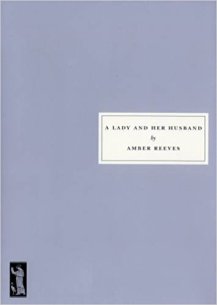
 Today is another review for the Literary Wives blogging club, in which we discuss the depiction of wives in fiction. If you have read the book, please participate by leaving comments on any of our blogs. Be sure to read the reviews and comments of the other wives!
Eva of Paperback Princess
Kate of Kate Rae Davis
Lynn of Smoke and Mirrors
Naomi of Consumed By Ink
TJ of My Book Strings
My Review
A few months ago for Literary Wives, we read The Awakening, one of the first feminist novels, written in 1899. A Lady and Her Husband was written 18 years later and shows great advances in feminist thought.
As I started the novel, I thought it was going to be about Rosemary Heyham, who is just about to be married, but instead it is about the awakening of her mother, Mary, a gentle, conventional soul who has been married to James for nearly 30 years. The action of the novel stems from Rosemary’s recognition that her mother is facing empty nest syndrome but also because she thinks her mother needs outside stimulation. She goes to her father with the idea that he give Mary a job.
James decides to put Mary to work looking into the welfare of his female employees, particularly the waitresses who work in his chain of tea shops. He believes he is a stellar employer and she won’t find anything to complain about, so in a way, this job is make work.
But Mary takes her job seriously. At first she finds nothing wrong, but she is shocked when she investigates the living conditions of the girls. (Of course, this dates the work, because these days the things she looks at and has control of would not be an employer’s business.) When she finally goes to James with some ideas, she is surprised to find him reacting angrily. What she asks for first are a room in each shop where the girls can eat their lunches, shoes that are more comfortable, and permission to do the washing up sitting down. What she gets are the shoes, but the girls will have to buy their own.
As Mary pursues her work, eventually asking for raises for the girls, she begins to see James in a less rosy light. It is difficult for me to guess how a contemporary audience would view their relationship, but for me, even when it is loving at the beginning, he patronizes her shamefully. All of this eventually leads to a crisis, when Mary is forced to evaluate even her own marriage.
While I wouldn’t say I loved this novel, I found it fascinating. A lot of it follows the evolution of Mary’s ideas from total acceptance of her situation in life to more of an awareness of her duty to herself and others. It also exposes James’s self-justifications. After I read Samantha Ellis’s introduction to the Persephone edition, which provides biographical information about Amber Reeves, I felt that if I ever had a hero, she would be it. As a young women, she had an affair with the much older H. G. Wells, whose ideas about free love didn’t include the woman being equally free, but she grew out of it. He never did, apparently, grow out of her, though, but kept rewriting her into novel after novel, where he depicted her changing from a vibrant, intelligent lover to a subservient wife. She never did, though.
What does this book say about wives or the experience of being a wife?
Mary has had a conventional marriage for her time. In the beginning of the novel, she sees that her role has to do with keeping house and caring for the children. She believes that only men are capable of understanding bigger issues. She loves her husband and takes care to present him with a placid home life.
However, largely because of his reaction to how she does the job he invented for her, she begins to re-evaluate her ideas about men and their relationship to women. She sees that men care more about things—their careers, their projects—more than they do about people. She begins to question her role in her marriage and in their business—in which she owns 50%—and to feel that she has a responsibility to make sure their employees aren’t treated badly.
She also begins to understand James’s self-justifications. As an example, when Mary, having seen how some of the waitresses live, points out that they are not receiving a living wage, both James and their son Trent remark that the girls just spend their money on ribbons. And she notices how James adroitly manages to blame a more serious marital problem on Mary herself.
Within the novel, Mary awakens from a woman who has been blinded by convention to a person who is more aware of the realities of life, who is able to think through her own difficulties and come to a solution.
Related Posts

 What? Me Read?
I’m glad you included the part about Amber Reeves – knowing a little about her life made the book that much more interesting. I’d love to read more about her life!
I also found James to be patronizing, but it didn’t seem to bother Mary at all. James’s character was so interesting – it was hard to know how to feel about him. I couldn’t help but like him, yet…
I took your comment about the patronizing to mean that possibly it was common in those days for men to behave that way toward women. That’s probably true that we are judging that part of the book by our own time. She may not have minded it because she expects it.
True. She may even think it’s a loving way for him to speal to her. I felt like that’s the way *he* saw it.
Yes, or possibly he has always spoken to her like this, so she is used to it. It’s possible to find certain things attractive in a young relationship that seem awful or irritating later or with more context.
I give Mary credit for how she handles her situation. I can only imagine how devastating it must be to realize that you’ve been blind to many important things most of your life and that the people you’ve put on a pedestal (her husband and her father) don’t necessarily deserve to be there. But instead of moping around or complain endlessly about her situation, she decides to do something about it. I think t’s interesting that we all thought of The Awakening and described Mary as waking up throughout this novel. I also think it was a great pick for the Club (even though you didn’t love it).
I didn’t dislike it, though. But I do take the credit for putting it on the list! I am impressed, too, by how much more advanced it is in its feminism than you might expect for the time.
I was also impressed by the feminist theme and how strongly it was portrayed through Mary. BTW, Amber Reeves bore Wells’s child at the ripe old age of 21! I really would like to read more about her. I also enjoyed the book and totally agree about James being patronizing, though I do imagine that was totally acceptable in its day.
That’s a good point. I wonder if there is a biography on her.
There is one written about both her and her mother by Ruth Fry that I linked to in my review.
Oh, great. Sorry, Lynn, I haven’t been on my computer yet to read your review. I’m just looking at my email. I’ll get on later today.