 Today is another review for the Literary Wives blogging club, in which we discuss the depiction of wives in fiction. If you have read the book, please participate by leaving comments on any of our blogs. Be sure to read the reviews and comments of the other wives!
We are sorry that Emily of The Bookshelf of Emily J. has left our group because of her many commitments. We’re going to miss her!
Eva of Paperback Princess
Lynn of Smoke and Mirrors
Naomi of Consumed By Ink
* * *
Ties is a very short novel divided into three parts. It is about a marriage, but moreso, it is about how a period of infidelity in that marriage affects everyone in this small family. Part I consists of letters written by the wife, Vanda, after her husband leaves her. Part II is narrated by the husband 40 years after they reconcile. Part III is from the point of view of their two children.
Initially, I was sympathetic to Vanda. After all, her husband leaves her with almost no warning and then neglects her and her children for several years, refusing to discuss their situation and too busy being happy with his girlfriend. His explanations for the affair are laden with sophism. Where did this idea come from, repeated twice, that it’s bad to resist impulses? It’s the 70’s, but come on. However, Vanda’s tone in the letters is too insistent, too strident.
An old man, Aldo is forced to revisit this period in their lives after a break-in. Cleaning up, he finds Vanda’s letters and reads them again. He sees his old affair with Lidia as a bid for freedom that was defeated out of guilt. After he and his wife reunited, she used his unhappiness to beat him and make him submissive. Worse, from the children’s point of view, she removed his role of father from the family.
This book was obviously written by a man.
Throughout the book are themes of boxes or being boxed in versus freedom and themes of cheating or being cheated.
What does this book say about wives or about the experience of being a wife?
We understand that Vanda and Aldo were happy and content for some years, although for a few years before the breakup, they were less so. But in this book we only see Vanda as a shrew. Of course, there is reason for her to be unhappy when her husband leaves her and the children with nothing and then avoids them for years. Still, she carries her reactions to an extreme, especially after they reunite.
For his part, Aldo seems to see her and their children as a trap. Interesting, how some men seem to forget they actually participated in having children. Once he has left them, he prefers to think only of Lidia. Later in life, he’s been downtrodden for so long, yet he sees Lidia once a year and secretly keeps photos of her in a box.
Jhumpa Lahiri, in her introduction, says the novel is about creating and destroying. To me, it is just about destroying. Aldo was happy with Lidia but didn’t have the courage to stay with her. At the same time, he destroyed what seemed to be a happy marriage with Vanda in the worst possible way, by deserting his family. When he comes back out of guilt, the two of them create an even worse mess.

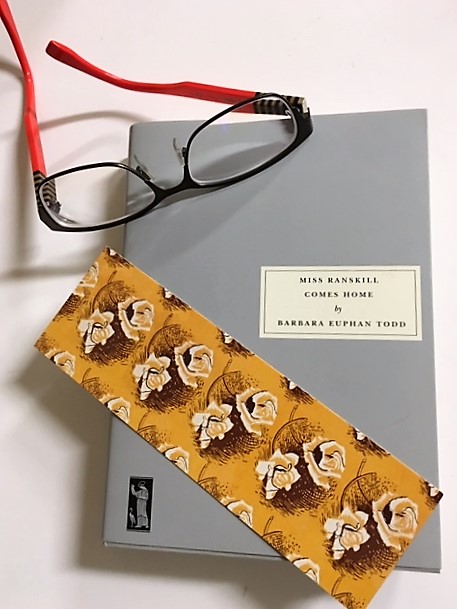 When I read that Miss Ranskill Comes Home is about a woman stranded on a desert island, I thought of some romantic comedies from the 50’s. But the novel is more serious than that. It’s about a woman struggling to find her place in a world completely changed.


 What? Me Read?