
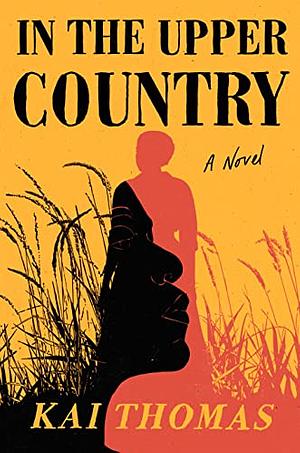
In 1850, Lensinda Marten lives in an all-Black town in Canada north of Lake Erie. She is a healer, but she is puzzled when she is summoned to the side of a slave catcher who has come after a group of escaped slaves that are hiding on Simion’s farm. Puzzled because the man is dead. When she hears that an old woman, one of the escapees, has been arrested, she realizes she is wanted to write a story about the woman for the Abolitionist paper.
She goes to visit the old woman in jail and finds that she isn’t ready to tell her story. Instead, she wants to swap stories with Lensinda. In doing so, a history of cruelty is reveealed, and the two women find connections between each other.
Thomas says in the Afterword that he heard and read many stories about Canada’s history of slavery, its treatment of First Nations people, and the War of 1812, but he could find no story that did everything he wanted. So, he chose this method of telling several stories that interface.
Although I found the information interesting and the settings and historical details to be convincing, I’m afraid his approach didn’t work that well for me. Just as I was getting interesting in Lensinda’s story, the novel appeared to move away from her. There were quite a few characters whose connections aren’t immediately clear, and I kept getting them confused as we jumped from story to story. Eventually, the stories connect, but that wasn’t clear for quite a while.
I read this novel for my Walter Scott prize project.

 What? Me Read?
I had no idea there were all-black towns in Canada. In fact, it was only when I read Their Eyes Were Watching God that I learned there were black towns in the US. Pity it didn’t quite work – it sound interesting.
There was also one in Illinois called New Philadelphia, although it wasn’t exactly all black. A freed black man bought the land and then sold it to different people, some of them white, but most of them black. He bought relatives out of slavery with some of the money. I would guess there were other black towns as well.
I had very similar feelings about this book. He had a lot of good ideas, but the structure didn’t work very well and I found it too confusing. I’ll link your review to my Walter Scott Prize page.
Thanks, Helen! I already have your review linked on my page. I think he might have done better to stick with one person’s story. He was trying to do too much.
What a shame this didn’t work better for you as it does sound interesting!
Thanks for sharing your review with the Historical Fiction Reading Challenge
Yes, it’s too bad.