Review 1698: Bad Debts

My husband and I binge-watched all of the Jack Irish series and movies early during the pandemic. That led me to look for the first Jack Irish book, Bad Debts.

Jack Irish is a lawyer who has moved from high-powered cases to investigations and more mundane law work after the murder of his wife. He doesn’t immediately return the call of an ex-client, Danny McKillop, because he frankly doesn’t remember him. He misses another phone call from McKillop saying he’s in trouble and asking Jack to meet him in a pub parking lot. Jack looks up his file and finds that McKillop was found guilty of a hit and run of a political activist, while he was drunk. When Jack tries to contact McKillop, he learns he is dead, having been shot by police in the parking lot where he asked Jack to meet him.

Jack figures he probably didn’t do a great job of defending McKillop, since he was drunk most of the time after his wife’s murder. The evidence against him seemed solid: McKillop was found passed out in his car with Jeppeson’s DNA on the hood. But when Jack talks to Danny’s brother, he says that Danny was seen passed out some distance from his car shortly before the hit and run. McKillop’s wife says he had been a model citizen since he got out of jail, contrary to the police explanation of the shooting.

Jack decides to investigate the original incident, opening up a big can of worms.

This is an enjoyable novel, tightly plotted, full of action yet witty and well-written, a little more hard-boiled than I usually read but with appealing characters. The setting is a gritty Melbourne, Australia. Unlike most investigators in fiction, Jack has a well-developed other life, working horse-racing deals with Harry Strang and his colleague Cam, hanging out with the guys at the local, and learning woodworking from a master. And he meets Linda Hillier, an attractive reporter. I will definitely read more.

Related Posts

Before the Poison

Playing with Fire

Jar City

Review 1697: Black Narcissus

Best of Ten!

After reading Coromandel Sea Change, I decided to find more of Rumer Godden’s India novels and read them. Black Narcissus was the first (although I have already reviewed a few of the others), and I found it mysterious and haunting.

Sister Clodagh and a small group of Anglican nuns arrive at a palace above a remote Himalayan village to establish a convent, hospital, and school. The abandoned palace once was the home of the General’s father’s harem. He first gave it to religious brothers for a boys’ school, but after only five months, they left with no explanation.

From the first, the place seems to affect the sisters oddly. Sister Clodagh finds herself dreaming about Ireland and Con, whom she thought would marry her long ago. Sister Philippa, the gardener, becomes involved with the flower garden, to the neglect of the vegetables and the laundry. Sister Honey becomes too involved with the children. Sister Ruth, always difficult, becomes obsessed with Mr. Dean, the General’s agent. The sisters occasionally begin to forget their devotions.

Mr. Dean has warned the sisters about possible cultural misunderstandings with the villagers, but although they sometimes make an attempt to understand the natives, mostly the sisters heedlessly continue on their agendas. The sense of foreboding grows.

This is an absolutely terrific novel, very atmospheric, in which the brooding mountain across from the convent becomes almost godlike, certainly a character. I was so rivetted, I stayed up late into the night until I finished it.

Kingfishers Catch Fire

The River

Coromandel Sea Change

Review 1696: V2

Just a note first: The description of V2 on Goodreads made me wonder if the publicist actually read the book. It describes one of the main characters, Kay Caton-Walsh, as an ex-actress when she is actually an ex-university student, and it says she becomes a spy. I always assume these descriptions come from the book jacket, but in this case the jacket is more truthful. I just happened to notice this, so I went over and looked at the description on Amazon, and it is the same as the one on Goodreads. Hmm.

_______________________

Kay Caton-Walsh, a WAAF, is having a liaison with her married lover, who is also the air commodore, when the area is hit by a Nazi V2 rocket. Her lover is dispatched to the hospital while she returns to work, disturbed by his refusal to let her accompany him to the hospital. A photo interpreter in Intelligence, she and her sector are attempting to locate the V2 launch site in the Netherlands. When the commodore treats her dismissively afterwards, she decides to volunteer for a position with a group of WAAFs in Belgium who will be trying to locate the launch sites by computing the rocket’s parabola.

Dr. Rudi Graf is a rocket engineer who has worked with Werner von Braun since he was 16. He has tried to concentrate on the mechanics of the rockets, but he is becoming disillusioned about the conduct of the war and sickened by the behavior of the Nazis. The novel alternately follows these two characters as they work on the same project from the two sides.

Although I am a devoted Harris fan, I don’t think this is one of his best. For one thing, it doesn’t build suspense as most of Harris’s books do. For another, I am dismayed by this trend I’ve noticed of depicting sympathetic German soldiers from World War II. Although I realize they were not all actively engaged in horrible acts, Graf really is. His dream of space flight has been converted into flinging rockets at civilians. Luckily, the program wasn’t that successful. Still, it killed hundreds of people on the British side and enslaved many more on the other side of the Channel.

Related Posts

Munich

An Officer and a Spy

The Second Sleep

Review 1695: The Bridge of the Gods

A friend who knew I was writing a story set locally before the arrival of white men gave me The Bridge of the Gods, which was written in 1899 as a result of Balch’s years of collecting Native American folklore and customs in Oregon. The novel is based on a legend about a bridge of stone across the Columbia.

The novel begins in 17th century Massachusetts, where Reverend Cecil Grey feels the mission to preach Christianity to the indigenous people of the West and dreams of a huge stone bridge over a river. His wife having died, he sets off to do just that, accompanied by his Native American nurse.

Eight years later, Multnomah, chief of the Willamette tribe, decides to test his allies. His tribe is the leader of a confederation united against their enemies, the Spokanes and the Shoshoni. The ascendancy of the Willamettes is prophecied to last until the Bridge of the Gods, a massive stone arch over the Columbia River, is destroyed. However, Multnomah has been hearing that some tribes want to leave the confederation. He decides to summon all of the tribes for a great council on Wappatta Island (now Sauvie Island).

Multnomah has a beautiful daughter, Wallulah, whose mother was an Asiatic princess shipwrecked at the mouth of the Columbia. Multnomah wants to betroth her to Snohomish, chief of the Cayuses, to cement their alliance. Wallulah, having seen Snohomish once, is not averse—until Cecil Grey comes on the scene.

I didn’t expect much from the attitudes of this book, considering when it was written, and I didn’t get much. Despite the young Balch having been interested enough to travel around and interview indigenous people, they are referred to constantly as savages, their traditions are treated with abhorrence, their villages are described as degraded, they are shown as violent and cruel. Even Multnomah, who compared to Snohomish is a good guy, is depicted as obdurate and cruel. Grey’s faithful nurse doesn’t even have a name.

Only Wallulah escapes this treatment, but note that she is half “Asiatic” (and a confused half at that, for her mother is said to have taught the Willamettes something about Buddha but calls god Allah). Her mother is described as white. Wallulah is herself a typical late 19th century romantic heroine, fragile and weak and a completely unlikely indigenous woman.

Although this novel is billed as a romance, Grey’s struggle is between his mission and Wallulah (even though they do not seem mutually exclusive), and since Grey is a zealot, Wallulah doesn’t have much of a chance. This is actually a romance in the older sense of the word, an adventure novel.

Since Balch went to so much trouble to personally speak to indigenous peoples and collect stories, I was hoping this book would be a little more enlightened—say, perhaps, written by someone who actually liked the people. It wasn’t. If you’re interested in an older book based in the life of indigenous peoples, I recommend The Loon Feather.

Related Posts

The Loon Feather

Caleb’s Crossing

One Thousand White Women

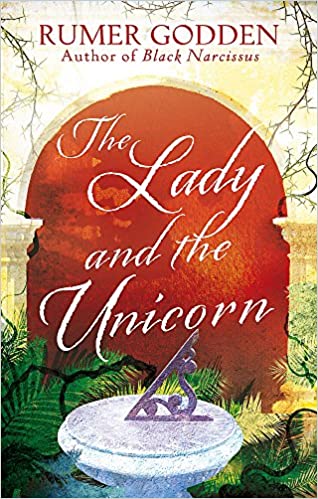
Review 1694: The Lady and the Unicorn

The Anglo-Indian Lemarchant family lives in the annex of a crumbling mansion in Calcutta. Belle, the oldest daughter, is beautiful, fair, and charming, with the reputation of a saint but a character lacking in morals. She is determined to do whatever it takes to get rich, which, for her, means marrying the right man. Rosa, the second daughter, is fair and gentle. She tells lies when she is scared, so has a worse reputation than Belle even though she is much more moral. Blanche, the youngest, is dark in complexion and generally treated disdainfully because of it but is the most honest.

At a party, Rosa meets Stephen Bright, a British young man who treats her respectfully and seems different than the others. But he is new to India and doesn’t understand how he’s expected to behave in 1930’s India. While he is dating Rosa, he becomes interested in the old mansion, where they find evidence of French nobility having built it.

Out in the garden at times Rosa and then several other characters see a sobbing woman and a little dog. Others report seeing a carriage departing from the house. These appear to be ghosts.

This novel is an unusual case of a doomed romance and an ancient mystery. I liked it, but it seems more cynical than Godden’s other Indian novels, though they often have sad endings.

Related Posts

The River

Breakfast with the Nikolides

Kingfishers Catch Fire

Review 1693: An Orchestra of Minorities

An Orchestra of Minorities has an unusual narrator. It’s the chi, a guardian spirit, of Chinonso, a young Nigerian poultry farmer. The chi has come before a sort of heavenly court to plead for leniency for his host, who has harmed a pregnant woman.

The chi’s story begins when Chinonso prevents a young woman, Ndali, from throwing herself off a bridge. Later, they meet again and become lovers. However, Ndali’s family is wealthy, and they don’t consider Chinonso a suitable partner for their daughter. Ndali is ready to split with them, but Chinonso decides to go back to school and earn his degree so he can get a good job.

His friend, Jamike, is attending a college in Cyprus, so Chinonso sells his farm and gives Jamike the money to pay for tuition and board and open a savings account in Cyprus, all without discussing this with Ndali. When he reaches Cyprus, he finds he has been scammed, that Jamike only paid for one semester in college but not for board, and there is no savings account.

Some people in Cyprus try to help him, but the hapless Chinonso falls into one misfortune after another. It takes him four years to get home.

I really struggled with this novel for so many reasons. It incorporates Igbo mythology and culture, which can be interesting, but every chapter and most of the smaller divisions of the novel begin with a story or a series of sayings or other digressions that slow down the narrative.

Then there is the character of Chinonso. He has low self-esteem and is weak, he is unbelievably naïve, he falls into traps that we can see coming pages ahead, he makes poor choices, his reactions to meeting Ndali’s parents seem cowardly. This might be a cultural thing. I have no idea what wealthy displeased Nigerians might be able to do to poor ones.

Then there’s his relationship with Ndali. For all we know of her, she might be a cipher. She is pretty much just something he wants. He calls her Mommy, for god’s sake. This is not a cultural thing, because she asks him why, and his answer creeped me out. I won’t say what happens to her, but it’s not good.

The only way I can justify not personally detesting this novel is if I look at it as a character study of what happens when a weak person is pushed beyond endurance. I strongly feel, though, that this novel shows an underlying hatred of women. What do women do in this novel? One dies at his birth. One leaves him without explanation. One is a prostitute. One makes a false claim of rape. One is steadfast and suffers a horrible fate. None have a personality. Detestably, at least for me, this novel is described as one about a man who will do anything for the woman he loves. Right.

And let’s not even mention the mistreated gosling that we hear way too much about. I read this novel for my Booker project.

Related Posts

Americanah

Stay with Me

Little Bee

Review 1692: The Horseman

I was in the midst of putting a hold on Tim Pears’ The Redeemed to read for my Walter Scott prize project when I noticed that it was the third in his West Country Trilogy. The prize judges have an annoying habit of picking books for their shortlist that are well into a series, and I have paid the price before of trying to read just the nominated book, which you would assume would stand on its own. But sometimes not, so I went ahead and got the first two books of the trilogy as well. The Horseman is the first.

It is 1911. Leo Sercombe is the son of a carter on Lord Prideaux’s country estate in Western England. Leo is twelve and speaks seldom, but he has a strong love for and interest in horses. He frequently slacks off from school to help work on the various farms that make up the estate, and he is beginning to attract the attention of the estate’s head groom for his talent with horses.

Sharing his love of horses is the lord’s twelve-year-old daughter, Lottie, whom Leo occasionally encounters.

The novel minutely observes everyday life in an early 20th century rural setting, particularly the work. Although it is occasionally lyrical, the writing is mostly spare. I wasn’t sure how much I was enjoying it but somehow kept reading, even though terminology and process sometimes escaped me. I was actually intending to read a completely different book next, as I often do with series, but the ending, which is sudden and unexpected, made me want to read the next book immediately. If it’s a fast-paced novel you are looking for, this one is not for you, as it is more concerned with detail.

Related Posts

All the Birds, Singing

Independent People

Tinkers

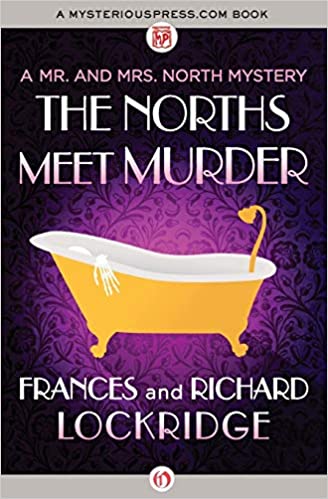
Review 1691: The Norths Meet Murder

Mysterious Press has recently started bringing back the Mr. and Mrs. North series, which was extremely popular in the 1940’s and 50’s. Other bloggers’ reviews finally convinced me to try the first in this entertaining series.

Pam North has decided to have a party, and she thinks the empty apartment upstairs in their building would be a perfect place to have it. So, one afternoon Jerry and Pam North go up to look at it. There they find a man’s naked dead body in the bathtub.

Lieutenant Wiegand has some difficulty identifying the body, but it turns out to be that of Stanley Brent, a lawyer. Brent was a man disliked by many, part of a social set that intersects with that of the Norths. Pam North soon finds a clue, a paper with the name “Edwards” inserted into the mailbox to make it look as if the upstairs apartment is occupied. Wiegand is also able to find Clinton Edwards, a businessman and part of the same social set as Brent. Edwards claims to know Brent but to have few dealings with him.

But there are other suspects—Brent’s wife Claire; the Fullers, as Brent has been behaving as if he’s having an affair with Jane Fuller when he is not; maybe Mr. Berex or even Kumi, Edwards’ houseboy.

Mrs. North is an interesting character whose mind seems to always be ahead of her tongue. Mr. North is adept at interpreting what she means. There’s an awful lot of drinking going on in this novel, but it is humorous and engaging. It had fun reading it.

Related Posts

By the Pricking of My Thumbs

Weekend at Thrackley

The Billiard-Room Mystery

Classics Club Spin #27

I just posted a new Classics Club list last week, and coincidentally, now they have announced a spin. The way it works is, if you want to participate, you pick 20 books from your list and post that list. The spin picks a number, and that determines which book you read next. The deadline for reading the book this time is August 22.

Since I have a new list to work with, I decided to pick 20 of the books I want to read most. Here they are:

  1. Sense and Sensibility by Jane Austen
  2. The Bride of Lammermoor by Walter Scott
  3. The Black Arrow by Robert Louis Stevenson
  4. Grand Hotel by Vicki Baum
  5. Weatherley Parade by Richmal Crompton
  6. The Woods in Winter by Stella Gibbons
  7. The Grand Sophy by Georgette Heyer
  8. Much Dithering by Dorothy Lambert
  9. A Town Like Alice by Nevil Shute
  10. The Moon Spinners by Mary Stewart
  11. Miss Plum and Miss Penny by Dorothy Evelyn Smith
  12. Rhododendron Pie by Margery Sharp
  13. Merkland, A Story of Scottish Life by Margaret Oliphant
  14. The Dead Secret by Wilkie Collins
  15. The Return of the Native by Thomas Hardy
  16. Our Mutual Friend by Charles Dickens
  17. The Methods of Lady Waldenhurst by Frances Hodgson Burnett
  18. Music in the Hills by D. E. Stevenson
  19. Phineas Finn by Anthony Trollope
  20. The Castle of Otranto by Horace Walpole