Review 2602: One Corpse Too Many

It’s 1138 during the war between King Stephen and Queen Maud, which became known as the Anarchy. King Stephen is besieging Shrewsbury, which is soon to fall. FitzAlan and Adenay, the castle defenders, wait until the last minute to flee with their men, but rumor has it that Adenay’s daughter and FitzAlan’s fortune are still inside the castle.

In the monastery, Cadfael is assigned a new helper, a boy named Godrik, who is a hard worker. It doesn’t take Cadfael long to figure out Godrik is a girl, Adenay’s daughter Godith, whom Stephen is searching for to use as leverage.

Stephen has the remaining defenders of the castle executed after he takes it, and Cadfael takes charge of identifying and burying the bodies. However, he finds there is one corpse too many. In looking more carefully at the corpses, he sees that one man has been garroted. So, he reports to the king the information that someone has tried to hide a murder by mixing the body with the executed and is given permission to try to identify the body.

A young lady of the town, Aline, identifies the body as Nicholas Faintree, a squire of FitzAlan. She has recently also identified one of the executed men as her brother.

Meanwhile, Godrik, whom Cadfael has sent reaping to escape the attentions of a mysterious man, Hugh Beringer, who has been following him, finds a wounded man. It turns out that the wounded man Godith finds is Torond Blunt. He was sent off with Nicholas Faintree to carry FitzAlan’s fortune into Wales. However, they were ambushed at night. Briefly separated, Torond returned to find Nicholas dead and then someone attacked him from behind, but he managed to get away and hide the fortune.

Now Cadfael is hiding Godith and Torond and trying to make arrangements to get them both to Wales along with the fortune. Meanwhile, it’s clear that Beringer is dogging his steps ever since he visited Godith’s old nurse to tell her she is safe. Incidentally, Beringer is engaged to Godith, although they haven’t seen each other for years. And she has fallen in love on sight with Torond.

Beringer seems to be playing a game with Cadfael, so he decides to play back. But is Beringer a friend or foe?

Although this mystery doesn’t really give clues to the murderer’s identity until the end, it does a good job of misdirection. This book is the second of the Cadfael series, which I would describe as Medieval cozy. It has likable characters and seems to be well grounded in its time period.

Related Posts

A Morbid Taste for Bones

A Murderous Procession

Grave Goods

Review 2601: #ReadingAusten25! Emma

After rereading Emma, I can understand in a way why Austen called her her favorite heroine. She has a long way to go in self-awareness, and I think that’s something novelists enjoy.

Although Emma has been played as a sparkling beauty by such actresses as Gwyneth Paltrow, when I began this reread, I found a lot to dislike in her. Fortunately, she is also easy to come to like. Rich, charming, somewhat spoiled, and managing, she is also bored, because her beloved friend and ex-governess, Miss Taylor, has recently married Mr. Weston. Since she prides herself on having made the match and has recently befriended Harriet Smith, she decides to make a match for her.

Now, Emma’s biggest fault—besides trying to arrange the lives of other people—is that she decides something and then sees nothing that doesn’t support that decision (despite hints by her brother-in-law, Mr. Knightly). Harriet is a beautiful girl, but she is the illegitimate daughter of who-knows-who. Emma, based on no evidence, decides she is the daughter of someone important, and the first harm she does to the suggestible Harriet is convince her she’d be throwing herself away by marrying Robert Martin, a farmer who has proposed to her. Emma intends her for the vicar, Mr. Elton, ignoring Mr. Knightly’s warning that Elton is looking for a marriage that will advance him. In fact, Emma, having decided for the match, takes his attentions to point at Harriet when in fact he is courting Emma herself. Harriet would never consider Mr. Elton without Emma’s management, so she develops affections where there will be no return.

Then there is Jane Fairfax, a lovely young woman who has recently returned from years of living with friends to the home of her impoverished aunt and grandmother. Jane Fairfax’s friend being recently married, Jane has returned home for a few months before seeking a position as governess. Although Jane is the only young woman of Emma’s age and birth in the neighborhood, Emma says she finds her too reserved to like. Emma is jealous of Jane’s accomplishments but doesn’t know it.

Mr. Weston has a son who was adopted by his wife’s family after she died. Although Frank Churchill is now a young man, he has never visited his father, having many times promised to come. He finally arrives, and Emma, who has not taken a hint about his character from his continual nonarrivals, finds she likes him very much.

As usual with Austen, there are lots of comic characters who echo people we know in real life. Mr. Woodhouse, Emma’s father, worries continually about his and everyone else’s health, and if Emma isn’t around when they entertain, he’ll have guests eating gruel instead of their dinners. Mr. Weston is so open and sanguine that if he knows something is a secret, he’ll only tell five or six particular friends. Mrs. Elton, once there is one, is full of self-importance, despite coming from an inferior background, and tries to patronize people, especially poor Jane Fairfax.

Of course, class difference is important in this novel, maybe more so than in much of Austen (except maybe Persuasion). So, some of the problems may not be obvious to modern readers.

Even if you don’t like Emma’s managing at first, she is such a sparkling and witty creation, fond and gentle with her silly father, and she is truly repentant of her faults once she comes to see them. This is a great book.

Related Posts

Pride and Prejudice

Mansfield Park

Sense and Sensibility

Review 2600: Helen

I thought I had read all of Georgette Heyer’s books, but when I looked up something recently, Amazon showed me that there were several I’d never heard of. So, I got a Conservatory Press print-on-demand copy of this one. It is one of her very few contemporary novels that are not mysteries, published in 1928.

Helen’s mother dies in childbirth, and although her aunt offers to take her, her father insists on keeping her. She is brought up in wealth on a country estate enjoying riding, hunting, and sports. She has old-fashioned values when she becomes an attractive young woman. Then everything is upended with World War I.

This novel spends a lot of time with the bright young things that emerged after the war. Helen is drawn into the set by some friendships, but her older friends are dismayed. She also attracts a young artist who may be a dangerous type.

There are long conversations in this novel meant to show how the younger generation is changing its attitudes from their Edwardian parents. It seemed to me that both sides had intolerant viewpoints, but the younger people, meant to be witty, seemed silly. In any case, I hate to say it, but I found this focus as well as Helen’s relationships to be a little tedious after a while. I didn’t think that this more serious romantic novel was Heyer’s forte. And both generations expressed attitudes about women that we find objectionable now.

As with most machine-read books, I found lots of wrong words. Not typos, but the wrong word replacing a correct one. I thought perhaps no human had read the book between machine-reading and publishing, but maybe someone read the beginning. I say this because the errors increased so much in the last third of the novel that sometimes it was difficult to guess what was meant. Helen is fairly consistently called “he” instead of “she,” and at one point, she is called “Heaven” instead of “Helen.” So, you can imagine how several errors could mount up to make the text unintelligible at times.

Related Posts

The Unfinished Clue

They Found Him Dead

Death in the Stocks

Review 2599: The Lonely Girl

The Lonely Girl is the second novel in Edna O’Brien’s The Country Girls trilogy. The trilogy is quite autobiographical without matching the details of O’Brien’s life exactly. I did a little reading about O’Brien lately and was interested to learn that her books were originally banned in Ireland because of their frankness about sex and other women’s issues.

If you haven’t read the first volume, you may not always understand what’s going on at first. It is very short, so I recommend it.

Caithleen and her friend Baba are still living in a rooming house in Dublin at the beginning of the novel. I was happy to learn that Caithleen has broken with Mr. Gentleman. However, the girls are living a giddy life, crashing parties, trying to find men to buy their drinks, and hanging out with people Caithleen disapproves of. They are happy to be thought fast but still very innocent and silly.

We saw in the first novel that Caithleen is attracted to older men, and early in the novel, she meets Eugene Gaillard, a documentary film maker, who is older. He is obviously attracted to her, but it is she who takes the initiative to see him. Although he is attracted by her freshness and innocence, he doesn’t understand how innocent she is. Eventually, she finds out that he has been married, and although they are separated, they are not divorced. Caithleen is still very Catholic, so there would be a problem even if he were divorced.

Some ill-wisher gets involved and sends anonymous letters around, including to her father, which makes a difficult situation even worse. I was struck by how everyone assumes these letters are true (they are not) without asking her.

Although I think Caithleen is very silly at times, she is struggling with a lot considering her total ignorance of sex, her uncertainty with Eugene, her jealousy of Eugene’s wife, and so on. She is kind of a wet noodle in this one, always in tears, but I still want to find out what’s next.

Related Posts

The Country Girls

Wild Decembers

A Girl Is a Half-Formed Thing

Review 2598: A Place to Stand

The first novel I read by Ann Bridge was contemplative. This one becomes much more action oriented. But both are about women developing new conceptions of themselves. This one is about a young woman becoming an adult.

A Place to Stand was published in 1951, but it is set ten years earlier. Hope Kirkland is a little bit spoiled, a nineteen-year-old American whose wealthy father is an oil executive living in Budapest for the last eight years. Although she and her mother have lived there that long, neither of them seems to understand much about what’s going on around them politically.

Hope is engaged to Sam Harrison, a young journalist who has just been transferred to Istanbul. At his departure, he gives Hope a large box of chocolates, which she thinks is an odd goodbye gift. However, when she opens it, she finds it contains two passports for young men and money with a note of where to take them. So, she does. In a less desirable neighborhood, she finds a group of Polish refugees, an old woman, her two sons Jurek and Stefan, and Jurek’s fiancée Litka.

Hungary is neutral, but Poland is fighting the Nazis. Some Hungarian politicians are pushing the country toward Germany, so Polish refugees are in potential danger. Stefan and Jurek are almost ready to leave the country, but they are waiting for something to arrive from Poland first.

Hope is immediately drawn into the affairs of the Polish group. She is struck by what was clearly once a wealthy family having no home and no possessions. Then the Nazis arrive in Budapest and immediately begin looking for Poles. At the same time, the Americans are asked to leave the country.

I had to get over my initial reaction to Hope and her general obliviousness, which was made worse for me by Bridge’s continual use of the word “little” to describe just about everything about her, her little hand, her little figure, etc. However, this novel turns into an adventure that results in self-discovery for her. I enjoyed it quite a bit, acknowledging that probably many rich American girls at the time were silly and clueless (although ones living right there in Budapest? I’m not so sure).

Related Posts

Illyrian Spring

The Flight Portfolio

The Invisible Bridge

WWW Wednesday!

It’s the first Wednesday of the month, so it’s time for WWW Wednesday, an idea I borrowed from David Chazan, The Chocolate Lady, who borrowed it from someone else. For this feature, I report

  • What I am reading now
  • What I just finished reading
  • What I intend to read next

This is something you can participate in, too, if you want, by leaving comments about what you’ve been reading or plan to read.

What am I reading now?

I am reading English Magic by Uschi Gatward, one of the last books for my James Tait Black Award project, since I’m trying to wrap it up. It’s a collection of short stories. I don’t always get on well with short stories, but so far, I’ve found some of them interesting and some of them frustrating.

What did I just finish reading?

I just finished The Librarian by Salley Vickers. I’m not sure how this book got on my list, but I enjoyed it. It’s about a librarian who moves to a small English town in the 1950s and tries to get more children to use the children’s library. At first, I thought it was going to be a standard romance, but it didn’t turn out that way.

What will I read next?

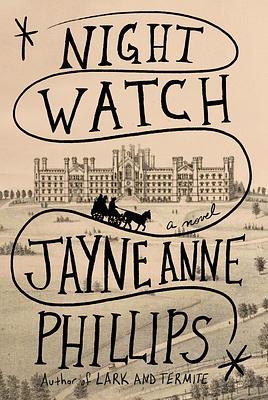
This can always change, but what’s next in my pile is Night Watch by Jayne Anne Phillips. It’s a historical novel set during the Civil War, and it’s been on my list for some time.

What about you? What are you up to with your reading?

Review 2597: Death Under a Little Sky

Maybe I’m a little old-fashioned, but there seems to be a vogue for calling characters just by their first names these days. But when we’re strangers, as we are to characters, we don’t often go straight to first names, do we? Yet, after reading many books, I have a hard time finding the main characters’ last names. This time, I had to look it up.

Jake Jackson has retired early from being a police detective because of the combination of a separation from his wife and an inheritance from his uncle. He has been left a house in the isolated countryside, not even a road to it, and quite a bit of money, his uncle wanting to give him the gift of solitude. The name of the house is Little Sky.

There were a few things about this house that I found hard to believe, since parts of it are very old and it is huge, so presumably at one time had servants. First, why is there no road to it if it’s been there a long time? How was it built? How did they get furniture to it? Second, why are there no bathing facilities? Third, why no laundry, however primitive? Even a rustic abode would have a big metal tub for baths and a place to wash clothes.

These are nitpicks, you might think, but then, of course, Abell needs his hero to live in a perfectly remote area (it could have been an island, Stig, that would be believable), he wants his scene where Jake is caught in the nude after his morning swim (Stig, he can swim even if he has a bathroom), but that doesn’t really explain the laundry.

Oh well. So, Jake begins living in this house, mostly being by himself but slowly getting to know his neighbors. His closest neighbor is the local vet, Livia. Livia what? I don’t know. No last names are exchanged. You can tell I find this irritating. Livia is a lovely mixed-race woman with a little girl named Diana. Jake is immediately interested. Since his home also has no phone or reception, Livia gets to take him by surprise when he is swimming nude.

One thing Livia does is encourage him to participate in a local custom, a hunt for St. Aethelmere’s bones. The local storekeeper hides a bag of sticks marked “bones,” and there’s a contest to see who can find it, if anyone can. Jake finds the bones, but they turn out to be really bones, and human, as judged by Livia and the local biologist, Dr. Peter.

Jake reports the bones to the police, and he meets the local man, Chief Inspector Gerald Watson, who seems happy to have Jake poke around and try to figure out who the bones might belong to. They are of a woman in her thirties and are about 10 years old. A look through his uncle’s old newspapers provides a possible name, that of Sabine Rohmer, a foreign farmworker who fell from a tower on the farm where she had worked for years. The death had been ruled misadventure.

However, when the police examine Sabine’s grave, they find bones in it. Watson seems inclined to think the whole thing is a wild goose chase, but Jake convinces him that perhaps Sabine’s death was not an accident, because someone, hearing the grave would be exhumed, has hastened to put bones in it to throw them off, and as it turns out, the bones in the grave are too old to be Sabine’s.

Jake’s investigations turn up little cooperation, just hostility, threats, and violence, principally from the people on Smith’s farm where Sabine had worked and from some lay-abouts and nogoodniks around the village, including Sabine’s old boyfriend, a man named Rose. Then Dr. Peter, who has been helping Jake, is killed.

This novel is really more of an action book than a mystery, as we’re given no hints to the identity of the killer until the same second Jake figures it out. And, although I don’t fall into the camp that believes mystery and romance don’t mix, I think there was too much emphasis on the romance, and it was a clunky one, with scenes that Abell obviously found sexy but left me cold. Usually, women who are trying to develop a relationship slowly because of their child don’t engage in salacious banter at an early meeting, even if they see a guy naked.

The novel is a very slow developer, which I didn’t mind. I enjoyed the descriptions of the countryside and the work Jake does to improve his property. However, my comments above have me wondering how interested I am in reading the second book in the series.

Related Posts

Started Early, Took My Dog

Interred with Their Bones

Magpie Murders

Review 2596: The Chosen

The Chosen, which I read for my Walter Scott project, is about the weeks after the death of Thomas Hardy’s wife, Emma, and also about the writing of Tess of the D’Urbervilles. Hardy is working in his study when the maid comes to ask him to go to Emma. Although she indicates there is some urgency, Hardy is oblivious and continues working for a while before going up to his wife’s rooms in the attic. When he arrives there, she is dead.

The aging Hardy plunges into guilt that is made worse when, a few days later, he finds her diaries, in which he reads that Emma was deeply unhappy in their marriage. As he reads the diaries, he relives his own memories of the same days, realizing he had no idea of how aloof he seemed to her and how oblivious.

This is not really a novel of plot but more of feelings and realizations. Lowry explains at the end of the novel that Hardy burned the diaries soon after he found them, but she did quote from Hardy’s work and from letters. Emma’s death apparently spurred a collection of poems.

Waiting in the wings is Hardy’s secretary, Florence Dugdale, who seems to expect to take Emma’s place (and eventually did). She cannot understand why, after telling her so many times how unhappy he was, Hardy can now only talk about Emma.

For Hardy fans, especially, this is an insightful and beautifully written novel. It makes me wish I had known more about Hardy’s life before I read Maugham’s Cakes and Ale and this book. Although I read Claire Tomalin’s biography, it was so long ago that I don’t remember what it said about his home life (although I said it was interesting in my review).

Related Posts

Cakes and Ale

Tess of the D’Urbervilles

Thomas Hardy

Classics Club Spin Result! Review 2595: The Passenger

I know I’m early in reviewing my Classics Club Spin book, but it just so happens that when it was picked for the spin, I had just read it but not reviewed it yet. Lucky for me, because so many of the books remaining on my list are really long!

I am not sure how The Passenger made it onto my Classics Club list, but its origins are certainly interesting. Boschwitz, who had already escaped Germany with his mother, was so affected by the events of Kristallnacht that he wrote this novel in a great hurry. It was published in England in 1939 and in the U. S. in 1940, but then it just vanished. Revisions he mailed to his mother never arrived. Then, in 1942, he and his manuscript were on a passenger ship that was torpedoed by a German U-boat, and they were lost. Nearly 80 years later, a correspondence with Reuella Shachaf, Boschwitz’s niece, mentioned to Peter Graf that the manuscript for the book was held in an archive of the Deutsche Nationalbibliothek. So Graf looked it up and helped edit it and get it republished. It came back out in 2018.

The book opens with wealthy Jewish businessman Otto Silbermann handing over 51% of his business to a friend, Becker, to save it from being taken. As Becker points out, there is nothing Silbermann can do about it because he’s Jewish. Jewish men are being rounded up, but Silbermann has an advantage of not looking Jewish.

Back at home with his Christian wife, he tries to sell his house to another friend, Findler, who cheats him. Again, there is nothing he can do about it. Then thugs begin pounding on the front door, so Findler sends him out the back, saying he’ll protect Elfrieda.

Silbermann begins a journey lasting days, traveling by train from one city to another to find a way to escape Germany. His goal is to go to his son Eduardo in Paris. But Eduardo has been unable to get him the papers he needs. In the meantime, he lives in a state of paranoia, listening to constant insults to Jews, fearing strangers, and thinking he’ll be arrested any minute.

This is a tense novel that seems very realistic, although Silbermann occasionally becomes incandescent with anger about the injustice, thereby risking his own life. It’s a compelling novel.

Related Posts

The Oppermanns

Sarah’s Key

The Weight of Ink