If I Gave the Award

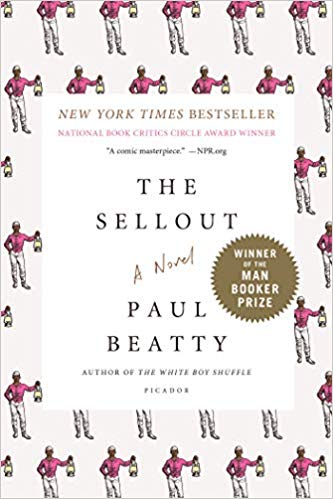
Cover for Do Not Say We Have NothingHaving posted my review of The Sellout by Paul Beatty, I see it is time for my feature where I give my opinion of the winners for a specific award. The Sellout was shortlisted for the 2016 Man Booker Prize. It was the winner that year. If you read my review, you know that I disliked this book intensely because of its style, which reminded me of a long stand-up comedy routine, and also because of its over-the-top plot. In fact, I did not finish reading it. So, obviously, I would not have picked it for the award.

Another book that did not impress me was All That Man Is by David Szalay. It depicts in barely related short stories (why is it called a novel when nothing but the theme overlaps from story to story?) a series of incidents featuring despicable male characters who at best do nothing and at worst are very bad indeed.

Eileen by Otessa Moshfegh, on the other hand, is a portrait of a despicable woman. Although I thought this novel presented a masterful characterization, it was not my favorite.

Cover for His Bloody ProjectI liked Hot Milk by Deborah Levy more, but I thought some of its events were unlikely. And it was confusing at times, written in an almost hallucinogenic style.

Although I occasionally found its style irritating, since it has a fairy tale-like quality to it, I found Do Not Say We Have Nothing by Madeleine Thien heart-rending. In addition, it informed me about events I knew nothing about.

My selection for the winner, however, would have been His Bloody Project by Graeme Macrae Burnet. I found it absolutely fascinating as it followed a crime as well as depicting the lives of crofters in the 19th century.


Review 1374: The Sellout

Really? This book won the Booker Prize? I know my sense of humor is getting to be out of date, and when I read on the blurb that the book was “biting satire,” I just sighed. There’s no subtlety in humor anymore, and this novel is a prime example. Its writing style is broad and hectic, like a really long stand-up comedy routine. I’m guessing you either love it or hate it.

The narrator, a black man whose name is Me, starts out the novel at the Supreme Court, where he is being tried as a slave owner and is getting a lot of hatred because of his race. He proceeds to tell the story of how he got there, spending lots of time getting to the crux of the story.

The beginning of the book, where he satirizes his upbringing as a subject of his father’s childhood development experiments, is over the top but amusing. When he introduces the character of Hominy Jenkins, the last surviving Little Rascal, his all-on employment of racial stereotypes (to make fun of them, of course) was too much for me. I quit about halfway, after he reluctantly made Hominy his slave.

Be warned that this novel makes extensive use of the N word. I’m not sure, but Beatty’s intent may be to desensitize us to it. If so, it didn’t work.

Related Posts

The Finkler Question

To Rise Again at a Decent Hour

The Good Lord Bird

Review 1373: The Queen of the Caribbean

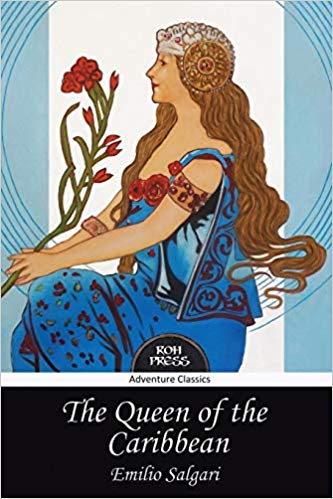
I was intrigued enough when I wrote my Classic Author Focus article on Emilio Salgari for The Classics Club that I ordered one of his books. Salgari was an early 20th century adventure novelist whose work inspired other writers and film makers.

Unfortunately, I didn’t really do my homework and ended up picking a book with an appealing cover and title. The problem was that it is the second in Salgari’s Black Corsair series. Unlike many old adventure series—I’m thinking of, for example, Tom Swift—The Queen of the Caribbean depends heavily on its predecessor, The Black Corsair, which I had of course never read.

I was a bit taken aback when I opened the book to find a modern map of Southern Mexico and Central America labeled “West Indies, 1600.” The only concession to the 1600’s was a hasty label “New Spain.” Panama, which wasn’t even a country until a couple of years before the book was published in 1905, was delineated. Apparently, Salgari or his publishers (assuming this was a map that appeared in the original publication and not a creation for the republished copy) chose to use modern place names, some of them even in English.

Other than that, Salgari appears to have some knowledge of pirates, sea-going, and the flora and fauna of Mexico and Florida. Unfortunately, he sometimes stops the action dead in its tracks to tell us about some plant or animal. In a way, this book reminds me of those of W. H. G. Kingston, which I had a small collection of that never reappeared after our move. However, Kingston was better at working his facts into the story.

The Black Corsair is pursuing his enemy, Van Guld, who betrayed his followers in battle. Later, after the Black Corsair and his brothers turned pirate in pursuit of their enemy, Van Guld was responsible for the deaths of the corsair’s brothers. All this apparently happened in the first book. In The Queen of the Caribbean, this pursuit leads them to attack Vera Cruz, an event that actually happened. During the search in Vera Cruz for Van Guld, the Black Corsair hears rumors that his lady love, who he thought was dead, may be alive.

Although the Black Corsair behaves nobly, he doesn’t seem at all disturbed by the mayhem wrought upon innocent people by his pirate friends. Perhaps Salgari was attempting to portray pirates more realistically than is usual in adventure fiction. He seems, however, to have an admiration for what are essentially bloodthirsty cutthroats. I don’t think I’m applying my 21st century standards here, because I’ve managed to enjoy many other adventure novels, including ones about pirates. The characters in this one are cardboard figures being put through their paces.

Related Posts

Captain in Calico

Treasure Island

Men Against the Sea

Review 1372: The Greenlanders

Best of Ten!
The Greenlanders took me quite a while to read, and that wasn’t because it wasn’t interesting. My hardcopy book was 558 pages, which isn’t that long a book for me. The type was small, however, and the pages dense, so that I would guess it normally would be closer to 1000 pages long.

This novel is also unusual because it is written in the tradition of the Nordic sagas. Although it centers on the activities of the family of Asgeir Gunnarsson, it also tells of other events taking place in the country, beginning in about 1345 until roughly 1415. Because of this style, the actions of the people are described, but there is little conventional character delineation.

Much of the novel has to do with the events spawned by a feud between Asgeir Gunnarsson’s family and that of their nearest neighbor, Ketil Erlendsson. Asgeir and Ketil are wealthy landowners, but life on Greenland is hard, and no landowner can be assured he or someone in his household will not starve during a difficult winter.

In fact, the Greenlanders don’t know it, but in the mid-14th century, they are at the beginning of a long downhill slide for the country. Although ships used to arrive with relative frequency from Norway or Iceland, at the beginning of the novel, the first ship arrives in 10 years. The Greenlanders hear that much of Europe has been overcome by the plague, and so many people have died that the church has not been able to send priests to Greenland nor has the bishop been replaced.

In fact, Greenland has already suffered some diminishment. There used to be settlers in the Western Settlement but now it is deserted. As time progresses, more and more farms in the Eastern Settlement are abandoned as farmers become unable to support their households. The novel documents famines, illnesses, outlawry, the loss of laws and the country law-keeping institutions as well as weddings, births, and deaths.

Despite its nontraditional approach, I was deeply absorbed by this book and particularly by the events in the lives of Gunnar Asgeirsson, Asgeir’s son, and his daughter Margret Asgeirsdottir. I was particularly struck by how similar the lives of these 14th century Greenlanders were to those of the Icelanders described in Halldór Laxness’s Independent People. I think I mentioned in my review of that book that I assumed it was set in the Middle Ages, only to be floored when I realized it was set in the 20th century.

Related Posts

Independent People

Iceland’s Bell

King Hereafter

Review 1371: My Year of Rest and Relaxation

Ottessa Moshfegh is good at creating unappealing characters, and the narrator of My Year of Rest and Relaxation is no exception. From a privileged background, pretty and with no need to work, she inwardly mocks everything, including her only friend, Reva. Depressed by the deaths of her cold parents and by being dumped by her cruel boyfriend, Trevor, she decides that she wants to sleep her way into a new life. So, she loads up with a cocktail of prescription drugs, supplied by her batty, pill-pushing psychiatrist.

This novel can be darkly funny, mostly in a cruel poking at Reva’s social ambitions or other characters’ taste, but also poking fun at the modern art scene. Still, I found it both oddly fascinating and distasteful, despite a more positive ending.

This novel is set in the early 2000’s and works its way resolutely to 9/11.

Related Posts

Eileen

Extremely Loud and Incredibly Close

In the Light of What We Know


Review 1370: Unsheltered

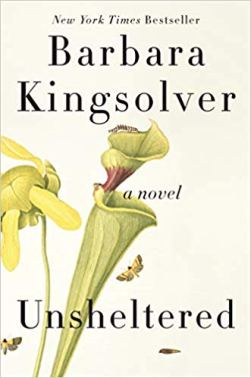
Unusual for Barbara Kingsolver, Unsheltered is a dual time-frame novel, changing centuries every other chapter. The setting is the same, though, the odd town of Vineland, New Jersey.

In the present time, Willa’s family has discovered that the house she inherited in Vineland is no asset. Both she and her husband, Iano, have recently lost their jobs through no fault of their own. Willa’s magazine failed, and so did the college in West Virginia where Iano was tenured. When he finally got hired in an inferior level for a one-year position, the inherited house nearby had seemed like a godsend. But now she has found that it is falling down, with part of the old house not even on a foundation, and too expensive to fix.

To make matters worse, they are the only people in the family who offered to take in Iano’s ornery dying father. Their daughter, Tig, has also unexpectedly returned from a year in Cuba. Finally, their son Zeke’s partner has committed suicide, leaving him in an apartment he can’t afford with a baby son. Willa and Iano offer him a place to stay, but what he wants is to leave his son with them.

In mid-19th century Vineland, Thatcher Greenwood has moved his new bride, Rose, back into the house she grew up in. They are also living with her mother, Aurelia, and young sister, Polly. Thatcher is delighted with his wife but is soon to find that they don’t share the same values. His position as a science teacher pays very little, but Rose and her mother continue to demand elegancies that belong to their former life, before Rose’s father went broke.

Next door, Thatcher meets Mary Treat. Rose knows her as the poor woman who was deserted by her husband, but Thatcher learns that she is a scientist, whose correspondents include Charles Darwin.

Vineland was founded as a sort of utopia by Captain Landis, but Thatcher begins to see the cracks in that utopia. One of them is his employer, who will not allow him to teach anything more than rote memorization and hates most recent scientific theories, particularly Darwin’s.

Both of these main characters are concerned with keeping shelter over their families’ heads, but while Kingsolver links the stories through Willa’s growing interest in Mary Treat, she is also able to draw many parallels between the two times. The present uncertainty in the poor economy of the Eastern Seaboard she compares to the uncertainty in the lives of Vineland’s population, of workers promised much by a man who can repossess their property if they fail. An unmistakable political figure in the present day, nicknamed by Willa The Bullhorn, bears a metaphorical resemblance to Landis, who is essentially a conman. The main characters’ housing insecurity stands for the insecurity of the entire population as a result of climate change and the death of the American dream. Kingsolver has lots to talk about.

I’m not so sure how much I liked the dual narrative. I was far more interested in the present-time story than I was in the older one. Kingsolver seemed to want to write about Mary Treat, but Treat features more as an important secondary character. And I have to say that some of Willa’s discussions with her daughter and her ruminations about those discussions border on the didactic (which we know has been a fault of Kingsolver in some other books).

Still, it is great to have another book out by Kingsolver. She can be hit or miss, but I have very fond memories of some of her books.

Related Posts

The Lacuna

The Weight of Ink

Maddaddam

Review 1369: The Craftsman

Thirty years ago, Florence Lovelady’s career took off when she helped capture Larry Glassbrook, a coffin maker who was burying teenagers alive. Something made her continue to visit Larry in prison, though, and now he has died. With her teenage son, Ben, she has returned to the village of Sabden, in Lancashire, for his funeral.

When Florence, or Flossie, as she is known there, goes to visit the Glassbrook house, where she was a lodger years ago, she finds a clay picture of herself. A clay picture is like a voodoo doll, used in dark magic, and was a feature of the earlier murders. This discovery makes Flossie re-evaluate the truths about the earlier murders. Although Larry confessed to the crimes, did he have an accomplice? Did he even commit the murders?

Sabden sits at the bottom of Pendle Hill, a location famous for witches. The novel returns to the past to follow the investigation of the first crimes, during which Flossie encountered a coven of white witches. Then it returns to the present, where Flossie is threatened again.

This is a fast-paced, enthralling book. It wasn’t as creepy as it was probably meant to be, but I enjoyed both police investigations. This is a good, solid thriller with a twist.

Related Posts

Sharp Objects

Blacklands

The Girl on the Train


Review 1368: Owls Do Cry

It’s obvious that Owls Do Cry was written by a poet. The writing is beautiful, but since I am not very good at poetry, I have to admit that I didn’t always understand what was going on.

The Withers family lives in a small town in southern New Zealand. They are very poor, and the children are called dirty at school and subjected to humiliations. They like to go to the town dump to look for treasures.

At 12, the oldest girl, Francie, must quit school to do housework for a wealthier family in town. Toby, the only son, is subject to epileptic fits. Mr. Withers verbally abuses his wife. Then one day there is a terrible accident, and Francie is killed. Some time later, Daphne is hospitalized in a mental hospital, just as Frame herself was.

The novel skips forward 25 years to the 1950’s. Mr. Withers is retired, and Toby is now the bully of the household. Daphne is still hospitalized, and Theresa, the youngest daughter, has married and moved away.

Janet Frame was the first writer to tackle the subject of mental institutions. This novel is harrowing and occasionally satiric. However, I often couldn’t follow the poetic passages. I read this for my Classics Club list.

Related Posts

The Bone People

The Luminaries

The Rehearsal

Review 1367: See What I Have Done

See What I Have Done is an interpretation of the famous Borden murders in 1892. It is absolutely seething with undercurrents and is occasionally very creepy. I think most people don’t know that Lizzy Borden was not found guilty of the murders of her stepmother and father. Somehow, this novel maintains suspense by creating uncertainty about that.

The novel concentrates most of its energy on the day before and the day of the murder, but it goes backward and forward in time and changes point of view from one character to another.

Schmidt depicts Lizzy as a childish 30-year-old who has been alternately indulged and oppressed by her father. Fatefully, on the day before the murders, Mr. Borden slaughters Lizzy’s pet pigeons with an ax. Then, instead of telling her what he has done, he leaves her to discover it.

There are other people in the house who have motives for the murders. Lizzy’s uncle, John, has hired a ruffian named Benjamin to make Mr. Borden pay attention to his demand that his nieces be treated better. Benjamin is lurking around and inside the house the day of the murders, which made me wonder whether the warning was to go awry. Also, the day before the murders, Abby Borden, who was killed first, confiscated from the maid, Bridget, all of the money she saved to get her back to Ireland.

The narrative style, from Lizzy’s point of view, is feverish. In all, I found this novel to be really interesting, imaginative in its approach and unsettling in effect.

Related Posts

The Wicked Boy: The Mystery of a Victorian Child Murderer

The Killer Inside Me

Famous Trials