WWW Wednesday!

It’s the first Wednesday of the month, so it’s time for WWW Wednesday, an idea I borrowed from David Chazan, The Chocolate Lady, who borrowed it from someone else. For this feature, I report

  • What I am reading now
  • What I just finished reading
  • What I intend to read next

This is something you can participate in, too, if you want, by leaving comments about what you’ve been reading or plan to read.

What I am reading now

I am reading The Deepening Stream by Dorothy Canfield Fisher, which I’ve had sitting on my nightstand for a few weeks but was avoiding during Nonfiction November and Novellas in November because it is 600+ pages long. However, it is perfect for Doorstoppers in December, so I signed it up for that. I originally chose it because it’s on my Classics Club list, so reading it serves two purposes. So far, the novel may be autobiographical, and it is covering the main character’s childhood. It was published in 1930.

What I just finished reading

I just finished a really entertaining early mystery, Enter Sir John, by two authors I have never heard of, Clemence Dane and Helen Simpson. Well, actually, I think I have heard of Clemence Dane, but not in terms of mystery novels. It turns out both were successful writers, Dane mostly as a screenwriter and Simpson as a novelist. This mystery is from 1928.

What I will probably read next

The next book in my stack is Wild Dark Shore by Charlotte McConaghy, which has shown up here and there a lot this year. I have forgotten what it’s about since I ordered it, but that just makes it more fun to dig in!

What about you? What are you reading?

Review 2658: Rum Affair

The famous coloratura opera singer Tina Rossi has made a rendezvous with her lover, Kenneth Holmes, at the flat of one of his friends. When she arrives, though, Kenneth is not there, but a body is in the wardrobe. She has just discovered it when Johnson Johnson, the famous portrait painter, arrives with two policemen, saying there’d been a complaint. Reader of this series know that Johnson is a lot more than an artist. (Although I guess they don’t know at this point.)

Tina puts them off, but after they go outside, a man with a gold tooth bursts out of the wardrobe. Tina screams, but they miss him and he escapes.

Tina is now afraid for Kenneth, but acknowledging the affair could destroy her career. She decides to go to the island of Rum, where his laboratory is located. But she must do it without anyone suspecting, especially her agent, Michael Twiss, who has been trying to keep them apart. Later, she hears that Kenneth is suspected in the explosion aboard a nuclear submarine that was developed under his management. That makes her more eager to get to Rum.

Luckily, Johnson offers to paint her portrait if she will join him for a yacht race in Western Scotland that ends near Rum. Shortly after they leave, it becomes clear that someone is trying to kill Tina.

Dunnett’s Dolly series (Dolly is the name of the yacht) poses as mysteries but the books are really adventure novels with espionage at their core. They are fast moving with entertaining dialogue. All of them are narrated by a different woman, vividly drawn. The 60s yachting life seems to be pretty wild. These books make entertaining reads, even though it is generally impossible to guess what’s going on.

These books have not been republished in order, and I have not been reading them in order. This one, original name Dolly and the Singing Bird, was actually the first one in the series.

Related Posts

Ibiza Surprise

Tropical Issue

The Scottish Highlands

Review 2657: Literary Wives! The Soul of Kindness

Today is another review for the Literary Wives blogging club, in which we discuss the depiction of wives in fiction. If you have read the book, please participate by leaving comments on any of our blogs.

Be sure to read the reviews and comments of the other wives!

My Review

Although this novel has a main character, Flora, it is more of a community novel, about a group of people whose lives are affected by Flora. I was going to say by her actions, but Flora doesn’t really act.

Flora’s best friend Meg has never approved of how much Flora’s mother, Mrs. Secetan, cossets her, but in school Meg picks up the cossetting herself. Flora is a beautiful young woman, getting married to Richard in the first chapter, and people tend to worship her and try to protect her. Her influence is well-intentioned, but she doesn’t seem to understand that what she believes is good for other people may not be.

There’s her father-in-law, Percy, for one. He is a widower who drinks a bit too much and whom Mrs. Secetan thinks is uncouth. He has been happy with his mistress Ba for years, living apart, having his days to himself and his nights with Ba. And Ba, who owns a dress shop, likes the independence this gives her. But Flora thinks they will be happier married.

And Kit, Meg’s younger brother, adores Flora. She encourages him in his career as an actor even though he can’t act and is a financial burden on Meg.

And Meg loves her friend Patrick, whom everyone but Flora realizes is gay. Even when Richard tells her that, she can’t believe it and persists in wondering why they don’t get married.

If you ask Richard, he’s happily married, although he works a lot. Yet he occasionally seeks out the company of a neighbor, Elinor Pringle, whose playwright/activist husband leaves her alone almost all the time, even when he is home. Their friendship is entirely innocent, but when Flora learns about it, she can’t grasp that.

In fact, Flora, meaning well, is often cruel because she utterly fails to see anything from anyone else’s point of view. And only Kit’s friend Liz sees her for what she is. Everyone else thinks she’s wonderful.

I feel that Taylor is very observant of people’s foibles. As a realist writer, she doesn’t really deal in unmixed joy. She has a fine eye for complex personalities, though.

What does this book say about wives or about the experience of being a wife?

There are three marriages on view here—Richard and Flora’s, Percy and Ba’s, and the Pringles’, although we don’t get much perspective on the feminine half of the marriages except Elinor’s. From the beginning I didn’t forecast success for Flora’s marriage because she wasn’t paying attention during the groom’s speech and seemed more concerned about her doves. But it seems to be surprisingly successful. Yet, Richard is clearly getting something out of his friendship with Elinor that he doesn’t get from Flora. He is innocent of any intent to deceive, but Flora is beginning to doubt him by the end of the book, and I foresee trouble from that.

Percy was happier with Ba as his mistress, because he had time for himself. And perhaps Ba, although we don’t see much from her point of view, was happier, too.

Literary Wives logo

In the introduction to my edition, Philip Henshir states that Taylor felt it was better to be lonely than bored. Certainly, there are some lonely people in this book. Elinor Pringle is one of them. Between his activist meetings and his time spent writing bad plays, her husband Geoffrey leaves her almost entirely alone. She has little to do, so she is both lonely and bored. In this marrriage, we see only her dissatisfaction.

As for Flora, she seems perfectly happy as wife, mother, and interferer in other people’s business until her interference nearly causes a tragedy and she gets a letter from Liz. And then, at least to her, her husband seems to be meeting another woman.

Related Posts

A View of the Harbour

A Wreath of Roses

Mrs. Palfrey at the Claremont

Review 2656: The Edinburgh Murders

I still prefer McPherson’s stand-alone thrillers to any of her mystery series, but Helen Crowther is starting to grow on me. This is the second book in the series.

Helen is an almoner serving the poorest neighborhoods in Edinburgh post-World War II. Her title has just been changed to welfare officer, but her job is a lot more hands on than we would expect. So, she is bathing a woman at the public baths when two things happen—first, she spots her father in a booth but it is not the family’s usual night. Then, in the next booth an attendant finds a man who has been boiled to death. Helen, trying to help, notices that although his clothes are those of an abattoir worker, his hands are not those of a working man, and someone has removed his signet ring.

No one comes to identify the body, but Helen thinks her father knows something about it.

Helen’s personal life is complicated. In the first book, she was newly married and wondering why her marriage was not consummated. (Spoiler for the first book.) She has discovered her husband Sandy is in love with a man, Gavin. Now she lives alone in an upstairs apartment with Sandy and Gavin below. Things are going to get more complicated, because Helen is attracted to Billy, a technician in the morgue. Her friend Caroline wants to visit the morgue, so they arrive there to find out that another corpse has arrived, this one forced to eat himself to death and dressed like a tanner with a signet ring missing.

Helen agrees to go ice skating with Billy, Caroline, and Billy’s coworker Tom, and another body is found frozen under the ice. Then there is a fourth.

Helen and Billy begin investigating the murders, which are being blamed on an escapee from a mental hospital. But they don’t think he did it.

In the meantime, Helen and Caroline are arranging a Halloween party for the local kids at an Adventist church. It turns out spookier than they planned.

I like the flavor of Edinburgh in these mysteries, although like her Dandy Gilver series, they are super complicated, without much of a hint about the perpetrators until the end.

Related Posts

In Place of Fear

The Reek of Red Herrings

The Turning Tide

Review 2655: #NovNov25! A Pale View of the Hills

A Pale View of the Hills, Kazuo Ishiguro’s first novel, is restrained and delicate and at first seems relatively straightforward. But towards the end, ambiguity sets in, forcing the reader to think back through the events of the novel. I read it for Novellas in November.

Etsuko is a Japanese woman, a widow living in England whose eldest daughter, Keiko, has recently committed suicide. Her younger daughter, Niki, is visiting from London, and a child they see on a walk together reminds Etsuko of her life in Nagasaki just after World War II. Particularly, she is reminded of her friendship with a woman named Sachiko.

Nagasaki is recovering from the bombing. Etsuko is married to Jiro only a short time, and she is pregnant. The other women in her apartment building talk about Sachiko and say she is unfriendly. She lives with her daughter Mariko in the only house left in the area, a rundown cottage.

Etsuko meets Sachiko when she expresses worry about Sachiko’s young daughter, who seems to be left alone quite often. Sachiko talks as if her daughter is the most important thing in her life, but she doesn’t worry when she is out late, and Mariko is a very strange girl. Also, we eventually learn that Sachiko has an American lover, Frank, who keeps promising to take them to America but then abandons them and drinks up all their savings.

For her part, Etsuko behaves like a dutiful housewife and entertains Jiro’s visiting father, whom she likes very much. But in the present time we understand that she left Jiro to move to England with Niki’s father.

The plot of the novel centers on Sachiko’s choice—whether to return to live with her rich uncle and cousin, who welcome her, to live the life of a traditional widow, or to go off with Frank. The girl Mariko detests Frank, by the way, and she is also concerned about the fate of some kittens.

There is a moment late in the book that made me doubt that I fully understood what was going on, and this ambiguity is not resolved. As a narrator, Etsuko is not altogether reliable, but whether this moment is a slip of self-identification or of something more sinister, readers have to decide for themselves. Certainly, by then the story has taken on a darker tinge.

Some readers may not care for this ambiguity and others, I understand, have come up with some far-fetched theories, but along with its elegiac pure prose, it is this moment that turns the novel into one you will remember and think about.

Related Posts

The Remains of the Day

Nocturnes

The Buddha in the Attic

Wrap-Up for My James Tait Black Project

Announcement of a Review-Along!

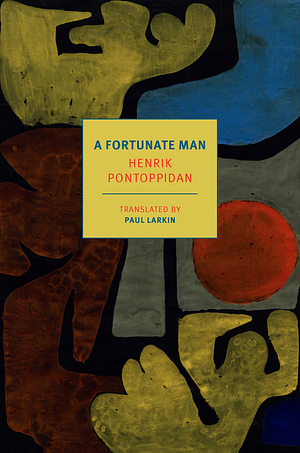
Before I plunge into my topic, FictionFan and I are announcing a Review-Along of the works of Henrik Pontoppidan, the Danish Nobel Prize for Literature winner (1917). We both chose his most famous book to read, A Fortunate Man (also known as Lucky Per), but readers are welcome to choose any of his works that are available. We’re aiming for March, as A Fortunate Man is a real doorstopper! See the details at FictionFan’s announcement post here!

James Tait Black Fiction Prize Wrap-Up

A few years ago, I decided to add the James Tait Black Fiction Prize to my shortlist projects. However, after a while I felt like I was reading too much British fiction as opposed to American or fiction from other countries, since all my prize projects were Brit-based and I also read a lot of reprinted British fiction. So, I dropped the James Tait in 2023 and added the Pulitzer Prize for Fiction. For the James Tait, I started my list back a few years, at 2010.

When I was just trying to wrap up this project by finishing the few books I had left to read, some fellow bloggers asked me if I would provide a wrap-up post for my reading. So, here it is, for the shortlisted books from 2010-2023, I know I’m finishing a few years later, but many of the books for this project were never available from my library, so I waited to see if they would become available and at the end, had to buy them. That hasn’t been a problem with my Booker or Pulitzer projects, although it has sometimes affected my Walter Scott Fiction Prize project.

The Data

Thanks to a request by FictionFan, I am providing data about my project. I am not a data person, so bear with me.

I began this project October 6, 2017, and decided to wrap it up in 2023. I finished reading on October 4, 2025, but it’s taken me this long to schedule the final two reviews. I posted my last review last Thursday, November 20, 2025.

Number of books read for project: 57

Ratings in The StoryGraph

Keep in mind that until 2025, I stored this data in Goodreads, which does not allow fractional ratings. There were only two books in the list that had fractional ratings, so I rounded them down. I am not really happy with 1-5 ratings, because to me, a 3.25 rating (a little bit better than 3, which is my meh rating), for example, is a lot different than a 3.75 rating (almost a 4).

Yes, I made some charts! It’s been a long time since I used Excel, so pardon me for any awkwardness. As you can see below, most of the books were rated either 3 (green) or 4 (blue).

Author Information

Number of female authors: 34; Number of male authors: 22

Note that one author made the shortlist twice.

I made a chart for author nationality. This chart is off by one because Sarah Hall is listed twice in my data, and I couldn’t figure out how to exclude one of her from this chart. So, there is one extra count for “English.” I used nationality as listed in Wikipedia, which for some authors listed two. Where are the Canadian authors, guys?

Settings

This answer was difficult, because some settings were unspecified while other books were set in several places, and one was just “Europe.” The chart I generated was unpleasing, so here is the data entered by hand for number of books in a setting:

U. S.: 17
England: 13
Ireland: 2
Scotland: 2
Multiple countries: 9
Unspecified: 5

Only one novel is set in each of the following countries: Kosovo, Bulgaria, Italy, Spain, Nigeria, Russia, Japan, Uganda, and Vietnam.

Genres

This section is problematic, I know, but I decided to add it at the last moment. The problem is that genres are so fluidly described these days that I could have a different list for each book! I tried for broader categories and used a search when I needed to, but sometimes I got as definitive a genre as “novel.” I also realize that short fiction could also fit into one or more of these genres, but I didn’t go there. I didn’t want to deal with specifying more than one genre per book. So, I did my best. Here is the genre breakdown I came up with. I was surprised by how many of the novels were historical, although I know it has recently become a very popular genre.

How Much I Liked Them

I wasn’t sure how to organize this section, so I decided to break it up into categories by how much I enjoyed the book. So, with no more adieu . . . These books are ordered by year of the prize, with the earliest first. For the most part, you will see that the category I put a book in has no relationship to whether it won that year or not. Winners are marked in red.

Books I Loved

Books I Highly Recommend

Books I Moderately Recommend

So-So or Even Meh or Some Good Stuff

Books I Actively Disliked or That Annoyed Me

Best and Worst

The best book choice is tough, but I pick Wolf Hall by Hilary Mantel. It captured me every second and was minutely researched.

The worst book choice is easy, the only one I didn’t finish, You & Me by Padgett Powell. Who needs to rewrite Waiting for Godot anyway? And so unfunny.

Review 2654: #NovNov25! Why Did I Ever

Technically, Why Did I Ever is a little longer than the page limit for Novellas in November at 210. But I found it in a list of recommended contemporary novellas and read it for this event.

Part of me doesn’t want to present a cogent plot synopsis for this book, because it isn’t presented cogently. Instead, the novella is written in fairly unconnected snippets, some of them titled but in a way that seems to have nothing to do with the snippets.

So, maybe not a synopsis, but here are some of the things that are going on. Melanie Money (we don’t learn either name for quite some time) hates her job as a Hollywood script doctor. She lives somewhere in the Deep South but occasionally flies to California for bizarre meetings about an inane script.

She has two grown children. Mev, her daughter, is methadone-dependent and has trouble keeping a job. Paulie, her son, is in New York under protective custody before testifying against a man who held him prisoner and viciously abused him.

In her home in a small Southern town, she has two very odd friends—the Deaf Lady, an old lady who is not deaf, and Hollis, a driving instructor who seems to spend most of his time in Money’s house.

Money has a boyfriend in New Orleans named Dix who calls a lot but from whom for a while she is keeping her address secret. She doesn’t regard him as very smart, but he seems to care for her.

Aside from the states of her various relationships, in which every character seems to respond to what is said with a non sequitur, the ongoing plot is about the state of the script and whether Melanie will be fired and about Paulie’s situation.

Melanie herself obsessively covers everything in her house (literally everything, even her books) with a coat of paint or alphabetizes everything, seems to drive aimlessly around the South, and worries about her missing cat and her kids.

It’s a very disjointed account, but it’s quite funny at times, especially about the movie industry.

Related Posts

Milkman

Girl, Woman, Other

A Girl Is a Half-Formed Thing

Nonfiction November 2025! Week Five: New to My TBR

Welcome to the last week of Nonfiction November 2025. This week the host is Deb at Readerbuzz, and the prompt is New to My TBR:  It’s been a month full of amazing nonfiction books! Which ones have made it onto your TBR? Be sure to link back to the original blogger who posted about that book!

In her roundup for the year, Shoe’s Seeds & Stories reminded me of Amy Tan’s Backyard Bird Chronicles. I must have read about that book on her blog last year, but I also listened to an NPR interview with her about the book. I still have that book in my pile, but Shoe also mentioned her memoir, The Opposite of Fate. I think I would like to read that.

In her roundup, Kate of Books Are My Favourite and Best mentioned Hannah Kent’s memoir, Always Home, Always Homesick, about falling in love with Iceland. I’m kind of fascinated by Iceland, and I loved Kent’s book set there, so I’m putting that one on my list.

On Books Please, I read about Islands of Abandonment by Cal Flynn, about what happens to places when they are abandoned by people. Sounds fascinating!

I noticed that Say Nothing: A True Story of Memory and Murder in Northern Ireland by Patrick Radden O’Keefe is mentioned by Anne in My Head Is Full of Books. This is another book in my pile that I think I read about last year but have not gotten to yet. So, not new to my TBR but waiting.

A memoir that looked interesting on Fanda Classic Lit was Notes from an Island by Tove Jansson & Tuulikki Pietilä, and it has a map on the cover! I love maps!

This book isn’t nonfiction, but Michelle Paver’s name has been popping up all over the place lately, so when Olivia of Bemused and Bookish paired it with a nonfiction book of exploration, I put Rainforest on my reading list. I didn’t put the nonfiction book on my list because I already read a similar book called The Lost City of Z by David Grann. Also, it has a great cover.

Also from Olivia’s post for book pairings is Uncredited: Women’s Overlooked, Misattributed & Stolen Work by Allison Tyra. As a woman whose work has been overlooked and misattributed, I think this will be interesting.

I think the Franklin Expedition is fascinating, and I have already read several books that are either about it or reference it, so when Aj Sterkel of Read All the Things posted Ice Ghosts by Paul Watson, I had to add it to my list.

Aj Sterkel also brought up Stiff by Mary Roach, which made me remember how much I enjoyed her book about space exploration, Packing for Mars. Learning what people have done with corpses throughout time sounds interesting. So, I put that on my list. And, by the way, Read All the Things also reminded me that I have not yet read Sapiens by Yuval Noah Harari, which I put on my list last year.

Joy of Joy’s Book Blog mentions The Warmth of Other Suns by Isabel Wilkerson, a book I read in 2015. This reminds me that I have not yet read Caste, by the same author, a book that I have had on my list since it came out. And she also reminded me of another book that I’ve had on my list for a while, Fever in the Heartland by Timothy Egan.

So, I’m cheating a little bit by mentioning some books that are on my TBR, but I have added quite a few this week.

Review 2653: #NovNov25! For Thy Great Pain Have Mercy on My Little Pain

The fourth novella I chose (via eeny meeny miney mo) for Novellas in November is about two real figures in Medieval literature, Margery Kempe and the anchoress Julian of Norwich. Julian of Norwich’s book Revelations of Divine Love is the first surviving book written by an English woman, and the book Kempe dictated (as she was illiterate), The Book of Margery Kempe, is the first-known autobiography in English.

The point of view alternates between Julian and Kempe. Both have experienced revelations, although at that time to do so was considered heretical. Julian experiences losses of everyone in her family and eventually decides she wants a life of contemplation. She becomes an anchoress, a woman who lives in a small room attached to a church, cemented in, the room with three windows—one to observe the church services, one to pass things back and forth with the maid, and one looking out on the street. People can talk to her but aren’t allowed to see or touch her.

Margery reacts to her revelations differently. She has had 12 children but doesn’t seem to like them or to like sex with her husband. Her point of view sounds like she has gone into permanent post-partum depression. She goes to the streets telling about Christ and sobbing loudly. She is several times examined for heresy. She disturbs church services and pilgrimages with her crying.

This book eventually leads up to an imagined meeting between the two women. It is well written and provides insight into the Medieval religious mindset and beliefs. Religion is seldom my cup of tea, though, so don’t ask me why I chose this book. I can’t remember.

Related Posts

The Name of the Rose

To Calais, In Ordinary Time

The Mistress of Husaby

Review 2652: Alligator & Other Stories

Alligator & Other Stories is the last book I had to read to wrap up my James Tait Black project. It is a collection of nine stories by Syrian-American writer Dima Alzayat, all with a theme of dislocation.

I was nearly brought to tears by the first one, “Ghusl,” about a woman preparing the body of her younger brother for burial, against tradition. The woman’s name is Zaynab, and I believe she is the same woman we read about in later stories.

“Daughters of Manät” (does it mean “destiny”? all I could find was a definition of the word without the diacritical mark) also brings in Zaynab as the aunt of the narrator, but it begins with a woman stepping out of a window, presumably committing suicide. This act indicates a shift of point of view between telling the story of Zaynab and whatever else is going on, but that’s just it. The rest is beautifully written, but I found it a bit opaque.

“Disappearance” is the only story that doesn’t seem to contain characters of Middle East origin unless one is Etan, a boy who has disappeared. The story is written from the point of view of a young boy who is not allowed to leave his New York apartment building during the summer that Etan disappeared.

In “On Those Who Struggle Succeed,” a young college graduate makes compromises, including hiding her Lebanese ethnicity, to try to succeed at a company.

In “The Land of Kan’an” an Egyptian man living in Los Angeles tries to overcome his predilection for men as sexual partners.

“Alligator” is a long story that shows America’s history of racism through newspaper clippings, interviews, and testimony, reverting many times to the killing of a Syrian grocer and his wife in Florida by the police in 1929. Although it employs the technique, becoming more common, of using documents to tell its story, I think it is overly long and a bit redundant. I hadn’t realized until reading it, though, that there was a large emigration of Syrians in the early 20th century and that they were treated like my Irish ancestors were in the late 19th century.

“Summer of the Shark” is from the point of view of a young man of Jordanian descent working in a call center on 9/11.

In “Once We Were Syrians,” Zaynab makes another appearance as a grandmother tries to explain to her granddaughter what her Syrian heritage means.

In “A Girl in Three Acts,” a teenage girl in foster care reconnects with the Christian Syrian family that ostracized her branch of the family when her grandfather converted to marry a Muslim girl.

I found the first and last stories most affecting. The stories are beautifully written, but since short stories are not really my thing, I’d like to see a novel by Alzayat.

Related Posts

Travelers

Unaccustomed Earth

In the Eye of the Sun