Review 2556: American Psycho

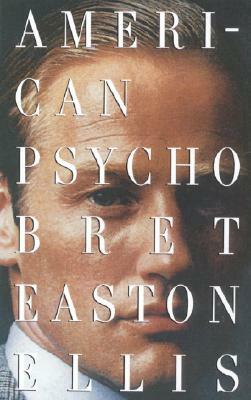
Is American Psycho a satire? a commentary about the manners and morals of young, wealthy Wall Street workers? a faithful depiction of New York City in its seedy 1980s days? a horror story? Or is it all of these things? Whatever it is, it was a DNF for me, although I made it almost halfway through.

I avoided this novel when it first came out, because it caused so much buzz that I knew what it was about. However, when I saw it filled a hole in my A Century of Books project, I was curious enough to get it from the library.

Patrick Bateman is a twenty-six-year-old Wall Street executive who is obsessed by the condition of his body, what everyone around him is wearing, what he eats and drinks, and how wealthy he is. (In a scene halfway through the book, he is angry because two prostitutes he has hired don’t care what he does for a living or how much he makes.) He is exactly like all his friends and coworkers. In fact, a running joke is that they all look so alike that they keep mistaking one guy for another. There is one difference for Patrick. He is a serial killer.

As far as I could tell, there’s no plot to this novel, just one scene after another of he and his friends at dinner or in a club trying to impress each other, and then going out to score drugs or sex. Every outfit he and his friends wear is described, especially including brand names. (In the first scene with two girls in it, they are wearing clothes by the same designers in the same colors.)

There is nothing to like in any of these people. They are racist, sexist, homophobic monsters who think it’s funny to hold money out to a homeless person and then snatch it back. The only seeming difference between Patrick and his friends at first is that he occasionally says something extremely hateful and violent, sometimes to his friends, that they don’t seem to hear (possibly because they’re almost always in loud places or they are so self-absorbed that they’re not listening). At first, these utterances and similar thoughts seem to be just very strange fantasies, but anyone who has heard anything about the book knows they are not.

The novel faithfully depicts late 1980s New York, in all its glitter and grit. It also includes conversations that, unless the men are being crass, hateful, or rude, read as if they’re taken verbatim from stereo brochures, etiquette and travel books. One chapter, thankfully short, is about the musical artistry of Genesis, and two pages are devoted to describing Patrick’s stereo system. The technology passages, meant to show how up-to-date and expensive his equipment is, now just seem dated.

The serial killer part doesn’t come out right away, but I don’t feel like I’m writing spoilers because this book is so famous. There are hints that something else is up besides partying, especially when he describes his expensive overcoat streaked in something dark or is furious because he can’t communicate with his Chinese laundry about getting the blood off his clothes. Finally, after about a hundred pages, he brutally murders a homeless man and cripples his dog. That’s just the first one he describes (although apparently not the first one he commits) and I read another 50 pages but ultimately couldn’t face the nail gun (which I only know about from seeing a picture from the movie).

I hated, hated, hated, this book.

Related Posts

Bright Young Women

Famous Trials

The Midnight Assassin: Panic, Scandal, and the Hunt for America’s First Serial Killer
Review 2555: Angle of Repose

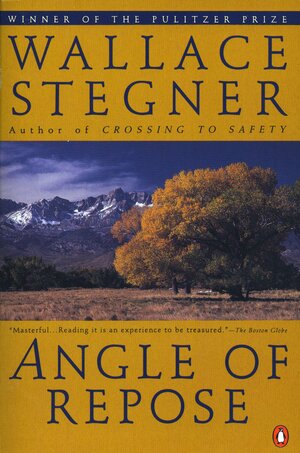
Again, when I finished reading this book, which was supposed to be for my A Century of Books project, I found the year already occupied. I have been using Goodreads and often Wikipedia to find books for each year, but Goodreads seems particularly inaccurate. I suspect that what happened here was that it listed the novel for, say, 1981, where I still have a hole (as of this writing in February), because of a 10-year anniversary reprint. I often check the dates if they seem suspicious, but this one didn’t. It’s especially bad now because it took eight days to read, and I am way behind on my reading. I only have a few more books to go, but from now on, I’m double-checking the publication date before I start reading.

Lyman Ward, a former academic just in his 50s, has contracted a bone disease that has frozen his neck so that he can’t turn it, confined him to a wheelchair, and resulted in the amputation of one of his legs. He is almost completely helpless, so his son wants to move him into care, but he stubbornly remains in his grandparents’ home in Grass Valley, California, being taken care of by Ada, a local woman.

His wife, Ellen, left him abruptly for his surgeon when he was helpless in the hospital. Although her partner died soon after and she has shown signs of wanting to return, he stubbornly refuses to see her.

Lyman can read, though, and do other sedentary activities. He was raised by his grandparents, and his grandmother was in her time a famous illustrator and writer, Susan Burling Ward. He has come across newspaper clippings and letters she wrote to her best friend, so he decides to write a biography of her, partly to answer questions for himself about events in his family he doesn’t understand.

Angle of Repose combines Lymon’s current experience and thoughts as he does this work with the events in the biography he is writing. The historical arc of the novel predominates, so much so that I occasionally wondered why Lyman’s story was there at all. However, by the end I understood how his grandparents’ history informs his own.

It’s a mismatch. Susan Barling as a young woman is from Upstate New York, a gifted artist just beginning to become known. She yearns for a life of culture. Her best friend, Augusta, comes from a prominent, cultured New York City family, and as young women, Susan and Augusta make a threesome of friends with Thomas Hudson, a poet and editor who goes on to become famous himself. She meets Oliver Ward, a young mining engineer, when she is very young. Unlike her other friends, he is taciturn and maybe too respectful of them all. He goes away on a job in the West for five years.

Thomas, sensitive, intelligent, and delicate, is Susan’s idea of a perfect man. He picks Augusta, though, and Oliver returns around the same time. Despite her friends’ misgivings, Susan decides to marry Oliver. Her idea is that Oliver can get some experience in the West and then move back East to live a more cultured life. She doesn’t seem to realize that to do his work, he must be in the West, and he is suited for that life.

As far as his career is concerned, Oliver seems too prone to consult Susan’s convenience, and she has unrealistic ideas. He turns down some opportunities because they don’t seem suitable to Susan. He takes a short-term job and they live apart. (She is too genteel for these rough mining camps.) She finally joins him near a mining town named New Almaden, southeast of San Jose. He has taken a house away from town, which anyway she removes herself from, as she does everywhere they live, thinking herself too good for the company. As Lyman says, his grandmother is a snob. Here she begins a pattern of not joining into society and their life but enduring it.

The couple doesn’t thrive financially. At this time, there are lots of qualified engineers available and most of them aren’t as fussy about where they’ll go. Susan’s work writing articles about the West and illustrating other writers’ work is helping support them, despite Oliver’s dislike of the situation and Susan’s complaints about it. They move to Leadville, Colorado, which although it is primitive, allows her to open her home to some intelligent visitors and have lively, informed discussions, which she loves. But the Leadville mine eventually grinds to a halt because of a lawsuit brought by would-be claim jumpers.

The couple goes to Mexico, which Susan loves, but the mine doesn’t prove promising. Their projects gain and then lose funding, and so on.

Susan writes to Augusta constantly, but Augusta never acknowledges Oliver as a fit husband. I fear that much of Susan’s growing disappointment has to do with wanting to justify her choice to her friends.

In the novel’s current time (the late 1960s and early 70s), Lyman expresses some irritating views on the times and young people. I wasn’t sure whether they were Stegner’s own views or more delineation of Lyman’s character, but Lyman eventually forms a sort of friendship with a young woman who acts as his secretary for a time.

This is ultimately a fascinating and absorbing story, but this time through (I apparently read it in the mists of time but didn’t remember anything about it) I kept getting distracted from it. I’m not sure why. I think, though, that it deserved more attention from me. Although I was bothered by Lyman seeming to blame all his grandparents’ problems on his grandmother (and after unfortunate events, his grandfather’s intransigence), the novel is considered Stegner’s masterpiece and won him the Pulitzer.

Related Posts

Obscure Destinies

The Town

North Woods

Review 2554: #ReadingAusten25! Pride and Prejudice

For years, I read all of Jane Austen’s novels once every year, but I haven’t done that since I started this blog. Now, Reading Austen 25 has given me an excuse to do it again.

The neighborhood is thrilled, because Netherfield Park, a large estate that has been vacant, has been leased. More importantly, the new occupant is Mr. Bingley, a young, single man of fortune. Foolish Mrs. Bennett, with five single daughters, is certain he will marry one of them.

Mr. Bingley has come with friends, and the first time everyone meets them is at a local ball. Although Mr. Bingley seems attracted to Jane Bennett, Elizabeth Bennett’s beautiful older sister, his friend Mr. Darcy stays aloof from the locals and will only dance with members of his own party. (That may seem okay to modern readers but is really very rude for the time.) When Mr. Bingley tries to get him to dance, suggesting Elizabeth as a suitable partner, Darcy slights her.

Later, Lizzy meets Mr. Wickham, a pleasing young man who grew up with Mr. Darcy. He tells her that Mr. Darcy has treated him wrongly, especially that he withheld a living from him that was promised to him by Darcy’s father. Lizzy is shocked.

Things look good for Jane, though, as Bingley is very attentive. Unfortunately, at a ball hosted by Bingley, all of Lizzy’s family except Jane behave in an embarrassing manner—her mother loudly discussing Jane’s chances with Bingley, her foolish younger sisters making exhibitions of themselves, and her father loudly correcting Mary. The next thing they know, the entire Bingley party has left for London with no intention of returning. Lizzy blames Jane’s disappointment in love on Caroline Bingley—Bingley’s sister—and on Mr. Darcy.

This novel is a domestic drama, a romance, and a witty social satire. Austen is gifted at creating characters whose personalities become obvious almost as soon as they open their mouths. I find it hard to choose my favorite Austen novel, but this one is certainly the funniest, with such characters as Mr. Collins, Mrs. Bennett, and Lady Catherine De Bourgh.

Harking back to a discussion last month about Austen’s wobble between sense and sensibility, I see more evidence of it here, when Mr. Darcy takes Jane’s calm demeanor for indifference to Mr. Bingley and when, later, he doesn’t speak to Lizzy because he can’t tell if she cares for him.

Anyway, of course, this novel is great.

Related Posts

Sense and Sensibility

Persuasion

Mansfield Park

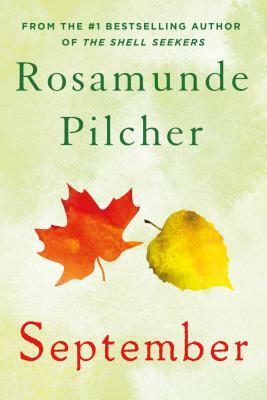
Review 2553: September

I think Rosamunde Pilcher is considered a romance novelist. Judging from this book, though, I wouldn’t call her that. Although there are some romantic situations in it, this book, in its focus on family and the beauties of Scotland, reminds me more of something by Molly Clavering’s or D. E. Stevenson’s family-oriented novels, although much more recently written.

The novel is about two families in small-town Scotland and particularly what happens when a neighbor decides to hold a ball for her daughter in September.

Violet Aird is a mother and grandmother. Her son Edmund is a businessman who spends a lot of time traveling. His daughter Alexa is a shy young woman living in a house she inherited from her other grandmother in London. His second wife, Virginia, is an American who loves being home and taking care of their eight-year-old son, Henry.

The other family is the Balmerinos. Archie Balmerino is the local laird, and although he owns a lot of land, the family isn’t as prosperous as it was, especially since Archie lost a leg in Northern Ireland. His wife Isobel has arranged to take paying guests in the summer as a result. Archie’s sister Pandora ran off with a married man when she was 18 and hasn’t returned. Archie and Isobel have children, twelve-year-old Hamish and much older Lucille, who has been living in Europe.

Lucille is traveling around Europe with her Australian friend, Jeff, when she decides to go to Majorca to visit her Aunt Pandora, whom she has never met. Pandora is beautiful, rich, and generous. Lucille hadn’t been planning to return home for the ball, but Pandora decides they should all drive back together for the party.

Trouble is brewing between Edmund and Virginia, because Edmund has signed Henry up to go to boarding school in the fall without consulting Virginia. When Virginia objects that he is too young, Edmund thinks she is babying Henry and is coldly insistent. About then, she meets a man Alexa has invited home, who turns out to be an old friend.

Alexa herself has become involved with a man for the first time. He is Noel Keeling, up to now a lady’s man who usually dates women a lot more attractive than Alexa.

I said this novel isn’t exactly a romance, but it unfortunately employs some romance conventions. One is to describe almost everything everyone wears. The other is to describe almost every room people enter. Pilcher also tells us the contents of almost every meal, no matter how commonplace. In fact, I found the book to be about two hundred pages longer than it needed to be.

Another issue I had with it was that although it was published in 1990 and gave no clear indication of its time setting, it seemed so horribly out of date for then that I wondered if it wasn’t an old manuscript that had been set aside until the success of The Shell Seekers. One example is that the American Virginia spots an American across a room and wonders why you can always tell an American. He doesn’t even wear a crew cut. What? I haven’t seen a crew cut on anyone except the military since about 1961!

And then there is Archie with his false leg made out of either tin or aluminum. In the 1970s-90s, legs were being made out of such things as polymers, and I think I can safely say that no one has ever made an artificial leg out of tin or aluminum, neither of which would support the weight. (Oh, I see now that artificial legs were made out of Duralumin, a hard, lightweight alloy of aluminum, during World War I. Well, the time setting may not be specified, but the novel is set a lot later than that, at least in the 1960s or 70s and I suspect later.)

I was interested enough in the story to finish it, even though Pandora’s big secret was pretty obvious from near the beginning of the book, but thought the novel was only a middling effort.

Related Posts

Because of Sam

Love Comes Home

Family Roundabout

Review 2552: Malice

I have only read a few Japanese mysteries, and those, written in the 1990s, were more focused on the puzzle than motive and psychology. A couple featured eccentric buildings that no rational person would design, explicitly there to make the puzzle harder.

Malice, although written around the same time, 1996, is much more concerned with personality and motivation. It is also unusual because the murderer is arrested on about page 80.

Osamu Nonaguchi, a children’s book author, goes to visit his friend, Kunihiko Hidaka, a best-selling writer, shortly before Hidaka leaves the country to live in Vancouver, British Columbia. Later that day, Nonaguchi returns to the house when invited, only to find it shut up and the lights out. He is alarmed and calls Hidaka’s wife, Rei, who has moved to a hotel while Hidaka finishes some pages for his editor. When Rei arrives, they find Hidaka dead, possibly from hitting his head in a fall. But Hidaka, it turns out, was murdered.

When Nonaguchi is interviewed, he can only offer the information that Hidaka had an altercation with a neighbor about a cat, and that when Rei let the cat out of the house, the neighbor was talking to Masaya Fujio, who was suing Hidaka over one of his books.

Nonaguchi has known Hidaka since middle school. By coincidence, the detective, Kyiochiro Kaga, also knew Nonaguchi in school.

Although Kaga quickly identifies the killer, he is concerned with motive. Even though the killer eventually offers up a motive, Kaga is not satisfied.

This novel is written entirely in statements and interviews. Although Wilkie Collins used this method effectively many years before in The Moonstone, it makes this novel inert. Also, a problem I found in other Japanese mysteries, when the solution is finally revealed, Kaga goes over every little detail to explain it, sometimes more than once. I felt the novel was a good 50+ pages too long, and it dragged at times.

Although I liked this novel’s approach better than that of the other Japanese mysteries I’ve read, it didn’t have any action and moved too slowly.

Related Posts

The Decagon House Murders

Murder in the Crooked House

Number9Dream

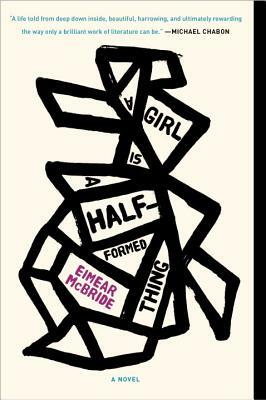
Review 2551: #ReadingIrelandMonth25! A Girl Is a Half-Formed Thing

I was going to review this book in February, but then I decided to hold it a few weeks so it could be part of #ReadingIrelandMonth25 hosted by 746 Books. This may be my only contribution, because I’m busy finishing my A Century of Books project. And now for my review.

When he was two, the unnamed narrator’s brother had brain cancer. To her mother’s mind, her praying rather than the surgery saved him, and she became extremely religious. Her father left, saying he couldn’t take it. So, she, the younger child, her brother, and her mother grew up in a sort of microcosm.

When she isn’t praying, their mother is full of anger, which is expressed at them, particularly at her. Their classmates think they are weird—he because he is slow and has a scar across his head, she because she scorns them and is intelligent. She doesn’t care, but he wants to fit in.

Then at 13, she begins a sexual relationship with an older relative that forms her later relationships with men around violence and mistreatment.

This book isn’t for everyone. For one thing, it is written in an experimental, half-incoherent style. It takes a while to get used to it. However, it is bold and bleak and ultimately it made me cry, which to me means it’s very good. It’s ground-breaking.

It contains scenes of verbal and physical abuse, sexual violence, and rape. Also, suicide and death. So be warned.

Related Posts

The Lesser Bohemians

Milkman

The Virgin Suicides

WWW Wednesday!

It’s the first Wednesday of the month, so it’s time for WWW Wednesday, an idea I borrowed from David Chazan, The Chocolate Lady, who borrowed it from someone else. For this feature, I report

  • What I am reading now
  • What I just finished reading
  • What I intend to read next

This is something you can participate in, too, if you want, by leaving comments about what you’ve been reading or plan to read.

What am I reading now?

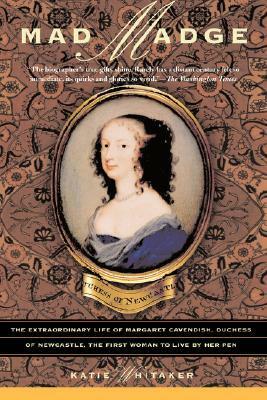
During Novellas in November last year, I read a novella about an interesting woman, Margaret Cavendish, Duchess of Newcastle, the first woman to publish more than one work. She was prolific, but she got the label of Mad Madge. We can assume that some men were jealous. Anyway, this is a biography of her, Mad Madge by Katie Whitaker, one of the source materials for the novella, I think. Not only will it work toward a larger number of books to report for Nonfiction November and fill a hole in my A Century of Books project, but I wanted to read it anyway. I am just getting started on it.

What did I just finish reading?

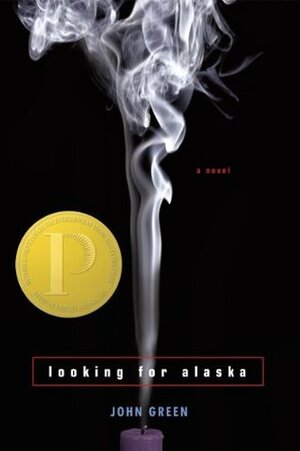
I don’t often read YA books, and I confess to being perplexed as to why so many adults read lots of them, but John Green is usually a reliable author and has even managed to tear me up at times. So, when I saw that Looking for Alaska filled a hole in my A Century of Books project, I got it from the library. Green, so far in my experience, usually writes about some major issue, and in this case, it is death and grief.

What will I read next?

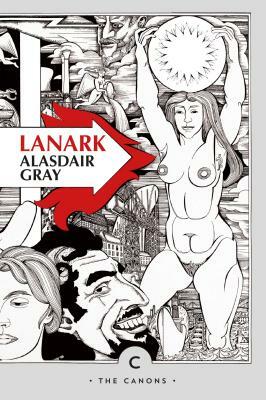
As of this writing, that’s a good question. The next book I have on my pile for A Century of Books is Lanark by Alasdair Gray. I am sort of dreading it, though, both because of its length and what the cover forebodes. (I’ve seen that exact same devilish character on the cover of another book from that era, and I remember disliking the book intensely, although I can’t remember what it was. I also find no succor in the image of the naked woman or in the blurb that says it’s “probably the greatest book of the century.”) I’m writing this a few days ahead, being very sure that I won’t finish Mad Madge by Wednesday since I am a slow nonfiction reader, so what I read really depends on whether some of my other A Century of Books selections arrive from the library before I finish it.

The books I’m waiting for are, in order of how long I’ve had them on hold:

  • Girl Interrupted by Susanna Keysen (which I’ve been waiting for since December, so I suspect it’s stolen; however, one time that I had a book on hold for several months, they apparently bought another copy, because the one I finally received looked unread)
  • A Short History of Nearly Everything by Bill Bryson (which is probably going to end up being another big honker)
  • Sarah’s Key by Tatiana Rosnay (I think I read another book by her and didn’t like it, but this one was very popular—we’ll see.)
  • The Quiet American by Graham Green (The movie was good.)
  • Moo by Jane Smiley (I have an uneven relationship with Jane Smiley. Sometimes I think her books are so-so and other times they’ve been great. We’ll see.)

Update! Not only did some of my library books arrive yesterday, but almost all of them did! The only one that didn’t arrive was A Short History of Nearly Everything. (We should have a copy in the house, because I gave one to Wayne for a present years ago, but of course, since it’s his, he can’t find it.) So, the next book I read will probably be The Quiet American. Girl, Interrupted is shorter, but I just read a nonfiction book, so I don’t want to push it. I know it’s silly to read shorter books first, but I just read several big honkers in a row!

What about you? What are you reading, or what have you finished reading?

Review 2550: Literary Wives! Lessons in Chemistry

Today is another review for the Literary Wives blogging club, in which we discuss the depiction of wives in fiction. If you have read the book, please participate by leaving comments on any of our blogs.

Be sure to read the reviews and comments of the other wives!

My Review

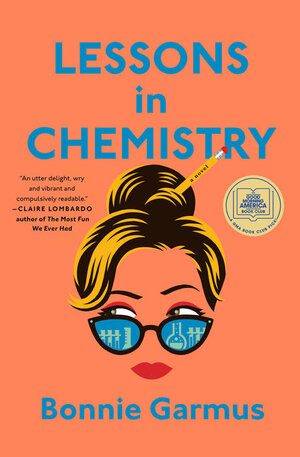
I finally got to read Lessons in Chemistry. It’s been sitting in my pile for more than a year waiting its turn for the club.

Elizabeth Zott is a chemist in the 1950s, when any career for a woman besides secretary, teacher, or nurse is unusual. She was accepted as a Ph.D. candidate at her university when her advisor sexually assaulted her, so she stabbed him with a pencil. Although he had a reputation, she was accused of cheating and expelled. So, she has no doctorate.

She gets a job at Hastings Laboratories in a town in California, but she is treated like a secretary. However, she meets Calvin Evans, a scientific genius with no social skills, and after a misunderstanding, she interests him in the work she is doing on abiogenesis. Soon, they fall in love. The people at their workplace interpret their synergy to Zott’s ambition to succeed. The couple acquires a dog, which they name Six Thirty (a great, if slightly unlikely, character). Zott is determined not to be married because she knows any breakthroughs she makes will be attributed to Calvin, but Calvin determines to ask her to marry him. We never find out how this will work out, because he is killed in a freak accident.

I may seem to be giving a lot away, but there’s a lot more to this story. For one thing, Garmus has created a unique character in Elizabeth Zott. She is straightforward, forthright, and determined to be treated equally with men. She doesn’t understand the meaning of compromise or of hidden messages.

I know I’m not conveying what this book is like, though. Despite the many obstacles and injustices that Elizabeth encounters, the tone of this novel is light and often funny, as Elizabeth misunderstands the other characters, and they misunderstand her. Yet, the novel has a strong message of feminism, and if younger readers think the misogyny in it is exaggerated, I can tell you it isn’t. (I remember talking to my father, who was a vice president of a large corporation, about a job interview at his company—for which, by the way, he gave me no assistance because he thought it would be unethical. I complained that the first thing they wanted to do was give me a typing test. He told me that was how to get started. I asked him if he had to pass a typing test when he first went to work. He didn’t understand my point.)

As someone who wanted to be a boy when I was a child, because boys got to do things, I really related to Elizabeth Zott. She’s a great character, and I loved this book.

What does this book say about wives or about the experience of being a wife?

Literary Wives logo

The marriage examined in this book is more of an implied one about everyone else, since Elizabeth and Calvin aren’t married. The problems that Elizabeth has are rooted in the attitudes about marriage at the time, the clichés that Elizabeth doesn’t want to have anything to do with—that the wife is the homemaker and mother, and the husband earns the bread, that women don’t have careers, that the women who work are basically there to be sex toys for their bosses, that women are subservient to their husbands and probably not even intelligent, that in terms of science, findings would be attributed to the husband.

Elizabeth and Calvin, the main relationship in the book, are not married, and they have an intellectual synergy that is above these notions. But the implications of the notions have all their coworkers buzzing that Elizabeth is sleeping her way to the top, rather than that she is contributing to the work intellectually.

The point of the novel is to break all these stereotypes and show what Elizabeth is able to do despite all the setbacks. And have fun reading about it.

Related Posts

Euphoria

Recipe for a Perfect Wife

The Time of Women

Review 2549: A Bend in the River

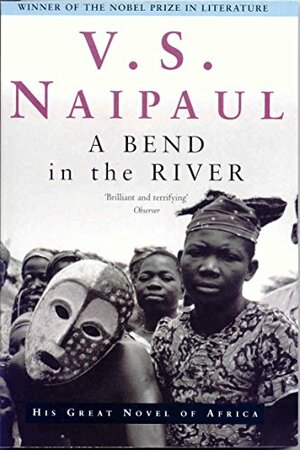
Salim is a young man of Indian descent who was born and raised on the east coast of Africa, at that time a cosmopolitan and wealthy area. Feeling the need for a life change, he buys a store in an unnamed Central African country (probably Congo) based on the stories his friend has told about the town. He makes the difficult journey there. It is the mid-20th century when African countries were throwing off their colonial rulers. He arrives to find the rebellion has destroyed the town.

Salim makes a life there, following a second rebellion, a boom and rebuilding, the reappearance of Europeans, and so on. However, he struggles with a sense of inertia and lack of identity.

This novel has been criticized for leaning toward colonialism. I’m not sure it does, but certainly it spends a lot of time looking at the characteristics of what Salim might call “bush Africans.” The new leader of the country is such a man, and at first, he seems to be a symbol of hope and prosperity, but eventually things change.

I was enthralled by the beginning of the book but not as interested as political issues emerged. There is a long section about an area called The Domain, sort of like the unoccupied cities the Russians and Chinese have built, that bored me. Also, there is a shocking scene when Salim attacks his lover.

Related Posts

Afterlives

The Promise

Things Fall Apart