Review 2591: Lady Living Alone

For quite some time in reading this novel, there is no indication of what it will become. It seems to be a domestic novel about a modest woman in her 30s, Penelope Shadow, disorganized, scatterbrained, unconventional, undomesticated, and of little means until she has a hit with her fourth novel. Soon enough, she is doing well and is able to move out of her sister’s house and buy her own. She has trouble keeping servants, however, and that is mostly an issue because of her phobia of being in the house alone at night.

On her way home from visiting friends, Penelope is forced to stop in a hotel at night because of the weather, but more because there is no one at home, the servants having quit while she was gone. The hotel is pretty dreadful, but a very handsome young man who is working there brings her tea when she wants it. He later confides to her that he’s leaving in a few days because he was hired as a waiter but is made to do all kinds of other work—cooking breakfast, cleaning, and so on.

He is so efficient and seems so kind that Penelope decides to ask him to work for her. His reaction when she’s not looking is the first indication that the novel is going somewhere other than expected.

Everything goes so well at home with Terry working for her that she is in seventh heaven. This state lasts for months until Terry comes home angry because, he says, people are spreading nasty rumors about their relationship. Instead of hiring another woman to live in the house, Penelope says they should get married.

Maybe, like me, you don’t think this is a great decision. Slowly, the novel shifts from a domestic drama to suspense.

This novel is a little different from anything I’ve read. It takes its time getting to where it is going without being a long book, and even after the reader is fully aware that things are going badly, Penelope is basically the only person who doesn’t know that.

I liked this novel a lot. I liked Penelope and sympathized with her problems, even though she is so impractical and looks too hard for people’s better nature. My dread grew toward the end of the book, and the ending was quite suspenseful.

Lofts wrote this book under the name of Peter Curtis so as not to confuse her usual readers, who expected historical novels. I’m going to look for more by Peter and also for those under her own name, as she is a writer I haven’t read before.

Related Posts

Touch Not the Cat

The Circular Staircase

Before I Go to Sleep

Review 2590: The Night of Fear

At a Christmas house party with the staff dismissed to attend a party in the village, the guests play a game of hide and seek. The host, George Tunbridge, and Julian Haviland, a young guest, wait for 20 minutes after the lights have been turned off at the main and then are supposed to look for those in hiding. However, before they begin to do that, another guest, a blind man named Hugh Darrow, comes running out in a panic. He has discovered the bloody body of another guest, the famous writer Edgar Stallard.

Sergeant Lane has Inspector Collier of Scotland Yard staying with him as a guest, and he is happy to bring him along on the case. Suicide being ruled out because of the absence of a weapon, and no forced entry discovered, the police feel the murderer must be one of the guests.

Aside from George Tunbridge and his wife, who is so shaken she takes immediately to her bed, the guests are Sir Eustace Tunbridge, a pompous older man engaged to a beautiful young Diana Storey; Mrs. Storey, Diana’s grandmother, who went to bed early; Ruth Clare, a young woman who it becomes clear is in love with Hugh Darrow; and a bunch of young people, including Angela Haviland, who were hiding together and are so alibied. Even George and Julian are without an alibi, as they stood on either side of a screen as they waited.

Unfortunately, the Chief Constable is offended to find Collier on the scene, and he is asked to report back to London. That leaves Sergeant Lane to investigate by himself for a day. The next morning, he is found unconscious from a gas leak in his room. Collier is convinced that he was on to something, but his notes have been ripped from his notebook. Collier’s replacement, Inspector Purley, arrives and comes down heavily on everyone then concludes that the murderer was Hugh Darrow, who had a grudge against Stallard and didn’t tell anyone that his blindness was cured from the shock of discovering the body. In making this decision, Purley is ignoring some clues—that despite typing at all hours, Stallard appears to have left no notes or manuscript in his room and that Sergeant Lane is poisoned in the hospital after Darrow is arrested.

To help with the defense, Collier recommends a private investigator, Mr. Glide. When Sergeant Lane is poisoned, he is unable to speak but writes a clue on a piece of paper.

This novel wasn’t quite as zippy as Dalton’s first one and had a little too much recap of the evidence, but it was still fun to read and fairly baffling. It looks to me as though Mr. Glide might become a recurring character. I’m looking forward to the next one.

I received this book from the publisher in exchange for a free and fair review.

Related Posts

One by One They Disappeared

A Christmas Pary

The Christmas Card Crime and Other Stories

It’s Time for Another Classics Club Spin!

The Classics Club is beginning its 41st spin event this week. If you are a member and want to participate, just post a choice of 20 books from your Classics Club list in a numbered list before Sunday, June 15. You can duplicate some, especially if you don’t have 20 books left to read, like me.

The Classics Club will announce a number on Sunday, and that’s the number of the book you should read from your list. The idea is to try to read that book before the 24th of August and post a review.

If you are not yet a Classics Club member and would like to participate, all you need to do is post a list of books you want to read, most people post 50-100 books, and a deadline by which you would like to have them read. Submit that list to the Classics Club, and you’re signed up! Then post your list of 20 for the spin.

Here’s my list of 20 for the spin:

  1. Love’s Labour’s Lost by William Shakepeare
  2. The Deepening Stream by Dorothy Canfield Fisher
  3. Our Mutual Friend by Charles Dickens
  4. The Methods of Lady Walderhurst by Frances Hodgson Burnett
  5. Cecilia, Memoirs of an Heiress by Frances Burney
  6. Tis Pity She’s a Whore by John Ford
  7. The Tavern Knight by Rafael Sabatini
  8. Les Misérables by Victor Hugo
  9. The Princess of Cleves by Madame de La Fayette
  10. The Three Musketeers by Alexandre Dumas
  11. The Passenger by Ulrich Alexander Boschwitz
  12. Love’s Labour’s Lost by William Shakepeare
  13. The Deepening Stream by Dorothy Canfield Fisher
  14. Our Mutual Friend by Charles Dickens
  15. The Methods of Lady Walderhurst by Frances Hodgson Burnett
  16. The Passenger by Ulrich Alexander Boschwitz
  17. Tis Pity She’s a Whore by John Ford
  18. The Tavern Knight by Rafael Sabatini
  19. The Princess of Cleves by Madame de La Fayette
  20. The Three Musketeers by Alexandre Dumas

Review 2589: Lies and Sorcery

This book was the last one I read for my A Century of Books project. At nearly 800 pages in small type and a fairly bizarre plot, it was quite a slog for me, but I was determined to finish it, especially because I hadn’t finished several others.

The novel is set in Sicily and narrated by Elisa, a young woman who is looking back over the history of her family to try to understand some complicated and intertwined relationships. She is an intrusive narrator, popping in frequently to make observations, and she implies in the beginning that she’s been mentally ill and is not altogether to be trusted. But I didn’t experience a big reveal that labels her as unreliable. Notes in the Introduction indicate that the novel is fairly autobiographical.

Elisa begins with her maternal grandparents. Her grandmother, Cesira, is a schoolteacher who marries Teodor Massia because he looks like a gentleman and acts like a gentleman so he must have money. Unfortunately for her, the Massia family throws him off because he has married a schoolteacher. Worse, he is a wastrel who blows away any money they have, so their daughter Anna grows up in poverty but with an inflated sense of self-worth as the daughter of the upper class.

On the other side of the family, Alessandra, the servant of a peasant, is happy to marry her elderly employer Damiano De Salvi, because for her it is a big step up. Unfortunately, they are not blessed with a child, that is, until she is dazzled by Nicola Monaco, a land agent who seems to her to be a great gentleman. When she has his child, she raises Francesco to think of himself as a person of great potential. The De Salvis spend every penny sending him to school and are repaid by his being ashamed of them.

For her part, Anna Massia (Elisa’s mother) spots her cousin, Eduardo Massia di Carullo, when she is five years old. Her mother points out this wealthy branch of the family, and Anna is struck by how handsome he is, like a prince. When they meet, more than 10 years later, he is struck by how beautiful she is, and she is instantly enamored. Unfortunately, Eduardo, although charming, is not a nice person, and he spends most of his time tormenting her and making her prove she loves him. They are engaged, but his family doesn’t know about it.

Eduardo, for some reason, befriends Francesco, who is a student in town dressed in shabby clothes, but he has adorned himself with some flashy but cheap ornaments and is introducing himself as a baron. It is through Eduardo that Anna and Francesco meet at a time when Eduardo is tiring of Anna. Francesco has no idea of their actual relationship and in fact never has. Then Eduardo disappears.

Anna doesn’t know that the Massia di Carullo family has been paying her mother a small amount of money every month since her father died. When Eduardo discovers this, just before he is ready to break with Anna, he tells his mother to double the amount. But this makes Anna find out about it, and she in her pride goes to his mother and says they don’t want her money. Then she and her mother are destitute, her mother ill and still having to teach, while she, indolent and untrained for anything, lies around the house all day. Francesco having fallen in love with her, she marries him even though he revolts her.

Our narrator describes all this in great detail, along with her parents’ marriage. Her mother is not at all maternal and often is quite nasty to her, but of course that makes the little girl idolize her more and follow her lead in disdaining her father.

The novel begins to turn into absolute weirdness about 10 years after the marriage when Anna learns that Eduardo died some time before of tuberculosis. Eduardo’s mother, who worshipped her son, has retreated from that reality and believes Eduardo is traveling around writing letters to Anna. Dona Concetta asks Anna to bring her the letters, which Anna begins writing.

Even though I have told a lot, by now, I’m not kidding, we are at about page 350 with plenty more to go as the entire family descends into madness.

Morante is a terrific writer, but she really takes her time. At one point early on, she is showing how Eduardo taunts Anna and she provides not one lengthy example but several. And these are sickening conversations.

The Introduction to my NYRB edition states that the theme of the novel is the inability to get out of poverty. That is certainly there, but I think a more important theme, aside from that of the perceived importance of class, is unrequited love. Nearly every character in the book loves someone who either doesn’t love them back or even actively despises them. And these people are tempestuous! And as for sorcery? Is there really a ghost of Eduardo or are these people driving themselves freaking insane?

Although the novel handles human emotions and behavior insightfully, and I sometimes sympathized with Elisa and occasionally with Francesco, most of the characters are more or less terrible, especially in their treatment of others.

I received this book from the publishers in exchange for a free and fair review.

Related Posts

Siracusa

My Brilliant Friend

The Bee Sting

Review 2588: Bluebird, Bluebird

Black Texas Ranger Darren Mathews is on suspension after he went to the aid of Rutherford McMillan, a man who has worked for his family for years. He is also having trouble with his wife, Lisa, who wants him to return to law school. Then a friend, Greg Heglund, an FBI agent in Houston, asks Darren to look unofficially at a situation in Lark in East Texas. There, the body of a Black man, an outsider, was found in the bayou and later the body of a White woman, a local, was also found there. Usually in that part of the country it’s the other way around, plus Lark hasn’t had a murder for years.

An interest for Darren is the Aryan Brotherhood of Texas, and he finds in tiny Lark a major presence. The only two businesses in town are Geneva Sweet’s café with mostly Black patrons and an icehouse up the road packed with members of the ABT. When he arrives at Geneva Sweet’s Sweets, he finds the locals nervous and unwelcoming. Missy Dale’s body was found right behind the café. At Jeff’s Juice House, just up the road, where Missy was a waitress, he finds the all-White clientele belligerent and violent.

Then Rainie Wright arrives. She’s the widow of Michael Wright, the first victim, and she is distraught. She worries Darren, because she is from Chicago and has no idea how to behave in the rural South (and no, this novel is not set in the past).

A person Darren finds of interest is Wally Jefferson, a rich White man whose mansion is right across the highway from Geneva’s café and who treats her and the café with a proprietorial air. But Geneva is prone to telling him to get out of her place.

Darren is inclined to suspect Missy’s husband of the murders, since Missy was seen talking to Michael at the icehouse. But that doesn’t quite satisfy him. There are connections here that he doesn’t understand.

I’ve been looking around for a new mystery series to follow, and this novel by Locke has me wanting to look for more. I am familiar with East Texas, and she has the atmosphere down. There is plenty of action and some suspense in this novel. I have to admit that my suspicions fell on a culprit pretty quickly, and I sensed that the story would have something to do with an earlier crime, which it did. But I certainly had some surprises coming. The only think I didn’t like was the cliché of the cop who drinks too much. Bluebird, Bluebird is listed as the first of Locke’s Highway 59 series, so I’m not sure if the others feature the same protagonist or just the locale or both. I have driven on that highway so many times!

Related Posts

The Trees

Raylan

The Devil All the Time

Review 2587: Luckier Than Most

Luckier Than Most is an autobiography by David Tomlinson, the stage and screen actor. Although I felt handicapped as an American reading this because I wasn’t familiar with many of the names he mentioned, I found it a pleasant read, and Tomlinson comes across as a good and patient person. Americans are probably most familiar with his comic work for Disney Studios, particularly in Mary Poppins or Bedknobs and Broomsticks. Although often a comic performer, he had serious stage roles as well.

Although some of his theater stories are interesting (and I noted that he rarely said a bad thing about anyone and was just as likely to say nice things about a crew member or understudy as he is about a star), I found most interesting his recollections of his childhood. Although fond of his mother, he and his brothers were terrified of their father, who was not affectionate and had a terrible temper. His father disliked David and told him he wasn’t going to amount to anything. He was hiding a big secret, hinted at from near the beginning of the book but not hard to guess, even though David and his brothers didn’t discover it until they were adults.

Later on, with David’s success and again with his discovery to CST (what the brothers called their father) that they knew his secret, David’s relationship to his father improved. CST even admitted that he had misjudged him.

The book is also interesting because of its light, well-intentioned stories about well-known figures. It was surprising, for example, to learn that Peter Sellers needed people around him all the times because he was an insomniac and had no hobbies or other resources for his spare time. The only person Tomlinson said anything negative about was the actor Jack Lord, who played in the original Hawaii Five-O.

If you want a book that dishes the dirt, this isn’t it, but if you want a nice, light read, it is.

I received this book from the publisher in exchange for a free and fair review.

Related Posts

Life Itself

In Pieces

Merry Hall

WWW Wednesday!

It’s the first Wednesday of the month, so it’s time for WWW Wednesday, an idea I borrowed from David Chazan, The Chocolate Lady, who borrowed it from someone else. For this feature, I report

  • What I am reading now
  • What I just finished reading
  • What I intend to read next

This is something you can participate in, too, if you want, by leaving comments about what you’ve been reading or plan to read.

What I am reading now

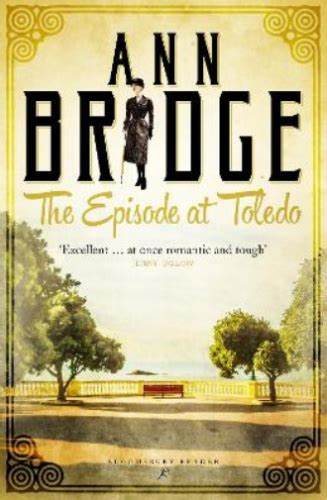
I just finished my previous book, so I haven’t actually started An Episode at Toledo by Ann Bridge. I have liked the couple other books I have read by Bridge, but this one is apparently a part of a mystery series she wrote. I haven’t read any of the others, and I’m afraid I’m getting this one out of order, which I hate to do if I can avoid it. Anyway, I’m looking forward to starting it today.

What I just finished reading

I just read The Safekeep by Yael van der Wouden for my Walter Scott Historical Prize project. It is set in the early 1960s in Utrecht, but the vestiges of the war are still in evidence. I don’t want to say too much about it here, because it goes somewhere surprising at the end. You’ll have to wait for my review!

What I am reading next

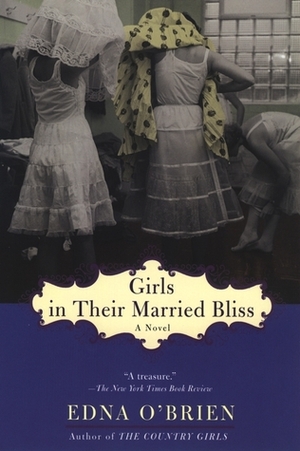
I sometimes forget what I said I was going to read next and read something else, but this time I think I’ll read the third book in Edna O’Brien’s Country Girls trilogy. It’s called Girls in Their Married Bliss, and I can’t help thinking that title might be meant ironically. I’ll find out!

Review 2586: The White Bear

The newly released (today, I think) reprint of The White Bear by NYRB is actually two novellas, The White Bear and The Rearguard. I wasn’t familiar with Pontoppidan but find he was an early 20th century Danish Nobel laureate. Both of these novellas were published in the late 19th century.

In The White Bear, we meet Thorkild Müller, who as a young misfit was directed into the ministry because of a grant that offered a generous university stipend for a theological degree if the recipient was willing to minister in the frozen north for an unspecified period. Thorkild takes the stipend but fritters away his time at university, barely setting foot in the classroom.

But then because of the deaths of two ministers, he receives his summons, which he tries to avoid by flunking his exams. That doesn’t work, and he ends up in Greenland ministering to the Inuit.

There he is miserable until one summer when, instead of returning to a trading post as expected while the Inuit were leading their nomadic summer lives, he goes with them.

Much of the story is about what happens when, as an old man, he decides to return to Denmark.

I really loved this story. I have a fascination for books about cold and desolate climates, but what’s more important is that Thorkild is an unforgettable character—huge and covered with an unkempt white beard, boisterous, simple, yet not as simple as he seems.

The Rearguard is about Jørgen Hallager, in some ways a bit like Thorkild but in others, not. He is also a big boisterous man, a social realist painter who considers that artists who turn away from realism are traitors, who is loud in his condemnation of almost everyone that doesn’t believe what he does.

He has recently become engaged to Ursula Branth, the frail, gently reared daughter of a state counselor. He has become engaged to her in Rome, where they make a lengthy stay and eventually marry. Her father and Hallager dislike each other. He is trying to separate her from her friends and family because of his socialist principles, and her father is worried about her.

I found Hallager to be insufferable—so full of himself and sure of his ideas, belligerent with anyone who disagrees, and verbally abusive to his wife, trying to bring her to a mental place where he wants her. I didn’t understand some of the basis for his rants (not being up on 19th century Danish politics and art).

I liked Thorkild a lot better. Both of the novellas are wonderful character sketches, though.

I received this book from the publishers in exchange for a free and fair review.

Related Posts

Germinal

The Devils

The Return of the Native

Review 2585: Literary Wives! The Constant Wife

Today is another review for the Literary Wives blogging club, in which we discuss the depiction of wives in fiction. If you have read the book, please participate by leaving comments on any of our blogs.

We also welcome another member to our group! Becky Chapman is a new member from Australia. You can see her bio on my Literary Wives page. Welcome, Becky!

Be sure to read the reviews and comments of the other wives!

My Review

The Constant Wife is a play by Maugham, a social comedy that is reminiscent of one of Wilde’s. It is witty and reflects some interesting attitudes about marriage and faithfulness. It is set completely in Constance Middleton’s drawing room.

The play begins with the revelation that most of Constance’s friends and relatives think her husband John is being unfaithful with her best friend, Marie-Louise Durham. Constance’s sister Martha wants to tell her, but her mother, Mrs. Culver, does not. In any case, once the matter is hinted at, Constance refuses to hear and says she is sure John is faithful to her.

John and Marie-Louise are having an affair, though, and it turns out Constance knows. She has been maintaining the status quo, but when the truth comes out, it turns out she has some unusual ideas about marriage, especially for the time. At the same time, Bernard, a former suitor of Constance’s, returns from years in China.

The play is meant as a light diversion, I think, but its ending was probably considered pleasantly shocking at the time.

I try hard not to judge works out of their time, but although the script is undoubtedly witty, it reflects some attitudes that made me wince. Here’s one that seemed so strange it was funny. I’m not sure what early 20th century British people of a certain class thought feminism was, but in an early speech Mrs. Culver says she told a friend whose husband was unfaithful that it was her fault because she wasn’t attractive enough. (Ouch! But that idea was still around when I was growing up.) What made me laugh, although I don’t think it was meant to be funny, was that Constance in response asks her if she’s not “what they call a feminist.” Maybe it was meant to be funny. Hmm.

What does this book say about wives or about the experience of being a wife?

I think a discussion of this topic probably involves spoilers, which I try to avoid. But here goes.

This play comments in several ways about marriage and fidelity. First, there is the idea that it’s okay and expected for a man to cheat, expressed by Mrs. Culver. The corollary to that is that it is not okay for the wife. Martha does not agree. She thinks both should be faithful. Constance’s attitudes are more complex.

At first, Constance wants to maintain the status quo of her marriage by ignoring the situation. Then when she is forced to acknowledge her husband’s infidelity, she does and says some surprising things. She is very matter of fact about it and expresses the idea that they were lucky because they both fell out of love at the same time. John, more conventionally, affects to love her still.

Constance has been offered a place with a successful decorating business by her friend Barbara, which she originally turned down. Now, she decides to take it, eventually explaining that John’s rights over her have to do with him supporting her, so she wants to be independent. And a year later, there is more to come.

I’m not sure whether Maugham was making serious points about marriage and the relationships between the sexes or just trying to shock and be funny. The upshot of the play is what’s good for the goose is good for the gander—or the other way around.

There are still lots of implicit messages in the play:

  • That women are still property, based on their being supported by men. And Constance discounts running a house and caring for children as if it were nothing
  • That once love has calmed, marriage is basically a financial arrangement
  • That women are more interesting when they’re unobtainable than when they are present and faithful

These are the women’s attitudes, mind you (although I keep reminding myself that this play is written by a man). John isn’t that much heard from, except his cowardly request for Constance to break up with Marie-Louise for him and his conventional assertions that he still loves Constance.

Related Posts

All’s Well That Ends Well

The World’s Wife

Excellent Women