
 The Best Book for this period is West with the Night by Beryl Markham! Also recommended is Stay With Me by Ayòbámi Adébáyò!
Day 1225: Literary Wives! Stay With Me
 Today is another review for the Literary Wives blogging club, in which we discuss the depiction of wives in fiction. If you have read the book, please participate by leaving comments on any of our blogs. Be sure to read the reviews and comments of the other wives!
We are happy to announce that Emily will be rejoining our discussions. However, Kate and TJ have resigned the club. We will miss them!
Emily of The Bookshelf of Emily J.
Eva of Paperback Princess
Lynn of Smoke and Mirrors
Naomi of Consumed By Ink
List for 2018-2019
We have just finished the selection process for our next group of books! Literary Wives will be reading the following books in the coming months.
August 2018: First Love by Gwendolyn Riley
October 2018: An American Marriage by Tayari Jones
December 2018: The Stars Are Fire by Anita Shreve
February 2019: They Were Sisters by Dorothy Whipple
April 2019: Wait for Me, Jack by Addison Jones
June 2019: A Separation by Katie Kitamura
August 2019: Ties by Domenic Starnone
October 2019: Happenstance by Carol Shields
December 2019: The Home-Maker by Dorothy Canfield Fisher
February 2020: War of the Wives by Tamar Cohen
My Review
Yejide and Akin have been married for four years, she believes happily. But one day, Yejide’s malicious stepmothers show up with Funmi and introduce her as Akin’s second wife. Because the couple is childless, Akin’s family has talked him into marrying again. He did this without Yejide’s knowledge even though they had both agreed they didn’t believe in polygamy.
Yejide now becomes obsessed with having a child. Soon, she is suffering from a false pregnancy. Funmi, even though she has her own apartment, has started moving her things into Yejide’s and Akin’s house. The situation is made worse for Yejide, because her father’s other wives mistreated her as a child and continue to do so. She understands very well the pitfalls of this custom.
Akin is obviously a weak man unable to withstand pressure from his family. It turns out things are worse than that, however, and Yejide’s marriage will soon be in crisis.
Taking place in mid-1980’s Nigeria, this novel is set against the backdrop of political and social chaos. During one period, ordinary people have robbers breaking into their houses and stealing things while they are home. Yejide is an appealing and sympathetic character, and her people’s customs are interesting although sometimes appalling. The members of both families seem aggressive and rude at times. Overall, this is a fascinating novel.
What does this book say about wives or about the experience of being a wife?
I try to avoid spoilers even for this club, but for this topic that may be difficult. This novel depicts a culture that places almost all the emphasis in marriage on having children and men’s virility. Yejide finds that Akin has never been honest with her, even since the beginning of their marriage. To avoid having a discussion with his naive wife and his family, he begins a deception that is ultimately too damaging for their marriage.
 Later, Akin says that he made arrangements for his most dishonest actions because he was worried about her, but it is clearly to avoid admitting his part in their fertility problems, an admission that would have solved most of their other problems.
Although both partners continue to believe they love each other, at no point do they frankly and honestly discuss their problems with each other. This omission is largely because of the weight of cultural conventions, but that does not excuse it. Their marriage is built on lies and omissions and continues into more lies, with tragic results.
Related Posts
Day 1224: The Alphabet of Heart’s Desire
 The Alphabet of Heart’s Desire is about an incident in the early life of Thomas De Quincey, best known as the author of Confessions of an Opium Eater. The bare bones of fact are that De Quincey, as a young man, was given an allowance to use in his travels around the country, which he stopped getting when he fell out of touch with his family. Destitute, he was rescued by Anne, a prostitute. This novel tells their stories, along with that of Tuah, a Malay slave who is taken in by Archie, who sells used clothing.
I had a lot of trouble reading this novel and kept putting it aside to read other books. I almost decided to quit reading it when I realized I was 80% done, so I finished it. My problem was that I didn’t find any of the three major characters, De Quincey, Anne, and Tuah, particularly interesting. Here is a situation where the author tries to invoke interest in his characters by making bad things happen to them, trying to raise our sympathy from these unfortunate events rather than from the characters’ own personalities.
 I also found this fictionalized interpretation of a short period in De Quincey’s life to be relatively pointless. All it serves is to wrap up Anne’s fate in a pretty bow. In reality, she disappeared into the London stews.
Related Posts
If I Gave the Award
 Having finally reviewed the last book on the shortlist for the 2011 Walter Scott Prize for Historical Fiction, it is time to write this recurring feature, where I give my opinion about which book I feel deserved the award.
This was a year with several entries that were unusual and one that I felt was not actually a very good novel. Let’s start with that one, To Kill a Tsar by Andrew Williams. This novel about a plot to assassinate Tsar Alexander II was presented wrapped around an unlikely and uninteresting love story. I was never sure whether I was supposed to feel sympathy for the plotters or not. I didn’t.
The winner for that year was The Long Song by Andrea Levy. Although this is an interesting novel about the last days of slavery in Jamaica, I felt it was somewhat distancing from its characters. However, this sad story is told with humor and lightness.
Heartstone by C. J. Sansome is an entry in his Matthew Shardlake series set in Tudor England. Although this series is outstanding for its thorough immersion in the Tudor world, this novel was impeded in its effectiveness, I thought, by the subplot involving Ellen Fettiplace.
 C by Thomas McCarthy is an unusual story of the life of a young man, set in the early 20th century and ending during World War I. Again, this novel, which wanders about among many different pursuits of its main character, was interesting but seemed detached from its subject, as was I.
One of the most beautifully written entries for that year is Ghost Light by Joseph O’Connor. This is the story of the poet John Millington Synge and Molly Allgood. Characterization is more important in this novel than the historical setting, which I think is vital for a novel considered for an award for historical fiction.
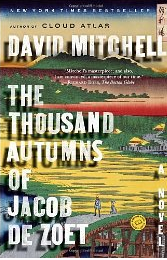
That leaves one of my favorite books of all time, The Thousand Autumns of Jacob de Zoet by David Mitchell. This novel is set in 18th century Nagasaki, Japan, during the first opening of Japan to the West. Jacob de Zoet becomes one of the first Europeans to be allowed to set foot off the island called Dejima where all the Europeans are restricted to live. This novel was full of the flavor and customs of 18th century Japan as well as a good story about corruption in the Dutch East India Company.
Although several of the books on this year’s list are worthy of the award, my personal choice is The Thousand Autumns of Jacob de Zoet.
Day 1223: To Kill a Tsar
 I have such a struggle with reading eBooks that I often put them aside while I’m charging my iPad and pick up a paper book, only to not return to the eBook until I finish the paper one. This is what happened with To Kill a Tsar, which was the paper book I picked up. Sometimes, the reason for continuing with the paper book is that I’m engrossed in it, but this time, it was just because I was finding the eBook no better.
The main character of To Kill a Tsar, Dr. Frederick Hadfield, is a Russian of British ancestry whose uncle is high up in Russian political circles. Hadfield has recently returned from studying in Switzerland and has liberal tendencies, which in Russia makes him a radical.
At a radical social event, he meets Anna Kovalenko and agrees to help her on Sundays at a free clinic. He is drawn to her, but he realizes very soon that she is part of a political group who just attempted to assassinate Tsar Alexander II. Does he avoid her despite his belief in nonviolence? No, of course not.
For me, this is one of the many places where the novel breaks down. To keep us interested in this story about terrorists, we are presented with a wholly unconvincing love story. Then, there is the question of what the author is asking of us. Are we supposed to sympathize with these people, who don’t care how many people are killed, as long as they make their point? Certainly, Williams doesn’t spend enough time revealing the characters of the police for us to sympathize with them. In fact, there is a subplot of an informer inside the police, but when his identity was revealed, I didn’t even know who he was.
I honestly couldn’t figure out what Williams was thinking when he made his choices. There were lots of things he could have done to make this novel interesting. He could have, for example, worked more to make us sympathize with one side or the other instead of assuming, in this age of terrorism, that we would think “No rights? Of course, kill the tsar!” never mind that, as tsars go, Alexander II was one of the most liberal. If Williams simply wanted to report what happened without following a side, he could have left out the lame love affair and spent equal time with both sides. If he wanted us to sympathize more with Hadfield, then make his reactions more understandable.
This is one of the books on my Walter Scott Prize list that I didn’t enjoy that much. That has happened before, but in this case, I also didn’t think it was a very good novel. I don’t think that has happened before.
Related Posts
Day 1222: West with the Night
Best of Five!
When it was republished in the 1980’s, West with the Night was controversial because of Markham’s third ex-husband’s claim to have written most of the book and allegations by people who knew Markham that she was practically illiterate. In her biography of Markham, Mary S. Lovell effectively refutes these allegations, noting particularly that nothing like this was said the first time it was published and that part of the manuscript was submitted to a publisher before she met her third husband.
Actually, I don’t think anyone but Beryl Markham could have written West with the Night. It is beautifully written, with evocative descriptions of Africa and insights into her own thinking. It is not an autobiography. Most of the intimate details of her life are left out. We do not hear, for example, that when her father first left British East Africa for Peru, she was married to her first husband.
Instead, West with the Night is a series of recollections about Markham’s childhood and life in Africa, ending just after she flew across the Atlantic by herself. The book is deeply interesting and thought-provoking. Here and there she interjects a few stories told to her by natives. She was a remarkable woman, both Kenya’s first woman horse trainer and one of the world’s first woman pilots, the first person to fly east to west over the Atlantic (the more difficult direction).
West with the Night is sometimes compared to Out of Africa, written by her friend Karen Blixen (Isak Dinesen), but I find Markham’s book to be much better. It is both simply written and full of understated emotion.
Related Posts
Day 1221: Portrait of a Murderer
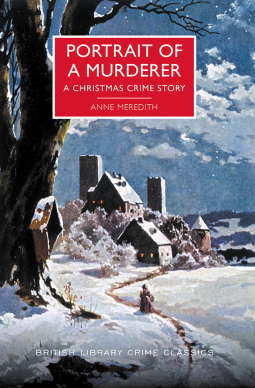 Set during Christmas of 1931, Portrait of a Murderer is an unusual novel. We know from the beginning who the murderer is, and at first it looks like he is going to get away with his crime. For its time, the psychological portrait of the murderer is surprisingly deep.
Gathered together for Christmas are Adrian Gray and his family. Adrian is in financial straits because of reckless investments he made through his son-in-law, Eustace Moore. Adrian’s oldest son, Richard, is a member of parliament who has been spending heavily on a blackmailing mistress and his bid for a title. Eustace’s investments are all about to fail, with many investors bankrupted. Youngest son Brand’s need to pursue his painting full time has overcome his duty to his family.
All three men plan to ask Adrian for money that he doesn’t have. Richard needs it to pay his blackmailer. Eustace needs £10,000 to keep his investors happy. Brand wants to offload his wife and children onto his father and sister so that he can return to Paris to paint. Failing that, he’d like a loan to support them.
Brand goes to speak to his father around midnight on Christmas Eve. He gets so angry because of Adrian’s attitude toward his career and life that he lashes out. Meaning to slam a heavy paperweight onto the desk, he hits his father in the head instead. Soon he is standing there stunned by what he has done. But it’s not long before he begins trying to find a way out of it. His solution? Frame Eustace.
This novel isn’t so much about the investigation as about Brand’s mental outlook. Dashing off a portrait of himself as he stands in the murder room, Brand recognizes his own genius and decides that nothing should get in the way of his art. Meredith seems, on the whole, sympathetic with him, even as he treats his own wife and children as discardable, simply because he is not sure of the children’s parentage.
Brand’s brother-in-law, Miles Avery, is not satisfied when Eustace is charged with the crime. Despite his wife Ruth’s apprehension, he manages to work out what really happened.
There are some things that are now considered politically incorrect in this novel, originally published in 1933. In particular, anti-Semitic remarks may bother readers. Then there is Brand’s Nietschean sense of superiority, reminding me a bit of Raskolnikov without the feverishness. However, it’s a fascinating character study.
Related Posts
Best of Five!
 The Best Book of the last five is In a Strange Room by Damon Galgut!
Day 1220: Tightrope
 Yet again, I had no idea that Tightrope, which I read for my Walter Scott project, was a sequel until I went into Goodreads to indicate I had started reading it and saw that it was “Marian Sutro #2.” In this case, the novel seemed to recap the events of the first novel rather heavily, so I don’t think I missed anything by skipping the first book except maybe some feeling for Marian.
I found Mawer’s The Glass Room to be icy in its distance from the characters, so I wasn’t excited about reading Tightrope. It turned out to be better than I expected but not much.
Tightrope begins toward the end of World War II, when Marian Sutro returns to England. She was one of the women sent over to infiltrate Europe during the war, where she worked with the French resistance. But she was betrayed and spent the last two years in Ravensbrück. Shortly before the liberation, she and some other women managed to escape.
Because of Marian’s background, she is of interest to the British secret service. She is of interest to the Russians, too, primarily because her brother Ned is a nuclear physicist. Her own beliefs that knowledge of nuclear weapons must be shared to maintain peace also draws her into the midst of the Cold War.
This novel is narrated by Sam, the son of one of Marian’s friends, and his story contains lots of details he couldn’t have known, even though he had access to her file and she tells him parts of her story. This narrative also allows Mawer to insert a certain amount of salacious detail, as Sam has a mad adolescent crush on Marian. I think I mentioned Mawer’s fascination with labia in my last review.
Marian is essentially an unknowable character, which kept me, as a reader, from becoming very engaged with her story. It didn’t help that she seemed to be the product of some adolescent idea of a perfect woman—a beautiful woman who sleeps with just about every man she meets and cares for none of them. Yet we are to believe she cares for one, even though there is little evidence for it. I found the book blurb, which says “Marian must risk everything to protect those she loves . . .” laughable.
Quotes on the cover call Mawer “a true master of literary espionage” and call the novel “gripping.” If you want gripping, try John Le Carré or Robert Harris instead.
Related Posts
Day 1219: In a Strange Room
Best of Five!
It’s not clear to me whether In a Strange Room is a novel or three slightly linked short stories. I’ve seen it referred to as both. The linkage comes from journeys, as each section deals with a journey the narrator takes with different people.
This narration is complex. South African novelist Galgut himself is the narrator, but he speaks both in first and third person, the one hinting at intimacy, the other, more often used, at distance.
The first section, or story, “The Follower,” deals with a journey in the early 1990’s with a German named Reiner. The narrator meets him on another trip, and although they do not know each other well, they correspond. Eventually, Reiner comes to Africa, and the two take a journey through Lesotho. It’s difficult to understand what the narrator sees in Reiner besides good looks, and eventually the trip becomes a battle for control.
The second section, “The Lover,” starts with Damon latching on to a group of Europeans traveling in Africa after he leaves the group he started with. He keeps running into them when he is with the first group and offers to help them when they are turned away from the Malawan border for not having visas. Damon and Jerome are attracted to each other, but they can barely communicate, as Damon doesn’t speak French and Jerome barely speaks English.
In “The Guardian,” Damon takes his old friend, Anna, on a trip to India. She has recently been hospitalized for mental illness, and Damon finds it increasingly difficult to deal with her.
I didn’t really enjoy Galgut’s novel about E. M. Forster, so I wasn’t exactly looking forward to reading this novel for my Booker Prize project. But I am happy to say that I found In a Strange Room powerful and touching. It is sparsely written but completely involving. Even though it doesn’t explicitly express emotion, it still evokes an emotional response. I am happy to have changed my mind about Galgut.
 What? Me Read?