Review 2537: Levels of the Game

Although John McPhee is best known for his work in the 1960s through 1990s, he is still going at 93. He is known for being a pioneer in a style of writing called “creative nonfiction” or “literary journalism.” Years ago, I read his four-volume work Annals of the Former World, about the geology of the United States, basically the formation through time of various areas of the country, which was absolutely fascinating. Later I picked up a copy of his Coming into the Country, about homesteaders in the wilds of Alaska in the 1970s. So, when I saw he had written a book that could fill a hole in my A Century of Books project, I got it.

Levels of the Game is not really my subject matter. It cleverly combines a play-by-play description of a tennis game at Forest Hills in 1968 with profiles of the players. This is an amateur game between Arthur Ashe and Clark Graebner. Although I used to watch tennis a bit when Ashe was further along in his career, I couldn’t really follow the subtleties of the play-by-play that well. I’m sure for tennis lovers it might have been climactic.

Ashe at the time was the only Black player of the U. S. circuit, and there were no others following behind. A lot of what McPhee says in his profile is interesting and a lot is dated. Coming up, Ashe ran into situations where he was barred from clubs. Yes, it was still like that.

If you’re a sports fan, particularly of tennis, you’ll probably get more out of this book than I did. Still, I didn’t really understand the important place Ashe holds in the game until I read this book.

P. S. The description of Ashe, who at the time was a lieutenant at West Point, putting on love beads to go on a date, cracked me up.

Related Posts

Open: An Autobiography

Coming into the Country

Annals of the Former World: Basin and Range

WWW Wednesday!

It’s the first Wednesday of the month, so it’s time for WWW Wednesday, an idea I borrowed from David Chazan, The Chocolate Lady, who borrowed it from someone else. For this feature, I report

  • What I am reading now
  • What I just finished reading
  • What I intend to read next

This is something you can participate in, too, if you want, by leaving comments about what you’ve been reading.

What I Am Reading Now

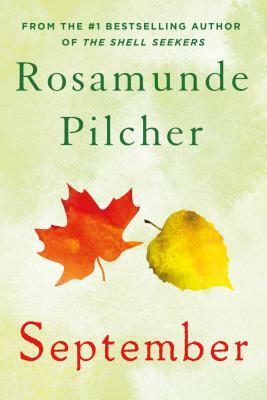
Actually, at this writing I haven’t started it, but by the time this is posted tomorrow, I’ll be in the midst of September by Rosamunde Pilcher. I already checked this book out once from the library, to fill the 1990 gap in my A Century of Books project, but I knew I wasn’t going to finish one of the four library books I checked out, and unfortunately, chose one of the others to be the last one I read. Unfortunately, because it turned out someone else had put a hold on this one. But now I have it back. I haven’t read anything by Rosamunde Pilcher except The Shell Seekers, years and years ago, so I’m curious.

What I Just Finished Reading

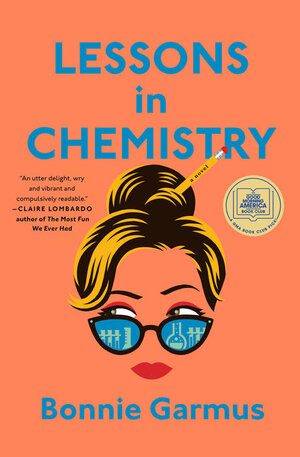
I finally got to read Lessons in Chemistry by Bonnie Garmus for my Literary Wives club. It has been sitting on my pile for over a year, waiting for its turn to come up for the club. I enjoyed it very much. Review coming at our next club meeting, Monday, March 3!

What I’ll Be Reading Next

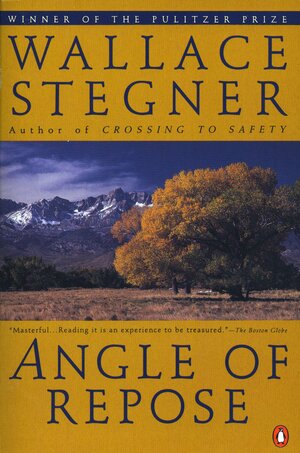
I was glad to get a little heaviness break by reading the above two books (although September is very long), because I made the mistake of putting my books for A Century of Books into a pile by length, shortest first, in an effort to get as many read as possible before the end of last year. (Obviously, I haven’t met my goal for this project.) The result is that the heftiest are all waiting for me. And I haven’t yet found a book for every year. I have four more years to find books for and some books on hold at the library that are taking a long time to get here. Anyway, my next book falls into the middling hefty category, both in length and seriousness. It’s Angle of Repose by Wallace Stegner. It’s been a long, long time since I read any Stegner, and I’m not sure if this was one that I read or not, way back then.

Of course, my reading plans sometimes get thrown off. They did in January, when I suddenly decided to reread Sense and Sensibility for ReadingAusten25 instead of How Green Was My Valley, and that could happen this time, too, if some of those books that I’ve had on hold for ages arrive from the library.

What about you? What have you been reading or plan to read next?

Review 2536: The Trees

The Trees is not a book for everyone. It is black satire, very dark, and it covers shameful events in American history that took place over centuries.

In Money, Mississippi, a dismal small town, a brutal murder occurs, or maybe two. A White man is found bound in barbed wire, his testicles removed. With him is the body of a Black man unknown to anyone in town, his hand wrapped around the testicles.

Shortly, the Black man’s body is stolen from the morgue and ends up at the scene of another murder, holding another White man’s testicles. Both White men are descendants of Granny C, an old lady who turns out to be the woman who claimed Emmett Till disrespected her, resulting in the famous lynching. Then Granny C is found dead.

And this is what the novel is about, in its sly, sometimes stereotyped (at least in the case of the White redneck characters), brutal way. It’s about the history of lynchings that continued in this country up until not that long ago (Wikipedia says, shockingly, 1981), thousands of them, mostly Black males, but also some women, as well as Chinese, Native Americans, and even one Japanese man.

The novel has a strange, sort of overdone anti-Southern humor that leads to additional gruesome scenes as two Black detectives from the Mississippi Bureau of Investigation come to investigate.

I read this novel for my Booker Prize project.

Related Posts

Chenneville

The Tilted World

The Warmth of Other Suns: The Epic Story of America’s Great Migration

Review 2535: A Death in Summer

A Death in Summer is the fourth of Black’s series about Quirke, an Irish pathologist in the 1950s who helps his friend Inspector Hackett in some investigations. Although these are interesting mysteries, I’m beginning to be irritated by the cliché of Quirke’s drinking problem. This is the second book in a row where Quirke dries out or is already dried out at the beginning and then falls off the wagon.

Wealthy and powerful Richard Jewell is found dead in his home office. It is supposed to look like he committed suicide by blowing his head off with his shotgun, but it is obvious to both Quirke and Hackett that the man wouldn’t be still holding the gun if he had done it himself.

Jewell’s sister Dannie was at home as were some servants, but no one heard the shot. Mrs. Jewell, a French woman, says she arrived home after the house manager discovered the body. Françoise thinks her husband’s only enemy is another wealthy man, a Canadian named Carlton Sumners. Quirke attended university with both these wealthy men.

At this point, I began to wonder if Quirke was related to Inspector Morse (apparently the TV version only), because he immediately falls in love with Françoise, dumps his friend Isabel, and begins to have an affair with F. And by the way, you wonder how these male authors think, because the way Black describes Quirke, you wouldn’t think an elegant, wealthy Frenchwoman would want to jump into bed with him.

Quirke invites his assistant, David Sinclair, to dinner with his daughter Phoebe. Although both resent what they see as a clumsy attempt to pair them up, they begin seeing each other. David is a friend of Dannie Jewell, quite a disturbed young woman, and through him Phoebe meets Dannie.

As in a previous case, Quirke is warned off his investigations by a thug, Costigan. In the previous instance, when Quirke ignored him, he was badly beaten. This time, Sinclair begins receiving threatening phone calls.

Of course, there is a big secret that I personally didn’t find hard to guess once some of the pieces were in place. I might read the last book, but I am not sure if I will. Black is an excellent writer, but to have Quirke behave so stupidly in this one turned me off a little.

Related Posts

Elegy for April

The Silver Swan

Christine Falls

Review 2534: #ReadingAusten25! Sense and Sensibility

My original intention for ReadingAusten25 was to reread only the books I hadn’t reviewed yet. But I can’t resist Austen, so here I am reviewing Sense and Sensibility. I am not going to repeat my review of 2022, though, so you can find it here. Instead, I thought I’d look at whether the book struck me differently this time and a little at Claire Tomalin’s point of view (the wobble), as cited by Brona.

It did strike me differently. Although Elinor is still my favorite of the two sisters, they both struck me more extremely this time. Marianne seemed like a true modern teenager, not as much for her reactions to Willoughby but more in her sulking (call it what it is), her rudeness to various kind characters whom she thinks ill-bred, and so on. But the thing is, 16 in the early 19th century meant she was supposed to be an adult, or almost. (Of course, she is also under the influence of the Romantic movement in art, literature, and music.)

As for Elinor, sometimes I felt she carried her comments a little too far, into preachiness. I got a little tired of her dissections of other people’s behavior.

I also appreciate the wit of the novel more. Although I always find Austen witty, she has drawn us some priceless characters and written quite a few zingers.

I am not so sure about Tomalin’s “wobble.” I looked for it but didn’t find much evidence for it unless you count Elinor’s dash out of the room after she finds out Edward isn’t married. I’d like to hear if anyone was struck differently. I remember not agreeing with some of Tomalin’s interpretations when I read her biography of Austen.

Related Posts

Jane Austen: A Life

Jane Austen at Home

Persuasion

Review 2533: The Stone Angel

When I was looking for books to fill a hole in my A Century of Books project, I found this one. I thought I had read a book by Laurence before, but apparently not. The Stone Angel is the first in her Manawaka series.

Hagar Shipley is 90 years old. She is a proud, tough woman who has never expressed any of her gentler feelings. Now she finds that her son Marvin and his wife Doris are thinking she needs to move to a senior home. She understands this idea as greed for her home and possessions, although that is not the case. She is fighting the idea as best she can.

Hagar, though, is prone to falling and has memory lapses. In between the scenes from her current life, she returns in her memory to important events and tragedies in her life.

Hagar is not a pleasant person, but Laurence makes us interested in her and manages to make us understand and even sympathize sometimes with this complex character.

Related Posts

The Night Stages

Fifth Business

The Northern Lights

A Century of Books: How Am I Doing? January Report

In January, I foolishly decided to join Simon Thomas’s Century of Book Challenge, even though I knew that reading 100 books, one for each year in a century, from 1925-2024, would be tough because last year I only read 169. So, how am I doing? I was trying to finish by the end of December, but I clearly didn’t make it.

Here are the holes in my project with the books listed for this month below. If you want to see the details, see my Century of Books page.

  • 1925-1934: complete!
  • 1935-1944: complete!
  • 1945-1954: entry needed for 1948
  • 1955-1964: entries needed for 1955 and 1960
  • 1965-1974: complete!
  • 1975-1984: entry needed for 1981
  • 1985-1994: entries needed for 1990, 1991, and 1993
  • 1995–2004: entries needed for 1995, 1997, 2001, 2002, and 2003
  • 2005-2014: entries needed for 2005, 2006, and 2007
  • 2015-2024: complete!

I had a little confusion this month with the year 1980. I finished The Name of the Rose only to find that the year was already occupied by Tropical Issue, a renamed book by Dorothy Dunnett. However, I looked that book up again, and it actually belonged in 1983. So, I filled two slots at once.

Since December 25, I read the following books. The ones for this project are listed in bold. As you can see, I concentrated this month on books for this project. I completed books for two more decades:

  • How Green Was My Valley by Richard Llewellyn for 1939
  • The Feast by Margaret Kennedy for 1950
  • Sense and Sensibility by Jane Austen (from 1811, too early to count)
  • The Temptations of Big Bear for 1973
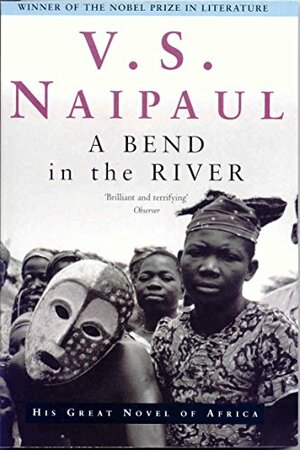
  • A Bend in the River by V. S. Naipaul for 1979
  • The Name of the Rose by Umberto Eco for 1980
  • The House of the Spirits by Isabel Allende for 1982
  • Howl’s Moving Castle by Diana Wynne Jones for 1986
  • The Shape of Water by Andrea Camilleri for 1994
  • Malice by Keigo Higashino for 1996
  • Island by Alastair MacLeod for 2000

As of today, it looks like I have 15 books left to read for this project, although it will take a bit longer for me to post all the reviews.

Review 2532: Beauvallet

I am fairly sure I read Beauvallet to fill a hole in my A Century of Books project, but as has happened too many times already, once I had read it, I saw that I had already filled that hole. This book is one of Heyer’s earlier novels, and it is more of a swashbuckler than her other ones, showing a possible influence of writers like Dumas, Rafael Sabatini, or Baroness Orczy.

In 1586, Beauvallet is a privateer like his colleague Drake, a daring, laugh-in-the-face-of-death type guy. His ship is fired on by Don Juan de Narvaez, who wants to show off for his lovely passenger, Doña Dominica de Rada y Sylvan, who is traveling with her father, the ailing late governor of Santiago. They are returning to Spain because of his health.

Beauvallet takes their ship and puts the crew into a boat for shore. However, he promises to take Doña Dominica and her father to Spain, because of her father’s illness. Beauvallet immediately begins to court her. Dominica is at first hostile but eventually falls in love. When he drops them at a smuggling port in Spain, he vows to come get her within a year and make her his wife. Obviously, this poses difficulties because England and Spain are at war. Once Dominica’s father dies, things become worse because her relatives, into whose custody she falls, want her to marry her cousin for her fortune.

I don’t think this is one of Heyer’s best. Her main characters aren’t as appealing as usual, and I think her social comedies are more effective than her adventure novels. However, it’s always worth it to read Heyer. If you haven’t read her, I suggest you start with one of her Regency romances.

Related Posts

An Infamous Army

The Talisman Ring

The Toll-Gate

Review 2531: The Bell Jar

I’ve meant to read The Bell Jar for years, so when I saw it would fill a hole in my A Century of Books project, I got it from the library. I was also interested in it after reading the biographical fiction Euphoria, about Sylvia Plath and her husband, Ted Hughes.

In 1953, Esther Greenwood has earned an opportunity from a major fashion magazine, an internship with a group of other girls in New York. At first, she studiously applies herself to her assignments, but she becomes distracted by her fascination with Doreen, who seems more worldly than the other girls. She is tempted out by endless partying until Doreen gets a boyfriend and Esther has several unfortunate encounters with men.

She returns home from her internship suddenly adrift. She has not been accepted into a writing program, she doesn’t want to live with her mother, and none of the careers she can think of are appealing. Everything seems gray and uninteresting.

Of course, this is the story of Esther’s fall into mental illness, wrapped up in her inability to see a path for herself aside from marriage, which she clearly fears.

The novel is clearly based on Plath’s own experiences. It is clearly and vividly written and looks deep into the psyche.

Related Posts

Euphoria

Song of a Captive Bird

My Brilliant Career

13th Anniversary! Top Ten Books of the Year!

When I started blogging, I decided to list my top ten books of the year at my anniversary instead of close to the calendar new year so that I would have reviewed a year’s worth of books. It’s that time again. My actual anniversary is tomorrow, but that’s not usually a book blogging day for me. This year for perhaps the first time, I haven’t had multiple books by the same author to choose between. Also unusual for me because I read so many vintage books, most the books on this list were published recently. Unusual for me, too, is that half the books are written by men.

I was only reviewing three books a week last year, so that made the list of Top Ten books a bit shorter than usual but a little easier to choose from.

It was really an excellent year for historical fiction for me. Of the ten books I chose, six are historical, one is dystopian, two vintage contemporary, and one contemporary fiction. Of the historical fiction books, one was set in the 18th century, one in the 19th century, three in the 20th century, and one spans the time between the 17th century and the present.

So, here they are, in the order that I reviewed them: