Day 749: Charlotte’s Web

Cover for Charlotte's WebBelieve it or not, I’ve never read Charlotte’s Web before. I bought it for my niece’s birthday and read it quickly before I wrapped it. It’s a charming story with the bit of pathos that all children’s books should have.

Fern is devastated to learn that the runt from the latest litter of pigs is to be killed, so she begs her father to keep him. He allows her to hand-raise the piglet, and she names him Wilbur.

When Wilbur is a month old, he goes to live in a nearby farmer’s barn. After spending most of his time during the previous month playing with Fern, he is lonely, although Fern visits him often. No one in the barn seems interested in being his friend, though. After he asks each animal to be his friend, someone he has not even noticed says she will. She is Charlotte, a spider whose web is right in the doorway above his sty.

This is a delightful tale full of the smells and sights of rural life. Although the story starts with Fern, it is soon about how Charlotte and the barnyard animals try to figure a way to save Wilbur from being Christmas dinner. Although it doesn’t shy away from the basic truths of farm life, it is calm and gentle in tone and has lessons about friendship. It’s a wonderful book for reading to smaller children or one that slightly older children can read themselves. I think many modern children may envy the freedom eight-year-old Fern and her older brother Avery find in their rural life.

Related Posts

The Secret Garden

Anne of Green Gables

Doll Bones


Day 748: The Lily and the Lion

Cover for The Lily and the LionBest Book of the Week!
The sixth book of Maurice Druon’s The Accursed Kings series follows the fall of Robert Artois, the prime mover in many of the events of the other five novels. It is the reign of Philippe VI, the first Valois king, so you’d think the curse of the Knights Templar against the Capet kings would be complete. But Druon points out that there is one Capet we’ve probably forgotten.

It is Robert Artois who ensures that his Valois cousin is chosen from the candidates proposed for the crown, despite the better claims of Isabella of France, the only surviving sibling of the Capet King Charles IV, for her son Edward III of England. But even though by supporting the victorious candidate Robert finally gains a peerage and property of his own, he is still obsessed by the theft of his county of Artois by his Aunt Mahaut years ago.

He hears of the existence of a copy of the will and deeds that left him the property when he was a boy. The originals were stolen and destroyed by Mahaut and her minion, Monseigneur Thierry. But the Monseigneur kept the copies to protect himself, Robert is informed by Jeanne de Divion, the Monsiegneur’s mistress. Now that he is dead, Mahaut has treated Divion so poorly that she offers to steal the papers from the Monseigneur’s office. Before she gets the opportunity to do so, however, Beatrice d’Hirson, Thierry’s niece and Mahaut’s servant, steals them for her mistress. Robert then makes the decision that will decide his fate. He decides to forge the papers.

In the meantime, Isabella and Roger Mortimer have taken the throne from Edward II for his son, but the young king is a ruler in name only. Mortimer’s abuses are just as bad as those of the previous reign perpetrated by Edward II’s favorites. In addition, Edward III hasn’t forgiven Mortimer for having his father murdered. Soon, Edward will act for himself.

As with the others in this series, this novel is packed with traitorous acts, poisonings, and other skullduggery, as well as amazingly readable historical detail. Druon peppers his tales with plenty of cynicism and sly remarks. As always, I highly recommend this series.

Related Posts

The Iron King

The Strangled Queen

The Poisoned Crown

Day 747: Literary Wives! The Astronaut Wives Club

Cover for The Astronaut Wives ClubToday is another review for the Literary Wives blogging club. Be sure to read the reviews and comments of the other wives! If you have read the book, please participate by leaving comments on any of our blogs.

Emily of The Bookshelf of Emily J.
Lynn of Smoke and Mirrors
Naomi of Consumed By Ink

* * *

The Astronaut Wives Club just plain irritated me. I don’t know why such a potentially interesting story had to be written as if it was chick lit. If I had had to read one more description of an outfit before the end of the book, I would have screamed.

The book tells the stories of the wives of the astronauts from the beginning of the space program in the 1960’s until the manned exploration program was cancelled in the early 70’s. It keeps its focus on the wives with admirable intention but sometimes unfortunate results, as its determination not to focus on their husbands’ activities, even in moments important in history, sometimes sucks any potential drama right out of the book. For example, anyone who has seen Apollo 13 knows what a stressful bunch of hours those must have been for the families. Yet, the mission gets a bare few paragraphs in the book.

Since the wives were determined to keep their family lives private and their upper lips stiff, what are we left with? Well, basically the kinds of things Life magazine wrote about in the 60’s, the glitz, the perks, the outfits, the parades, the parties. We get so little insight into the wives’ characters that well into the book, I was still unable to connect very many wives’ first names with their last names or remember which one was the pilot. Although we learn a little more about their home lives than the public did in the 60’s, for example, whose husbands were unfaithful or the pressures the wives were under from NASA to present the front of a perfect family, we still get to know very little about the individual women. I recently saw a one-hour TV program about the Apollo wives that told more about what they were feeling than this entire book did!

I believe I was also handicapped by getting an electronic copy from Netgalley that did not have any photos in it. It may have been easier for me to keep the wives apart if I could have had photos to refer to as the other Literary Wives did. All I had was the cover of the book showing the first group of wives, in such a small size that I couldn’t see their faces.

link to NetgalleyThe level of information presented sometimes reminds me of the horrors of watching Entertainment Tonight! For example, at the beginning of Chapter 8 about the parties in Houston, Koppel tells us that a society person she mentions was played by Julia Roberts in a recent movie, a completely gratuitous comment. On the other hand, Koppel is so determined not to get technical in her approach to a general audience that she describes almost nothing of the missions. In a relatively lengthy description of Apollo 8, she twice mentions a maneuver called a trans-earth injection that Susan Gorman was worried about without once explaining what it is. I would like to see this subject handled again by someone who is willing to do more research than thumbing through old Life articles.

Literary Wives logoWhat does this book say about wives or the experience of being a wife? In what way does this woman define “wife”—or in what way is she defined by “wife”?

NASA pretty much defined what wives were in their concern that the astronauts’ families appear to be perfect representatives of America. This definition was strictly by the standards of the 1950’s. Wives were housewives who got up at 5 AM to make steak and eggs for their husbands’ breakfasts. The wives were expected to show support for their husbands no matter what was going on in their marriages, to ignore infidelities, and to do everything possible to keep stress away. They also weren’t supposed to show any stress during their husbands’ missions. NASA controlled them to the point of telling them what to wear before their first photo shoot.

Being a wife also had a lot to do with protecting your privacy and that of your family. This habit extended so far that Koppel didn’t really get much more out of them in her recent interviews than they were willing to say in the 50’s and 60’s.

Related Posts

Death by Black Hole and Other Cosmic Quandaries

The Life and Times of the Thunderbolt Kid

Nora Webster

Day 746: Sidney Chambers and The Shadow of Death

Cover for Sidney ChambersI’ve been watching the Grantchester series on Masterpiece lately, so I decided to read the first book the series is based on. Sidney Chambers and the Shadow of Death is really a collection of six short stories. They are light cozies about a mild-mannered Anglican vicar who gets involved in mysteries. In fact, if you’ve been watching the TV series and have been bothered by the darker aspects of Sidney’s character, you will not find any evidence of them in these stories.

Just after World War II, Sidney Chambers is a vicar in the village of Grantchester and also lectures in nearby Cambridge. He is young and well-meaning, his biggest faults being a tendency to get distracted from his duties and a certain lack of organization.

The first story explains how he gets involved in detecting. After presiding at the funeral of one of his parishioners, Stephen Staunton, who apparently committed suicide, Sidney is approached by Pamela Morton.

Morton is certain that Staunton couldn’t have killed himself. However, she doesn’t want to go to the police with her doubts, because she is a married woman who was having an affair with Staunton. She tells Sidney that they were planning to run off together in the new year and asks him to discreetly make inquiries.

Sidney’s friend Inspector Geordie Keating is not happy to find Sidney making discreet inquiries. But Sidney is able to identify Staunton’s killer using clues about his taste in whiskey and a code in his datebook.

Of course, Sideny is surrounded by colorful characters, especially his crotchety housekeeper and his intellectual curate Leonard. If you like cozies, you will probably enjoy this series.

Related Posts

The Tuesday Club Murders

Death in the Stocks

The Return of Captain John Emmett

Day 745: The Buried Giant

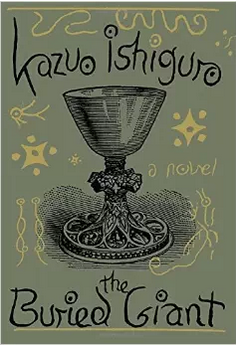
Cover for The Buried GiantI thought from what I read about The Buried Giant that it was a historical novel set in the days after the Romans left Britain. But it is really a fable or a fantasy novel or both.

Axl and his wife Beatrice are an old British couple who decide to go on a journey. They have recently become aware that their memories of the past are poor, as are everyone’s, but they vaguely remember they have a son. Years ago, their son moved to another village, and Beatrice has been wanting to visit him. Finally, they decide to go.

Beatrice has difficulty remembering the way to their first stop, a Saxon village she has visited before, but they find it by evening. The village is disturbed and possibly dangerous for the visiting Britons. A boy was taken by an ogre, but a strange warrior has brought him back. The villagers have seen a bite on the boy and want to kill him. But the warrior saves the boy, named Edwin. Once Axl and Beatrice leave the village the next day, they find themselves traveling with Edwin and the warrior Wistan.

This novel features ogres, pixies, treacherous monks, a British lord on the lookout for the Saxon warrior, an Arthurian knight, and finally a dragon whose breath has made everyone forget the past. It is about reconciliation, memory, aging, and death. As a fable, it doesn’t really characterize its protagonists; they are more like symbols. As such I wasn’t really compelled by the story.

In addition, a history class I have been taking recently indicates that it is unlikely any Britons would have been mixing freely with Saxons at this time. By the time the Anglos and Saxons began settling England in earnest, all the Britons had been pushed off to far western England and Cornwall. Although this novel does not really mention which part of England they are in, I understand that Britons did not tend to mix with the Angles and Saxons.

Related Posts

The Alchemist

The Wake

The Summer Tree

Day 744: The Child Garden

Cover for The Child GardenI have long been a fan of Catriona McPherson’s light-hearted historical mysteries featuring Dandy Gilver, but I wasn’t aware that she had written some darker contemporary mysteries. For me, dark is always good.

At 40, Gloria is in a somewhat dowdy middle age, her life completely taken up by work and care for her severely handicapped son Nicky. Nicky will die soon, she knows, and her greatest fear is that her friend old Miss Drumm will die before he does, so that Gloria will lose her home in Miss Drumm’s cottage and have to move Nicky to care in a less expensive facility.

Gloria is driving home one stormy night from visiting Miss Drumm and Nicky in the care home when another car almost runs into her on the deserted roads near her remote cottage. She has just arrived home when the driver comes to the door and she finds he is an old friend from primary school, Stieg Tarrant.

Stieg  has a favor to ask. He says he has been stalked by a woman from his school days, April Cowan. Long ago, when he and April were in the school named Eden nearby in what is now the care facility, a boy died on an overnight camping trip on school grounds. Hinting that she knows something about the death, April has demanded Stieg meet her in a small building on the grounds, and Stieg wants Gloria to go with him. When they arrive there in the pouring rain, they find April’s dead body. Their first instinct is to tell the police, but Gloria panics, worried that a body in the grounds would result in the care facility being closed, just as Eden closed after Moped Best fell off the bridge years ago.

They go back to Gloria’s cottage, where Stieg admits that he had already found the body before he fetched Gloria. After some discussion of the circumstances of April’s death, Gloria thinks April for some reason tried to frame Stieg for her own suicide, so she has Stieg stay at her cottage while she goes back to the body. The body is gone.

When Gloria tracks down April’s address and goes to her house, she finds the police already there. Soon, it becomes clear that someone is trying to frame Stieg for April’s murder. Gloria can’t help but think there must be some connection to Moped’s death. Sure enough, when she begins trying to track down the other 11 people who were children on the camp-out, most of them have died.

link to NetgalleySet in the atmospheric countryside of Scotland, this novel is a real page-turner. As Gloria and Stieg investigate, the secrets start to come out, and Gloria even finds herself discovering the truth about her own marriage and ex-husband, who also attended the camp-out. I see there are some more McPherson books I haven’t read yet, and I’ll be looking for them.

Related Posts

The Map of True Places

Nightwoods

Echoes from the Dead

Day 743: Happy Returns

Cover for Happy ReturnsHappy Returns is one of Angela Thirkell’s books set in Barsetshire, the setting also of Anthony Trollope’s novels. Thirkell’s novels were written in the 1930’s-50’s and feature, in large part, pleasant and well-meaning characters, gentle romances, and problems bravely dealt with, particularly during and after the war.

Happy Returns is set in 1951 and 1952, just before and after Winston Churchill’s ascension to the office of Prime Minister. Much of the conversation at the beginning of the novel is about the government, called Them, the depredations its taxes have made to the neighborhood, and the characters’ hope that there will be an election that will bring Churchill into office.

The situation of Lady Lufton is one of the focuses of this novel. Her husband is recently dead at an early age, and she is struggling with grief and apathy. The family fortunes have suffered so from death taxes that she is forced to lease half her house to a tenant, Mr. MacFadyen of Amalgamated Vedge. She is concerned because her son, the young Lord Lufton, can’t afford to rent a better place when he goes up to London for Parliament and has to stay with a miserly relative, who does not feed him well in exchange for his ration card. Frankly, the gentle Lord Lufton fears he is too poor to marry.

Charles Belton is another important character. He has been engaged for a year to Clarissa Graham, but they show no sign of marrying. Clarissa has been behaving petulantly, so that Charles has begun to doubt that she wants to marry him. It takes his friend Eric Swan to notice that Clarissa is actually madly in love with Charles and fears he doesn’t love her back.

Swan, a schoolteacher, doesn’t seem very ambitious, but he is actually considering trying for a place at Oxford. But then he meets Grace Grantly and falls in love with her. At this time, fellows at Oxford couldn’t be married, so he decides to put his plans on hold and see what develops.

The whole neighborhood notices that Francis Brandon hasn’t been treating his nice wife Peggy very well lately. She, along with several other women in the novel, is very pregnant and despite her husband’s behavior keeps her good humor.

As an example of the flavor of this book, Lady Lufton and Lord Lufton are having a conversation when Mr. MacFadyen comes in. Mr. MacFadyen observes sympathetically that some of Lady Lufton’s comments are of the type to make a young man impatient, but Lord Lufton always replies gently and patiently.

Most of the characters in Happy Returns are nice people, except maybe the Bishop, who never actually appears. Throughout the entire novel, Mrs. Joram is planning a party but is waiting for the Bishop and his wife to depart for Madeira so she won’t have to invite them. The Bishop is apparently so disliked by many people that when he finally leaves for Madeira and his ship is overtaken by a storm, almost every character wishes for a shipwreck.

I enjoyed this novel with its depiction of the hardships of post-World War II Britain. My only problem with it was the plethora of characters, for I could not keep track of who they all were and what their relationships were. Probably someone following the series from the beginning would not have this problem. I have read several of the books, but that was a long time ago.

There are also quite a few cultural and literary references I didn’t get—and probably many jokes. For the tone of the novel, although it has touching moments, is one of humor, with many funny asides addressed directly to the reader about what will or will not be further explained. I think a fair comparison for someone who is not familiar with Thirkell’s work would be the novels of Nancy Mitford, although they are more obviously unrealistic and caricatured.

Related Posts

The Warden

The Pursuit of Love

Love in a Cold Climate

Day 742: Witch of the Glens

Cover for Witch of the GlensKelpie is about fourteen or fifteen and only remembers a gypsy life traveling with Mina and Bogle. They use her to steal and read the crystal, for she has second sight. Mina keeps promising to teach her witchcraft without actually showing her any. Still, they are often accused of being witches and hounded out of town.

Then one day she pretends to fall in front of a party of young men only to find she has actually injured herself. Although they catch her stealing from them, they are amused by her and take her home with them. The young men are Ian, Cameron, and Alex, returning from Oxford to their home north of Inverlochy.

Kelpie stays at Glenfern with Ian’s family, eventually as a servant, but they treat her kindly. She begins to feel affection for the children, especially little Mairie, and is dismayed when Mina and Bogle reappear. Mina threatens to curse the family if Kelpie refuses to come with them, and since Kelpie believes in Mina’s power, she goes.

The Highlands are in turmoil because Argyll has been commissioned to secure the area for the Calvinist Covenant against King Charles. Argyll’s troops are more prone to burn villages and murder innocents than to fight armies. But Montrose is trying to raise men to fight for the king. Mina sends Kelpie on a perilous task, to steal some hair or a personal possession from Argyll so he can be hexed.

Kelpie’s adventures take her all over the Highlands. When she joins the followers of Montrose’s army, she is happy to meet Ian and Alex again, but she has seen Alex strike Ian down in the crystal, so she is wary of him.

This is an enjoyable novel for tweens and teens full of likable characters and nasty villains, some history, lots of adventure, and another feisty Watson heroine. Kelpie begins re-evaluating her moral choices through the examples of others and the kindnesses she receives during her travels.

Related Posts

Lark

The Loon Feather

Treasure Island

Day 741: Seven for a Secret

Cover for Seven for a SecretSeven for a Secret is the second fantastic Timothy Wilde historical mystery by Lyndsay Faye. The series is set in 1840’s New York City. Wilde is a member of the newly formed copper stars, the city’s first police force.

It is Valentine’s Day, and Timothy and his colleague Jakob Priest are celebrating having solved an art theft when a beautiful woman of color comes looking for him at the station house. She is Lucy Adams, and she has just returned home from her job at a flower shop to find her son and sister missing. She knows exactly what happened to them. “Blackbirders” have snatched them to sell down south as escaped slaves, even though they are free.

Timothy asks his brother Valentine to go with him to get them back. Although Valentine is a corrupt Democratic party boss and a drug addict, he’s a good man in a fight. Timothy, his African-American friend Julius, and Valentine retrieve the three from the slavers, Varker and Coles, but not without a fight. The two women and little boy need somewhere safe to stay until Lucy’s husband returns, so Valentine offers them the use of his apartment.

Something is going on that is more complex than he understands, for when Timothy goes searching for Lucy’s husband, he finds that Lucy isn’t married to Charles Adams, a white salesman, as she thinks she is. She may or may not be married, but her “husband” is a Democratic senator for New York state.

Coming to see Lucy and her family a couple of days later, Timothy finds Lucy strangled and the room disrupted. Timothy is an honest police officer but he knows a frame job when he sees one. He has just finished removing the body and cleaning up when an enemy, Sean Mulquean, another copper star, arrives to investigate a reported disturbance. Timothy also soon learns that Varker and Coles have kidnapped Julius, so he must hurry to court to try to free him before he can look for Lucy’s sister Delia and son Jonas.

Faye’s historical setting of gritty 1846 New York is absolutely convincing. We like Timothy more the more we see him, and Faye is beginning to build a solid cast of supporting characters. This is a well-written, swift-moving, suspenseful series. At almost 500 pages, the novel is long for a mystery, but it didn’t seem like it for a second. Unfortunately, I have just learned that there is only to be one more in the series, and that one is waiting in my pile to be read.

Related Posts

The Gods of Gotham

Dust and Shadow

The Pale Blue Eye