Something a Little Different: The Walter Scott Prize

Logo for Walter Scott PrizeI am stealing an idea from Helen of She Reads Novels, who has a page devoted to the Walter Scott Prize for Historical Fiction. She is attempting to read all of the novels nominated for the prize since 2010. Since I am always looking for good historical fiction and I have already read several of the nominees and winners, I thought I would try to do the same. You can find more information about the prize on the Walter Scott Prize website. The prize for 2015 will be announced this coming Saturday, June 13, so that is also exciting.

Here are the lists of nominees, showing the winners in bold. I have linked to my existing reviews, and I am also including links to Helen’s reviews. I have also added this list as a page under my About menu so that it is easy to find, and will continue to update the links on that page as I finish the books.
Cover for Wolf Hall2010

Sacred Hearts by Sarah Dunant
The Quickening Maze by Adam Foulds
Lustrum by Robert Harris
Wolf Hall by Hillary Mantel (My review) (She Reads Novels review)
The Glass Room by Simon Mawer
Stone’s Fall by Iain Pears (My review) (She Reads Novels review)
Hodd by Adam Thorpe
Cover for The Thousand Autumns of Jacob De Zoet2011

The Long Song by Andrea Levy (She Reads Novels review)
C by Thomas McCarthy
The Thousand Autumns of Jacob de Zoet by David Mitchell (My review)
Ghost Light by Joseph O’Connor (She Reads Novels review)
Heartstone by C. J. Sansome
To Kill a Tsar by Andrew Williams

2012

On Canaan’s Side by Sebastian Barry (She Reads Novels review)
The Sisters Brothers by Patrick deWitt (She Reads Novels review)
Half-Blood Blues by Esi Edugyan
The Stranger’s Child by Alan Hollinghurst
Pure by Andrew Miller (She Reads Novels review)
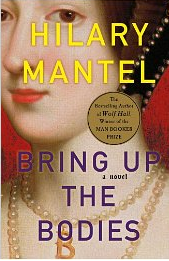
Cover of Bring Up the Bodies2013

Toby’s Room by Pat Barker
The Garden of Evening Mists by Tan Twan Eng (She Reads Novels review)
The Daughters of Mars by Thomas Kenneally (My review) (She Reads Novels review)
Bring Up the Bodies by Hilary Mantel (My review) (She Reads Novels review)
The Streets by Anthony Quinn (She Reads Novels review)
Merivel: A Man of His Time by Rose Tremain

Cover for Life After Life2014

Life After Life by Kate Atkinson (My review) (She Reads Novels review)
The Luminaries by Eleanor Catton (My review)
Harvest by Jim Crace (My review) (She Reads Novels review)
Fair Helen by Andrew Greig (She Reads Novels review)
An Officer and a Spy by Robert Harris (She Reads Novels review)
The Promise by Ann Weisgarber

Cover for Viper Wine2015

Zone of Interest by Martin Amis
The Lie by Helen Dunmore (She Reads Novels review)
Viper Wine by Hermione Eyre (My review)
In the Wolf’s Mouth by Adam Foulds
Arctic Summer by Damon Galgut
A God in Every Stone by Kamila Shamsie
The Ten Thousand Things by John Spurling

Day 715: Lark

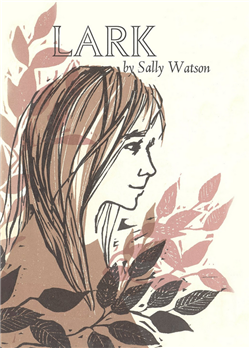
Cover for LarkJust an aside to start. When I was in high school, I had a job at the public library. There I discovered lots of authors I may not have come across elsewhere, and one of them was a writer of books for teens and preteens who specialized in historical novels featuring likable, feisty heroines. I read every one the library had.

Years later, I would try to remember who this author was to see if I could find some of her books and discover whether I still liked them as much. But all I could remember was she had a relatively common name that started with W. I searched Amazon for children’s books with authors beginning with a W. There are a lot of them. Then one day just awhile ago, a word popped into my head, “Lark.” A Google query accomplished the rest. I found a wonderful page on a site specializing in children’s books called “Stump the Bookseller” where you could ask exactly that kind of question, and more than one person asking about the author of a historical novel with a character named Lark. The author was Sally Watson. A little more searching found she is back in print.

* * *

Elizabeth Lennox has not been called by her nickname of Lark since her Uncle Jeremiah came and took her away from her family. He always thought she would make a good wife for her cousin Will-of-God if she was just raised correctly. Since he is one of Oliver Cromwell’s officers and Lark’s father was away fighting with the Royalists, he could do what he wanted. So, he took Lark away and she has been living miserably in a Puritan household ever since. She has no desire to marry Will-of-God, whom she dislikes. She deliberately tries to appear young so that her uncle won’t realize how close she is to being marriageable.

Lark has had nowhere else to go, since her family had to leave for the continent after their property was confiscated. But one day she receives word from her sister up in Scotland, so she decides to go there, not realizing how far away the Highlands are from southern England. She sneaks out of the house in the middle of the night and sets off.

James Trelawney is a young Royalist who disguises himself as a Roundhead to run errands and pass messages in the interests of Charles II. He comes along as Lark is being accosted by a Puritan man after singing a Cavalier song on the road. James takes her for a child, for she looks much younger than her thirteen years. After tossing the Puritan into the river, he reluctantly agrees to take her north, but only because she seems to be too young to leave on her own and she won’t tell him who she is. The two of them have adventures involving intrigue, capture, travels with gypsies, and other exciting incidents.

When I reread a children’s or young adult book, I try to evaluate how interesing it is for both the adult and the intended audience. I don’t think Lark has as much to offer an adult as some of the old classics I’ve reread recently, such as The Secret Garden or Anne of Green Gables. However, I did enjoy it as a bit of light reading. It is written for girls around ten to thirteen or fourteen years old. Although I loved it as a sixteen-year-old, older teens today may be a bit too sophisticated for it. I’m not sure. Still, it has plenty to recommend it, a good background in the history and a pleasant way of presenting it—through James’ confusion about his own loyalties—adventure, humor, and light romance. It is much more innocent than many of today’s books for teens, but that’s not necessarily a bad thing.

Related Posts

Anne of Green Gables

The Loon Feather

Swamplandia!

Day 714: Rubbernecker

Cover for RubberneckerBelinda Bauer has stepped away from the locale of her first three thrillers, set in Shipcott on the atmospheric moors of Exmoor. Rubbernecker is a departure both in locality and tone, set in Cardiff and showing a bit of humor now and then.

Patrick is a young man with Aspergers. He is not as functional as he probably could be, especially with his people skills, having apparently received no help for his condition from anyone, including his apathetic and alcoholic mother. Patrick has been obsessed since he was a small boy by the death of his father, the patient and caring parent. He doesn’t really understand what killed his father, and above all he wants to understand things. So, he is enrolled in anatomy classes at Cardiff University.

Another character we follow at the beginning of the novel is Sam, a coma patient. Sam has begun to emerge from his coma but can’t speak. However, he first awakens just in time to see a man dressed like a doctor murder the man next to him. As Sam frantically tries to communicate, he begins to fear for his own life.

At first, we don’t know how these stories connect or even their relative time frames. We wonder if we should see anything sinister in Patrick’s obsessions.

link to NetgalleyThe novel provides us a few glimpses of humor as Patrick tries to navigate the world of roommates and anatomy class teams and his peers try to understand him. The novel is well-written and involving, but I think I prefer the black aura overhanging Bauer’s earlier efforts. There is plenty of action going on in Rubbernecker, but it is lacking the atmosphere and absolute terror of the previous novels.

Related Posts

Blacklands

Darkside

Finders Keepers 


Day 713: Salem Chapel

Cover for Salem ChapelBest Book of the Week!
Because of the order the books were listed in on Wikipedia, I thought that Salem Chapel was the first of Margaret Oliphant’s Chronicles of Carlingford. However, the introduction to the book says it is the second. When I started to read it, I thought it was going to be, like Miss Marjoribanks, a light satire on society, only a different level of society. But it is much more dramatic than that.

Arthur Vincent proudly takes up his first clergy position as the Dissenting vicar of Salem Chapel at Carlingford. He is an educated gentleman of some ability, and he is certain he will soon be an accepted member of the best Carlingford society. But he receives a shock when he meets his congregation of buttermen, poulterers, and greengrocers and their wives. He soon finds, too, that he is expected to bend to their wishes, as they pay his salary.

Arthur is a proud young man of good family, and this doesn’t sit well with him. Still, he makes an impression with his first sermon and dutifully goes about his business until he is struck by the sight of the beautiful, young Dowager Lady Western. Although a mutual acquaintance tries to warn him not to make anything of her warm manner to him, as she is like that with everyone, he doesn’t pay attention. Soon, he is informed that his parishioners are displeased. He has been seen paying a call in Grange Lane, the home of the upper-class residents of Carlingford (and setting of Miss Marjoribanks), who all attend St. Roque’s.

Arthur has also made the acquaintance of a less prosperous woman, Mrs. Hilyard, an impoverished gentlewoman who takes in sewing. Mrs. Hilyard is an odd and unfortunate woman, and it is a favor she asks of Arthur and his family that drives the larger actions of the plot.

Up until the major events are set in motion, I found the book amusing, as when Arthur, moonstruck by the sight of Lady Western, spends an entire week daydreaming about her. His congregation interprets this lack of activity as a scholarly application to his sermon and is impressed.

This novel contains wonderful characters who can be a bit Dickensian, like the well-meaning butterman Deacon Tozer or the disturbing Mrs. Hilyard, who reminds me a bit of Rose Dartle in David Copperfield. From humor, the novel soon takes a more serious turn.

The introduction to this novel says that once Mrs. Oliphant was one of the most well-regarded of the Victorian novelists, but she is now nearly forgotten. I have found the two of her novels I’ve read to be very entertaining. I think she reminds me, with a delicate touch, more of Jane Austen than any other writer I’ve encountered, and some of the events of Salem Chapel are remindful of Pride and Prejudice. I can only hope that more people will decide to read the works of Margaret Oliphant.

Related Posts

Miss Marjoribanks

Persuasion

David Copperfield

Day 712: Literary Wives: My Father’s Wives

Cover for My Father's WivesToday is another Literary Wives discussion about the book My Father’s Wives by Mike Greenburg.

Be sure to read the reviews and comments of the other wives! If you have read the book, please participate by leaving comments on any of our blogs.

* * *

If there is such at thing as a male equivalent for chick lit, My Father’s Wives fits in the genre. Take a similar focus on romance and family, keep the background of wealth and focus on expensive brand names, replace shopping with basketball and witty dialogue with earnestness. Mix in a bunch of underdeveloped characters that readers don’t care about. Make it light as a feather despite themes that could be heavy and also make it thoroughly predictable. There you have it. This genre can even have a similarly rhyming name, but it would be rude to say it.

Jonathan Sweetwater has led a privileged existence. He is the son of a U.S. senator. He has a job as a banker that he enjoys, and he has been taken under the wing of the CEO because of a mutual love of basketball. He is happily married with two kids that he loves.

One day before he is due to leave for a business trip, he decides to come home early from work and sees what he thinks is evidence that his wife Claire is having an affair. I’m not giving away anything here. This happens almost at the beginning of the book.

Instead of simply walking into the room or, failing that, asking his wife about what he saw, Jonathan hires a private detective. This is what movie reviewers call the lame-brained plot, the plot that continues when the problem could be cleared up with a few sentences. If he had behaved at all rationally, there would be no story, however. By the way, this detective’s shenaningans, supposedly an effort to protect his client’s anonymity, are ridiculous.

Then for some reason, Jonathan decides he really needs to find out about his father, from whom he and his mother have been estranged since he was 9. I would call this the McGuffin if it had any other purpose than making the book a little longer. To do this, he tracks down all six of his father’s wives, doing so while pretending to be on business trips.

I felt the premise behind this novel, although not unlikely, didn’t really relate well to its trigger. That is, why would thinking his wife was having an affair make him run out to find out about his father? The people in the novel are very thinly characterized, even Jonathan. We know, for example, that he’s supposed to be destroyed by his discovery, but we don’t feel it. In any case, I think we all know that there will be some explanation for Claire’s apparent infidelity.

I would also like to mention the choices in this novel and the lack of a sense that some of the choices are not ethical or moral. Jonathan sees nothing wrong with hunting up his father’s wives while he’s pretending to work. His boss behaves more like a mafia don than a CEO, and if he was really spending his nights with cocaine-sniffing models, he wouldn’t take an employee along. In any case, that relationship is inexplicable and unlikely. Claire does one questionable thing that is unexplained, and I cannot say more about it.

What does the book say about wives or the experience of being a wife? In what way does the woman define “wife”—or in what way is she defined by “wife”?

Although there are a lot of wives in this book, I don’t think we learn much about them. We don’t even see that much of Claire. Her role seems to be very conventional—to be a good suburban wife and mother. She is warm and someone Jonathan feels comfortable with.

Literary Wives logoOf Percy Sweetwater’s six wives, we learn that he left each one for not being perfect. Jonathan’s mother is intelligent, educated, and cultured, but she doesn’t worship Percy, so he leaves her for Christine, who does. But he soon tires of Christine for her lack of the qualities he admires in his first wife. Next, he marries Elizabeth, a doctor, for her intelligence. He continues on, always marrying his current wife’s opposite. But we barely learn anything about them except their jobs. I don’t think we can gain much of a coherent view from this novel of how the author views wives. Clearly Percy views a wife as someone who has to meet all his needs for admiration, intelligence, charm, and beauty, but just as clearly, that is not Jonathan’s view of a wife. What is his view? That’s not clear. Maybe a companion.

Related Posts

Wife 22

Where’d You Go, Bernadette?

The Interestings

Day 711: Mother of Pearl

Cover for Mother of PearlSet in the 1960’s but seeming more appropriate to decades before that, Mother of Pearl is a sort of Southern Gothic mashup. It features a love affair between near relations, a half-Indian seeress, the town slut, a self-educated African-American man, and some other stereotypes. It is energetically written but sometimes so floridly that I wanted to put it down. Still, it captured my attention enough to give it a mild recommendation. For a novel that starts out dark and unusual, it ends up being surprisingly sentimental and unlikely.

Even Grade is an African-American factory worker. He recently helped his older neighbor Canaan after a teenage white boy hit him in the head with a bottle. His deepest sadness comes from the knowledge that his mother abandoned him as a baby and he was raised in an orphanage.

Valuable Korner, a white teenager, was also left by her mother, the town slut. Her mother disappeared after her birth and left her to be raised by her grandmother Luvenia, returning just before Luvenia died. Since then, Valuable has shared the house with her mother and whichever man she is with.

Barely in puberty, Valuable is about to turn her life-long friendship with neighbor Jackson into a full-blown love affair. What neither of them knows is that they are half brother and sister. The adults who are aware of this seem criminally oblivious, except one.

That one is Joody Two Sun, a half-Indian healer and seeress who lives in a hut by the creek. She and Even are lovers. When Valuable and Jackson come to consult her, she can immediately see their relationship and fate but chooses to say nothing.

Joleb, a friend of Jackson, lives with his father, who is as dumb as a post, and his older brother Burris, who tries to see God by standing on a railway trestle as the train approaches. Their mother also lives with them, but she has been in a vegetative state since Joleb was born. He feels closer to Grace, an African-American woman who cares for his mother and nursed him when he was a baby, than he does to his own family.

I had some problems with this novel, mostly involving the unlikelihood that Valuable, with her attitude toward her mother’s affairs, would plunge into her own love affair as soon as she hits puberty, especially as naive as she is. But then again, if she didn’t, there would be no novel. In addition, I can say no more, but the ending of the novel is very unlikely, ignoring legalities, for one.

Still, I enjoyed this book, especially liking the African-American characters, who seem better defined than the white ones. Valuable’s Aunt Bea, who with her lesbian lover Neva takes her in when her mother finally leaves town, seems to have no personality at all. Neva definitely has one but it is mostly destructive. Joleb, although he gets more interesting, seems like a cartoon character at times. And frankly, the two star-crossed lovers are pretty much cardboard figures.

I was interested particularly in Even and Grace. Joody is too much over the top at times, and Canaan only seems to be there to anchor Grace.

Readers commented that they were not taken with the book until about 100 pages in. That was my experience as well. In fact, if I hadn’t read those comments, I may not have kept reading the book.

Related Posts

This Side of the Sky

Queen Sugar

A Good Hard Look

Day 710: The Kept

Cover for The KeptBest Book of the Week!
The Kept is a mysterious and darkly moody novel that I found compelling from the first sentences. Elspeth Howell arrives home on a snowy winter day in upstate New York near the turn of the 19th century. She has been away for months working as a midwife. But when she reaches home, she finds that her husband and all of her children that live in the house have been murdered. Only her 12-year-old son Caleb, who has taken to living in the barn, is alive, but he has been hiding in the pantry for days, and when she opens the pantry door, he shoots her in terror.

Caleb spends the next few days alternately trying to take care of his mother and dispose of the bodies of the rest of his family. He cannot bury them in the frozen earth, but in his attempt to burn them, he accidentally burns down the house. He ends up caring for his mother in the barn.

The Howell’s home is isolated and difficult to find. As a young girl, Espeth was driven from her home for having spoken to Jorah, the man she later married, because he was Native American. But there are other reasons for the family’s isolation. In any case, Elspeth thinks the murderers must have sought for their house.

When Elspeth is barely healed, she and Caleb set forth to find the three men who murdered their family, men whom Caleb watched from the barn. They stay briefly with an old couple who have been terrorized by the same three men and who point them in the direction of a town on Lake Erie with a terrible reputation. There, with Elspeth disguised as a man, they go to search for the men.

Beginning as a straightforward revenge novel, the book goes on to explore deeper themes. One of them is that of unintended consequences, as Caleb finds that their troubles result from Elspeth’s own actions years before.

This novel is well written and packed with atmosphere. It is vivid and brutal and beautiful.

Related Topics

Seven Locks

True Grit

Neverhome

Day 709: Family Furnishings

Cover for Family FurnishingsBest Book of the Week!
I felt it was about time I read something by Alice Munro, having only ever encountered a story or two in a magazine. Now, I only wish I’d read her earlier. A note in Family Furnishings explains that the stories were selected to cover the entire time of Munro’s writing career, although it also refers to two volumes. So, I assume this volume is from the latter half.

I am usually more a long fiction person, because I like to get thoroughly involved in what I’m reading, and short fiction doesn’t usually accomplish that. But in this case, I found myself completely absorbed in story after story.

Early on in the volume, I thought I detected a pattern of Munro telling how the different characters formed their families, sometimes in unusual ways. Later, I thought I might have imagined this pattern, or it may not fit all the stories. In any case, the stories are spell-binding, often toward the end revealing something that happened earlier than the timeframe of the story and illuminating some truth. Some of the stories appear to be autobiographical and some may be about Munro’s ancestors.

“The Love of a Good Woman” at first seems to be two unconnected stories, one about three boys discovering a car in the river with a body in it, the other about a nurse discovering tender feelings for a man she knew in high school while she is nursing his dying wife. Yet, it turns suddenly into a murder mystery. But Munro somehow makes this a banal and everyday event.

In “Hateship, Friendship, Courtship, Loveship, Marriage,” we seem to be reading about a swindle. An old man’s servant suddenly runs off with his dead daughter’s furniture to live with his ex-son-in-law. But halfway through the story, we meet two adolescent girls, Edith and Sabitha, who are actually controlling this situation through a prank.

“The Bear Came Over the Mountain” is the touching but even more complex source of the wonderful movie Away from Her, about a man helplessly observing his wife’s growing loss of memory from Alzheimer’s. In “The Children Stay,” a young woman walks away from her family during a vacation on Vancouver Island to leave with her lover.

Several of the stories are about Munro’s own childhood—how her father began raising animals for fur too late to make a success of it and had to go work in a foundry, how her mother suffered for years from Parkinson’s, how the truth of a story long told about a crazy neighbor’s behavior when Munro was a baby suddenly was revealed years later when she saw a poem in a newspaper.

All of these stories show us the complexities and depths of human interactions. They are minutely observed and beautifully written. I’ll soon be looking for more to read by Alice Munro.

Related Posts

The Empty Family

Unaccustomed Earth

Stone Mattress