
The Best Book for this period is Illyrian Spring by Ann Bridge!
Reviews, reviews, and more reviews

The Best Book for this period is Illyrian Spring by Ann Bridge!
It’s the first Wednesday of the month, so now it’s time for my new feature, WWW Wednesday (which I stole from The Chocolate Lady). The idea is to talk about the book I’m reading now, what I just finished, and what I’ll read next. If you want to pop in and tell me about your reading, please do by adding your comments.

I have to admit to not looking forward to this book for my Booker Prize project. It’s Glory by Noviolet Bulawayo. At this writing, I have just picked it up, but it is one of those allegories that uses animals as characters. My initial reaction is to think that Animal Farm was enough of that. Sigh. We’ll see how we go.

My last book was from Dean Street Press, the Furrowed Middlebrow line, a place I go for relaxation. It was Village Story by Celia Buckmaster. This is the second book I’ve read by Buckmaster, and they both seem to have lots of characters and less of a straightforward plot than most of the others. This one does indeed tell the story of a village through the characters of some of its principal citizens, through a few years in time. It was published in 1951, but its time setting isn’t clear.

I’ve been going back and forth on this. I picked up the next book in my stack, but when I read what it was about, I put it way back on my stack. Bad timing. However, a few months into my Century of Books project, I put my TBR list in order of publication date and picked out some books for years I didn’t have an entry. The Voyage of the Narwhal by Andrea Barrett was a book that had been on my list for a long time and that filled one of those holes. For some reason I thought it was nonfiction, but it says clearly on the front cover that it is a novel, about a voyage to Greenland.
No matter what you read next, I hope you enjoy it. Let me know what you’re reading, if you don’t mind. Do any of these books sound tempting to you?
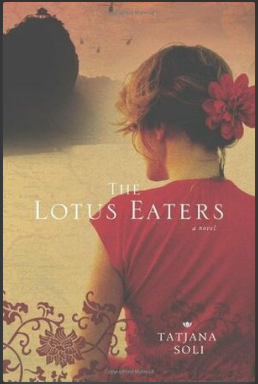
I’ve had The Lotus Eaters on my TBR list for a long time, so I finally decided to get a copy. Unfortunately, it turned out to be a DNF for me the first time. (But read on, because I eventually finished it. My review is in two parts.)
The novel begins with the fall of Saigon in 1975. War photojournalist Helen has left it late to try to get herself and her wounded husband, Linh, out of the country. Torn between trying to get photos of the fall and getting out safely, after a long, dangerous struggle to get to the American embassy, Helen gets Linh into a helicopter and then returns to the city.
The novel then moves back in time to 1965, when Linh has just been forced to rejoin the South Vietnamese army. On his first day back, he meets photographer Sam Darrow, who gets him appointed as his assistant. But on the same day, friendly fire destroys his village, including his parents and his pregnant wife. Linh deserts.
After months in Saigon, Linh gets a job with Life magazine by claiming to be Darrow’s friend. He ends up being Darrow’s assistant again. Then the focus of the novel shifts back to Helen and her arrival in Saigon as an inexperienced photographer.
I gave this novel 100 pages, but although I was interested in the setting, I just didn’t care about these characters. And although Soli does a good job of describing some things, I just wasn’t feeling the setting or getting engaged in the story. This seemed like a mediocre attempt at historical fiction. Things didn’t come to life.
I realized later that this book was part of my James Tait Black project, so I should have tried to finish it, but I didn’t.
I gave The Lotus Eaters another try after I realized it was not only part of my James Tait Black project, but it had won the award that year. When I quit reading, it was because I assumed that the novel was mostly going to be about Helen’s romantic relationships with married photographer Sam Darrow and then with Vietnamese photographer Linh, and I wasn’t at that point that interested in them. However, it turned out to be more about Helen’s growing love for the country and whatever it is that makes people risk their lives to get photos of dangerous events.
Soli is good at evoking the landscapes and scents of Vietnam, as well as the dangers. Although I became interested enough in the story to finish it, I still felt a considerable distance from the characters. I was most interested in Linh, but we only see from his point of view briefly at the beginning and end of the novel, and after all he goes through, his most defining characteristics are loyalty and love for Helen.
So, I still only liked this novel somewhat. I couldn’t help contrasting it with the recent movie Civil War, also about photojournalists and much more gut-wrenching.
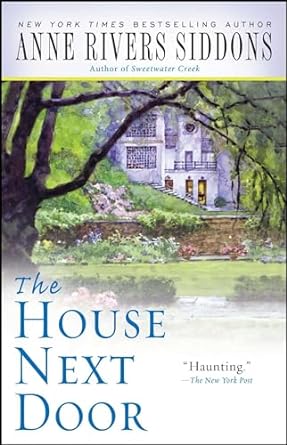
Colquitt and Walter Kennedy are dismayed when they hear that the lot next door in their wealthy Atlanta neighborhood is being built on. They have relished it as a green buffer and have been assured that no one can built on it. However, the new owners have apparently found someone who can, Kim Dougherty, a young architect. Colquitt is the first to admit that the house he builds is strikingly unusual and beautiful. In fact, she understands its beauty much better than do the owners, Pie and Buddy Harrelson. As the house goes up, Colquitt and Walter develop a friendship with Kim.
I read this novel because I heard it was a good ghost story, but it’s not a ghost story as such—rather a haunting. As the house goes up, the bodies of small animals, ripped apart, appear, including that of Pie’s puppy. Pie falls down some unprotected stairs and has a miscarriage. When Kim finishes the house and moves on to other projects, he reports being unable to work. The Kennedys think he’s just burnt out and needs a rest, but he says it’s the house, that it takes whatever you value most. Then, on the night of the Harrelsons’ house-warming party, a dreadful event occurs.
When the next family moves in. Buck and Anita Sheehan, Colquitt feels that Anita looks haunted. The neighborhood soon finds out that Anita spent time in a mental hospital after the couple’s son died in the Vietnam War. (The novel was written in the 1970s.) Soon enough, Colquitt and eventually Walter start to believe that Kim may be right about the house. The problem is what to do about it.
I am not familiar with Siddons, so I don’t know if she generally writes about the privileged. The Kennedys are not wealthy according to themselves, but they both have generous salaries and they live among the rich. There are times when the novel reflects a sort of exclusiveness and self-satisfaction that is not flagrant but is there. The Kennedys run into a class wall when they try to warn people about the house, but all this surfaces at the end in an unusual way.
The ending of this novel takes a startling turn that opens up the reader’s interpretations of the actions of the novel and makes you rethink. I think this put it higher in my regard than it would have if it had gone where I expected it to. It made me reconsider the whole story.
I thought that Ferdydurke would be something different that I could read for the 1937 Club, but I couldn’t bring myself to finish it. When I returned to it, I still couldn’t make any headway. I didn’t finish it but read about 70 pages.
The unnamed narrator is turned from a middle-aged writer into a juvenile boy by an old schoolmaster and forced to go back to school. The sense of humor is juvenile, jokey, and forced, and I didn’t think it was funny. I quit reading during the mock introduction to a story (the first of two, apparently) that Gombrowitz chose to interrupt the flow of the novel. Not that the flow was very interesting.
Gombrowitz uses a Polish word, “pupa,” which means the butt or core of the body, to signify the concept of infantilization. He uses the word so often that I never wanted to hear it again.
This novel is supposed to be a masterful satire, but I couldn’t stand it.

In January, I foolishly decided to join Simon Thomas’s Century of Book Challenge, even though I knew that reading 100 books, one for each year in a century, from 1925-2024, would be tough because last year I only read 169. So, how am I doing?
Here are the holes in my project with the books listed for April below. If you want to see the details, see my Century of Books page.
This month I read the following books:
Not eligible for this project, unfortunately, because written too early:
Eligible and read since May 29th:
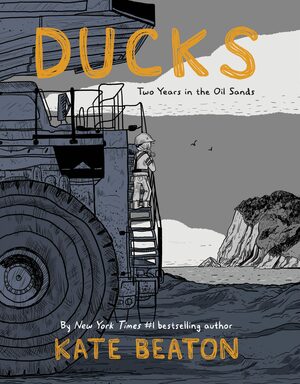
Ducks is Kate Beaton’s graphic memoir about the two years she spent working in the oil sands of Alberta. Originally from Nova Scotia, she was unable to find work at home that would pay enough to pay off her student debts. So, like many others, she traveled to Fort McMurray to get a higher paying job.
She found herself in a hyper-masculine setting that was toxic, where she encountered routine sexual harassment and was raped twice in her first year. She does attempt to show the whole story, the loneliness of both herself and the men, the nice people she encounters, and so on.
Other themes in the book are the poisoning of the environment, the lip service to corporate safety, the harm to local people, especially the First Nations.
I thought this book was interesting. The cartoons are not beautiful, but they are good enough to tell characters apart and to recognize emotions. It certainly provided a window into another kind of life.
It struck me how often the most beautiful areas to live in are the ones where it’s most difficult to gain a living. I grew up in Michigan, which in my time was a have-not state, but not as bad as Eastern Canada, apparently.
The Ukrainian and Russian Notebooks

Clover is a death doula who is still in mourning for her grandfather. She is a lonely person, but she avoids getting to know new people. At a death café, she meets Sebastian, who seems to want to get to know her, but she avoids him. When he finds out she is a doula, he hires her to be with his grandmother.
Her new neighbor, Sylvia, also wants to get to know her. Clover reluctantly agrees to meet for coffee.
From about page two, I realized this wasn’t the book for me. It had all the earmarks of the manipulative feel-good novels that are so popular now and I dislike. In addition, it was clunky and obvious, especially the flashbacks of her as a child with her grandfather. Brammer doesn’t write a convincing child.
I gave the novel 104 pages to see if it improved, but it didn’t.
This is a lovely book. In some ways, it compares to Elizabeth Von Armin’s The Enchanted April, but I think it is deeper and more thoughtful.
Grace Kilmichael has left her family. Although she is a famous painter, her husband Walter treats her art like a little hobby. He has always teased her about being stupid, but lately there seems to be an edge. He constantly makes admiring remarks about a female coworker and spends a lot of time with her.
Grace’s children are grown and don’t seem to need her, and she has lately had a poor relationship with her daughter Linnet, who no longer confides in her and acts impatient with her.
Accepting a contract for some drawings on her travels, she leaves without telling anyone where she’s going. She simply writes Walter a letter offering him the opportunity to leave her for Rose.
Lady Kilmichael has avoided meeting any of her friends in Europe, because she wants no one to know where she is. However, she runs into her friend Lady Roseneath in Venice. Lady Roseneath is traveling with her nephew, and when he appears, Grace realizes that she met him the day before on Torcello, where they had a conversation about architecture and he helped her correct a drawing of mathematical design that she plans to send to her archeologist son.
His name is Nicholas Humphries and he’s a little older than her sons. On an expedition the next day, he confides that he wants to be an artist but because he made the decision late and he wanted to be an architect as a child, his father is determined he will study architecture. The situation is made worse because his sister decided to be an artist before him, although she has little talent, and his father won’t stand for two artists in the family. When Grace sees his work, she realizes he needs to develop but has talent. So, eventually she agrees to help him learn.
She has told Lady Roseneath she is going to Greece because she doesn’t want her family to find her, but actually she goes to Spalato (Split) on the coast of Croatia, and the boy comes with her. Grace feels that he is giving her insights into her relationship with Linnet, and Nicholas, who was sulky when she met him, begins to be more happy.
As well as containing gorgeous descriptions of the towns and countryside of 1935 Croatia, the novel thoughtfully explores the relationship between the two protagonists. It describes Grace’s own personal growth and her insights into her relationships with her family members. It’s a lovely novel about personal development.

I know I must have read this novel back in the days when it was named Dolly and the <Whatever> Bird, Dolly being Johnson Johnson’s yacht and <whatever> being whatever they politically incorrectly called each book’s female narrator, thinking they were being hip. Anyway, I enjoyed this reread years later.
Sarah Cassels may be the daughter of Lord Forsey, but she’s been broke most of her life. She wants nice things, and the only way she can get them, she reckons, is by marrying a rich man. Although on the lookout, she is likable and doesn’t seem rapacious. In the meantime, she is working as a caterer and sharing a flat with a girlfriend.
Sarah gets word that her father has committed suicide on Ibiza. But when she receives a last letter from him, she’s not so sure it was suicide, because she doesn’t think he wrote it. She can’t imagine why anyone would murder him, though. He was just a harmless drunk who earned his way with his friends by his entertaining chatter.
Sarah meets Mr. Lloyd, the wealthy father of her school friend Janey, at her father’s funeral. That’s when he realizes she was Lord Forseys’ daughter and tells her that her father was staying with him in Ibiza when he died. Mr. Lloyd invites her to Ibiza to visit his daughter, but she only agrees if he’ll let her cook. She decides to go to Ibiza to find out why her father died.
Dunnett’s plots tend to be complicated, so it’s hard to provide any more of a synopsis. I’ll say one thing further. Sarah finds out that her brother Derek’s firm believed a piece of stolen machinery was taken by her father. Derek was in Ibiza the weekend her father died, so the family reunion is bumpy—and there’s more family than that.
She also, of course, meets Johnson Johnson, the internationally renowned portrait painter. He’s staying at the same yacht club where her father died.
These mysteries are written using a light tone with sharp dialogue and complex plots. The story involves jet setters and some wild parties, but it ends in an ancient religious ceremony. The descriptions of Ibiza are vivid and make me wish I could have visited 50 years ago.
Book reviews of mainly modern & contemporary fiction
Writer and Historian
There is nothing more satisfying than reading a book while sipping a hot cup of tea.
A historical fiction book blog
Emerging as an artist
Liz Dexter muses on freelancing, reading, and running ...
For mostly adult, literary, fiction; focusing on historical, contemporary, biographical, and women.
"Well, there’s so much to read, and I’m so far behind." Wallace Stegner
Read to live and live to read
A bookish blog (mostly) about women writers of the nineteenth and twentieth centuries
A Celebration of Russian Literature
Reading: it's personal
Based in Romania, reading all over the world. Mostly fiction, some memoires and a little bit of poetry.
Adam Burgess
"Vivre le livre!"
"History is a vast early warning system." Norman Cousins
Scottish Book Blogger
"She had read novels while other people perused the Sunday papers" - Mary Elizabeth Braddon
A word after a word after a word is power. --Margaret Atwood
Books • Opera • Art • History
FOR DISCERNING READERS
Your online source for Jane Austen and her legacy
A Community of Classics Lovers
A blog about Irish books, writers, writing and everything in between.
 What? Me Read?