Review 2429: The Return of the Native

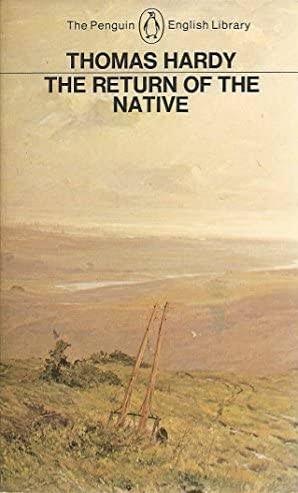
A love triangle—or rather a love pentagon—is at the heart of The Return of the Native. I put this novel on my Classics Club list because, although I read it years ago, I could remember nothing about it.

The Return of the Native is Hardy’s most contained novel, all of it taking place on Egdon Heath. The action begins on Guy Fawkes night with the lighting of bonfires. The occupants of one barrow are discussing the supposed marriage that day of Damon Wildeve and Tamsin Yeobright. But Tamsin returns home in distress and unmarried, saying Wildeve made a mistake with the license.

Wildeve has told Tamsin they can marry on Monday, but on that very night he goes to see Eustacia Vye, the girl he dropped for Tamsin. Eustacia is a vibrant, proud woman, and there is no doubt that she is tempted to get revenge on Tamsin.

Tamsin and her aunt view themselves disgraced if the marriage doesn’t come off, even though Wildeve lets weeks go by as he tries to court Eustacia. But Eustacia has heard of the return after years away of Tamsin’s cousin Clym, an educated man who works as a diamond seller in Paris, and sight unseen, she decides he’s the man for her. She hates the heath and wants to go to Paris. So, she misses a rendezvous with Wildeve and he marries Tamsin.

With this ill-conceived marriage, we are halfway set up for the tragedy. Then Eustacia marries Clym even after he tells her he plans to run a school for the poor on the heath, thinking she can easily change his mind after the wedding. The fifth point of the pentagon is occupied by Diggory Venn, a rettleman, or man who sells the red substance used to mark sheep and whose skin and clothing are dyed red from handling it. Although the Introduction to my edition explains that Hardy meant him to be a rather freakish figure about the heath, he ends up using him as a sort of deus ex machina, always in aid of Tamsin.

A strong theme of snobbery is inherent in the novel as we learn (1) that Wildeve was meant for better things but ended up owning the neighborhood pub, (2) that Tamsin turned down a proposal from Venn even when he was a respectable dairyman because he wasn’t good enough for her, (3) that the only suitable suitors for Eustacia in the neighborhood are the morally dubious Wildeve or the unambitious Clym. And Mrs. Yeobright clearly disapproves of both her son’s and niece’s choices.

So, we’re all set up for one of Hardy’s tragedies, in which he lays into the Victorian idea of marriage while making all his characters suffer. I usually like this stuff, but Hardy was forced by his publisher to add on the last section, thus providing a happier ending and making the story seem to last a little too long.

Related Posts

Far from the Madding Crowed

Tess of the D’Urbervilles

The Mayor of Casterbridge

Review 2428: The Green Road

The Madigan family centers its activities around Rosaleen, the mother. At the beginning of the novel, she takes to her bed, assuming the horizontal, after she learns her favorite son Dan is planning to become a priest. The family has to run itself around her until youngest daughter Hanna, the narrator of this chapter, returns from a visit to her brother with information that gets Rosaleen out of bed and on the attack.

In that chapter we learn of the tangled history of the village. The Considines, Rosalee’s family, always looked down on the Madigans, Rosaleen mocks other families for their pretentions, but it’s true that she married below her, and the Madigans have never made very much money. But Rosaleen doesn’t care about money. She would like her husband to fix a few things around the house, but he generally doesn’t.

The next chapter picks up eleven years later in 1991 New York City. This chapter is narrated by Greg Savalas, a gay man deeply in love with a man named Billy. Dan Madigan comes on the scene, and although he is not out, he begins an affair with Billy. This is the time when men are dying of AIDS, and Billy is suddenly stricken. Dan is not helpful.

Eleven years later we encounter oldest son Emmett, who is an aid worker in Mali. This chapter details his insufficiencies in his relationship with his girlfriend Alice.

The Madigans all seem to reserve themselves from deep attachments. The second half of the novel is set in 2005, when they all gather together for Christmas for the first time in years because Rosaleen decides to sell the house. It’s clear that everything is still revolving around her. We get more insight into Constance, the oldest daughter, who has her own family but is the only one left in the area to meet Rosaleen’s demands. Finally, there is Hanna, an actress who is not coping well with motherhood.

I always feel that Enright’s characters are absolutely believable and her families fraught with realistic complications. Her descriptions, too, of the Western Ireland scenery are gorgeous.

Related Posts

The Gathering

Small Things Like These

This Is Happiness

Review 2427: Impact of Evidence

The area around St. Brynneys on the English side of the Welsh borderlands has been snowed in for days. It has finally started to thaw, and that has brought flooding to the valleys like the residents have never seen before. Up at St. Brynneys, the Lambton family is safe from floods and working hard on their dairy farm when they hear old Dr. Robinson go out in his car. The doctor is a menace on the road, being deaf and nearly blind, but it is his habit to drive to the top of Hollybank and back, a short distance. This time, however, they all hear a crash.

It’s a while before they can get the old Ford going, but when they do, they head to the accident, meeting Mike and Sue Dering coming home on their bikes. They all find the doctor’s car in the stream and Bob Parson standing nearby all bloody with his Jeep wrecked. Bob tells them he was driving fast down the road to get up the next hill when the doctor emerged without stopping from the side road.

The Lambtons, the Derings, and Ken, Lambton’s young hand, manage to haul Dr. Robinson’s body out of the water. But Ken notices another body. This man is a total stranger.

The phone is out and driving still dangerous, so after delivering the concussed Bob and the two bodies to the farm, Henry Lambton and Mike Dering decide to walk to the magistrate Colonel Wynne’s house to notify him of the accident. Since the area is now isolated because of floods, Colonel Wynne rides his horse the next morning to the nearest constabulary. Eventually, Chief Inspector Julian Rivers and Inspector Lancing are dispatched to find out who the second body is, when he arrived in the area, and why he was apparently in Doctor Robinson’s car.

Carol Carnac is another pen name for E. C. R. Lorac, who always writes beautiful descriptions of the local landscape. With quite a few suspects but most of them likable, I was never sure where this one was going to end up. The culprit was a complete surprise. I liked this one a lot.

Related Posts

Crook O’Lune

Fell Murder

The Theft of the Iron Dogs

Review 2426: Mrs. Martell

Mrs. Martell is not a nice person. She is beautiful and ambitious. Her goal has always been to marry a wealthy, influential man. She’s always had plenty of attention from men, but somehow she has not been lucky. Mr. Martell was a mistake, of course.

Cathie Martell never paid much attention to her cousin Laura until Laura married Edward West, wealthy and with great connections. Since then, she has made it her business to befriend Laura and has almost succeeded in detaching Edward for herself, but somehow he stays married to Laura.

Just in case Edward doesn’t come up to scratch, Cathie has encouraged the attentions of Mr. Hardy, a young newspaper reporter, who is able to get free tickets for shows. He is madly in love with her, but she doesn’t want Edward to find out.

This darkish social satire rivals the story of Becky Sharp, only Becky is more likable. Eliot’s prose is sharp and biting, although she tends to shift point of view without warning, sometimes in the middle of a paragraph, which I found confusing at times. Still, I was driven to find out if Cathie would succeed or get her comeuppance.

Related Posts

Alice

Burmese Days

The Eustace Diamonds

A Century of Books: How Am I Doing? April Report

In January, I foolishly decided to join Simon Thomas’s Century of Book Challenge, even though I knew that reading 100 books, one for each year in a century, from 1925-2024, would be tough because last year I only read 169. So, how am I doing?

Here are the holes in my project with the books listed for April below. If you want to see the details, see my Century of Books page.

  • 1925-1934: entries needed for 1926-31
  • 1935-1944: entries needed for all years except 1935, 1936, 1937, 1941, and 1943
  • 1945-1954: entries needed for all years except 1947, 1952, 1953, and 1954
  • 1955-1964: entries needed for all years except 1958 and 1959
  • 1965-1974: entries needed for all years except 1965, 1966, 1972, and 1974
  • 1975-1984: entries needed for all years except 1975 and 1976
  • 1985-1994: entries needed for all years
  • 1995–2004: entries needed for all years except 2004
  • 2005-2014: entries needed for all years except 2009, 2010, 2012, and 2014
  • 2015-2024: complete!

Read since March 27th:

Unfortunately, not qualifying for the project, The Return of the Native by Thomas Hardy from 1878

Qualifying:

  • Illyrian Spring by Ann Bridge from 1935
  • An Infamous Army by Georgette Heyer from 1937
  • Beginning with a Bash by Alice Tilton from 1937
  • Forest Silver by E. M. Ward from 1941
  • Family Ties by Celia Buckmaster from 1952
  • A Stranger Came Ashore by Mollie Hunter from 1975
  • Real Life by Brandon Taylor from 2020
  • The Immortal King Rao by Vauhini Vara from 2022
  • The Other Side of Mrs. Wood by Lucy Barker from 2023
  • Prophet Song by Paul Lynch from 2023
  • The Square of Sevens by Laura Shepherd Robinson from 2023
  • The Guest Room by Tasha Sylva from 2023

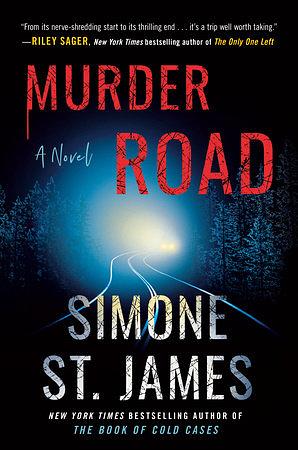
Review 2425: Murder Road

If you like a good ghost story, there’s no one to beat Simone St. James. Her last two books were especially excellent.

It’s July 1995. April and her new husband Eddie are on their honeymoon on the way to a motel on Lake Michigan when they get lost. Something about the road they are on, Atticus Line, feels wrong. April sees a light blinking in the woods and then they see a figure in the road, a girl who seems to have something wrong with her. Her name is Rhonda Jean, and once they realize she’s bleeding, they rush her to the hospital in Coldlake Falls.

Rhonda Jean has been stabbed, and she dies in the hospital. April and Eddie are covered with blood, as is their car, and they suddenly realize they look like murderers. And that’s how the cops see them.

April and Eddie soon realize that they need to try to solve the murder themselves. They learn that there had been a series of murders on the Atticus Line, mostly of hitchhikers on the way to a beach, starting in 1976 with an unidentified woman. There is also a story of a ghost who haunts the road. Once you see her, you die. April sees her when they return to the road, and the ghost tries to pull Eddie from the car, but they don’t die. What does the ghost want?

As far as the plot goes, and sympathy for the main characters, this one is right up there with St. James’s best. Unfortunately for me, Michigan native, it turned into What It Gets Wrong about Michigan, especially Midland, one of the novel’s settings and my home town.

Never mind me. If you like ghost stories, you’re going to love this one. No need to continue reading. However, if you like accuracy . . .

First, it was the weather. This is minor, but the characters experience a series of really hot days. Sure, it can be hot in Michigan, but in the northern lower peninsula, which is where the book is set, it’s usually not that hot in July. Mornings are usually cool and nights cold. There’s a bit about a flannel shirt that Eddie brought along in case it was cold. He would know it would be cold. Of course, weather in 2024 could be different, but I looked up the weather in that area in July 1995. They had one day in the 90s and a low in the 80s. Most days were in the 60s or 70s. But again, this is minor.

Then she shocked me by saying Midland was in the south, almost to the Indiana border, proving she never even looked at a map. Midland, as its name suggests, is smack dab in the middle of the lower peninsula, maybe a bit east of the middle. It’s a five-hour drive from Ohio. Indiana is further away. The main characters are from Ann Arbor, which is almost two hours further south than Midland, so they wouldn’t make that mistake.

I’m no Midland booster—I got out of there as soon as I could—but St. James depicts it as a sad little town. It’s actually quite prosperous as the home of Dow Chemical, which has pumped a lot of money into it, and it has a large percentage of people with PhDs. The characters think they are in a sad downtown area when they go to the library, but they are not, and in fact never get there. The downtown of MIdland was quite vibrant in the 90s, much more so than when I left in the 80s. The library is actually on a long main street that is commercial at both ends but middle- to upper-class residential in the middle where the library is, with the botanical gardens behind it and the performing arts center next to it. April is surprised that the library is surrounded by greenery, but most of Midland is quite green, although it gets a little seedy a few long blocks away, closer to downtown. Finally, there is no bank across the street from the library.

Just a little more research, even if she couldn’t make a visit, would have got these facts right. It’s kind of interesting that she didn’t do it or make up a different town, as she did with the setting farther north.

Related Posts

The Book of Cold Cases

The Sun Down Motel

The Broken Girls

Review 2424: The Bookbinder

Pip Williams revisits the Oxford University Press and the themes of World War I and rights for women in The Bookbinder. Again, she shows her skill as a storyteller.

Peg Jones has grown up around the Oxford University Press, but she’s a representative of town rather than gown. She works at the press as a bookbinder, but she has always yearned for more education and an opportunity to attend Somerset, the women’s college. Aside from the social and educational restrictions, she has been held back by a feeling of responsibility for her special needs identical twin sister Maude.

World War I has just started, and Peg gets an opportunity to apply for one of the positions on the men’s side, but she doesn’t take it. In a link back to The Dictionary of Lost Words, Peg helps Esme’s lover bind a printed copy of her collection of women’s words.

After the invasion of Belgium, Belgian women come to work at the press, and Maude becomes close to one of them, Lotte. Peg goes to volunteer at the hospital and is teamed a reader/letter writer with Gwen Lumley, an upper-class girl who becomes her friend.

Peg is torn between her feeling of responsibility for Maude and her resentment of it. She is both grateful to Lotte for helping with Maude and jealous.

Her contact with Gwen along with the help of her supervisor, Mrs. Stoddard, leads her to an opportunity to apply for a scholarship to Somerset. But she must pass two series of exams.

Williams is skillful at involving readers with her characters’ ups and downs as well as their self-development. I enjoyed this novel very much.

Related Posts

The Dictionary of Lost Words

High Wages

Weatherley Parade

Classics Club Spin Yet Again!

Here it seems like we just had a Classics Club Spin and we’re having another one, #37! What is the spin, anyway? Well, if you are a member of the Classics Club you have posted a list of a number of classics you would like to read by a certain deadline, set by yourself. To participate, simply create a numbered list of 20 of the books on your list and post it by Sunday, April 21. On Monday, the club will post a number, and that number determines which book you will read for the spin. Post a review of that book by Sunday, June 2. It’s as simple as that. And don’t forget to add a link to that post in the Comments for the spin post on June 2nd.

With no further ado, here is my list. I no longer have 20 books left on it, so I have to repeat some:

  1. Our Mutual Friend by Charles Dickens
  2. Les Misérables by Victor Hugo
  3. The Deepening Stream by Dorothy Canfield Fisher
  4. The Book of Lamentations by Rosario Castellanos
  5. The Methods of Lady Walderhurst by Frances Hodgson Burnett
  6. The Passenger by Ulrich Alexander Boschwitz
  7. Merkland, A Story of Scottish Life by Margaret Oliphant
  8. The Prophet’s Mantle by E. Nesbit
  9. Incidents in the Life of a Slave Girl by Harriet Jacobs
  10. The Three Musketeers by Alexandre Dumas
  11. Cecilia, Memoirs of an Heiress by Frances Burney
  12. The Princess of Cleves by Madame de La Fayette
  13. Love’s Labour’s Lost by William Shakespeare
  14. Hero and Leander by Christopher Marlowe
  15. The Tavern Knight by Rafael Sabatini
  16. The Book of Dede Korkut by Anonymous
  17. Merkland, A Story of Scottish Life by Margaret Oliphant
  18. Tis Pity She’s a Whore by John Ford
  19. The Deepening Stream by Dorothy Canfield Fisher
  20. The Prophet’s Mantle by E. Nesbit
  21. The Methods of Lady Walderhurst by Frances Hodgson Burnett

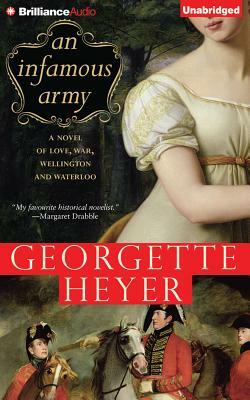
Review 2423: #1937 Club! An Infamous Army

I was planning to read Witold Gombrowicz’s Ferdydurke for the 1937 Club, but I got about 70 pages in and just wasn’t in the mood for it. I may never be.

Georgette Heyer is usually a good bet for me, and I conveniently had An Infamous Army on my shelf. I remembered, though, that it was not one of my favorites despite featuring characters from or related to those from some of my favorites. I decided to try to read the novel by pretending I had never read a book by Heyer, just judging it as a historical novel.

The novel is set in Belgium in the summer of 1815, so if you know your history, you know what’s coming up. The military of all the countries allied against Bonaparte are gathered in Brussels, as are the fashionable. Colonel Charles Audley, brother of Lord Worth of Regency Buck, is on Lord Wellington’s staff, so he is busy but occasionally has time to spend with Lord and Lady Worth. And everyone attends the frequent balls and parties.

Judith, Lady Worth, has found a girl she considers perfect for Charles, Lucy Devenish, a pretty, demure, heiress whose only detraction is a vulgar uncle. Society is being scandalized by the behavior of such young women as Lady Caroline Lamb and Lady Barbara Childe, a shocking young widow whose Alastair heritage (see These Old Shades and The Devil’s Cub) has given her quite a temper. Nevertheless, as soon as Charles sets his eye on her, he is in love. Unfortunately, thinks Judith, so is Barbara, and they are engaged in no time.

It’s no surprise that this is a rocky love affair. However, Heyer’s purpose is to depict the Battle of Waterloo and the frivolous months that led up to it.

Heyer was a serious historian, but her books aren’t often serious, and when they are, I miss the brilliant conversations and her humor. Sticking to my decision to try to forget about that, here are my observations. At the parties, there is too much enumeration as Heyer tries to list all the brilliant people attending. I felt like I was reading the beginning of The Iliad when Homer lists all the Greek commanders plus how many ships, men, and horses they brought.

Then, the social season seems to drag on a little too long. Things get going when the war starts, but when Heyer begins explaining troop dispositions and geography, I got lost. I could have used a map. Finally, although parts of the battle are brilliantly described, I felt as if Heyer was trying to include every anecdote she ever read about. There was just too much.

I have read battle scenes in other novels that were so clearly explained that I understood exactly what was going on. Here, there were so many different types of soldiers, so many leaders’ names, most of them only briefly described. There was too much going on for me.

As for the love story, while I didn’t much like Barbara, I was disappointed in how judgmental Judith, who had her own mishaps in her youth, was. It was nice, though, to have a brief appearance of Barbara’s grandparents, the Duke and Duchess of Avon, once Vidal and Mary of The Devil’s Cub.

Related Posts

Regency Buck

The Romantic

The Charterhouse of Parma

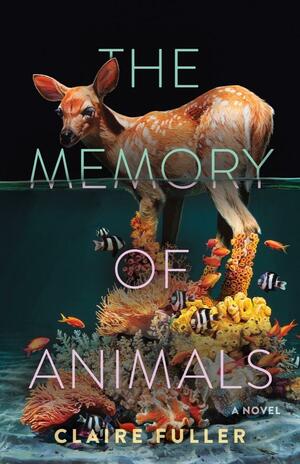
Review 2342: The Memory of Animals

The Memory of Animals is Claire Fuller’s apocalyptic pandemic novel, so I usually would not have read it. But then again, it’s Claire Fuller.

Neffy has volunteered for a drug trial, an unusual one where a vaccine is to be tested for the first time by humans. The virus is already wreaking havoc, so the subjects will be vaccinated and then given the disease. Neffy, we learn later, has recently experienced a series of difficult events and has joined the trial for money after losing her job. Before she even starts the trial, she hears of a variant of the virus that is even worse.

After Neffy is given the virus, she becomes very sick. She is aware of being locked in her room and deserted. When she recovers, she finds the clinic is empty except for four other study participants—Leon, Yahiko, Rachel, and Piper. They tell her that the medical staff abandoned them and all the rest of the participants left—that only Neffy and a few others were given the virus before the trial shut down.

Outside is an apocalyptic world where the occasional person or two, looking ill, stumble by outside the clinic, and stores are looted. The remaining participants are hiding in the clinic, living off the food they’ve scavenged from the trial and the staff’s lockers.

The narration goes in different directions, as Neffy addresses letters to an octopus she cared for in her job. She also is introduced to a device brought by Leon that allows her to revisit scenes from her past. With little to do in the clinic, she begins revisiting so that she can see her parents and her stepbrother/lover Justin.

This novel is moody and contemplative rather than eventful. It explores such issues as the treatment of animals in labs and zoos, our responsibilities to other people and animals, the dangers of freedom vs. the comfort of restriction.

Sometimes this novel flagged a little for me. I was less interested in the present-time story than in the revisits. I also came to understand how someone could love an octopus.

Related Posts

The Year of the Flood

The Parable of the Sower

A Children’s Bible