Review 2648: #ReadingAusten25! Persuasion

Persuasion is a reread and re-review for me, and I see that my original post works just as well as it did before for a general review. So, I was trying to think of a topic I could discuss, and I decided to focus on its villains.

Maybe “villains” is too strong a word for this novel. The only outright villain in Austen that I can think of now is Mr. Wickham in Pride and Prejudice. But certainly Austen’s work features selfish people, people who wish ill to others, and even people who actively work against others. It strikes me that, although many of these characters are comic, they are less comic as she goes on. Is it my imagination, or are there also more of them?

First, there’s Anne Elliot’s entire family. Her father and sister Elizabeth are cold and snobbish and care only for appearances. Neither of them thinks Anne is of any account. And Sir Walter Elliot holds this high opinion of himself despite his having recklessly outspent his income, he and his daughter refusing to retrench where it might lessen their consequence. Above all, Sir Walter felt that Frederick Wentworth was beneath Anne when she fell in love with him seven years ago.

Anne’s sister, Mary Musgrove, is a little more bearable, but she is also self-consequential, as evidenced by her disdain of the Hayters, her husband’s cousins. However, she finds Mary useful (selfishly so, but Anne wants to be useful) and although she never considers Anne’s comfort, the contrast between Anne’s life in her father’s house and the one in Mary’s, with her nearby warm and welcoming in-laws and the visits with the neighbors, is striking. Of course, Anne has to bear Mary’s whining.

Then there is Mrs. Cox, Elizabeth’s friend, a poor widow and daughter to Sir Walter’s lawyer, so of inferior station. Pretty much everyone except Sir Walter and Elizabeth understands that Mrs. Cox means to marry Sir Walter if she can. However, she isn’t actively malevolent, and the only aspect we see of her is excessive agreeableness (sycophancy?). As she is living with two such people and probably endures many humiliations, I sort of feel sorry for her.

Now, if you don’t want spoilers, skip this part, because it’s about Mr. William Elliot, the young, handsome, well-mannered relative, Sir Walter’s heir, whom Anne encounters briefly in Lyme and meets later in Bath. Everyone thinks he and Anne will make a match (except Elizabeth and Sir Walter, who think he’s after Elizabeth), but Anne has one safeguard—she has been in love with Captain Wentworth since she was 19. Also, she instinctively feels that there is something about Elliot she doesn’t understand. He turns out to be the moral equivalent of Mr. Wickham, although he doesn’t do anything as dastardly. Still, his attentions to Anne get in the way for a while of her gaining an understanding with Frederick Wentworth.

These negative characters are maybe a bit more nuanced but also more seriously depicted than equivalent characters in her other books, where they are often comic. They’re not at all funny in this book, and notice how almost all of them are related to Anne.

Austen is certainly a master at showing us people’s foibles in a way that is absolutely believable.

Related Posts

Pride and Prejudice

Northanger Abbey

Emma

Review 2647: The Darlings of the Asylum

Violet Pring is more interested in her art than marriage, and she meets an artist, Mr. Lilley, who thinks she shows great promise. But it’s 1886, and Violet’s parents are pushing her to marry her childhood friend, Felix Skipp-Berlase. Felix is wealthy, and Violet’s parents want her taken care of, as they are broke. Felix is willing to have Violet continue her art career, but that doesn’t seem to cut any ice with Violet.

Violet’s mother is perennially ill, and she has a doctor, Dr. Rastrick, who makes Violet nervous. Violet finally agrees to marry Felix, but on the eve of the engagement party, she commits an indiscretion with Mr. Lilley. A few days later, Violet wakes up in Dr. Rastrick’s asylum.

The novel seems to be about Violet’s unfair incarceration because her ambitions are ahead of her time. However, we find that Violet is not altogether a reliable narrator, because she has memory lapses.

The thrust of this novel is confusing. At first, it seems that the evil scientist with absurd ideas about treating mental patients is dominating a gothic novel. I don’t want to give too much away, but this idea shifts and shifts again. And Violet’s adventures turn toward absurdity by the end.

I think O’Reilly has written more of a 21st century heroine than a 19th century one, and not a terribly convincing one. He also doesn’t seem to know what his own book is about—a girl learning how to take control of her own destiny? a girl learning to understand her parents better? a girl coming to sympathize with the stresses on women in poverty? the difference between Dr. Restrick’s approach and that of the new field of psychiatry? It doesn’t seem like he knows.

Related Posts

The Other Side of Mrs. Wood

Jamrach’s Menagerie

Affinity

WWW Wednesday!

It’s the first Wednesday of the month, so it’s time for WWW Wednesday, an idea I borrowed from David Chazan, The Chocolate Lady, who borrowed it from someone else. For this feature, I report

  • What I am reading now
  • What I just finished reading
  • What I intend to read next

This is something you can participate in, too, if you want, by leaving comments about what you’ve been reading or plan to read.

What I am reading now

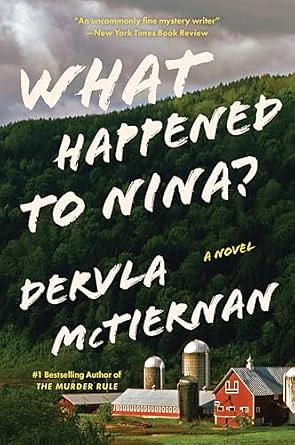
I am reading What Happened to Nina? by Dervla McTiernan. It’s a departure from the other books I’ve read by her, because it’s set in Vermont, U. S., instead of Ireland. It’s billed as a thriller, although so far (I’m two-thirds of the way through), it’s not showing any evidence of that. It’s more of a psychological novel about what happens when a young woman goes missing.

What I just finished reading

My last book was one I read for Literary Wives, review coming up December 1. It’s The Soul of Kindness by Elizabeth Taylor. It’s more of a community novel, like Middlemarch, even though it has a main character. It’s about the effect of a woman’s actions on the people around her.

What I will read next

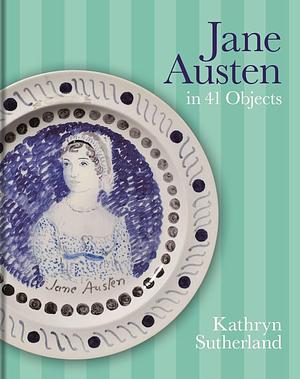
I just got this book out of the library, so I’ll probably read it next. It’s Jane Austen in 41 Objects, yes, nonfiction by Kathryn Sutherland. I read about it on another blog, and it sounded fascinating. I would say it is right in time for Nonfiction November, except that I probably won’t be posting my review until January or February.

How about you? What have you been or are reading?

Review 2646: #NovNov25! The Sweet Dove Died

It’s November, so it’s time for another yearly event, Novellas in November. I’ll start out this post with a recap of the novella reading I did during the year and finish with my first review. Since the beginning of the year, I’ve been tagging books with the word “novella” so that I don’t have to look at the page count for each. I think that since last year’s event, I have read quite a few more novellas than usual, and at least two that I read about during the event.

Novellas Read So Far This Year

Here are the novellas I have read up to this point, not counting the ones I am reviewing for this event, 20 of them!

I know that some people are counting short nonfiction, but I am not, and anyway, that would only add one more book to this list.

My Review

I decided to include this book as the first one for Novellas in November even though it is a few pages too long at 210. It is a book that wasn’t published for some years after it was written, during a time when Pym was considered past her prime before being rediscovered, and in its subtle way, it’s a little darker than she is known for.

Humphrey Boyce and his nephew James meet Leonora Eyre at a book auction when she nearly faints after a successful bid. Leonora is an elegant woman of a certain age, the kind then considered fragile. (I don’t think we have any of those anymore.) She is single and can be cold, and she is definitely snobbish, but then so are James and Humphrey. Both James and Humphrey are attracted to her, but although she is closer in age to Humphrey, who is in his 60s, she prefers James, in his 20s. (We know Leonora is “of a certain age,” but exactly how old is hard to say. Middle age came earlier even as recently as the 1960s.)

James is comfortable with Leonora, but there is no hint that he feels romantic about her, whereas when Leonora learns he has a girlfriend in the country, Phoebe, she sets to work to drive her away. While he is on a buying trip in Europe, she boots out her old lady tenant and moves his things into the attic apartment in her house, even taking some of them to decorate her own rooms. But he returns with an even more dangerous friend, an American named Ned. In the meantime, Humphrey is competing with James.

James is sweet-tempered and naïve, so he worries about hurting Leonora’s feelings, but she seems to me like an attractive spider. It’s ironic that she disdains her friend Meg for a similar relationship with a young gay man named Colin.

This novel is insightful into human behavior and slightly biting. It contrasts the new behaviors and mores of the young with the much more formal manners of the older characters. In fact, from the first few sentences, when stodgy Humphrey remarks that a book sale is no place for a lady, I wondered if I was in 1867 instead of 1967.

I received this novel from the publisher in exchange for a free and fair review.

Related Posts

Excellent Women

A Very Private Eye

The Camomile

Nonfiction November 25! Week Two: Choosing Nonfiction

For week two of Nonfiction November, the host is Frances at Volatile Rune. The prompt is Choosing Nonfiction: There are many topics to choose from when looking for a nonfiction book.  For example:  Biography, Autobiography, Memoire, Travel, Health, Politics, History, Religion and Spirituality, Science, Art, Medicine, Gardening, Food, Business, Education, Music.  Maybe use this week to  challenge yourself to pick a genre you wouldn’t normally read?  Or stick to what you usually like is also fine.  If you are a nonfiction genre newbie, did your choice encourage you to read more?

I’m not actively reading nonfiction this month unless something comes up in my pile. I usually use this month to read other people’s entries and get ideas for books to read in the future. I put a bunch of books on my To Read list last year, but so far, I have only managed to read a few of them. That doesn’t mean I don’t intend to read them.

As far as genres, although I tend to read mostly history and biography, particularly of literary figures, and a bit of true crime, I will read any topic if it seems interesting, even science, which in general I don’t have much interest in. About the only topics I won’t read are self-help and health, because I’m really uninterested in those topics. But psychology, for example, which is related, I find interesting. (I also won’t read business books, especially the “Ten Traits” type, because they are based on very little research and are generally stupidly thought through—and thank goodness, I’m no longer working.)

I thought I’d use this week to talk about some of the more unusual, for me, nonfiction books I read during the year. Unfortunately, I have only posted reviews of one of them so far.

Although I don’t tend to read about health, this year I read Animal, Vegetable, Miracle: A Year of Food Life by Barbara Kingsolver. Now, granted, this book is partially memoir, but it also has lots of information on food topics and the importance of eating fresh food. I actually read this book because it filled a hole in my A Century of Books project that I was trying to get done last year. (It came over into this year by four months!) That’s because, although I tend to like Kingsolver and think she has written wonderful books, she can also be preachy. And she is, a bit, in this book. But it also has lots of information about food topics I hadn’t thought about, includes a bit of memoir, and has tasty sounding recipes!

Now, I like books about maps and mapmaking. I don’t often see one, but I think books about mapmaking and the related subjects, geography and geology, can be interesting. I haven’t reviewed it on my blog yet, but one of my best books, whenever it comes up (it may not make it until next year) will be Pocket Atlas of Remote Islands: Fifty Islands I Have Not Visited and Never Will by Judith Schalansky. This is a lovely book that I read about on someone else’s blog. I’d like to give them credit, but I can’t remember who they are. (I did a quick search hoping a familiar blog name would pop up, but it didn’t, although I saw lots of copies for sale on eBay, surprisingly.) This book is interesting not just because of the islands Schalanksy chooses to talk about but also because of the things she chooses to tell about them, including a topographical map, one story about each place, and the distance from other locations. This is probably the most unusual book about maps I have ever read.

Finally, another as yet unreviewed book for me is Fenwomen: A Portrait of Women in an English Village by Mary Chamberlain. This is a sociology study from the 1970s, when feminism was just starting to make inroads in academia, but it was also the very first book published by Virago, and its reception was fairly astonishing, at least it would probably seem so to people nowadays. It simply interviews as many women in a small village in the fens as it can about their lives, their work, and so on. The updated version that I got includes an Introduction from 2010 that talks about what happened when it was published and includes about twenty pages of beautiful photos at the end.

I’m looking forward to getting new ideas for nonfiction this year.

Review 2645: #RIP XX! Uncle Paul

Why have I never heard of Celia Fremlin before? This book is great! When I first read a review of it last year, I could only find an expensive used copy, but another blogger this year (sorry, I don’t remember who) set me looking again, and I found an inexpensive set of three novels, including this one.

Meg gets an urgent message from her older sister Isabel asking her to drop everything and come see her at a vacation caravan site on the seaside. The telegram simply tells her that Mildred, their much older half-sister, is in trouble.

After talking it over with her friend, Freddy, Meg travels to the run-down caravan park to learn that Mildred’s problems have to do with Uncle Paul. Fifteen years ago, when Meg was a child, Mildred married Uncle Paul, and they spent their honeymoon in a cottage just a few miles away. It turned out, however, that Uncle Paul was not only already married but he was wanted for attempted murder of his wife for her money, and Mildred was also wealthy.

Now it is the end of Uncle Paul’s 15-year sentence. Mildred seems to think he will be coming to get his revenge, but she has perversely rented their old holiday cottage.

Both of Meg’s sisters seem permanently distressed. Isabel worries constantly about her husband Philip’s reaction to everything, while Mildred is often alarmed enough to scream. Meg talks Mildred into returning to town and looking for different lodging, which she finds for her at a comfortable hotel. She also finds Freddy there.

Her sisters’ alarm seems to be contagious, though. When she arrived at the cottage, she found Mildred all aquiver because she had been hearing footsteps—Uncle Paul’s footsteps. Isabel is hardly less nervous. And Meg learns that she may also be in danger, because she was the one who recognized Uncle Paul in an old newspaper.

Fremlin manages to work a good deal of suspense from what seems like trivial incidents, and from fears that Uncle Paul could be any of several men around. But just when I was deciding that everything was in their heads, things got going.

This book reminded me of a lot of Mary Stewart’s combinations of suspense and a bit of romance that I’ve always loved. The writing style is sprightly, the dialogue is witty, and the characters are vivid. Finally, Meg is an engaging, intelligent heroine.

Related Posts

The Unforgotten

Touch Not the Cat

The Lace Reader

Review 2644: RIPXX! The Absent One

This book is the second in Adler-Olsen’s Department Q series. It’s Danish super noir.

Someone has put a file on Carl Morck’s desk. It’s the case of two murdered teens, brother and sister, from 20 years ago. The only thing is, it’s been solved. Nine years after the murders, Bjarne Thøgerson confessed. He was part of a group of students who were originally suspected of the crime—Ditlev Pram, now the owner of several hospitals; Torsten Florin, a famous designer; Ulrik Dybbal, a stock market analyst; and the deceased shipping magnate, Kristian Wolf. The other member of this group was Kirsten-Marie Lassen, who has disappeared. Of the group, only Bjarne did not come from wealth.

So, Carl wonders, was Bjarne innocent of the crime, or did he take the fall for the others? He has become wealthy in prison, which might indicate the answer.

In the meantime we learn that the above-mentioned group of powerful men—who prove to be vile human beings—are searching for Kirsten-Marie Lassen, whom they call Kimmie. That’s because she has proof that they committed not just the double murder but scores of beatings of random strangers and some other murders. Kimmie is now a homeless person who is hiding from them.

As Carl and Assad investigate, they are blocked by their boss because the case is closed but also because someone is bringing pressure from above. There is a spy in the force, and Carl is being personally threatened.

This is really a grim entry into the series, not because of the investigation but because of the activities of the super-rich, soulless bad guys. Also, FictionFan mentioned to me that she quit reading the series because it made Assad into a figure of fun. I’m not quite seeing that yet, but the Danish characters seem to be quite bigoted, even Carl at times.

Related Posts

The Keeper of Lost Causes

Roseanna

The Tenant

Review 2643: #RIPXX! The House of Silence

Marble knights walking in the night, a man coming back from the dead, a man who acquires a sweetheart in the graveyard, a haunted picture frame, killer vines, such are the fodder of E. Nesbit’s collection of 18 ghost stories. None of these stories are truly terrifying, but some of them are at least original.

There are a few that turn out not to really be ghost stories—for example, a salesman who uses a ghost story to get a better room—and I liked those better than most of the ones involving the supernatural, although I do like a nice, chilling story.

Several of the stories are about thwarted love affairs or unscrupulous rivals for a girl’s affections. Some have sad endings, but in others people get what they deserve.

This book is about on par with the volume of Victorian ghost stories I reviewed a few years ago, but uniformly better written and sometimes more subtle.

Related Posts

The Oxford Book of Victorian Ghost Stories

Tales of Mystery and the Macabre

The Casebook of Carnaki the Ghost Finder

Review 2642: #RIPXX! Bats in the Belfry

Bruce Attleton is a once-successful novelist married to the actress Sybilla Attleton. He has planned to meet up with his friend Neil Rockingham in Paris, but he doesn’t show up. When Rockingham finds that no one knows where Attleton is, he thinks of going to the police.

In the meantime, Robert Grenville, a journalist who wants to marry Attleton’s ward, Elizabeth Leigh, learns that a strange man with a beard named DeBrett might be blackmailing Attleton. He traces DeBrett to a weird studio with a tower, breaks in, and finds Attleton’s briefcase in the coal cellar.

Grenville goes to the police, and eventually they find a body plastered into what had been a niche in the wall. But the body has no head or hands, so is it Attleton or DeBrett, since both seem to be missing?

There’s no love lost between the Attletons, and both were unfaithful, so is that a motive for murder? Or has Attleton faked his own death? Did Grenville kill him since he was denying permission for him to marry Elizabeth? Or does it have something to do with his cousin, who recently died?

If this doesn’t sound complicated enough, the mystery gets more so as it continues. I guessed the motive, but the murderer was just one of many guesses.

I think I like Lorac’s rural mysteries better because of their atmosphere, although the studio is certainly creepy. Of course, Inspector Macdonald is going to solve the crime.

Related Posts

Checkmate to Murder

Murder by Matchlight

Post After Post-Mortem

Nonfiction November 2025! Week One: My Year in Nonfiction

Hi, all, it’s November, so it’s time for Nonfiction November, which I participated in the last two years. This year, it is hosted by the following bloggers:

Each week, the host posts a prompt for discussion and a linkup where you can link your posts. For this first week, the host is Heather at Based on a True Story, and the prompt is Your Year in Nonfiction. For more information about the prompt, see Heather’s blog. And here we go for mine.

What Did I Read?

Since November 2024, I read 16 books. I think this means that I have increased my nonfiction reading in number by one each year that I participated until now, when I went up by four (but I am not sure if I included the two books I read in November 2024 in my count last year—probably not). Last year I didn’t list them all, just totaled them by category, but sixteen isn’t so many, so I may as well, in the order that I read them. If I have reviewed them yet (I am behind posting), there’s a link to the review.

As far as categorizing them, here goes:

  • Biography/Memoir: 10
  • Art and Language: 3
  • History: 4
  • Sociology: 1
  • Sports: 1
  • Food: 1
  • Science: 1
  • True Crime: 1
  • Maps: 1

Clearly, some of these fit into more than one category. The hardest to categorize are Animal, Vegetable, Miracle, which I have put under memoir but is as much about the importance of good food, and Shakespeare: The Man Who Pays the Rent, which I have not put under memoir, even though it includes lots of anecdotes, but under art and language, because it’s mostly about interpreting Shakespeare’s plays (which sounds dull, but it is not).

Just as a side note, when I look at my record of nonfiction reading from the past year, I see that I seriously went into it in the spring, reading half a dozen books between February and April, then sort of fell off for the summer, and picked up the pace a bit in the fall.

What Were My Favorites?

If I go by my ratings, my favorites were Life Among the Qallunaat, The Pocket Atlas of Remote Islands, and Shakespeare: The Man Who Pays the Rent. However, hands down, the one that made the most impression on me was Pocket Atlas of Remote Islands. I’m sorry, therefore, that I haven’t reviewed it yet. (It’s going to be a Best of Ten, which I tend to save up so as not to have too many in a given period, so I may not get to my review this year, because there are a bunch ahead of it.) I believe I read about it during last year’s Nonfiction November. Other books I read about last year were Cultish and Mad Madge (I think).

What Were My Favorite Topics?

Well, obviously and always, I like reading about people and history. I didn’t read anything this year that I wanted to follow up on, although I like to read about indigenous people, so probably will.

What Am I Hoping to Get Out of Nonfiction November?

Since I’m not a big nonfiction reader and don’t tend to read many blogs that focus on it, I hope to add a few more interesting books to my To Read list.