Review 2755: The Heart in Winter

Kevin Barry is certainly an evocative writer, but after reading my second book by him, I’m still not sure I like him. The Heart in Winter combines romance with brutality and some readers deserve a warning about foul language.

In 1891 Butte, Montana, the mines are booming, and the town is full of drunks and whores. Tom Rourke, a boyish Irish immigrant, spends his days helping a photographer or writing letters for illiterate miners and his nights drinking and doping. One day, mine captain Long Anthony Harrington comes in for a wedding photo of himself and his brand new wife, Polly. Their romance has been an exchange of letters, and Tom can tell that the wife dislikes her new husband. Tom is smitten.

Three weeks later, they put into action Tom’s poor excuse for a plan. While Polly’s husband is at work on the night shift, Tom will burn down the rooming house where he lives so that in the confusion he can steal the landlady’s money, and then they will steal a horse and escape to San Francisco. It’s turned toward winter, the perfect time to be traveling in the mountains. (I’m being ironic here.)

Of course, their plan fools no one, and the outraged Harrington hires three Cornishmen to track down the fugitives with the instructions to bring back Polly and do whatever they want to Tom. For their part, after a first burst of speed, Tom and Polly are honeymooning in someone’s cabin.

Of course, there’s a feeling of doom throughout the novel, and things don’t go very well for the couple. The novel is adventurous, with quirky characters, and gritty.

Another caveat, though. Barry seems to know nothing about what it would be like to travel in these mountains in winter. His inexperienced travelers would probably be dead in days.

I read this for my Walter Scott prize project.

Related Posts

Beatlebone

The Sisters Brothers

True Grit

What I Added to To Read in July

I’m stealing an idea from Liz of Adventures in reading, running, and working from home. She’s started listing the books she adds to her wish list each month. I think this is a great idea if only for myself, to keep track. In my case, I’d be working with the To Read list on The Storygraph, but I ran into an unexpected hitch. In The Storygraph, you can look at your To Do list in order of most recently added, but what it does not do is keep track of the date you added something to your list. At least, not that I can figure out. And I looked at the Stats page to see if I could run a report, but as soon as you select To Read for the books you want to look at, the date function goes away. So, you can only look at stats for the To Read list in total.

I have a question in to customer support, but in the meantime, I figure I’ll have to try to remember which books I added in July, and then going forward I can keep track by looking at my last post about it.

I also thought this would be a nice way to keep track of why I added books to my list, that is, where I heard about them, but I find I already only remember this information for a few.

Going backwards from the most recently added:

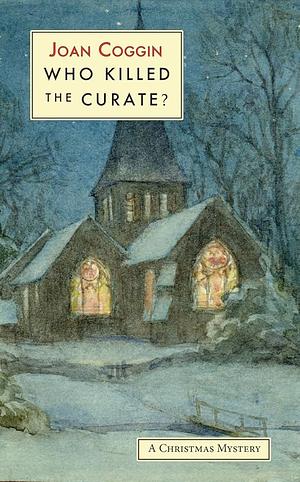
Who Killed the Curate? by Joan Coggins

Kaggsy of Bookish Ramblings wrote a review of this Golden Age mystery and another in the series, Why Did She Die? I was sufficiently intrigued to add the first book to my list

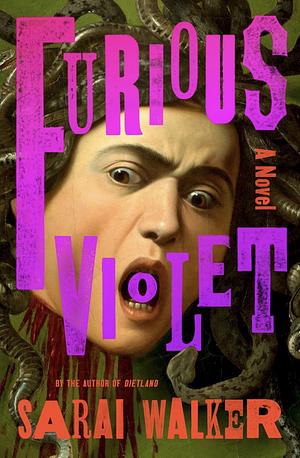
Furious Violet by Sarai Walker

I often read the reviews of books from The New York Times, and their review five days ago interested me enough to add this psychological thriller.

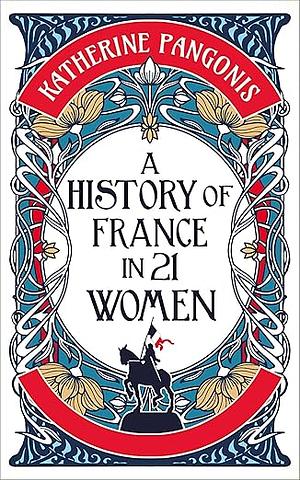
A History of France in 21 Women by Katherine Pangonis

This’ll teach me. Because I know I read about this book on one of the blogs I follow, but I can’t remember which one, and looking through my comments doesn’t help. Perhaps it was mentioned by one of the blogs I follow that posts reviews of a bunch of books at a time. If you recognize that you reviewed this one lately, please let me know! You should get credit! Perhaps this was a book for Paris in July?

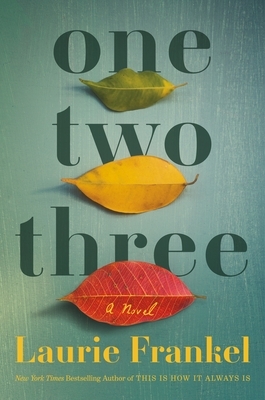
One Two Three by Laurie Frankel

This week I finished reading the book for the September session of The Marriage Plot (Literary Wives rebranded), which was Family Family by Laurie Frankel. I enjoyed that book so much that I decided to look for another book by her and came up with One Two Three.

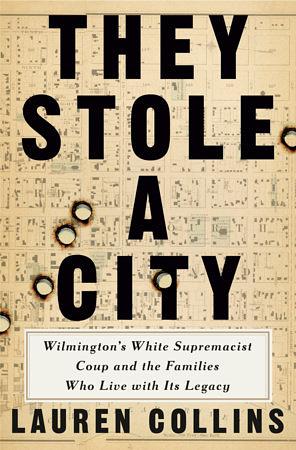
They Stole a City by Lauren Collins

I’m pretty sure I heard about this book on an NPR radio program (OPB, Oregon Public Radio) while I was driving to art class. It’s about a shameful event in 19th century Wilmington, North Carolina, that was subsequently so suppressed that people don’t know about it. Look at that! Two nonfiction books added to my list this month!

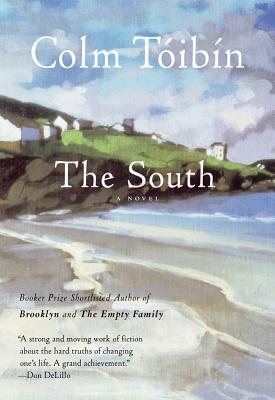
The South by Colm Tóibín

I don’t really go looking for Tóibín’s books, but when I see one mentioned, I always get it. This one is an older work by him, and I think someone either reviewed it this month or just mentioned it, and I thought, here’s one I haven’t read yet. I don’t even know what it’s about.

Unseen: Blind spots and why we miss what matters most by David Lewis

Three nonfiction books! I heard about this book on one of the science programs on OPB. It sounded intriguing.

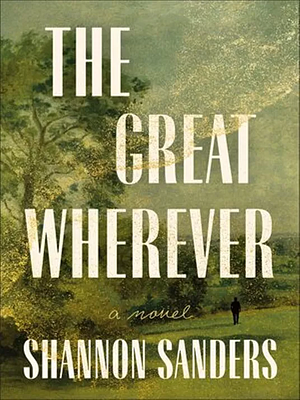
The Great Wherever by Shannon Sanders

I have no idea. I could have heard about this on NPR, but I think I actually saw it on one of The New York Times lists of the books they liked so far this year.

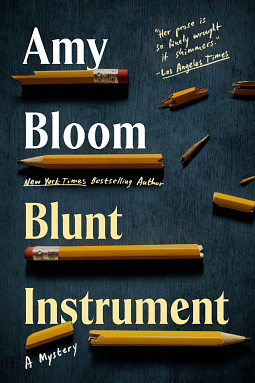
Blunt Instrument by Amy Bloom

Amy Bloom wrote a mystery? What’s not to like?

Heather by Caitlin Mullen

I have no idea where I heard of this book. If you reviewed it lately, fess up!

Prairie Edge by Conor Kerr

Ditto! I know that Simon of Stuck in a Book went to Canada lately and bought a bunch of books. Maybe there? Yes! Here’s his review.

The Rediscovery of America: Native Peoples and the Unmaking of U. S. History by Ned Blackhawk

I think I know where I heard of this book. I follow blackhawkfitness on Instagram, which despite its name is posts by a knowledgeable indigenous person about native culture. I’m pretty sure he talked about this book. If not, it got mentioned on NPR. Four nonfiction books!

I am stopping here, because the next book on the list is Solace House by Will McLean, and I’m pretty sure it’s been there for a while. On the other hand, the next one after that is Hunger & Thirst by Claire Fuller, and that seems more recent. But I’ll leave it at that. Next month, if people seem interested in this post, I will know exactly where to stop!

Review 2754: The Dead Room

I like Catriona McPherson’s thrillers. I call them cozy thrillers because they usually involve a friendly community. The Dead Room is a little more dire than usual, and one plot point didn’t work for me at all, but I still enjoyed it.

Lindsay Hale in her mid-thirties is a new widow, her beloved husband Kai having died from a brain tumor. When he was dying, her old friend Chloe came out to their home in Hawaii to help. Finally, between her brother John and Chloe, she was convinced to move back to Scotland, to her hometown which she has never revisited since she left. There are hints of a traumatic childhood.

Lindsay arrives a day earlier than expected, and when she gets to her hometown, she breaks down while talking to an old lady, Peggy Marsh. Peggy takes her inside her beautiful, old, slightly rundown house and gives her tea. She falls asleep and arrives at her brother’s house very late, surprising her relatives.

Lindsay wants to find a house, but her brother tries to convince her to stay with them. Despite their welcoming, they seem to be concerned about her behavior. It is true that Lindsay starts having some visual perception problems and also doesn’t recognize people she’s supposed to know, but her behavior seems pretty normal for a recent widow, and her family overly concerned. They seemed to be trying to make her doubt herself.

A few days later, Lindsay returns to Peggy’s home only to find it empty. When she asks a neighbor about it, he is hostile. A while later, she learns that Peggy entered a nursing home and died shortly afterward, but when she goes to the nursing home, the man at the desk is hostile and the home oddly empty-seeming.

Lindsay begins to believe that she has something wrong with herself. She is able to buy Peggy’s house, but she hears noises at night as if someone has come in and actually sees a man leaving her house at night. But all the doors are locked, and the police obviously think she is being silly.

Periodically, we hear from someone else who is being held prisoner. Is it Lindsay at a later time or someone else?

My biggest problem with the book is that the gaslighting seemed so obvious to me, and it seemed as though Lindsay was too quick to doubt herself. Also—spoiler alert—once the plot comes out, it’s almost impossible to believe that some people would have wanted her to return to Scotland. Despite a brief statement of explanation, it makes no sense.

Despite my caveats, the novel is suspenseful and the main character appealing. I would just rate it slightly lower than some of McPherson’s more compelling cozy thrillers.

Related Posts

Strangers at the Gate

Gingerbread House

Deep Beneath Us

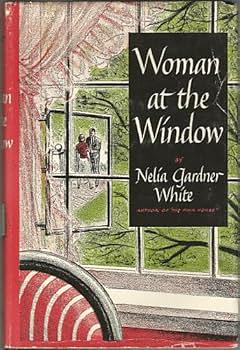
Review 2753: Woman at the Window

Although Elizabeth Burke leads a simple life, she enjoys it. She is looking forward to her new job in a bookstore when her brother-in-law Adrian calls. Her sister Anna has been told she won’t walk again. We’re never told what happened to her, but she has undergone two surgeries and refused a third that was supposed to either kill or cure her. Now Anna has asked Liz to come take care of her.

Liz is reluctant to go, citing a fear of losing her independence, but her issues are more complicated than that. And that’s one thing I liked about this book—everything is nuanced and complex, nothing black and white. Her friend and neighbor Lollie advises her not to go, but within a few pages, she has arrived at Anna’s home in Lakeville, New York.

There she finds a disturbing setup—Adrian is exhausted and seems to dislike her, having misunderstood her reluctance. Bunce, the cook and housekeeper, also shows dislike. Johnny, Adrian and Anna’s five-year-old son, avoids Anna’s room and spends most of his time by himself. Anna, who is charming to everyone else, is cold to Johnny. Adrian’s mother stays in her room all the time and doesn’t seem to notice Johnny much.

The crux of the novel is the relationship between the two sisters and between Anna and everyone else. Anna is charming and everyone loves her. Her bedroom receives visitors constantly. She talks affectionately to Liz but calls her her pony to other people. LIz has always adored Anna but previously Anna never seemed to heed her very much. She has seen Anna tire of people and doesn’t want her to tire of herself.

Liz is self-conscious about her looks and dresses badly while Anna is described as looking like Alice in Wonderland, fragile and beautiful. But Liz doesn’t understand her own qualities. There are a few instances, for example, when her intervention or comment helps another person, but she always attributes the help to Anna.

I disliked Anna. I could see that under her much-vaunted charm she sometimes makes knowingly hurtful remarks. Liz, although sometimes abrupt, is much more attuned to other people’s feelings. The situation becomes more intense when a friend gives Anna a mirror, to be put outside her house so that from the window she can see everyone who goes by. She becomes relentless about ferreting out people’s secrets, and she doesn’t seem to understand that she has no right to know them. Twice, she makes it appear that Liz has divulged someone’s secret when she has not and causes trouble by letting people know she knows their secret or by telling it to someone else.

Liz has a secret she doesn’t want Anna to discover. It’s that she’s fallen in love on sight with Huxley Reals, an employee of Adrian’s company. But Huxley is Anna’s devoted slave, coming constantly to visit her.

As Liz gets acquainted with the community, her influence begins to help particularly the people in their house. She pays attention to Johnny and he slowly opens up. She says something to get his grandmother to spend time with him. She cautiously makes some friends. But she believes she will be leaving, even continuing to pay rent on her old room, and everything in her life is overshadowed by her complex relationship with her sister.

I liked this book, which was published in 1951, a lot. I sympathized with plain, abrupt Elizabeth and felt she underrated herself and overrated Anna. I liked several other characters in the novel as well and thought it was an interesting character study.

Related Posts

The Pink House

A House in the Country

Revolutionary Road

Review 2752: They Came to Baghdad

British officials are awaiting the arrival of their man Carmichael in Baghdad. He is being sought after everywhere as others try to capture him before he can pass on important information leading up to the summit meeting that includes the President of the United States and the Premier of the USSR.

But then we return to London and the activities of two women. The mysterious Anna Scheele is being followed, while Victoria Jones is being fired from her job as a stenographer/typist.

In Covent Garden Victoria meets a young man named Edward and is immediately smitten, but he says he is leaving for a job in Baghdad the next day. Victoria decides she must go to Baghdad, but she has no money. She ends up taking a job to help a woman on her way to Iraq who has broken her arm.

Once in Baghdad, Victoria realizes she doesn’t know how to find Edward. She doesn’t even know his last name. Then, in her hotel room at night, a bleeding man dressed as an Arab breaks in and asks her to hide him. She puts him behind her pillows in her bed while a policeman searches her room, but when she uncovers him, he is almost dead. He whispers some words and dies. This is Carmichael, who has made it all the way to Baghdad only to be ambushed.

Mr. Dakin, a British official, appears almost immediately but is dismayed when he learns Carmichael is dead. He is forced to explain a bit of what is going on. Since Victoria is going to a charity called The Olive Tree to find Edward, and this place seems to Dakin to be a focus of activity, he asks Victoria to keep her eyes open. He also asks her to look for evidence of Anna Scheele.

The big plot in this book is a silly one, but I found it otherwise a lot more entertaining than Christie’s other espionage-based novels. It includes exotic scenery, kidnapping, and murders, an engaging heroine, and some interesting descriptions of the area and of archaeological digs.

Related Posts

The Man in the Brown Suit

Passenger to Frankfurt

Destination Unknown

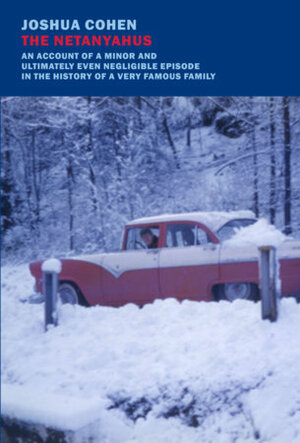
Review 2751: The Netanyahus: An Account of a Minor and Ultimately Even Negligible Episode in the History of a Very Famous Family

When I realized that the family in this novel was the Netanyahus—I mean, the Netanyahus, as in the prime minister of Israel, I was not looking forward to this book. However, it is part of my Pulitzer Prize project, and in fact won it, although I have never heard anyone talking about it.

Before I start my review, I’m beginning to find the quotes and book blurbs ridiculous, I have to say. Maybe some people actually read the quotes to select a book, but I avoid them then and only sometimes read them later when I am perplexed about a book’s reception. Here are some of the words on the back of this book—“genre-bending,” “exuberant,” “funny beyond belief.”

First, let me address “genre-bending,” which apparently applies to this novel because it combines nonfiction and fiction. Excuse me, but isn’t that what any historical fiction book based on real events does? Isn’t that the definition of historical fiction except perhaps in the case of some light romances or maybe gothic novels?

The novel is set at a small college in upper New York state, where Ruben Blum is the only Jewish faculty member—an American History professor—in 1959-60. Blum is asked to serve on the hiring committee when it interviews Ben-Zion Netanyahu, a scholar of the Spanish Inquisition and its treatment of Jews. Although Netanyahu is living in the U. S., he is from the new nation of Israel. Blum doesn’t know how he’s supposed to judge the applicant’s knowledge since he knows very little about Medieval Europe, and he finally realizes he’s been chosen because he’s Jewish and he is mostly needed to provide hospitality.

For about the first half of the book, there was a lot of standard campus satire. My husband, whose first wife is an academic, always says that politics on campus are so brutal because the stakes are so low. I started wondering where the exuberance lay or when the book was going to become funny beyond belief as it made stereotypical humor out of two holidays with the in-laws, examined the different beliefs Jews have about Zionism, and explained Netanyahu’s beliefs.

I suffered through a ridiculously long, glowing letter of recommendation, which was countered by an even longer letter telling Blum that the reason Israeli scholars were gushing so much about Netanyahu was because they wanted him out of the country. Okay, that was kind of funny, but not funny beyond belief.

Finally, more than halfway through the novel, the Netanyahus show up for the interview and lecture—not just Ben-Zion but all of them: his wife Tzila and his three young sons—Jonathan, Benjamin (yes, him), and Iddo, ages 13, 10, and 7. And their behavior is outrageous. The book picked right up, and I can only assume that the critics who are gushing about it can only remember the second half.

I won’t say what they do—that’s the fun—only that in essence if not in detail, this part is based on a true story told to Cohen by Harold Bloom—although Cohen hastens to assure us that his character Ruben Blum is not meant to be Harold Bloom (right).

All I can say is, tearing things down seems to be more the style of these characters than building them up, and I guess that has continued up to today.

Related Posts

Moo

Straight Man

Lucky Jim

Another short attempt at Book Serendipity

It’s been four months since my last Book Serendipity, and unlike Bookish Beck, I have only come up with a few more instances. Book serendipity is when the same topic or theme or something like that comes up in more than one book read around the same time, but since I am slower at catching these instances, I have expanded it to cross-media serendipity.

Here’s my only true book serendipity this time:

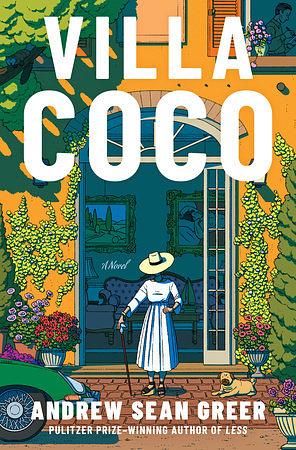
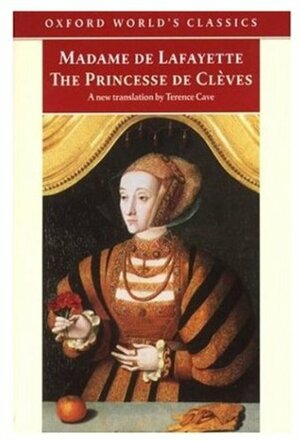
Reading about The Princess of Cleves by Madama de LaFayette in Villa Coco by Andrew Sean Greer when it is the next book on my pile.

The last two are cross-cultural and cross-media:

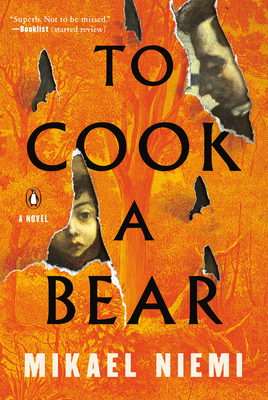
Reading a historical mystery (To Cook a Bear by Mikael Niemi) with the main character Pastor Laestidious, the founder of a religious movement in Sweden when I live in one of the two areas in the U. S. populated by many members of an obscure offshoot of that religion.

Here’s my cross-media reference:

Mention of axolotls in The Pendragon Legend by Antal Szerb the day after them being an answer on Jeopardy.

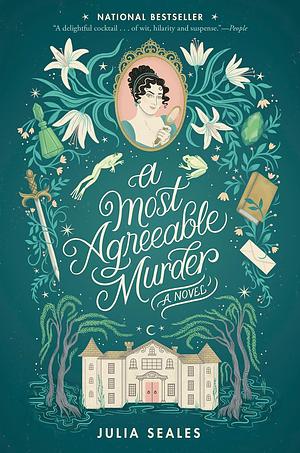
Review 2750: A Most Agreeable Murder

Julia Seales clearly had a good time writing this novel, which is absolutely silly and apparently a spoof of 19th century novels. It’s too bad, then, that she bothered so little to get the details right. It’s the second novel I’ve read recently that doesn’t bother with that, so why, I ask, place it in a historical context? Is this kind of laziness a trend?

Beatrice Steele has a secret. She is fascinated by crime and follows the exploits of Sir Huxley and his assistant, Inspector Vivek Drake, by stealing her father’s newspaper. She must hide this activity, because she lives in Swampshire, which has stern rules for the behavior of females.

The Steele family is preparing for a ball that evening at Stabmort Park, hereditary home of the Ashworths. A guest of honor is Edmund Croaksworth, a wealthy gentleman who was friends with Beatrice’s best friend Daniel Ashworth before the Croaksworths broke off the connection. Edmund’s father has died, and he is ready to resume the connection.

The Steele family is not only broke, but if they don’t produce a male heir before Mr. Steele dies, their property will go to their hated cousin, Martin Grub. So, Mrs. Steele’s hopes rest with her beautiful second daughter Louisa, who she thinks will fascinate Edmund Croaksworth into an immediate proposal. Beatrice herself assumes she will marry Daniel, but neither of them seems to be in a hurry.

I guess you can tell from the names that Seale’s sense of humor is not exactly subtle. She finally gets us to the ball while managing to get just about every detail of a 19th century ball wrong, including when soup would be available and how many guests a ball generally entails (hint—more than 16). There, Beatrice is surprised to recognize among the guests Inspector Vivek Drake—a person whom I had already guessed is to Sir Huxley as Laura Holt was to Remington Steele (that is, if you’re not old enough to remember, the real solver of the crimes), but Beatrice doesn’t believe that.

During the dance, Beatrice finds out Grub’s dastardly plan to have her father declared incompetent so that he can take the estate earlier, and since Mr. Steele is an idiot who is constantly playing practical jokes on people, this is a possibility.

Then Edmund Croaksworth is murdered, poisoned apparently during a card game that no one will admit playing. Inspector Drake is asked to solve the murder because the entire party is stranded in the house by a terrible storm. Beatrice is deputized to help him stay within the bounds of propriety.

I definitely didn’t share the author’s sense of humor here, although I might have had more patience with the novel if she could have been a little up on her subject. To successfully make fun of Victorian customs and manners, I think you have to know what they are first.

The mystery itself was all over the place, designed to get as many ridiculous details in as possible. Still, I at least finished the book.

Related Posts

Murder After Christmas

Beginning with a Bash

Babel: An Arcane History

Review 2749: The Keeper

The Keeper is Tana French’s third Cal Hooper novel. Cal is an ex-Chicago cop who moved to the small village of Ardnakelty, Ireland, when he retired.

Cal has settled down to what he deems a pleasant life. Trey, the girl he helped in the first book, is now 17. She works with him building furniture and splits her time between his home and her mother’s. He’s having a comfortable affair with Lena based to some extent on maintaining each other’s privacy.

In the village store, the gossip is about the engagement of Rachel, an innocent and well-liked young woman, and Eugene, the spoiled son of the most powerful man in town, Tommy Moynihan. They are seen having a disagreement. Later, Rachel calls on Lena, apparently with the intention of confiding something or asking advice. However, Lena has made a habit of staying out of the business of the village, which she thinks is toxic, to the point of even avoiding her own sister and her old friends, so she does not encourage Rachel to confide.

Late that night, neighbors call Cal asking him to join a search for Rachel, who has disappeared. She is later found dead in the river, but she has antifreeze in her system. Rumors immediately begin circulating. Did she commit suicide, or did Eugene kill her?

Trey is concerned about what really happened to Rachel, so Lena decides to find out. Breaking the habit of years, she calls on various women trying to find out what they know. She eventually learns that Tommy Moynihan plans to force many of the local farmers off their land to make way for a giant development. This plan involves getting Eugene elected to a government position. Rachel found out about this plan and was trying to get Eugene to stop it.

Lena is soon being threatened by Tommy Moynihan, who says if she tells what she’s heard, he’ll have her declared insane and locked up, and he has already started rumors that she is unstable. Because she’s kept away from the village for years, some people are ready to believe it, and a Garda even comes to see her, because Tommy has the Gardas in his pocket. So she reverts to her former behavior, even staying away from Cal.

Cal doesn’t understand what’s happening, but he stays away from her. He and his elderly neighbor Mart are conducting their own investigation and begin to believe that Tommy killed Rachel.

This book is one that rapidly develops that sense of dread. My only problem with it is that it depends a lot on what Roger Ebert called “the idiot plot.” That is, that if Cal and Lena talked to each other, a lot of confusion could have been avoided, both in their relationship and the investigation.

Related Posts

The Trespasser

The Hunter

The Searcher