Mid-Year Check-In

I’m copying Brona of This Reading Life, who got the idea from Calmgrove, and answering a few questions about my reading so far this year. I’m depending upon The Storygraph and WordPress’s Jetpack stats to help me with these stats. Here is the list of questions if you want to copy them and answer them yourself.

  1. How many books have you read so far this year?
  2. What’s your favorite book so far this year?
  3. What’s the most disappointing book you’ve read this year?
  4. What’s the most surprisingly good book you’ve read so far this year?
  5. What genre have you read most this year? 
  6. Name a new favourite author that you’ve discovered this year.
  7. What are your most anticipated end of 2026 new releases?
  8. Which post has been your most popular post (views, comments, engagement)?
  9. Which post would you like to see get more love?
  10. Is there a post, tag, meme, readalong by another blogger you’d like to highlight? Or any other bookish highlight you’d like to celebrate?

How many books have you read so far this year?

I’ve read 74 books as of Friday, July 10. That may sound like a lot, but I am behind my goal by about 10. (I have read 77 books as of today, Wednesday, but the rest of the stats are based on the Friday results, because I don’t have enough time this morning to figure everything out again.)

What’s your favorite book so far this year?
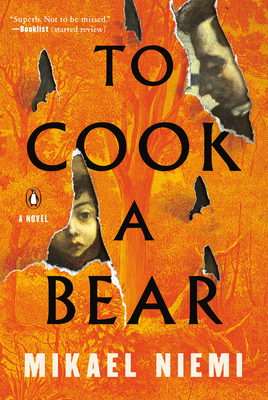
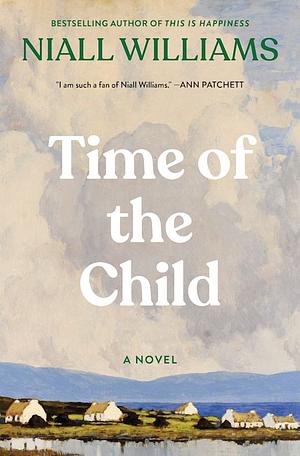
This is a tough one, even though I only have rated one book so far this year with five stars. That book is To Cook a Bear by Mikael Niemi, a mystery set in 19th century far northern Sweden. However, I just finished a book by Niall Williams, one of my favorite writers, Time of the Child, and even though I didn’t give it 5 stars, I really loved it. It is set in a small village in 1962 Ireland, and it is a sequel to This Is Happiness.

What’s the most disappointing book you’ve read so far?
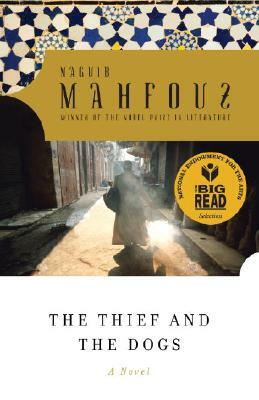
Disappointing is a difficult word for me, because I usually don’t have a lot of expectations before I start reading, unless it is for a writer I really love. I purposefully don’t remind myself what a book is about or what people said about it before I start reading it. Although I have often read reviews to get it on my list in the first place, I usually don’t remember them by the time I start reading. But I have read some stinkers this year. I guess I’ll pick The Thief and the Dogs by Naguib Mafouz, which I read for the 1961 Club. I had already read his Cairo trilogy, and although I liked the first one best, I thought they were interesting. However, I really hated the characters in this novel.

What’s the most surprising good book you’ve read this year?

Surprising is also another word I’m having trouble with because of my lack of expectations. However, I did get a surprise with To Cook a Bear. The main character of this novel is a historical figure, Pastor Laestadius. It just happens that I inadvertently moved to a region that is full of people from the Old Apostolic Lutheran religion, which is an American offshoot of a Swedish sect based on his teachings. In the 19th century, members of this group were some of the original settlers in this region.

What genre have you read most this year?

Historical novels come in first this year, with a tie for second place between mysteries and literary fiction. I don’t know if The Storygraph is double-counting historical mysteries or not (answer: it is).

Name a new favorite author you’ve discovered this year

I’m interpreting this question to mean reading an author for the first time this year that I has become a favorite author. Unfortunately, almost all the books I liked best so far this year were by authors I have already read. The exception would be Mikael Niemi, mentioned above, but I have only read the one book by him, so maybe he’ll end up to be a favorite, maybe not.

What are your most anticipated end of 2026 new releases?
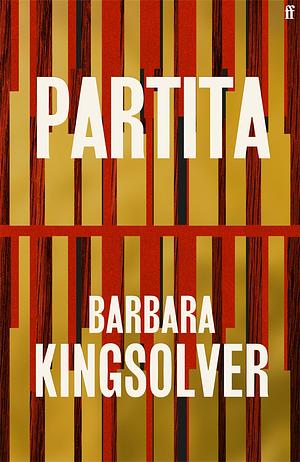
I am usually reading quite a bit behind the times, which means that I don’t really keep abreast of new releases but try to get them if they sound interesting when they come out. That being said, I already have a preorder out for Partita by Barbara Kingsolver. I’m looking forward to Country People by Daniel Mason, Agrippa by Robert Harris, Peck & Peck by Bonnie Garmus, and maybe The Radiance by Ayad Akhtar.

What post has been your most popular post?

I am depending upon Jetpack statistics for this answer, which don’t seem to be as good as the statistics I used to have on my dashboard, but they stopped working and the developers replaced them with this. It’s giving me some weird results. It says my most viewed day this year was January 8, 2026, which is a review of The Frozen People by Ellie Griffiths, but it is showing a suspiciously high number of views, about 1500. Since my usual number is more like a minimum of 150 a day up to around 300, 1500 is way out of whack. The stats also don’t allow me to limit the view for the most popular post to this year, so it is giving me a book from last year, in fact, a year and a half ago, and I don’t believe that one, either. (I also see that I have a suspiciously high number of views this year from China, Hong Kong, and Singapore, and I highly doubt that I’m that popular there, so I’m thinking, scraping.

If I look at the list of most popular posts and pages from forever, most of them are old ones. The only one I know of that was posted this year is 2026 Classics Club Questionnaire Answers, with 53 views, so that is a more likely answer to the question. However, this year my Authors page got over 1000 views. I don’t see anywhere that lists the post with the most comments, but I got 19 for my 14th Anniversary! Top Ten Books of the Year! post, so I think that’s a likely high point.

Which post would you like to see get more love?

Haha, I guess I’d like to feel that people are waiting every year “with bated breath” for my top ten.

Is there a post, tag, meme, readalong by another blogger you’d like to highlight? Or any other bookish highlight you’d like to celebrate?

I just want to say that FictionFan makes me laugh a lot, out loud.
If I Gave the Award

Since I just reviewed Western Lane, that finishes my reading of the shortlist for the 2023 Booker Prize. This means it’s time for my feature, where I decide whether the judges got it right.

Although I was indifferent to a few of the books on this list, there were two that I liked so much it will be difficult to choose between them, and this year, most of the others were very good. As I often do, I’ll lead up to the best ones. All of the books chosen this time were very well written.

The book that resonated with me the least was Study for Obedience by Sarah Bernstein. It was mostly a character study of a very particular woman, one who is completely obedient to her brother. I said I felt like I was being psychologically tortured when I read it.

Although darkly funny at times, I found If I Survive You by Jonathan Escoffery also a bit whiny. It’s about a Jamaican-American young man trying to figure out his own identity and community in Southern Florida, but he keeps making really bad decisions.

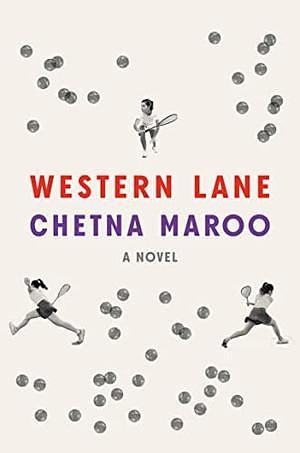
Western Lane by Chetna Maroo is about the grief of a family over the loss of their mother, which 11-year-old Gopi copes with by her success in playing squash. I found it touching and said it had floundering but sympathetic characters. So, here we are getting into more interesting territory.

I found the subject matter of This Other Eden by Paul Harding very interesting. The historical novel is based on a true event, when the State of Maine decided to evict several mixed-race families that had been living on an island since 1793. It’s no coincidence that this turn-of-the-20th-century event took place just after a Eugenics conference. Although I occasionally found Harding’s extended poetical metaphors annoying (and sometimes liked them), I found this novel to be touching. This is the first book in the shortlist that I read, way back in 2023, so unfortunately, I don’t remember it very well.

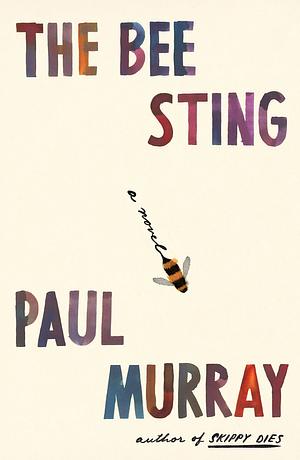
The last two novels each ended up on my Best of the Year lists in successive years that I read them. One is The Bee Sting by Paul Murray. It is a complex novel about the problems faced by a family. As it looks at the situations from each family member’s perspective in turn, family secrets are revealed. It’s hard to see from my description of this book just why I found it so good, but I was gripped from the start. I say that it is unexpectedly suspenseful in the last 50 pages and that the ending blew my mind (if only I could remember what it was).

I read Prophet Song by Paul Lynch a year earlier than The Bee Sting but remember it a little better. It’s the rare dystopian novel that I found absolutely gripping, about Ireland becoming a totalitarian state, which absolutely chimes in with current events. Prophet Song was the winner for this year. I’m thinking that for me, the choice between it and The Bee Sting is hard, as I describe both as gripping. I also say that Prophet Song has long, poetic sentences that create a sense of urgency. I guess it’s almost a tie for me between this book and The Bee Sting, but I’ll say that the judges got it right.

Review 2748: Western Lane

Eleven-year-old Gopi’s mother died a few months ago, and her father is finding it hard to cope with his grief and his daughters. On a visit to their aunt and uncle in Edinburgh, Aunt Ranjan remarks that the girls are running wild. Then she and Uncle Pavan suggest that he leave one of his daughters with them, since they cannot have children. Their father decides instead that they need something to occupy them, and he begins teaching them to play squash.

A lot of information about squash ensues. Gopi turns out to be good at the game, and she begins training at times with a boy named Ged.

The book deals with the girls’ grief over their mother’s death and with their father’s depression, as he begins missing work and spending most of his time at Western Lane, the exercise center. None of the girls are happy to see Papa getting closer with Ged’s mother.

This novel is full of inarticulate characters, so at times I wasn’t quite sure what was going on. But it is a touching, powerful story with floundering but sympathetic characters. The writing is fluid and vivid. I read this for my Booker Prize project.

Related Posts

Looking for Alaska

Levels of the Game

Open

Review 2747: A Box Full of Darkness

In A Box Full of Darkness, Simone St. James returns to the eerie town of Fell, NY, where The Sun Down Motel is set. This novel has as its protagonists the three siblings of the Esmie family, whose original home is in Fell.

Violet Esmie sees dead people. She does in her work cleaning houses after the owner has died, but terrifyingly, she did in her parents’ house growing up. She was hospitalized for her “delusions,” and her ex used that to get custody of their daughter, Lisette.

Violet receives a call from the landscapers taking care of the family grounds in Fell. They are quitting because of sighting a boy on the grounds who says, “Come home.” Violet knows that this boy is her little brother Ben, who disappeared when he was six during a game of hide and seek and was never found. She summons her brother and sister to go to Fell.

Vail Esmie had experiences in childhood that made him believe in alien abductions. So, he works as an investigator in cases where people think they have seen aliens.

Dodie Esmie is a model who purposefully keeps removed from men by only going on first dates. She has just had a first date with Ethan when she gets the call from Violet.

The neighborhood in Fell is creepy. Two houses are vacant, one recently so, and there is only one family there, in what should be an upscale area.

Violet finds that Sister, a spirit who haunted her childhood, is there in the house and dangerous. She has never told her siblings about Sister, whereas Vail has never told them about the bright lights, and Dodie about the feeling of drowning—all these events at night unless Ben was sleeping with them. Almost as soon as they arrive, they begin experiencing odd and frightening events that eventually make them realize they need to figure out what happened to Ben.

This novel is fast moving and engaging, with scary and intriguing events. I don’t think there is any writer these days who handles ghost stories as well as St. James.

Related Posts

The Sun Down Motel

The Book of Cold Cases

Silence for the Dead

Literary Wives gets rebranded

Literary Wives has been around for quite some time now, started by Lynn of Smoke & Mirrors in July 2013. None of the original members are still participating. I joined in October 2013, so I guess I’m the oldest current member (probably in more ways than one). Anyway, thirteen years is a long time, and it’s time for a new look and name.

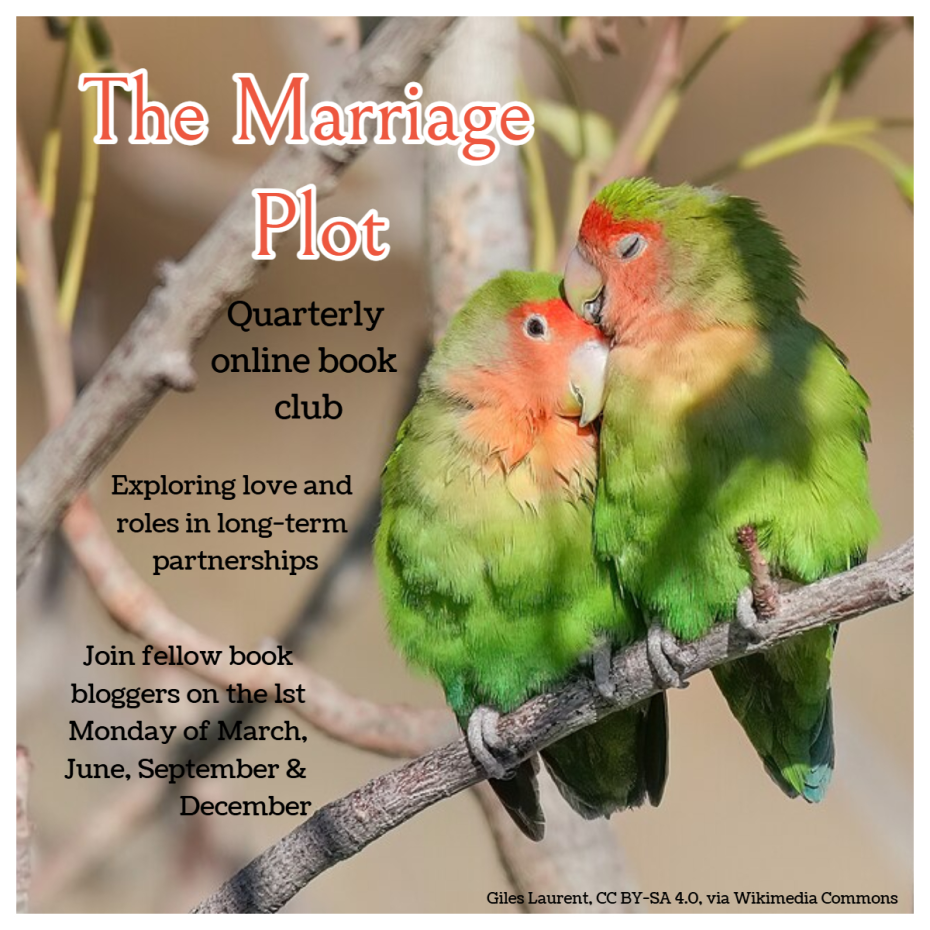
We tossed around some ideas, and Becky came up with The Marriage Plot for our new name. Rebecca kindly designed us a new logo, and it’s really cute!

Our mission remains the same, to examine marriage as it is depicted in books. We hope you’ll keep up with The Marriage Plot!

Review 2746: The Jealous One

Celia Fremlin does it again! This time, a puzzling, suspenseful story in which you’re never sure how much to like the main character.

Rosamund awakens from a feverish dream in which she pushes Lindy off a cliff. When she awakens, she is still ill with the flu but relieved to find it was a dream. Her husband Geoffrey bursts in, saying that Lindy is missing. Then the novel returns to the day they met Lindy.

Rosamund and Geoffrey are happily married. Maybe they’re not the nicest people in the world, because they enjoy making fun of their neighbors, but they share many tastes and like talking things over.

Rosamund’s first glimpse of their new neighbor is of a dowdy woman with ugly furniture and a Pekinese (they prefer cats). They both agree there’s plenty to amuse themselves there. Rosamund sends Geoffrey over to invite the neighbor to dinner, but instead she invites them.

When they arrive, the room looks lovely and Lindy is attractive, charismatic, and outgoing. But Rosamund can’t help noticing that there are hidden barbs in what Lindy says, especially toward her sister, Eileen.

Already by the end of the first evening, Rosamund realizes there will be none of the usual post-party discussions. Geoffrey is enchanted.

The friendship continues with Geoffrey spending time gardening for Lindy and Lindy popping into their house at all hours. She calls them Geoff and Rosie, which Rosamund hates. Suddenly, there’s nothing funny about owning a Pekinese or growing tulips (which the couple used to dislike). Geoffrey’s pride in not owning a car but enjoying walking or taking a train disappears because Lindy has a car. Geoffrey is either with Lindy or Lindy is with them. Even Rosamund’s particular pleasure in visiting her mother-in-law is disturbed by Lindy first offering them a ride and then by her being included in their visits.

Rosamund is determined to show no jealousy, but she can see her marriage eroding, while Geoffrey remains blind to any problems. One of Lindy’s favorite topics of conversation is to blame the wives for any problems with a marriage. Even working wives, she says, should have dinner on the table for their husbands and be sure to make housework look effortless so their husbands don’t feel bad about not helping!!!

Rosamund is back and forth on whether Lindy is trying to ruin her marriage or is just oblivious. No one else seems to notice anything amiss. Everyone loves Lindy, but Rosamund is starting to hate her.

Returning to the present, Lindy remains missing, and Rosamund realizes she can’t remember the events of Tuesday, the first day of her flu, past a morning party she attended at a friend’s house. She thinks she was in bed, but then why are her shoes muddy? And why did she find Lindy’s new purse with her own coat on the bedroom floor?

Rosamund begins to worry that her nasty dream might be real. Did she kill Lindy? Surely not.

The suspense builds as we sympathize more and more with Rosamund and begin to see Lindy as a malevolent force. But did Rosamund kill her?

As always, Fremlin takes her time building her characters and situations, but she’s really good at hooking our attention and reeling us in for the dramatic finish. I’m happy to see that Faber is apparently publishing three more books by her that I haven’t read yet.

Related Posts

Uncle Paul

The Hours Before Dawn

The Long Shadow

If I Gave the Award

With my review of Telephone, I’ve finished the shortlist for the 2021 Pulitzer Prize. Now it’s time for my feature where I decide if the judges got it right.

The Pulitzer is unusual, because there are usually only three or four books on the shortlist (although I prefer that to having lots and lots of books on the shortlist). For this year, there are three, a collection of short stories, most of them historical, a historical novel, and a contemporary novel, so they are hard to compare.

The winner was The Night Watchman by Louise Erdrich, a novel based on her grandfather’s work to save the Turtle Mountain Chippewa from being “emancipated” by the U. S. Congress (another attempt to abrogate treaties and steal land from the indigenous peoples) all the while working full-time as a night watchman. I felt that this tale was engrossing and that otherwise the novel was filled with interesting characters and subplots.

A Registry of My Passage on the Earth by Daniel Mason is a collection of short stories, many of them historical and some of them quirky, mostly about scientific curiosity or the characters’ perceived or actual potential. I liked them very much. Most of them had an optimistic tenor and felt like they were miniature historical novels.

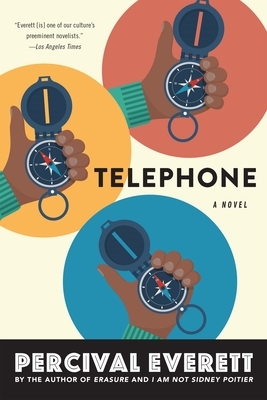
Percival Everett’s Telephone is about a man’s obsession with helping others as an expression of his own grief over his daughter’s fatal illness. This is a novel that famously has three different versions. I was frustrated by the main character’s tendency to go rushing off on his Quixotic expeditions, trying to gain some kind of control but leaving his poor wife to deal with their dying daughter by herself.

I liked Everett’s book the least of the three but have a harder time deciding between the other two. But I guess, from the interest of its subject matter, I pick Erdrich’s novel. That means the judges got it right!

Review 2745: Telephone

Telephone famously has three versions, each one different than the others—something I might be able to comment on if I’d read more than one. The novel is also divided into three sections, signified by different devices separating the chapters. In the first, it is Latin phrases; in the second, chess annotation, neither of which I understood (although I admit to being too lazy to look up the Latin). The third is a repeated sentence.

Zach Wells is a geology professor and paleontologist whose focus on his work in the Grand Canyon becomes dislodged when he and his wife Meg notice changes in their 12-year-old daughter Sarah, the person Zach loves best in the world. She has begun having minor seizures and her vision is blurry.

After visiting several doctors, the Wellses learn that Sarah has a rare neurological disease that is going to kill her. Zach clearly doesn’t know what to do with his grief.

Around the same time, he finds notes asking for help in some shirts he ordered from eBay. Perhaps to distract himself, he discovers where the packages came from and goes to a small town in New Mexico to investigate, oddly leaving his wife home to cope with Sarah, who is entering dementia.

This is an odd novel. Although Sarah early on tells him he can’t save everyone, he isn’t trying. He is unnecessarily harsh with a colleague up for tenure and a student with a crush, then he turns around and is nicer to them.

For me, apparently not agreeing with the critics, although wonderfully well written, the novel seems to go in several directions that are unresolved. But then, perhaps this is true to life, truer anyway than stories that neatly wrap everything up.

Zach isn’t a particularly likable person, and his way of running off in the midst of trouble, leaving the burder on Meg, is egregious. This novel is about grief, but it’s also about trying to have some kind of control over the randomness of life.

This is the last book I had to read for the 2021 Pulitzer Prize shortlist.

Related Posts

Erasure

The Trees

Looking for Alaska

WWW Wednesday

It’s the first Wednesday of the month, so it’s time for WWW Wednesday, an idea I borrowed from David Chazan, The Chocolate Lady, who borrowed it from someone else. For this feature, I report

  • What I am reading now
  • What I just finished reading
  • What I intend to read next

This is something you can participate in, too, if you want, by leaving comments about what you’ve been reading or plan to read.

What I am reading now

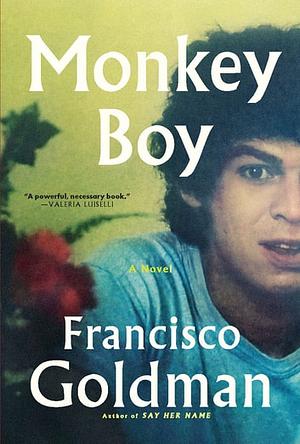
Right now, I’m reading Monkey Boy by Francisco Goldman for my Pulitzer Prize project. Somewhere I read that it is nearly autofiction. I’m not familiar with Goldman’s history, but my impression is that it is entirely autofiction. So far, although well written, it is going slowly for me, as the narrator loops in and out from a present that seems to be set in the early 2000s back through his childhood and adolescence.

What I just finished reading

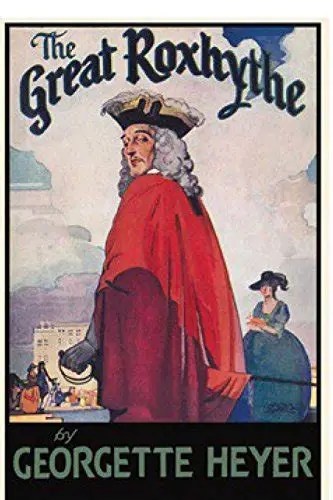
I thought I’d revisit a Georgette Heyer book that I haven’t read in a long time, The Great Roxhythe. It is one of Heyer’s earliest historical novels, not really a romance (maybe a bromance!), about a courtier in Charles II’s court. It reads like an early, less polished book compared to her later ones.

What I will read next

What I read next is always subject to change, but right now, it looks like it will be a book by Donal Ryan, Heart. Be at Peace. I enjoyed The Spinning Heart some years ago and always meant to get back to Ryan. Finally, I will. Also, it’s a novella, which right now is a good thing.

What are you reading now? Leave a comment and let me know!

Review 2744: Classics Club Spin Result! Our Mutual Friend

One of the pleasures for me in rereading some of Dickens’s more massive works is the plethora of characters and plots and the author’s skill in linking them all up. Our Mutual Friend is one of those books, and it was chosen from my list by the latest Classics Club spin.

The novel begins when Jesse Hexam, a waterman, and his daughter Lizzie fish a body out of the Thames. A sequel to this incident is related by Mortimer Lightwood, a man of law, at a party. He tells the story of a man named Harmon who became fabulously wealthy dealing in dust. He had two children. He threw off his daughter for marrying a man with no money, and when his son came from school to defend his sister, he threw him off, too. When Harmon dies, he leaves the lowest mound of dust to an old family servant, Mr. Boffin, and the rest to his son, John Harmon, as long as John marries the girl his father has chosen for him. The son is located after an absence of twelve years, but then he is drowned after returning, a body of a gentleman having been found with only Harmon’s card on his person.

Brought to identify the victim is a young man named Julian Handford, but he is unable to identify the body. When next we see this mysterious young man, he is called John Rokesmith and has soon offered himself as secretary to Mr. Boffin, the residual legatee to Harmon’s estate, now wealthy.

The Boffins are honest and unsuspecting people who, we learn, were the only comfort for John Harmon in his younger years. Since they have inherited John Harmon’s estate, they decide to offer a home to Bella Wilfer, the girl that the elder Harmon had picked out to be wife for his son, reasoning that they have deprived her of wealth. Our first meeting with Bella is not the best. She is both angry at being parceled out to be a wife for a man she never met without her consent and yet determined to marry money, because she is sick of being poor. The ubiquitous Mr. Rokesmith has taken a room at her parents’ house.

The Wilfer family comprise Mr. Wilfer, described as a cherub, with a generous and pleasant disposition; Mrs. Wilfer, a grand, bitter lady who terrifies her husband; Bella, a beautiful spoiled girl; and Lavinia, a little shrew. To her credit, though, Bella likes the unsophisticated Boffins and accepts their invitation.

This is just the beginning of a complex story that features a character with a secret identity; a murder; a man consumed by jealousy; the pursuit of a beautiful but socially inferior girl by an idle member of society; an attempted murder; betrayal by an employee; a selfish brother; an unselfish sister; a kind old Jewish man who suffers many insults; a doll’s dressmaker; and much more. This novel is so complex, but it features characters that you care about, characters that you hate, passages that make you laugh, others that bring a tear. In short—everything you expect from Dickens. Although not as well known as some of his novels, this is one of my favorites—after Bleak House and maybe tied with David Copperfield.

Related Books

David Copperfield

Bleak House

Dombey and Son