Review 2135: The Tortoise and the Hare

Imogen Grisham has a relationship with her husband, Evelyn, that is probably not unusual when this novel was written, in the 1950s. His job as a barrister being demanding, she feels it is her job to provide a stress-free home life. Unfortunately, since he is difficult to please and often impatient with her, she placates him. Her young son, Gavin, is like his father and treats her with disdain.

Imogen, who is some years younger than her husband, notices his growing friendship with Blanche Silcox but doesn’t worry about it because Blanche, a spinster, is old and unattractive, to her mind. However, Evelyn and Blanche have more in common, and eventually Imogen finds herself being excluded from occasions in which Blanche is included.

Although I thoroughly disliked Evelyn and Blanche, it was hard for me to be sympathetic at times with Imogen because she is superficial and so passive. For example, there is a situation in which Gavin has a serious problem at school while Evelyn is involved in an important case. Instead of going to school herself, she sends her friend Phil to deal with it, I assume because she believes she will be ineffectual. Even Imogen’s best friend thinks, not that Imogen should have gone herself, but that Evelyn would have respected her more if she’d interrupted him at work. Maybe there’s something about mothers going to school at that time that I don’t understand.

However I felt about the characters, this novel is a realistic portrayal of the breakdown of a marriage with all of its hesitations and heart-rendings on the one side and its self-justifications on the other. It is layered and ultimately affecting.

Related Posts

Harriet

A View of the Harbour

Ties

Review 2134: Back to the Garden

I know that Laurie R. King’s Mary Russell/Sherlock Holmes series is very popular, but I didn’t go past the first one because it’s clear to me that Sherlock Holmes, in his original form, was meant to be a misogynist. However, I have very much enjoyed some of King’s standalone novels, which tend to be atmospheric and creepy. Back to the Garden appears to be a standalone, unless it is the first in a series.

Raquel Laing is an inspector for the San Francisco Police Department on medical leave and possibly in disgrace after her use of a shortcut resulted in her injuries. However, her old boss has asked her to work on an informal Cold Case team, which recently realized that some bodies might be related and that a fabled serial killer from the 1970’s might really exist. So far, the team has found the killer by his son’s discovery of a storage locker holding his trophies. He’s a dying old man named Michael Johnstone who claims a whopping 19 murders. And Raquel has made a deal with him. For every body they find, he’ll tell them where another is.

Over on the Gardener estate, a statue made by a now famous artist when the estate was a commune in the 1970s is falling over. When Jen Bachus, the estate manager, has a contractor in, he says the base must be replaced. In the base, they find old bones and blonde hair.

Blonde women buried in concrete are hallmarks of Michael Johnstone, so Raquel arrives at the Gardener estate to begin an investigation. San Matteo County’s lab is running behind because of a triple homicide, so they don’t know yet whether the bones are male or female, but Raquel begins going through the estate archive and questioning people to look for any link to Michael Johnstone.

The investigation is made more difficult by the estate’s vexed history. The two brothers who were originally heir to the estate grew up hating their grandfather and both left—Fort to an ashram in India and Rob to a commune in Oregon. Fort was written out of the will, but Rob inherited the estate. He tried to turn it down but was eventually persuaded to take it for the commune, which was being kicked off the Oregon farm. The Gardener commune survived for about four years before failing. Just before it failed, the statue was erected. Now Rob lives on the estate like a recluse while others run it.

The novel swings back and forth between the 1970s and the present time, slowly revealing its secrets. Although this one isn’t as atmospheric as King’s other standalone novels, it’s a puzzling and satisfying mystery.

Related Posts

Lockdown

The Bones of Paris

The Damage Done

Review 2133: The Secret River

Kate Grenville started out writing a nonfiction account of her great-great-great grandfather’s family, but she ended up with too many questions. So, she fictionalized their story and combined it with what she had read about other Australian pioneers.

William Thornhill grows up in poverty in early 19th century London, but he sees a future for himself when Mr. Middleton, a waterman on the Thames, takes him on as an apprentice. William has grown up with Sal Middleton, his boss’s daughter, and he marries her shortly after he reaches journeyman status. However, things go wrong for Middleton, and William finds his livelihood is much more difficult to earn. Finally, he is caught stealing part of a cargo to support his family.

Although he is sentenced to death for theft, William manages to get his sentence reduced to transportation, and his family is allowed to accompany him. In Australia, although life is primitive, it doesn’t take him long to realize he can make money there and maybe return to England in style. However, when he takes a job ferrying goods from a river where settlers have begun farming, he sees a piece of land he can own by settling on it.

Now begins a conflict, with William realizing he will never return to England and Sal only wanting to return. The conflict is heightened when some of the settlers have clashes with the aboriginal people.

I was certainly engaged by this novel, and I felt that Grenville did a good job of portraying the conflicts with the aborigines. Grenville’s characters are flawed but totally believable. She looks unflinchingly at Australia’s brutal origin story, which is very similar to our own.

Related Posts

A Room Made of Leaves

Salt Creek

Rush Oh!

Review 2132: Death of Mr. Dodsley

On his rounds, a young police constable encounters a drunken young man late one night. The man tells him he saw a door opened and closed by a cat, so after the man leaves, the constable goes ahead checking doors and finds the door to a bookstore open. When he looks into the store, he finds a man shot to death in the office. It’s Richard Dodsley, the owner.

Inspector Mallet’s team finds that someone, possibly two people, waited in the store while Dodsley was out and shot him when he returned late to work on a sale catalog. They also learn that a mystery was recently published by Margery Grafton, the daughter of a prominent politician, the circumstances of which closely match those of the murder. It seems more than a coincidence that Margery Grafton is keeping company with Dick Dodsley, the dead man’s nephew, who worked in the shop.

The police find that Dodsley hired a private investigator, MacNab, to find out who has been stealing rare books from his store. MacNab has not been successful, but he gets more closely involved when Margery Grafton hires him to find the murderer because she thinks the police suspect Dick.

Death of Mr. Dodsley does not present us with a super-complicated puzzle , which is a point in its favor. On the other hand, characterization isn’t super important and there are a few important characters that we see almost nothing of, such as Dick Dodsley, the prime suspect. MacNab himself is a fairly laid-back character, and at times the plot seems to be moving very slowly.

Although it’s possible to guess the murderer, there is a surprise at the end that I didn’t see coming. It’s also fun that British Library has been lately publishing these “bibliomysteries.”

I received this book from the publisher in exchange for a free and fair review.

Related Posts

Death of a Bookseller

The White Priory Murders

Death in the Tunnel

Review 2131: Literary Wives! His Only Wife

Today is another review for the Literary Wives blogging club, in which we discuss the depiction of wives in fiction. If you have read the book, please participate by leaving comments on any of our blogs.

Be sure to read the reviews and comments of the other wives!

My Review

The death of Afi’s father years ago moved her and her mother from the middle class to poverty. Her uncle refused to give them a home even though Ghanaian custom decrees that a room in his house belongs to them. If Aunty, a wealthy local businesswoman, had not taken them in, they would have been homeless.

Now Afi has agreed to marry Aunty’s son Eli, a man she doesn’t know. His family hopes that a marriage to Afi will get him away from his Liberian girlfriend, with whom he has a child. They claim she must have bewitched him.

Afi marries Eli in a traditional wedding by proxy because he is away on a business trip in Japan. His brother Richard stands in and also takes her to her new home in a modern apartment in Accra. But Eli does not appear for some weeks. Afi has nothing to do except clean the apartment (even though there are people to do that) and shop. So she, who worked as a seamstress back in her village, decides to study fashion design.

Eventually, Eli comes to the apartment, but it is clear he is living elsewhere. However, Afi begins to fall in love with him and becomes determined that he will treat her as his wife.

This novel posed difficulties for me, and it was hard for me to tell if they came from cultural differences or not. The biggest was with the treatment of Muna, the girlfriend, referred throughout the book as “that woman” or “the Liberian woman.” After all, Muna came first and has Eli’s daughter, but Afi never once acknowledges that Muna has a prior claim, presumably because Eli hasn’t married her. Afi, after all, entered the marriage knowing she exists.

Second, most of the action of the novel revolves around a weak man who tells lies to avoid conflict.

I realize the novel is about Afi learning who she is and how much she owes to her family as opposed to herself, but after all, she ends up with a business that was essentially funded by her husband. She learns to stand up for herself but at the expense of Muna and her daughter.

There are other things in the novel that are interesting, such as the tension between tradition and modern marriage. Also, the writing is lively and engaging. But if Medie intended to write a feminist book, as I might assume from her Gender Studies background, she doesn’t really succeed.

What does this book say about wives or about the experience of being a wife?

Afi, coming from a small village and a traditional marriage ceremony, arrives in Accra seeming to expect a traditional marriage, as evidenced mostly by her concern to always have food prepared for Eli even though he never tells her when he’s coming and her attempts when he is there to wait on him. She also has constant tension between what is expected of her by her family and what she feels comfortable providing. Because of the unique situation she married into and also some culture shock, she has a hard time getting her bearings in the big city, especially as Eli doesn’t talk to her about things like money, what he’s doing about his girlfriend, and so on.

Although Eli doesn’t seem to want Afi to wait on him hand and foot, like she tries to do in the beginning, he isn’t honest or open with her and (major spoiler!) we infer from the ending of the book that he was planning a polygamous marriage as soon as his mother died. How he could think this solution would be acceptable to Afi is hard to grasp.

It’s hard to understand whether the aridity of Afi’s early married life is because she is wealthy or because of the differences between living in the modern big city and the traditional countryside, but it was a relief when Afi started with her studies.

Later on, when her marriage becomes more “normal” after the birth of her son, the novel isn’t very specific about the couple’s day-to-day life, but Afi seems to spend very little time with child-rearing or house management and most of her time running her business. Her relationship with Eli is better, but he still doesn’t tell her the truth or speak with her about important things. He also at one point tries to order her to behave a specific way. Theirs may be a modern marriage in terms of Ghanaian culture, but it certainly isn’t by our standards.

Review 2130: The Cartographers

Seven years ago, Nell Young was on her way to her dream job after interning in the Cartography Department at the New York Public Library. Her father, the head of the department, had hinted that a position was hers. In her excitement, she went down into the archives hoping to make a big discovery. This action initiated the Junk Box incident, after which she found herself fired and unemployable. Eventually, she got a job finding and copying maps for decorative purposes. She hasn’t spoken to her father since.

Suddenly, she receives a call from Swann, a former co-worker, telling her that her father was found dead in his office. She goes there to talk to the police. The death appears natural, but they are looking into it. When she is sitting at her father’s desk, she surreptitiously presses a button for a secret drawer and finds a portfolio. Returning home, she finds a map in the portfolio—not just a map but the one that appeared to be worthless when she originally found it in the Junk Box seven years ago, an ordinary road map from 1930.

When Nell looks the map up, she finds that every other copy of it has either been destroyed or stolen. It appears to be valuable on the dark web, but prospective searchers are warned to beware of a mysterious group called The Cartographers.

If you read my blog, you probably know I have a tricky relationship with magical realism. Suffice it to say that I found this novel most interesting before the magic came in, which it did in a obvious way at about page 150.

But I even had some problems with the realistic parts—in particular, that scholars of cartography would take seriously the idea of the Dream Atlas, not to mention the subsequent project.

Another problem was the shift in narration. Most of the book is in third person, but several chapters revealing secrets from the past are narrated by various friends of Nell’s parents. First, multiple narrators need to sound like different people. Shepherd’s do not. Second, the style of third-person narration is different from speaking. Shepherd’s is not.

I guess readers who go into this novel just as an adventure story and don’t look at it too closely will enjoy it most.

Related Posts

A Tale for the Time Being

Galore

Little, Big

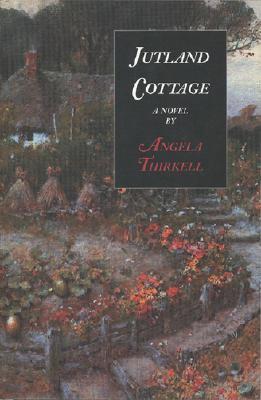
Reading Thirkell’s Barsetshire Series in Order: #22 Jutland Cottage + #21 Happy Returns Wrap-Up!

Rereading Happy Returns in the context of the rest of the Barsetshire series proved to be much more rewarding than reading it as a one-off as I did years ago. My thanks to the people who are sticking with the project and made comments or read along with this book:

  • Liz Dexter of Adventures in Reading
  • Penelope Gough
  • Gypsi

The next book is Jutland Cottage, and I will be posting my review on Friday, March 31! I hope some of you can read along with me. Including Jutland Cottage, there are only eight more books to go in the series!

And here’s our badge.

Review 2129: #ThirkellBar! Happy Returns

Cover for Happy Returns

When I originally reviewed Happy Returns, I remarked that I thought it would be easier to keep track of its many characters if you had read the series from the beginning. That certainly proved to be the case when I revisited the novel this time. I provided an adequate summary in my original review, so I’ll use this post to write about my observations second time around.

I didn’t mention that much of the point of view of this novel is from Eric Swan, whom we met way back when he was a school friend of Tony Morland’s and used to infuriate Philip Winter, then his schoolmaster, by looking at him through his glasses. (I believe this was in Summer Half.) Swan is now working for Philip, and at thirty, has not found the woman for him. However, he is immediately struck by Grace Grantly.

Much of the novel concerns whether the engagement of Clarissa Graham and Charles Belton will actually end in marriage, but I was also interested in the growing friendship between the older Lady Lufton and her very nice tenant, Mr. Macfayden. Lady Lufton was exceedingly irritating in the preceding book because of her helplessness after her husband’s death, but in this one a few choice words from a friend make her pull herself together. This takes some of the pressure off the burdened young Lord Lufton, her son. He has been attracted to Clarissa, but another instance of rudeness toward Charles breaks the spell. Unfortunately, he also notices Grace Grantly.

I enjoyed this novel in its context within the series much more than I did as a stand-alone. I knew most of the characters already, although I sometimes wish I had drawn up tables for each character when I read the first book and continued with it as I went on.

I haven’t commented on this before, but I also enjoy the references to Trollope’s Palliser and Barsetshire series. I have probably missed some, but I am noticing them more often because lately I’ve been reading the Palliser series.

Related Posts

Summer Half

The Duke’s Daughter

County Chronicle

Review 2128: Phineas Redux

In summarizing Phineas Redux, the fourth of Trollope’s Palliser novels, I can’t help giving away some of what happened in the previous books, so if you’re planning to read them, beware. All of the books so far in the series have shared characters but been reasonably independent. In fact, it didn’t much matter that I read the first two out of order. Although you could probably read this one by itself, it begins to tie the events and characters from the previous novels more closely.

Phineas Finn has been working at a government job in Ireland since we last saw him two books ago. However, after a short marriage, his wife Mary has died, and his friends, who think there will be a change in government, ask him to run for a seat in Parliament. He does and loses by only a few votes, but there are indications of bribery on the other side, so the election is challenged and Phineas must wait until January for the result.

Phineas has not seen his friend Laura Kennedy since she left her husband and went to Dresden to live with her father. However, she begs him to visit her. Before he leaves for Dresden, he is summoned by Kennedy, he believes to take a message to Laura. But all Kennedy does is berate Laura, tell Phineas it is her duty to return, and allege that she and Phineas are having an affair. They are not, but Phineas feels he owes Laura friendship. Unfortunately, Laura has learned too late that she married the wrong man.

Phineas gets his seat in Parliament, but he has managed to offend the editor of the equivalent of a tabloid newspaper, who brings him a libelous letter from Kennedy that he intends to print. Phineas goes to Kennedy about it, but Kennedy tries to shoot him. The editor is compelled not to print the letter but begins attacking Phineas in print, making suggestions about his relations with Laura and referring to the attack as if Phineas is to blame. The result is that he doesn’t receive a paid position in government as he expected, and he is still very poor.

In the meantime, Phineas’s friend Mrs. Max Goesler has befriended the failing Duke of Omnium. She has refused his proposal of marriage but continued to visit him. When he dies, she finds he has left her a large sum of money and his jewels, none of which she wants. As a result of his death, Plantagenet Palliser becomes the Duke of Omnium and Lady Glencora the Duchess. Plantagenet is mostly upset because his new position forces him into the House of Lords and out of the House of Commons, where he feels he has been doing important work.

Things are not going well for Phineas, and they are about to get worse, even to threaten his life.

In this book, I found the parliamentary issues a little harder to follow, but I was not expecting what is essentially a murder mystery. Once that plot got started, I was rivetted.

Related Posts

The Eustace Diamonds

Phineas Finn

Can You Forgive Her?