Review 2535: A Death in Summer

A Death in Summer is the fourth of Black’s series about Quirke, an Irish pathologist in the 1950s who helps his friend Inspector Hackett in some investigations. Although these are interesting mysteries, I’m beginning to be irritated by the cliché of Quirke’s drinking problem. This is the second book in a row where Quirke dries out or is already dried out at the beginning and then falls off the wagon.

Wealthy and powerful Richard Jewell is found dead in his home office. It is supposed to look like he committed suicide by blowing his head off with his shotgun, but it is obvious to both Quirke and Hackett that the man wouldn’t be still holding the gun if he had done it himself.

Jewell’s sister Dannie was at home as were some servants, but no one heard the shot. Mrs. Jewell, a French woman, says she arrived home after the house manager discovered the body. Françoise thinks her husband’s only enemy is another wealthy man, a Canadian named Carlton Sumners. Quirke attended university with both these wealthy men.

At this point, I began to wonder if Quirke was related to Inspector Morse (apparently the TV version only), because he immediately falls in love with Françoise, dumps his friend Isabel, and begins to have an affair with F. And by the way, you wonder how these male authors think, because the way Black describes Quirke, you wouldn’t think an elegant, wealthy Frenchwoman would want to jump into bed with him.

Quirke invites his assistant, David Sinclair, to dinner with his daughter Phoebe. Although both resent what they see as a clumsy attempt to pair them up, they begin seeing each other. David is a friend of Dannie Jewell, quite a disturbed young woman, and through him Phoebe meets Dannie.

As in a previous case, Quirke is warned off his investigations by a thug, Costigan. In the previous instance, when Quirke ignored him, he was badly beaten. This time, Sinclair begins receiving threatening phone calls.

Of course, there is a big secret that I personally didn’t find hard to guess once some of the pieces were in place. I might read the last book, but I am not sure if I will. Black is an excellent writer, but to have Quirke behave so stupidly in this one turned me off a little.

Related Posts

Elegy for April

The Silver Swan

Christine Falls

Review 2531: The Bell Jar

I’ve meant to read The Bell Jar for years, so when I saw it would fill a hole in my A Century of Books project, I got it from the library. I was also interested in it after reading the biographical fiction Euphoria, about Sylvia Plath and her husband, Ted Hughes.

In 1953, Esther Greenwood has earned an opportunity from a major fashion magazine, an internship with a group of other girls in New York. At first, she studiously applies herself to her assignments, but she becomes distracted by her fascination with Doreen, who seems more worldly than the other girls. She is tempted out by endless partying until Doreen gets a boyfriend and Esther has several unfortunate encounters with men.

She returns home from her internship suddenly adrift. She has not been accepted into a writing program, she doesn’t want to live with her mother, and none of the careers she can think of are appealing. Everything seems gray and uninteresting.

Of course, this is the story of Esther’s fall into mental illness, wrapped up in her inability to see a path for herself aside from marriage, which she clearly fears.

The novel is clearly based on Plath’s own experiences. It is clearly and vividly written and looks deep into the psyche.

Related Posts

Euphoria

Song of a Captive Bird

My Brilliant Career

Review 2477: The Time of Women

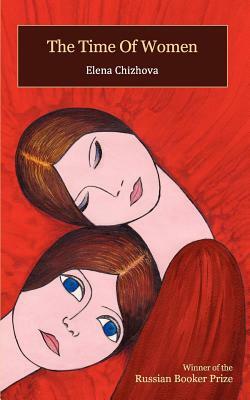
In 1950s Soviet Union, Antonina has a child out of wedlock. She is lucky to be allotted a room in a house with three old ladies, making a deal with them to cook and clean if they’ll take care of the baby while she’s at work at the factory. The deal becomes even more important when they realize Suzanna isn’t talking at the right time. They all become terrified that the girl will be institutionalized or at least that Antonina will be forced to take her from one doctor to another.

So, Suzanna stays out of school and the grannies teach her to read and write and even to understand French. She imbibes Russian fairy tales as well as some strange beliefs and superstitions, and the grannies sneak her to church to have her baptized.

All goes well until a man at work, Nicholai, starts paying attention to Antonina. Although they have done nothing but have tea, the union people at work assume they are having an affair and begin pressuring them to get married.

Then the situation turns serious. Antonina has cancer. How will the grannies be able to arrange to keep Suzanna after Antonina dies?

This novel effectively depicts the poor living conditions and the uncertainty of life in Soviet Russia, where the state can become involved in the details of anyone’s private life. The narration moves from person to person, and a lot of action is conveyed in somewhat elliptical dialogue, so I wasn’t always sure what was going on. Dreams and stories are also given a lot of importance.

I found the ending, which is another story, fairly unsatisfying, though.

Related Posts

A Mountain of Crumbs

A Train to Moscow

Sofia Petrovna

Review 2325: Homestead

In her research for Homestead, Melinda Moustakis incorporated her grandparents’ stories of homesteading in Alaska. Yes, in 1956, you could still receive a homesteading grant in exchange for working and making a home on the land. That was a surprise to me, too.

Lawrence Beringer is a withdrawn and hard man who has just filed homesteading documents for 150 acres of land when he meets Marie. Marie has traveled from Texas to stay with her sister Sheila and Sheila’s husband Sly with the plan of finding a husband so that she never has to return home. Within hours of meeting each other, Lawrence and Marie are engaged.

The couple live on a bus the first year while Lawrence clears land, plants a crop, and finally builds a cabin. Life is difficult, but for Marie, most difficult is understanding Lawrence, who is very withdrawn. For Lawrence has found he cares too much and must stay away to keep himself together. A miscarriage when Marie is almost at term doesn’t help, especially because Marie understands that her part of the bargain is providing children.

Conditions begin to improve, but even when things are good between them, Lawrence is aware that he’s keeping a secret from Marie.

I felt some distance from both of these characters but found the story fascinating nonetheless. It is written telegraphically, in short, sometimes partial sentences. Despite the descriptions of such activities as plowing, building a cabin, or planting potatoes, this novel is mostly a study of two distinct characters.

Related Posts

Coming into the Country

The Horseman

The Orchardist

Review 2323: Literary Wives! Mrs. March

Today is another review for the Literary Wives blogging club, in which we discuss the depiction of wives in fiction. If you have read the book, please participate by leaving comments on any of our blogs.

Be sure to read the reviews and comments of the other wives!

This month we welcome a new member, Kate of booksaremyfavoriteandbest! She will join in for the next review in June.

My Review

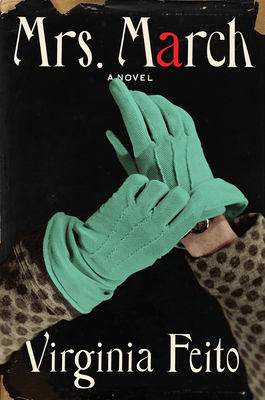
Set in an undefined time that is probably the 1950s or 60s, Mrs. March is a character study of a woman disintegrating. This all begins at her favorite pastry shop. Mrs. March is a woman highly concerned with appearances. She is married to George March, a writer whose most recent novel is a hit. She is figuratively torn asunder when the shop owner asks her if she minds being depicted in George’s book as the main character, Johanna. Mrs. March hasn’t exactly read the book, but she knows that Johana is an ugly whore whose clients don’t even want to be with her.

Mrs. March immediately becomes obsessed by the idea that he has portrayed her and that everyone is talking about it. She doesn’t read the book, which might be a reasonable reaction, but she destroys a few copies and roots through George’s desk trying to discover his secrets. There she finds an article about a missing teenager in Maine and immediately begins to believe that George, who periodically visits a cabin in the same town, has had something to do with it.

This novel takes a deep look at the psychological behavior of a woman who is unraveling. At times it is darkly funny, sometimes tipping nearly to absurdism. Mrs. March is not likable, her behavior is often outrageous, yet it’s hard to turn away from the page.

What does this book say about wives or about the experience of being a wife?

It’s hard to answer this question, actually, because we don’t see much of George. You have to wonder in the first place what would make George give such an unpleasant character as Johanna all of his wife’s rather distinct mannerisms, especially since most of the time he seems affectionate and soothing to her. Artists can be clueless, but it also seems clear that Mrs. March is so self-obsessed that she is detached from everyone, even her son.

Literary Wives logo

What does the poor woman have to do all day except clean up things she doesn’t want her maid to see and prance around town in her fur coat shopping? It’s enough to drive anyone mad. Yet is seems that no one is stopping her from doing whatever she wants to except, possibly, the notion of how it would look if she, say, got a job.

And how things look seems to be the dominating force in her life. We get a few glimpses into her childhood where her cold mother taught her this priority.

George has his secrets, but he is really not at all important in this novel. Mrs. March is able to adjust her notion of George instantly, thinking he’s a murderer while preparing his birthday party. What a book!

Related Books

The Wife

The Tortoise and the Hare

The Bird’s Nest

Review 2318: Elegy for April

This third of Benjamin Black’s Quirke series begins with Quirke drying out in a clinic. In the city, his daughter, Phoebe Griffin, is worried about her friend, April Latimer, a doctor and the daughter of a powerful family. No one has seen April for some time, and although she has gone away before, Phoebe thinks she would have told her.

Phoebe first goes to Dr. Oscar Latimer, April’s brother, even though she knows April is estranged from her family. Oscar doesn’t seem interested and says April probably ran off.

Phoebe is beginning to believe that April is dead. After Quirke gets out of the clinic, Phoebe turns to him. He talks to his friend Inspector Hackett, and the police eventually find a cleaned up pool of blood next to April’s bed.

The Latimers seem to be more concerned about their family reputation than they are about April and use their connections to get the investigation shut down. In the meantime, Phoebe is falling for Patrick Ojukuru, a Nigerian student in the small group of friends that included April. When Quirke tells her a Black man was seen visiting April, Phoebe denies knowing of any Black man.

Quirke is falling off the wagon with a vengeance, but he continues looking into the case.

An investigator with a drinking problem is such a cliché, but otherwise I find this series set in 1950s Dublin to be well written and interesting.

Related Posts

Christine Falls

The Silver Swan

The Secret Guests

Review 2307: The Geometer Lobachevsky

In 1950 Ireland, Soviet citizen Nikolai Lobachevsky has been working in the western bogs, trying to help a team survey the bog lands. He receives a letter from the Soviet government summoning him home to take up a “special assignment.” He knows that probably means execution, so he hides on a remote estuarial island.

Readers who look for a rousing plot aren’t going to find one here. Nothing much happens except for work and exact observations. First, Nikolai is helping with the surveying. Later, he helps farm seaweed. But he is homesick, and once he hears of Stalin’s death, he decides to return to Russia, taking a gamble that Malinkov, for whom he used to work, will pardon him for whatever sins he’s supposed to have committed.

I just felt meh about this novel, which I read for my Walter Scott project. It excels at descriptive passages, but it was hard to know Lobachevsky. Also, I am not that into strictly contemplative novels.

Related Posts

The Fawn

The Bogman

The Secret Guests

Review 2305: The Fawn

The Fawn is an unusual novel, narrated as it is by Eszter, who through the entire novel is speaking to another person. Eventually, we understand this is her lover, whose identity is not confirmed until the last half of the book.

The novel moves among scenes from the present and the past, sometimes with no transition, so that I was briefly confused about the when. Eszter grows up very poor. Her parents are from more prosperous roots, her father’s perhaps aristocratic, but his family has thrown them off. Her father is a lawyer but he takes few cases. He is more interested in horticulture and in fact is ailing for most of her life. So, her mother teaches endless piano lessons to support them, and Eszter earns money by tutoring other students and sometimes by stealing. Her life is made harder by her parents’ sufficiency for each other. She feels that they pay no attention to her.

Although Eszter becomes a famous actress with a good income and a nice flat in Budapest, she never forgets or forgives the slights of her childhood. In particular, she hates Angéla, a schoolmate who is beautiful and kind, but whose way is made easy by everyone because she is rich and beautiful. Her bad grades are corrected by the school after visits from her parents. Eszter is happy to see her family leave town after it is disgraced, but Angéla re-emerges after the war, married to the man who becomes Eszter’s lover.

Eszter is a complex character, not likable but someone who still keeps our sympathy. This novel explores the complexity of human relationships. Eszter laments that no one has ever loved her for herself, but she has turned herself into a chameleon—a famous actress who so submerges herself in her roles that on the street no one recognizes her. The Party members refuse to believe her true story when she submits her CV for approval to work at the theater, so she has to reinvent her life to make herself into a reformed aristocrat. Her lover loves her but doesn’t understand her at all.

I found this novel a little difficult at first because it just seemed to be rambling, but the narrative is compelling. Once I really got going, I just wanted to see how it ended.

Related Posts

Iza’s Ballad

Abigail

Nightwood

Review 2287: In the Country of Others

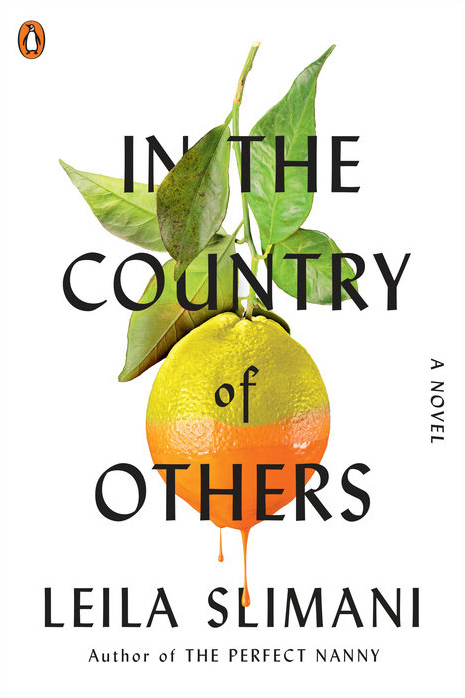
In the Country of Others tells the fictionalized story of Slimani’s own grandparents during a time of turmoil. During World War II, Amine Belhaj is a Moroccan soldier stationed in the Alsacian region of France. There he meets and marries his French wife Mathilde, and after the war, they go to live in Meknes, Morocco.

Mathilde finds it difficult to adjust to Moroccan life, especially once they move 15 miles out of town to live on the land Amine’s father bought and that he has dreamed of cultivating. Mathilde struggles to fight the total loss of power expected of an Arab wife. Amine can sometimes be physically abusive. Also, he works hard and spends all his time and money on the orchards. Mathilde would like to go into town and have some fun sometime. As what is considered a mixed-race couple, they are mocked on the street.

The narrative shifts mostly to her daughter Aïcha when she is a young girl starting school. Her parents send her to a Catholic school where she is mocked by her French schoolmates. She hates her kinky hair and is terrified when her parents leave her at school the first day.

As it gets into the 50s, the Moroccans move closer to war when France ignores their desire for independence. French people and homes are attacked.

This is a novel about sex and power. Although Mathilda doesn’t want Aïcha to be raised as a submissive woman, she finds herself forcing her sister-in-law Selma into marriage with an old man when Selma is deserted by her young French lover. It is also about power in terms of who will control the country.

It is an interesting story that’s told in a dispassionate way, keeping me from totally identifying with any of the characters. It’s clear toward the end that Aïcha is identifying with the native Moroccans rather than the French, even though she is half and half, but Slimani herself doesn’t seem to take any sides, either in war or in sexual politics, even though she clearly wants more for Moroccan women.

Related Posts

The Happy Marriage

Song of a Captive Bird

The Parisian

Review 2249: Murmur

When the cover of a book calls it “hallucinatory,” I know it’s not going to be a good fit for me. However, since Murmur is part of my James Tait Black project, I felt compelled to read it.

The novel aims to portray the mindset of an Alan Turing-like scientist named Alec Pryor after he is undergoing chemical castration because of a homosexual encounter. Aside from making his body more feminine, the chemical makes him dream and eventually induces wakened dream states, including ones where he fantasizes letters from his friend June, whom he hasn’t seen in years, and relives events of his boyhood.

Those who have been reading my reviews know how much I hate reading about dreams. Since it is difficult to know some of the time whether he is dreaming or remembering, this was a novel I found it hard to stick with, despite it being very short.

The rest of the novel is filled with philosophical musings about whether machines could have consciousness and other subjects. I felt that either I didn’t want to follow his thoughts or they were too hard for me to grasp. The journal section at the end is the most accessible part of the novel.

Related Posts

Crudo

Umbrella

Outline