Day 827: Flood of Fire

Cover for Flood of FireBest book of the week!
In the third book of his Ibis trilogy, Flood of Fire, Amitav Ghosh slowly draws most of his characters to China during a momentous period in history. The only major character missing from the first book is Deeti, making a home on Mauritius. And of course Bahram Modi, who died at the end of River of Smoke.

It is with the absent characters that we start, in a way, for at the beginning of the novel, Kesri Singh, Deeti’s brother, is unaware of what has happened to her. It is through Kesri that Deeti’s family met her husband, for he was brother to Subedar Nirbhay Singh, the highest-ranking sepoy in the battalion to which Kesri belongs. Kesri is a new character, and we go back in time to learn how Deeti helped him join the battalion and how Kesri, although wary of the character of Deeti’s proposed husband, encouraged the match to further his own ambitions. As those who have been following the series know, that did not turn out well.

Shireem Modi, Bahram’s wife, is finding her life uncomfortable since her husband died. Because his opium was confiscated by the Chinese government, she is left with nothing, dependent upon her own family. But soon her husband’s friend Jadig Karabedian arrives and tries to talk her into traveling to China to represent herself in the opium sellers’ claims against the Chinese government; otherwise, her claim may be disregarded. He also finds it necessary to tell her about Ah Fat, her husband’s illegitimate son.

Zachary Reid has finally been acquitted of blame for the incident on the Ibis but finds himself assessed fees that he cannot pay because his mate’s license has been suspended. He goes to work for the mysterious Mr. Burnham (who, although barely present, seems to affect all the events in the series) restoring a boat. There he is led into a dangerous relationship with Mrs. Burnham.

Neel, the rajah who ended up in prison for his father’s debts because of Mr. Burnham’s desire for his property, is still in China working at an English-language press. As the British Empire draws together a force to invade China, bringing most of the other characters there, Neel begins working for the Chinese government as a translator.

This trilogy clearly depicts Britain, driven by the greed of the opium growers and sellers, as the bully of Asia. Sea of Poppies shows how the Indian farmers were forced to abandon food crops to grow opium poppies, and how then the price of opium was manipulated to make them subsistence farmers. River of Smoke shows British efforts to force the Chinese to import opium, including the lies conveyed back to the British public about the behavior of the emperor. Flood of Fire draws all of our friends back to China to culminate in the First Opium War, when the British stuff opium down the throats of the Chinese.

Overall, I was very satisfied with this series. Ghosh is able to get you completely involved with his characters and is playful and inventive with language. Although I was not happy with the evolution of the character of Zachary Reid from a naive young man to the person he becomes, this is a great series.

Related Posts

Sea of Poppies

River of Smoke

The Siege of Krishnapur

Day 825: The Cricket on the Hearth

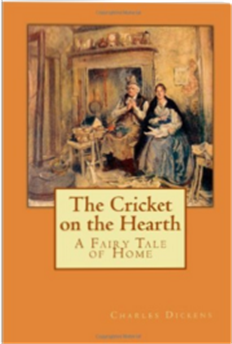
Cover for The Cricket on the HearthA year ago I reviewed two of Charles Dickens’ Christmas stories at Christmas time, and since I have a book containing all of them, I thought I’d continue the tradition.

We first meet the Peerybingles in their home, made cheerful by a bustling wife and a cricket on the hearth. John Peerybingle is an honest carter, quite a few years older than his wife. They have a baby and a clumsy maid named Miss Slowboy.

The plot is simple. It is the eve of the marriage of Mr. Tackleton to a much younger bride, May. He comes to invite the Peerybingles to the wedding as an example of a happy May-December union. But the wedding is set for the couple’s anniversary, and they have plans to spend it alone. Still, they include May in a visit to the house of their friend Caleb Plummer and his blind daughter Bertha. An unexpected visitor is with them—a deaf old man who accepted a ride in John’s cart but seems to have nowhere to go.

Mr. Tackleton is not a nice man. He’s been a grasping employer and landlord to Caleb, and it is clear that May is reluctant to marry him. At a point in the evening, Mr. Tackleton takes John aside and shows him something that makes him think his wife has deceived him.

This story is not one of Dickens’ best. Its pleasures are in its scenes of idealized domestic happiness in the Peerybingle home. But since we can’t reconcile our first glimpses of the Peerybingles with any such betrayal as alleged, we’re not in much doubt that everything will turn out to be a misunderstanding. Most of the characters are mere sketches, the only ones even slightly developed are the Peerybingles and Caleb and Bertha Plummer.

Since I recently read Dickens’ biography, though, I was interested in his little fantasy about marriage, particularly it being between two people so disparate in age, years before his affair with Nelly Ternan but only a few years after his wife’s younger sister, Georgina, moved in to live with them.

Related Posts

Two Christmas Novels by Dickens

Oliver Twist

Mr. Timothy

Day 814: Passion

Cover for PassionPassion tells the stories of the Romantic poets from the points of view of their women. It begins with each as a young girl, starting before Romanticism with the broad strokes of the life of Mary Wollstonecraft, Mary Godwin Shelley’s mother, a famous early feminist, writer, and philosopher.

Mary Wollstonecraft dies shortly after childbirth. Her daughter, Mary Godwin, grows up worshipping her mother and taking seriously the ideals of her father, William Godwin. However, he compromises his principles (he doesn’t believe in marriage) by marrying Mrs. Clairmont, a woman Mary detests. Her ideals and the poisonous atmosphere at home make her open to the advances of Percy Byssche Shelley, even though he is already married. She runs off with him at the age of sixteen, unfortunately accompanied by her stepsister Jane (who later calls herself Claire).

Lady Caroline Lamb loves her husband, but she is prone to a certain instability that her husband’s family deplores. When she sets eyes upon the famous Lord Byron, she is entranced and is soon engaged in a flagrant affair. When he breaks with her, she stalks him, sneaking into his rooms, following him around dressed as a boy. Her behavior is a scandal.

The only woman George Byron really loves is his half-sister Augusta. Even she succumbs to his charms. After he makes the mistake of marrying a self-righteous and vengeful woman, his worst secrets come out and he must leave the country.

Fanny Brawne comes late to the novel. She falls in love with a neighbor, John Keats, but he is a victim to a family weakness, consumption.

This material could be sensationally or romantically told, but it remains at a distance from us, more like biographical writing. We do feel sympathy for some of these women, especially for Mary Shelley, but I was not drawn right in. Although the book is named Passion and we know that this emotion was an important force for the Romantics, we don’t really see much of it in the novel, nor truly understand just what the attraction is to this group of neurotic young men. Sometimes I could catch a glimmer of the attractions of Byron, the only one who did not seem permanently deluded about the virtues of humanity. Still, for firmly setting a background for bits and pieces of information I picked up over time, I mildly enjoyed this novel. Although I admire the intent of Morgan’s more serious depictions of figures from literature, I have so far enjoyed most his romance novel, Indiscretion.

Related Posts

Indiscretion

The Secret Life of William Shakespeare

Miss Emily

Day 808: The Fatal Flame

Cover for The Fatal FlameI was sad to learn that The Fatal Flame would be the last book in Lyndsay Faye’s Timothy Wilde series. On the other hand, it is better to wrap up a series than let it go on until it becomes perfunctory. Still, I could have spent a lot more time with Timothy, his erratic brother Val, and his friends.

The novels are set in a gritty 1840’s New York City. This one deals with several issues that were controversial at the time: slavery—particularly whether Oregon would join the union as a free or slave state; the development of feminism; and the treatment of the mentally ill.

Timothy Wilde is one of New York’s newly formed Copper Stars, the police force, now two years on the job. At the beginning of the novel, he encounters a few of his colleagues at a wharf, where they are watching Ronan McGlynn. McGlynn is known to offer factory jobs to young, naive Irish women straight off the boats only to forcibly imprison them in brothels. When the men follow McGlynn and his latest victim to the Queen Mab, a brothel, they find there a Tammany Hall boss, Robert Symmes.

Timothy finds Symmes despicable, so he is not happy to be assigned to a case involving him later that day. Symmes is receiving threats from someone. He believes that person to be Sally Woods, a woman who used to work in his textile factory and led a strike against it for higher pay for the women. The threats Symmes is receiving are printed flyers promising to burn down the buildings that Symmes owns.

Although Timothy is disturbed by Sally Woods, he is still looking for evidence when one of Symmes’ buildings burns down, thankfully with no one in it. Why? Because the inhabitants were warned by another woman, Ellie Abell, who used to be Sally Woods’ best friend. A burning building is a great horror to Timothy, because two years earlier he was severely burned in the great New York fire of 1845.

Timothy soon becomes preoccupied by another matter. His great love Mercy Underhill has returned from London (much to my dismay). He is concerned to find that not everything she says makes sense.

The fire investigation gets more complicated, but that’s not confusing enough. Something Timothy tells his brother Val about Symmes causes Val to decide to run against Symmes in the upcoming election for alderman. Symmes is a dangerous man who enjoys inflicting pain. Timothy knows that there is danger for all Val’s intimates.

This novel is complex, exciting, and interesting. I am waiting to see what Faye will do next. But meanwhile, I’ll miss the Wildes, Bird, Jim, and other characters from this series.

Related Posts

The Gods of Gotham

Seven for a Secret

Dust and Shadow


Day 807: Life on the Mississippi

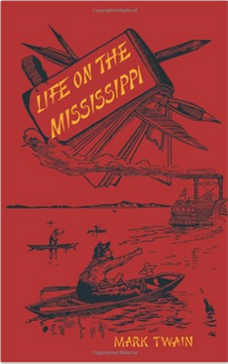
Cover for Life on the MississippiLife on the Mississippi is Mark Twain’s nonfiction book about the Mississippi River. Sort of. Although part history, part memoir, part travel account, it also includes a chapter from The Adventures of Huckleberry Finn, some folk tales, and many tall tales. So, it’s not just nonfiction. And not the best of Twain.

Twain begins with a few chapters about the history of the river’s discovery and exploration by Europeans. These first chapters are followed by reminiscences of Twain’s life as a boy along the river (including the excerpt about Huck) and his career as a riverboat pilot, including a description of what is involved in learning to navigate the river. This section takes up about half the book, by far the best half.

From there, the book loses focus, and if the kitchen sink had anything to do with the Mississippi, it would be in there. The last half of the book is supposedly centered around a trip Twain takes down the river to New Orleans and all the way back up to Minnesota. It describes the people he encounters and the towns he visits during his journey, 20 years after his time as a pilot. But it also goes off an every manner of digression and tells many anecdotes, some of which are frankly corny and a few of which are offensive these days. I don’t want to make too much of this because it is judging a book unfairly by the standards of another time, but some of the pictures especially, reprints of those that appeared in the 1883 version, are insulting to African-Americans.

Finally, my edition, a replica by Dover, was loaded with typos, especially in the last half. I can only hope that the errors weren’t really in the originally published edition.

Related Posts

The Tilted World

The All-True Travels and Adventures of Lidie Newton

Once Upon a River


Day 805: Blood & Sand

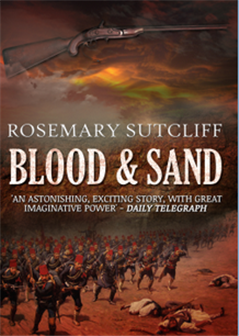
Cover for Blood & SandRosemary Sutcliff was a prolific writer of historical novels from the 1950’s through the 1990’s. She is best known for children’s literature, and most of the books I’ve read by her are set in Britain during or shortly after the Roman occupation. She also wrote a series of Arthurian novels, placing Arthur in the time just after the Roman withdrawal, which is a much more likely time period for him than the Middle Ages, if he existed at all.

Blood & Sand is for adults, however. It is based upon the life of Thomas Keith, an actual Scottish soldier in the Napoleonic Wars, who was captured in Egypt while fighting for Britain. Keith converted to Islam and went on to become the governor of Medina.

Blood & Sand is full of adventure and fighting, but it also depicts a sincere conversion to Islam and a love for the desert. It has beautiful descriptions of the desert landscape. Several times I was reminded of the line in the movie Lawrence of Arabia, where Prince Feisal describes Lawrence as “another of these desert-loving English.”

Thomas takes the name Ibrahim and makes a good friend of Tussun, the younger son of the Viceroy of Egypt. Part of his decision to convert is because of the opportunities for advancement with the Sultan’s army, and he becomes involved in trying to free the holy cities of Arabia from a group of religious zealots called the Wahabis. Some of the issues in the latter part of the book have echoes for us in modern times, showing us that these kinds of battles have been going on for hundreds of years.

link to NetgalleyI mildly enjoyed this novel. The characters are concerned with issues such as honor and are not terribly well rounded. The descriptions of Thomas’ life in Egypt and Medina and the customs of his new people were more interesting to me than the action scenes. There is a small bit of romance in the novel as Thomas marries a girl to protect her and ends up loving her, but it is not very important to the novel, and she herself is not fleshed out. The writing is at times, especially in the descriptive sections, quite beautiful, however.

Related Posts

The Lantern Bearers

The Black Count: Glory, Revolution, Betrayal, and the Real Count of Monte Cristo

Flashman

Day 802: This Godforsaken Place

Cover for This Godforsaken PlaceAbigail Peacock and her father are regretting the impetuous desire for adventure that led them to journey thousands of miles from England to a remote village in northwestern Ontario to run a school. In 1885 the living conditions are primitive, and Abigail’s father has fallen ill in the depths of winter. Abigail continues to run the school and finds her life tedious. Lars, the helpful store owner who brought them there to teach Swedish rail workers and miners English, is almost certainly going to propose marriage. Abigail is not enthused.

Abigail is not at first receptive to Lars’ suggestion that she get a rifle. But eventually she buys one on a whim, guiltily spending some of her family’s savings. She finds an area outside of town to practice, and it soon becomes the only thing she enjoys. One day, though, she arrives at her practice location to find a wounded, unconscious cowboy. It’s not totally clear, but suggested, that she shot him by mistake the day before.

Here’s where the story started to lose me a little bit. Abigail doesn’t want anyone to disturb the place she practices, so instead of going for help, she leaves the cowboy there and returns at times to nurse him. This decision eventually leads to an even more morally challenged decision and then to a cross-country journey to find a man connected with Buffalo Bill Cody’s western show.

I don’t expect characters to be perfect, but this is the same person whose desire to do the right thing puts herself and a friend in jeopardy later in the novel. And then there’s the way they get out of it.

This kind of thing probably won’t bother many readers, though, and the novel does make an inventive adventure story with a strong heroine. I’m not saying I didn’t enjoy it. Still, just one more caveat.

Part of the novel is devoted to a rebellion in Canada that I hadn’t heard of before, of the Métis people lead by Louis Riel and Gabriel Dumont. Early in the novel, information on this topic is introduced through synopses of news articles Abigail is reading to her father and through some discussion. These sections and later ones are handled a little awkwardly because of the amount of information and its method of introduction. The way it was handled made me wonder what it was doing in the story. The information fits into the story eventually, but I feel, firstly, that it could have been introduced more smoothly, and secondly, that the novel unhandily juxtaposes the rebellion, the James Gang, and Annie Oakley.

When I read in an interview of Gault on Consumed by Ink that Gault wanted to write something that combined her research into those three topics, it made perfect sense to me. I just think the subjects could have been combined in a way that seemed more likely.

Disclosure: I received a copy of this book free from the publisher in exchange for an honest review.

Related Posts

The All-True Travels and Adventures of Lidie Newton

The Sea Captain’s Wife

True Grit

Day 795: Pitcairn’s Island

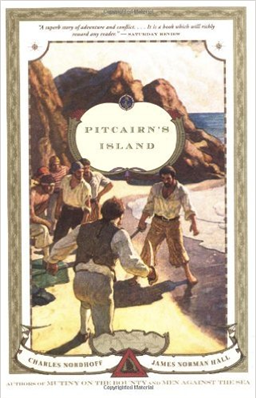
Cover for Pitcairn's IslandThis final novel in the Bounty Trilogy tells what happened to the mutineers from Mutiny on the Bounty. As explained in the introduction, the fate of the mutineers was not known until Pitcairn’s Island was rediscovered by an American ship in 1808. Although the mutineers arrived 18 years before, only one survived, surrounded by the wives and progeny of himself and others.

As the authors explain, the only information available about the fate of the mutineers was directly or indirectly from Alexander Smith, but those sources failed to agree and many accounts were improbable. So Nordhoff and Hall presented what they thought was the most likely version of events.

The mutineers and their companions arrive at Pitcairn’s Island in 1790. They have already tried to settle twice in Tahiti and once in the Friendly Islands (Tonga) but had to leave for fear of discovery or because of hostile natives. With the nine mutineers are six native men and twelve native women. Although all of the islanders get along well at the beginning while they are busy building their homes and planting their crops, the seeds of failure are already there, in the quality of some of the mutineers.

The first problems are caused by John Williams. He already has a woman named Fasto, but he lusts for Hutia, the wife of one of the native men, Tararu. When disputes over the woman reach the heights of disruption, Fletcher Christian allows Hutia to pick her husband. She picks John Williams, thus introducing the first tension between whites and native men.

But Christian’s biggest mistake is his egalitarian impulse to grant each man a vote on the future of their community. Although he wants to extend this vote to the native men, the whites do not agree, and it is this plus the votes extended to the less scrupulous whites that cause the problems. Eventually, some of the lowest of the men begin treating the native men as their slaves. The final break between whites and natives comes after a vote about ownership of the land, for the whites want to own the land and reduce the natives to servants.

Although most of the novel is peaceful, taking place in a tropical paradise, the worms in the apple are a few of the white men. A palpable tension brews throughout the novel.

If I have a criticism, it is that the final portion of the novel, presented as Alexander Smith’s story to the mate of the Topaz in 1808, goes on for a bit too long past the fate of the islanders into Smith’s discovery of God and the Bible. Other than that, the novel is gripping and a fine conclusion to the trilogy.

Related Posts

Mutiny on the Bounty

Men Against the Sea

Robinson Crusoe

Day 791: Moloka’i

Cover for Moloka'iIn late 19th century Honolulu, Rachel Kalama is only seven years old when she develops leprosy. It starts out as just a pink spot on her leg, but as soon as authorities spot it, she is examined and exiled to the leper colony on Moloka’i. Even though her beloved Uncle Pons is already on the island, she is not allowed to stay with him but must live in the girls’ dormitory at least until she is 16. The facilities on the island are primitive and the rules rigid. She is the youngest resident of the island. It’s tough for a little girl.

Although Rachel’s father Henry writes regularly to her from his travels as a seaman, she soon has her letters to her mother returned to her. She never sees her mother again. The novel tells the story of Rachel’s life from the time she is admitted to the colony until she is an older woman.

I have to admit that I hesitated to read a novel about lepers, thinking it might be too gruesome. But Rachel’s story isn’t depressing. Aside from lightly covering a great deal of the recent history of Hawaii, beginning with the deposing of the queen by the United States, the novel depicts a life in a tough environment that slowly becomes a community. If anything, at times the novel seems to depict a rosier environment than seems possible.

Owing to lack of characterization and the prevalence of description versus action and dialogue, I was not captured by this novel until almost the end. I was interested to see what would happen, but I didn’t find the characters very involving. Still, I found the end of the novel touching, and I enjoyed learning about the history and customs of Hawaii.

Related Posts

The Descendants

Shanghai Girls

The Known World

Day 779: The Quickening Maze

Cover for The Quickening MazeThe Quickening Maze is the first book I read purposefully because it’s one of the finalists for the Walter Scott Prize for Historical Fiction. By coincidence, I had already read half a dozen finalists and winners, and when I learned that Helen of She Reads Novels was trying to read them all, I decided to join her.

This novel is based on events in the life of the poet John Clare, known as the “peasant poet,” a man of rural background who was steeped in his natural surroundings. Unfortunately, Clare is having some mental problems and is staying in an asylum in Epping Forest. Nearby is Alfred Tennyson, whose brother Septimus also resides there.

John Clare seems to be doing well under the treatment of Dr. Matthew Allen. When we first meet him, his movements are relatively unrestrained and except for some confusion about a girl he knew named Mary, he seems sane enough. He is soon given a key to the gate so that he can walk in the forest.

Another patient important to the novel is Margaret, who is regularly transfixed by visions of angels and messages from god. At one point as Clare’s mental state deteriorates, he mistakes Margaret for his Mary.

Dr. Allen seems to have a gift for dealing with his patients during a time when mental health practices were deplorable. However, he also has a fascination with risk, and soon he is trying to talk his friends and the Tennysons into investing in his new invention, a machine for following the shape of furniture and carving additional pieces.

Hannah Allen at 17 has decided that Alfred Tennyson is the man she’d like to marry. She boldly begins seeking him out, not realizing that he is preoccupied with his brother and with grief over the death of a good friend.

Although this novel is more about the internal workings of some of the characters’ minds than its historical setting, it is beautifully written and atmospheric. I was interested in this narrow slice of history and curious to look at some of Clare’s poetry.

Related Posts

Under the Wide and Starry Sky

Parrot and Olivier in America

A Good Hard Look