Day 710: The Kept

Cover for The KeptBest Book of the Week!
The Kept is a mysterious and darkly moody novel that I found compelling from the first sentences. Elspeth Howell arrives home on a snowy winter day in upstate New York near the turn of the 19th century. She has been away for months working as a midwife. But when she reaches home, she finds that her husband and all of her children that live in the house have been murdered. Only her 12-year-old son Caleb, who has taken to living in the barn, is alive, but he has been hiding in the pantry for days, and when she opens the pantry door, he shoots her in terror.

Caleb spends the next few days alternately trying to take care of his mother and dispose of the bodies of the rest of his family. He cannot bury them in the frozen earth, but in his attempt to burn them, he accidentally burns down the house. He ends up caring for his mother in the barn.

The Howell’s home is isolated and difficult to find. As a young girl, Espeth was driven from her home for having spoken to Jorah, the man she later married, because he was Native American. But there are other reasons for the family’s isolation. In any case, Elspeth thinks the murderers must have sought for their house.

When Elspeth is barely healed, she and Caleb set forth to find the three men who murdered their family, men whom Caleb watched from the barn. They stay briefly with an old couple who have been terrorized by the same three men and who point them in the direction of a town on Lake Erie with a terrible reputation. There, with Elspeth disguised as a man, they go to search for the men.

Beginning as a straightforward revenge novel, the book goes on to explore deeper themes. One of them is that of unintended consequences, as Caleb finds that their troubles result from Elspeth’s own actions years before.

This novel is well written and packed with atmosphere. It is vivid and brutal and beautiful.

Related Topics

Seven Locks

True Grit

Neverhome

Day 706: The Devil’s Backbone

Cover for The Devil's BackboneThe Devil’s Backbone is a western adventure tale related in an unsophisticated vernacular style in both first person and third person. It is an unusual novel but reminds me most of, perhaps, True Grit or The Adventures of Huckleberry Finn. The third person narrator is barely there but relates the first person story his father told him. The book is illustrated by Jack Unruh.

Papa, as the third-person narrator calls him, is a young boy growing up in the Texas Hill Country when his father Karl kills a horse after a dispute about it with his wife Amanda. Amanda saddles up her horse Precious with the concho-decorated saddle her father gave her and leaves. After Karl has gone off for a few days and returned, a neighbor, Miz Choat, arrives to tell Karl that she has promised Amanda to send the boys to school, so she takes Papa and his older brother Herman back with her. But after Herman has attended school awhile, he takes off.

Papa enjoys his time with the Choats, but after a few months his father arrives to take him back. At home he has installed another woman, Miss Gusa, who is pregnant.

Papa has clearly been brought home as a cheap source of labor. Eventually, Karl’s brutality makes Papa decide to leave and look for his Mama. On his journey he encounters outlaws, a dying Indian, a prematurely born baby, a family of Mexican migrant workers, and several loyal friends, including the cowboy Calley Pearsall.

I enjoyed this tale. At first, I thought it might become a series of tall tales, but nothing happens in it that seems wildly exaggerated. However, it does have the flavor of a folk tale. The only thing I found a little irritating was the double narration. We learn nothing at all about the narrator, so I don’t really see the purpose of that approach, which leads occasionally to such confusing constructions as “I said, Papa said.”

Although this novel may sound like children’s fiction, I don’t think I would recommend it for younger children because of some of the events. Older children would probably like it, as it has lots of adventure. Some of the subject matter may be inappropriate, however, as there are events such as murders and death in childbirth, so use your discretion. This book was a choice of my book club, all adults, and we all enjoyed it.

I have been on the Devil’s Backbone (pictured on the cover). These days it is a narrow two-lane highway across a ridge with spectacular views on each side. I heard it had been widened, but to think it was once so narrow is amazing.

Related Posts

True Grit

Appaloosa

Treasure Island


Day 699: Rustication

Cover for RusticationBest Book of the Week!
I was captured by this dark, twisty novel from the moment I started reading it. I only feared it may eventually disappoint, but it does not.

In winter 1863, Richard Shenstone, 17, appears without warning at his mother’s new home, a large dilapidated house on the southern coast of England. He has been rusticated, sent down from Cambridge for reasons not immediately explained.

Having received word of his father’s death too late for the funeral, he is surprised to find his mother and sister living in apparent poverty. Furthermore, although he doesn’t at first tell them he’s been sent down, his arrival is met by a surprising lack of welcome, indeed hostility on the part of his sister Effie.

There is some mystery about his father’s death, that is clear. His father’s pension has been denied to the family, and Richard’s mother is suing for her father’s estate as well. Effie is also up to something, for he twice sees her out accompanied only by a tall man, not proper behavior for a lady.

Richard is not a pleasant person, obsessed as he is by desire for every girl or young woman he meets and also addicted to opium. The novel is told as excerpts from his journal, interrupted by copies of a series of hateful letters that soon begin arriving at the homes of various people in the district. It is also clear from the beginning that some crime has been committed and the journal is a look back into the past. It is not clear to readers, however, how reliable a narrator Richard is or what’s going on when he roams the countryside at night in his opiated state. Soon the letter writer begins leaving corpses of mutilated sheep behind him.

This novel is atmospheric in the extreme and completely absorbing. As Richard begins trying to figure out who the letter writer is, he finds the finger pointed toward himself. He takes unwarranted leaps of logic that cause him to make many mistakes and ignores some clues that he has. Still, exasperating and unlikable as the main character is, you are urged along to the end of the novel.

Related Posts

Stone’s Fall

The Séance

The Darkest Room

Day 688: The Age of Innocence

Cover for The Age of InnocenceI have certainly read The Age of Innocence before, but it was not until this rereading that I gained a full appreciation for its subtlety and complexity. I may have read it years ago, but I became really interested in it after an interview with Martin Scorsese about his movie adaptation (my favorite film ever) where he commented on “the brutality under the manners” of the upper class New Yorkers in the novel, set in the 1870’s, and likened them to gangsters.

This novel is about the tension between individual desires and the expectations of a rigid society. However, it is also about the two main characters trying to do the right thing in the face of yearning and passion.

Newland Archer is an intellectually inclined young man interested in art and travel who thinks he understands but sometimes is a little impatient of the rigid and insular customs of his time and social class. He has just become engaged to May Welland during a difficult time for the Welland family. May’s cousin, the Countess Ellen Olenska, has returned to New York to her family, having left her husband, and society is shocked to see them bringing her to parties and the theatre. Archer decides to show solidarity with the Wellands and soon finds himself drawn into the Countess’ affairs in his professional capacity as a lawyer. Countess Olenska wants to divorce her husband, and the family is horrified, asking Newland to convince her not to.

Newland succeeds, but he soon realizes that he is in love with Ellen Olenska himself. Ellen is determined not to betray her cousin.  When she admits she loves Newland, she comments that by getting her to drop her divorce, he has assured that they can never be together. A disappointed Newland marries May.

Within a short time, Newland regrets his marriage and foresees a gray existence of doing the same things with the same people year after year. The innocence and purity he saw in May is actually an incuriosity and inability to grow or change. Although Newland doesn’t see Ellen, who has moved to Washington, he has begun to think of her as the only real corner of his life. All these feelings are brought to a climax when the Countess returns to New York and her family decides she should reunite with her husband.

This novel is vivid with carefully observed descriptions. Underlying it all is an understated yet savage critique of petty and provincial New York society of the time. Almost every sentence is double-edged, such as when Wharton describes a soprano’s solo in the first chapter:

She sang, of course “M’ama!” not “he loves me,” since an unalterable and unquestioned law of the musical world required that the German text of French operas sung by Swedish artists should be translated into Italian for the clearer understanding of English-speaking audiences.

Nice! I understand that when this book was published, nearly 50 years after its setting, members of New York society were still able to match most of the characters in the novel with their real counterparts.

Related Posts

The Master

Persuasion

Miss Marjoribanks


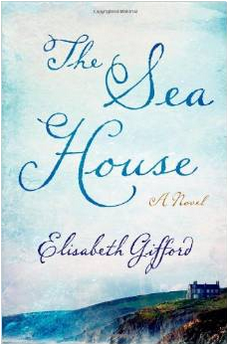
Day 682: The Sea House

Cover for The Sea HouseAn atmospheric novel set on the Scottish isle of Harris, The Sea House offers a fascinating story split between two times, the 1990’s and the early 19th century.

In 1992, Ruth and Michael have purchased a ramshackle Georgian house on the island, intending to fix it up and open a bed and breakfast. The house used to be the manse long before a new modern house was built. In tearing up the floorboards in the study, Michael finds the small corpse of a baby, although its legs are unfinished, looking more like a fish tail.

The body is at least 100 years old and its death is found to be of natural causes, but Ruth becomes interested in finding out more about the long-ago occupants of the house, hoping to identify the baby. She begins looking into the house’s history.

Ruth also knows very little about her own history. When she was 10, her mother’s death by drowning was found to be suicide, and she grew up in a series of foster homes. She knows nothing about her father, and all her mother told her was that they came from the islands and were descended from selkies. Her last name was Macleod, which she finds is a very common name there, but when she consults a genealogist, the woman can find no trace of a woman of her mother’s name and age born on the islands, leading them to guess that she was using a false name.

In 1860, Alexander Ferguson is the new curate at the manse. He is serious and eager to serve god and his parishioners. He is also interested in the new discoveries about evolution and studies fossils looking for new species. His family legend also holds that he is descended from selkies, and he is fascinated when he hears that a mermaid was discovered on the beach after a storm. He would like to examine her, but she has already been buried and the authorities won’t dig her up. He becomes interested in the idea that selkies might actually exist and could be a cross-species between man and fish.

Alexander has also taken in a new maid, a girl found running wild. Moira’s family was moved off their island along with all the other families so that Lord Marston could put sheep on it. The families were allocated the worst piece of land and all of them except Moira got sick and died. Moira was away from the house when Lord Marston’s men came and burned it down, and she was living wild until the reverend took her in. She loves the reverend but has vowed to kill Lord Marston.

This novel is well written and interesting. I was engrossed in both the modern and historical stories. The novel is particularly interesting for those who like Celtic legends and folk tales.

Related Posts

Galore

Remarkable Creatures

The Forgotten Garden

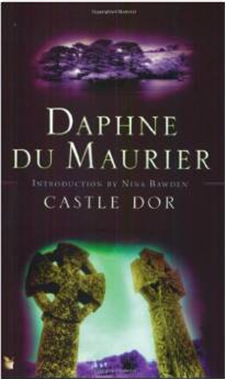
Day 678: Castle Dor

Cover for Castle DorIt is clear from the number of books Daphne du Maurier set in Cornwall that she found the region inspiring. In the case of Castle Dor, a book I had not heard of until recently, she actually finished a book begun by Sir Arthur Quiller-Couch, which is a retelling of the ancient Cornish legend of Tristan and Iseult. The novel also features another interest of du Maurier’s, the unexplained.

Dr. Carfax is the observer of this story set in the early 1800’s. He has a theory that he shares with a French visitor, elderly Monsieur Ledru, that the events of the old legend took place in the area of Cornwall where he lives. Monsieur Ledru has in fact traveled there to investigate just that subject. Ledru has also taken an interest in a young French onion-seller named Amyot Tristane and helps him free himself from his abusive ship’s master and get a job on the Bosanko’s farm.

It is the doctor who begins to feel an eerie familiarity in the behavior of Amyot once he unfortunately encounters Linnet Lewarne. Linnet is the most beautiful woman in the region, and she has at 18 married a much older man, the innkeeper Mark Lewarne. After Amyot meets Linnet, he seems to be aware of the history of the area in a way that is unlikely for the unsophisticated foreigner that he is. As Dr. Carfax views certain events and sees in them the similarities to the legend, he begins to fear the same fatal result for Amyot.

Linnet, although she is also presumably taken over by the strong forces of the past, is depicted unsympathetically, as ambitious and remorseless. As in the legend, there is a potion, but instead of being a love potion, it is poisonous.

The characters in this novel are rather one-sided, but it is the atmosphere and the legend that are important in the novel, set in the vicinity of the legendary Castle Dor. However, this is not one of du Maurier’s best, and for a retelling of the legend, I prefer Dorothy Robert’s The Enchanted Cup.

Related Posts

Daphne Du Maurier: The Secret Life of the Renowned Storyteller

Neverland: J. M. Barrie, the du Mauriers, and the Secret Life of Peter Pan

Bellman & Black

Day 667: Alias Grace

Cover for Alias GraceBest Book of the Week!
Most of what I have read by Margaret Atwood has been futuristic and dystopian, so I was quite surprised to find that Alias Grace is an apparently straightforward historical novel. But then, nothing with Atwood is exactly straightforward.

The novel is based on a notorious Canadian murder, in which two servants were found guilty of murdering their master and his paramour housekeeper. The man was hanged, but there continued to be debate about the extent of the guilt of the woman, Grace Marks.

The novel begins some years after the event, when Dr. Simon Jordan, studying new discoveries in the field of mental illness, is hired by a group trying to gain Grace a pardon. Grace has always claimed she cannot remember the crimes, and he hopes to revive her memory. He begins in a way meant to slyly nudge a modern sense of humor, by bringing her an apple followed by a series of root vegetables he hopes will remind her of a cellar, where the bodies were discovered.

Grace, who was very young at the time of the crime, eventually tells him what she can remember, beginning with her early life. She relates her story in a simple way, conveying the persona of a proper young girl.

Dr. Jordan appears as if he is going to be the hero of this novel, but he has his own obsessions and difficulties.

As Grace tells her story, we are drawn slowly in, waiting to learn what really happened. This novel is rich in detail and beautifully written, but it is also slyly humorous and dark.

Related Posts

Stone Mattress

Corrag

Burial Rites


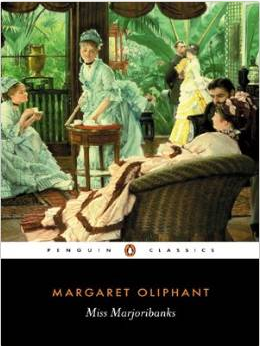
Day 664: Miss Marjoribanks

Cover for Miss MarjoribanksBest Book of the Week!
It’s not often that I discover a delightful novel by a classic author whose works I am unfamiliar with. But that’s the case with Miss Marjoribanks. It is a wonderfully ironic comic novel about middle class mores with an exasperating and ultimately lovable heroine.

We first meet Lucilla Marjoribanks at the age of 15. Her long-ailing mother has died, and Lucilla rushes home vowing to be a comfort to her father. Dr. Marjoribanks, who has been looking forward to a comfortable bachelor existence, wastes no time in sending her back to school.

Four years pass, and Miss Marjoribanks returns from her tour on the continent determined to devote herself to her father for the next ten years, suggesting that by then she may have “gone off” a little and will start looking for a husband. Lucilla is a young woman of energy and complete self-confidence who is determined to be a force in Carlingford society. But first she must deal with a proposal from her cousin, Tom Marjoribanks. She loses no time in dispatching him to India.

Dr. Marjoribanks watches in amusement as Lucilla calmly removes the reins of his household from his redoubtable cook Nancy and begins to take control of Carlingford society. Her first project is to begin a series of “evenings” every Thursday.

As Lucilla deftly and with dauntless good humor manages the affairs of her friends, somehow none of a series of eligible men ever come up to scratch with a marriage proposal when her friends expect them to. But Lucilla insists she will dedicate herself to her father’s happiness at least until she is 29.

Although Lucilla, with her managing ways, could easily be a figure of satire, I grew to admire her and like her friends and neighbors, who are fully realized even though  this book is the fifth in a series and I have not read the others. We even feel sympathy for Barbara Lake, the contralto whose voice goes so well with Lucilla’s that Lucilla invites her to her evenings. Barbara, from a lower strata of society, sees Lucilla’s actions as condescension and rewards Lucilla’s impulse with spite.

I was hugely entertained by Lucilla’s career and have already started looking for more books by Oliphant. Margaret Oliphant, I find, was once one of the most popular authors of the mid-19th century, and she deserves to be remembered.

Related Posts

Anderby Wold

Good Behaviour

Mrs. Dalloway


Day 662: The Mermaid’s Child

Cover for The Mermaid's ChildI was really delighted with Longbourn, Jo Baker’s twist on Pride and Prejudice. I have more mixed feelings about The Mermaid’s Child, Baker’s latest.

Malin Reed is raised by her father, who tells her she is the daughter of a mermaid. Her father, the ferry operator, is affectionate, but everyone else in town treats her with disdain. Malin herself is an odd mixture, a girl naive enough to believe in mermaids but hard schooled, bullied by the village boys and by her teacher. But she has seen a mermaid herself, when the circus was in town.

When her father dies, her grandmother tells her she can’t control her (although we see little evidence that she is uncontrollable) and sends her to “Uncle George” to be a skivvy and bar maid. There she is mistreated and learns to service more than the bar.

Then one night she walks off with a stranger, a man who has given her a smile. He has promised to deliver a rain machine to the village, which is in a terrible drought. With her myopic naivety, she hasn’t even realized he is a con artist.

So begins a picaresque journey for Malin that eventually becomes a search for her mermaid mother. This search takes her to many unlikely places.

I wasn’t sure how I felt about this novel. Were it not for the realism of Malin’s situation, I would take it more for a fantasy, and that is how it is being marketed. But it isn’t really a fantasy except possibly in the narrator’s mind, nor is it magical realism. Unlikely is the word to apply to her adventures but then again, I’m not sure we’re supposed to take Malin’s story that literally. She tips us off in the first few pages that she may be an unreliable narrator.

Still, there is not much to anchor this book except Malin’s character. Most of the other characters are one-dimensional, and anyway we don’t spend much time with them.

This is just an observation, but I don’t think I’m giving away too much when I say this is the fourth historical novel I’ve read this year in which a girl is disguised as a boy. So, what’s up with that? Are historical novelists bothered by the restrictions a woman was subject to in the past?

http://www.netgalley.comI guess I would sum up by saying I found the novel mildly entertaining. It starts out fairly believably and quickly becomes rather grim but with each adventure also becomes less likely. It’s as though it wants to be closer to something like The Rathbones but doesn’t quite manage to push out the boat.

Related Posts

Longbourn

The Rathbones

Ahab’s Wife Or, the Star-Gazer


Day 661: The Bully Pulpit: Theodore Roosevelt, William Howard Taft, and the Golden Age of Journalism

Cover for The Bully PulpitNoted historian Doris Kearns Goodwin approaches her subject of the relationship between Theodore Roosevelt and William Howard Taft from several insightful angles. Although her book examines their careers separately, it is focused on the differences in their personalities and approaches that finally led to the serious rift in their friendship of many years. This rift also led to Roosevelt’s third run for president, which split the Republican ticket.

One of the major differences that Goodwin identifies is their relationships to and use of the press. The journalists particularly close to Roosevelt and involved in the fortunes of both presidents all worked for McClure’s magazine and make up an impressive list of names in journalism: Ida Tarbell, Ray Stannard Baker, William Allen White, and Lincoln Steffens.

I wanted to read more by Goodwin after I read Team of Rivals, the great history of Lincoln’s career that inspired the movie Lincoln. Although I also have her book about FDR and Eleanor Roosevelt in my queue, I was interested in this one because I know only a little bit about Teddy Roosevelt and almost nothing about Taft, just the broad outlines of their careers.

Without going into detail about the careers and personalities of either man, although I developed respect for both, after reading this book, I confess to having a lot of sympathy for Taft over their split. The fact is that Roosevelt regretted his decision not to run for a third term and so looked for excuses to find fault with Taft’s presidency. After Roosevelt’s return from Africa, he criticized Taft’s record of progressive legislation even though it was actually better than Roosevelt’s own. Taft later acknowledged that he wasn’t as good as Roosevelt in publicizing his accomplishments or explaining his policies to the press.

This book is thoroughly interesting and revealing of the characters of both men. It is carefully researched, and it is also very well written. Although quite hefty at 750 pages, it moves along at a good pace and does not get bogged down with extraneous details.

Related Posts

Team of Rivals: The Political Genius of Abraham Lincoln

The River of Doubt: Theodore Roosevelt’s Darkest Journey

The Gods of Gotham