Day 617: Charles Dickens

Cover for Charles DickensReading this biography of Charles Dickens was very interesting to me after reading The Invisible Woman, about Dickens’ long illicit affair with Nelly Ternan. I have read biographies of Dickens before, but these two were the first I read that were forthright about some of Dickens’ inconsistencies and hypocrisies.

Renowned British actor Simon Callow puts a different spin on this book by examining Dickens’ love of and relationship to the theatre and his audience. Dickens adored the theatre and made quite a few forays into amateur theatrical productions, some of them quite large in scope, before settling on dramatic readings of his novels that were hugely successful.

It was of course during one of these productions, performances of a play he wrote with Wilkie Collins, where Dickens met Ellen Ternan, the young actress who became the focus of his mid-life crisis, which eventually ruined his marriage. She was brought in to replace Dickens’ daughter when a public performance made it improper for a young lady to appear.

This book is written in vivid and humorous style. It is entertaining and provides a view of Dickens’ career from the point of view of a theatrical background. Callow has himself played Charles Dickens more than once, most notably in a one-man performance, and is the author of nine books on theatre.

P. S. This book is sometimes titled Charles Dickens and the Great Theatre of the World.

Day 616: The Rathbones

Cover for The RathbonesBest Book of the Week!
The Rathbones is a strange and wonderful novel, part gothic mystery, part magical realism, about a whaling family in the 18th and 19th centuries. Mercy Rathbone is a girl, the last of a mysterious family. She lives in a massive house only partially built that used to house dozens of people. Now only her aloof mother lives there with her and her cousin Mordecai—who stays in the attic and acts as her tutor—and a few servants.

Mercy has vague memories of a brother that her mother and cousin tell her never existed. She has not seen her father for more than ten years, although packages from him occasionally arrive. She is curious about the family portraits in a gallery, all with the names removed. She knows the names of her mother and father but has no idea who her grandparents were, or how they related to Moses, the patriarch of the family.

One night Mercy is attracted by the sound of a boy singing and ventures into a part of the house where she is not allowed, the widow’s walk where  her mother goes every night. There she witnesses her mother being embraced by a strange man, and that man chases her through the house. She finds refuge with Mordecai, and the two decide to go to sea to find her father. They flee in a little dory, pursued by the strange man.

So begins a wonderous adventure, where they encounter an island occupied only by old ladies; an island of rich, eccentric cousins with a massive collection of furniture and art; an island of birds occupied by a woman who only speaks bird language. At each stop Mercy learns more about the odd and sometimes grotesque history of her family, many of whom have a magical affinity for the sea.

I do not usually enjoy magical realism, but with this novel I loved never knowing where the story would go. It is an odd one, certainly, and probably not for everyone, but it is imaginative and unusual.

Day 612: The 19th Wife

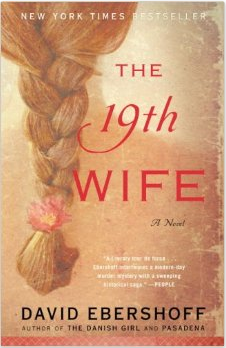
Cover for The 19th WifeBest Book of the Week!
The 19th Wife is actually two interleaved novels, one as interesting as the other. The novel that begins the book is a modern mystery. The novel that dominates the book, however, is historical, about Ann Elizabeth Young, Brigham Young’s 19th wife, whose lectures after she left the Latter-Day Saints were partially responsible for ending the authorized practice of polygamy within the church.

In the modern story, Jordan Scott is a young man who grew up with the Firsts, a fundamentalist Mormon group that still practices polygamy. At the age of 14, Jordan was booted out on his own because he held his stepsister Queenie’s hand. Jordan’s intentions were not amorous, because he is gay, but he realizes that the young men are ejected from the group so that the old men can keep the young girls for themselves.

Jordan is living in California when he reads that his father has been murdered and his mother, Becky Lynn, arrested for it. As his mother is a complete believer who actually dumped him out on the highway herself those years ago, he does not believe she murdered his father. The evidence against her is that another wife saw her coming from their husband’s room looking upset. Jordan’s father was texting someone just before he was killed and remarked that his 19th wife was at the door. That wife is Becky Lynn.

While Jordan tries to find out what happened that night, we read the story of Ann Elizabeth Young, a woman born into the Church of Latter Day Saints but who has always been clear on the evils of the practice of polygamy. This story is told through fictional excerpts from her autobiography, newspaper clippings, statements by Brigham Young, and other documents.

Ann Elizabeth begins with the story of how her own parents, once devoted to each other, were forced into polygamy by Brigham Young, and what pain it caused her mother every time her husband took another wife. This pain was amplified by the hypocritical ruling that the first wife had to accept all future wives into the household before further marriages could take place. Ann Elizabeth’s own first marriage is also marred by threats of polygamy, which her husband uses to manipulate her despite having promised before marriage not to practice it.

Well written and convincingly characterized, this novel is absolutely engrossing. Although I found the modern mystery interesting in its insights into fundamentalist Mormonism as currently practiced, I found the story of Ann Elizabeth’s life even more compelling. Ever since reading Jon Krakauer’s Under the Banner of Heaven, I have been fascinated by this subject.

Day 604: The Oxford Book of Victorian Ghost Stories

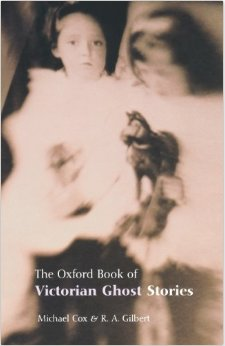
Cover for The Oxford Book of Victorian Ghost StoriesIn honor of Halloween, I decided to read this collection of 35 ghost stories from Victorian times, when they were very popular. This collection contains stories by well-known writers of the time, such as Charles Dickens, Mary Elizabeth Braddon, Wilkie Collins, and Rudyard Kipling, as well as those by other less-known writers.

First, I’ll comment that modern audiences probably won’t find them very scary. But I’m not so sure this has anything to do with the period or the ability of the writers. I think it’s very difficult to handle genre fiction successfully in a short story. Short stories seem to me to be more suited for literary fiction somehow. A few years ago, for example, I read a collection of mystery short stories but felt that the form didn’t allow much space to really develop an interesting atmosphere or characters. It merely allowed the author to pose a puzzle and a solution.

The Victorian ghost stories seem to observe a few conventions. Unlike the gothic stories from the preceding years, Victorian ghost stories are more homey and less likely to include oddities, fantastic events, or exotic settings. Many of them are presented as a person telling a story to one or more other people, often as an evening entertainment before the fire. Almost all of them involve haunted houses, which often seem to be leased to unwary renters at a suspiciously low price. (But I shouldn’t mock. I actually have a friend who found himself in precisely this situation.) Another common theme is a haunted object. In most of the stories, the worst thing that happens is that someone sees a ghost, although there are a couple that are a little more gruesome.

I found the story-telling approach a little tiresome after awhile and was refreshed by the ebulliant characters writing the letters in the epistolary story “The Truth, the Whole Truth, and Nothing but the Truth,” by Rhoda Broughton. “The Romance of Old Clothes” by Henry James and a few others also stood out. The collection even includes one vampire tale.

If you are looking for some chilling reading, you’re not really going to find it here. (Although I’ll suggest that any of these stories may be more successful if read out loud, preferably on a dark and stormy Halloween night.) However, if you are interested in the genre or the time period, you’ll probably find the collection worth dipping into.

Day 597: Neverhome

Cover for NeverhomeBest Book of the Week!
After some personal tragedies, Ash Thompson leaves the farm in Indiana to join the Union army and fight in the Civil War. Although the truth about Ash is not immediately apparent, I feel little hesitation in revealing that Ash is a woman, because the publicity for this novel makes that clear. Why she has chosen to leave her husband Bartholomew and go off to war is another matter.

Ash, who is tall and strong, shows herself to be a brave and obedient soldier, resourceful and a good shot. No one knows her for what she really is except a few women she sees in passing and her colonel.

This story is told by Ash herself in a very understated way. In fact, it is the voice of this novel, so distinctive, that makes it stand out. It is not until the end of the novel that we learn that Ash is not always a reliable narrator.

http://www.netgalley.comThis novel is beautifully spare and compelling, a wonderful portrait of a person who is more disturbed by violence and her personal tragedies than she appears to be.

Day 576: Indiscretion

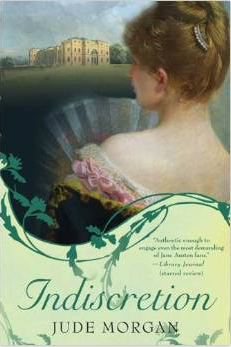
Cover for IndiscretionIn Regency London, Caroline Fortune and her ex-soldier father have been surviving at the edge of poverty for a long time. When her father reports that he has lost all his money in a bad investment, Caroline decides to look for work as a governess.

Soon, her father tells her he has found her a better situation, as companion to Mrs. Catling, the widow of her father’s former colonel. In his ebulliant way, he assumes Caroline could easily be left Mrs. Catling’s fortune. Caroline is not pleased with the situation, nor does she have any hopes of Mrs. Catling’s generosity, but seeing no other option, she takes the position. With no relatives other than her father to fall back on, as her mother’s relatives disowned her mother after her marriage, Caroline moves to Brighton to wait on Mrs. Catling.

Caroline soon learns that Mrs. Catling is demanding and petulant. She treats her servants harshly. When Mrs. Catling’s niece and nephew, the Downings, come to call, Caroline witnesses how her employer manipulates Matthew Downing with the promise of her fortune. Still, Caroline manages to get along with the Downings and Mrs. Catling fairly well, even receiving unwanted confidences from Matthew. However, her dependent position unexpectedly leaves her open to an insult from an unscrupulous man.

Re-opened contact with her relatives eventually removes her to an entirely new neighborhood and life, and she makes some new friends. After awhile, though, her experiences in Brighton return to haunt her.

I don’t often read romance novels and tend to stick to the older authors I love when I do. I have found no writer who can surpass Georgette Heyer in Regency romances. But a friend recommended this novel to me, and I found it quite entertaining. It does not seem simply a copy of Heyer as some other Regency novels have. The dialogue is witty. Once Caroline leaves Brighton she meets some endearing characters, and the plot is both complex and interesting. Caroline is an intelligent and engaging heroine. For some light, escapist reading, I recommend Indiscretion.

Day 567: Jack Maggs

Cover for Jack MaggsBest Book of the Week!
Jack Maggs belongs in a growing genre of fiction that reinterprets a classic novel. In this case, the novel works in two ways: as another look at Great Expectations from the point of view of a different character and as a loose work of metafiction.

Jack Maggs is a convict illegally returned from Australia when he arrives at the door of a gentleman named Henry Phipps, only to find no one at home. The maid from a neighboring house, Mercy Larkin, thinks he has come to the wrong house as an applicant for a footman position in her own. Maggs decides to take the position so that he can watch the neighboring house for Phipps’ return.

Maggs’ employer is Percy Buckle, once a grocer, who inherited some money and fancies himself a patron of the arts. That night Buckle entertains at dinner a famous author, Tobias Oates, who dabbles in mesmerism. During dinner, Maggs is attacked by a horrible pain in his face, which makes him collapse. Oates hypnotizes him in an attempt to cure him but also gets him to tell some of his secrets.

Soon the two are locked in a struggle. Oates has mentioned knowing of a thief-taker, whom Maggs wants to employ to find Phipps. Oates only agrees to give him the name in exchange for two weeks of allowing him to mesmerize Maggs. Oates, who has realized quickly that Maggs is a fugitive, wants to learn about the criminal mind for an upcoming book. But Maggs becomes dangerous when he learns Oates has found out his secrets.

This tale is really gripping and ultimately suspenseful. It is also very Dickensian in nature—in its storytelling, its empathy for the poor, its dark London atmosphere, its character names, and its rather convoluted but satisfying plot. Our sympathy is all for Maggs, who has built up in his mind a fantasy about Phipps, whom he educated and made a gentleman, and who he does not realize is hiding from him in dread.

Oates is meant to be Dickens himself, and he is depicted less sympathetically. He misuses Maggs in service of his writing, but he is not much more responsible toward members of his own family.

Although Carey won a Booker prize for Oscar and Lucinda, I think Jack Maggs is much more powerful.

Day 552: Dracula

Cover for DraculaHaving experienced other gothic classics of the 18th and 19th century, I was delighted to find Dracula unexpectedly readable. I was also surprised to find how little it resembles its many theatrical and movie productions, even those that attempt to stay closer to the original work.

All versions begin the same, however, with poor Jonathan Harker sent out by his office to Transylvania to complete a property deal with his client, Count Dracula. While staying at Dracula’s castle, he begins to suspect something is badly amiss and eventually fears for his life.

Back in England, his fiancée Mina Murray corresponds with and later stays with her good friend Lucy Westerna at a seaside town. In one day, Lucy has received proposals from three different young men, who all feature strongly in the novel. Dr. Jack Seward is in charge of a local insane asylum. Quincy Morris is a manly, amiable Texan, whom I feared all along was designed for a ghastly death. Lucy’s chosen is Arthur Holmwood, another manly young man who is soon promoted to a lordship by the convenient death of a benefactor. (I don’t think these things work this way, since Arthur is not his benefactor’s relative, but never mind.)

After a freakish storm, a Russian ship arrives unmanned at the port where Mina and Lucy are staying with Mrs. Westerna, who is gravely ill. As it arrives, a large dog jumps off it and runs ashore. Aboard is not a single live human. We horror aficianados know that Dracula has arrived.

While Mina waits for news of Jonathan, Lucy begins sleepwalking and behaving oddly. Dr. Seward makes notes about a patient who eats bugs and babbles about his master. Soon Van Helsing will be needed.

Unlike in most of the spin-offs, except for Jonathan Harker’s experiences at the beginning, Dracula is mostly an unseen menace for much of the novel. I’m guessing that the original readers did not necessarily realize the identity of that bat fluttering outside Lucy’s window.

In any case, the novel covers a lot more ground than does the standard remake. It is epistolary, written entirely as letters and journal entries. It is well written and moves along nicely except for the occasionally long-winded expulsion of pseudo-scientific mumbo-jumbo by Van Helsing or Seward. In the true gothic fashion, it is a classic battle of good versus evil, with the prize the soul of our heroine Mina.

Modern readers may be bothered by the depiction of the two women. Lucy is supposed to be a modern woman—who else would have three suitors at a time? She is both innocent and pure in herself and quite the seductive vamp when under the spell of Count Dracula. The men do a lot of harm to both her and Mina by trying to protect the “little women” from knowledge of what is going on. Again, try to judge the novel’s attitudes by the standards of its own time, when it was simply considered a whomping good tale.

Day 548: The Good Lord Bird

Cover for The Good Lord BirdBest Book of the Week!
Henry “Onion” Shackleford is a boy working with his father in a barber shop when John Brown and his followers ride into town. He relates his story many years later when he is more than 100 years old.

Henry and his father are African-American slaves living in the Kansas Territory near Laurence, a hotbed during the Border Wars, referred to as Bleeding Kansas. Brown has come to help the Free Staters, those who want Kansas to be free of slavery. But Brown’s ultimate goal is to rid the country of slavery, and he doesn’t care how he does it. In the resulting fight, Henry’s father is killed, and Brown “frees” Henry by kidnapping him.

Because, as Henry points out several times in his narrative, John Brown sees only what he wants to see, he mistakes Henry in his potato sack clothing for a girl. From then on, Henry is a girl as far as Brown’s followers are concerned, and Brown calls him Onion.

What follows is an an account of the deeds of John Brown, leading up to the assault on Harper’s Ferry. This tale is often cynical or ironic, boundlessly energetic, irreverent, and funny as well as touching. Brown is depicted as a sort of half-crazed, raggedy zealot, who is capable of stopping midway across a stream while being pursued by his enemies to pray for half an hour. Only his son Owen is brave enough to interrupt him and try to get him on his way.

Onion and other slaves they encounter are reluctant to be freed, afraid they’re going to end up in hotter water than they started. They have some cause. Onion, in fact, is almost always planning how he’ll escape the group and does so several times. But he always ends up back with Brown. His adventures lead him to residence in a whorehouse, a visit with Frederick Douglass (who gets drunk and tries to seduce “Henrietta”), and a more impressive meeting with Harriet Tubman in Canada. All the while, Brown attempts to “hive the Negroes” to revolt at the appropriate time.

The wonder is that with all this poking fun, McBride somehow manages to make us care deeply for John Brown and to honor his place as a trigger for the Civil War. This is an unusual novel—highly entertaining yet also deeply serious.

Day 545: Twelfth Night

Cover for Twelfth NightFans of the Lady Julia Grey mystery series will probably enjoy this novella, which seems as if it was written for Christmas even though published in June. It is a simple little holiday story, a bagatelle.

The Marches, Lady Julia’s family, have gathered together during the holidays to celebrate Twelfth Night. Every decade the family itself performs the Revels, which are attended by the countryside around. During the rehearsals, an abandoned baby is found in the stables.

Lady Julia’s father asks her husband Brisbane to try to find the mother, but Brisbane’s initial inquiries turn up nothing. Lady Julia has heard her young niece and nephew buzzing about a witch living in an abandoned cottage, and then Lady Julia catches her niece Perdita sneaking out at night to see the witch.

http://www.netgalley.comThis short piece doesn’t involve much of a mystery, but it is always enjoyable to spend time with Julia and Brisbane.