Review 1429: The Old Man’s Birthday

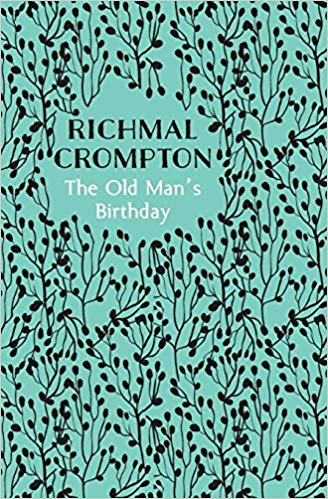
I’ve only read two books by Richmal Crompton, but she seems to be interested in studying the individual members of large families. In The Old Man’s Birthday, she focuses this interest around Matthew Rowston’s 95th birthday.

Matthew has led an exciting and sometimes disreputable life, but he married an extremely conventional woman and now lives in a village stifled by class consciousness and respectability concerns. To this birthday party, he has insisted on inviting his grandson Stephen, who is living with a married woman and has been cast off by most of the rest of the family. Part of Matthew’s motivation is a perverse desire to shock these family members, but when he meets Stephen’s partner, Beatrice, he is also reminded of a girl he loved when he was young.

This novel is about how the introduction of a single person into a group can change dynamics that seem fairly set. You may feel that a multitude of difficult situations are resolved too easily, but still, this is an enjoyable and touching novel. I read it for Classics Club and was glad I did.

Related Posts

Family Roundabout

Greenbanks

The Priory

Review 1428: The Children’s Book

I have an inconsistent reaction to Byatt. I find her novels either completely absorbing, as I did Possession, or perplexing, as I did A Whistling Woman. The very long novel, The Children’s Book, nevertheless falls into the first category.

Byatt’s novel takes on the late Victorian and early Edwardian periods, a time when, she says, adults seemed to be trying to prolong childhood, when, for example, Peter Pan made its appearance. Fittingly then, a major character is Olive Wellwood, a writer of children’s tales. She has many children, and aside from her authorly output, she writes a continuing story for each one of them. It’s her oldest son, Tom’s, misfortune that she confuses fiction with reality.

The novel begins when, on a visit to a museum with his mother, Tom notices a ragged boy and follows him to find he is living in a closet in the museum. This boy is Philip Warren, a worker in a pottery factory who has run away because he wants to make pottery, not feed fires and do other mundane tasks. Major Prosper Cain, the museum keeper Olive is visiting to consult, thinks he may be able to find a place for Philip, and Philip ends up working at Prospect House for the brilliant but disturbed potter Benedict Fludd.

But first we have the Wellwood’s elaborate Midsummer play, where we meet all of the important characters of the novel. The Wellwood’s guests are artists, anarchists, socialists, fellow Fabianists, and even a banker in the person of Basil Wellwood, the host Humphry’s brother. Of course, other guests are these people’s children, who eventually become important characters in their own right.

The novel covers the time from 1895 to the end of World War I, although the war is covered only briefly. Over this time period, Byatt not only tells us the stories of her many characters but also checks in to events in the lives of actual figures of the time, for example, Oscar Wilde, Emma Pankhurst, H. G. Wells, and Rupert Brooke.

This novel is interesting both on an intimate level, as the children discover their parents’ secrets and have their own, and on the broader, more ambitious level of a portrait of the age. There are casualties in this novel, and it is at times very dark, the way Olive likes her stories.

Related Posts

A Whistling Woman

C

Mrs. Engels

Review 1427: Dandy Gilver and a Spot of Toil and Trouble

Dandy Gilver receives a note from an old school friend, Minnie Bewer, asking for her assistance, but when she and her partner Alec Osborne arrive at Castle Bewer, what exactly the family wants is more difficult to ascertain. Whatever it is, it revolves around a missing necklace they call the Cutthroat and the disappearance 30 years ago of Bluey Bewer’s father, Richard.

Minnie Bewer wants Dandy and Alec to safeguard the castle while the Bewers put on a play. Bluey wants them to search for the Cutthroat and assure inland revenue that it is not in their possession before death taxes are assessed on his father’s 100th birthday. Ottoline Bewer, Bluey’s mother, wants them to find the necklace. To do that, Dandy reckons they must find Richard. There is a lot to do, and it must be done during the disturbance of rehearsing and performing the play Macbeth.

As usual with this series, there are lots of red herrings and a lot of confusion. That usually derails me, but this time I realized almost immediately the truth of one facet of the story, and I was right. Once I had figured it out, a lot became obvious.

Still, the Dandy Gilver mysteries are always fun cozies. The first one was set at the end of World War I, and this one in 1934, so it’s been a long-developing series.

Related Posts

Dandy Gilver and the Unpleasantness in the Ballroom

Dandy Gilver and a Deadly Measure of Brimstone

Dandy Gilver and a Bothersome Number of Corpses

Review 1426: The Wardrobe Mistress

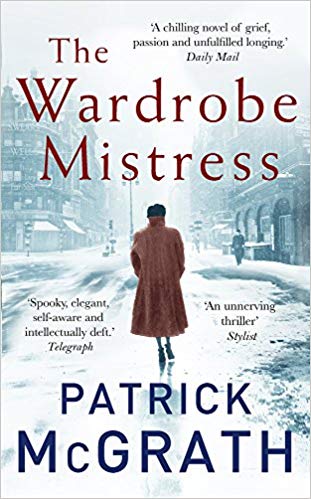
In post-World War II London during a cold winter, the famous actor Charlie Grice, called Gricey, has died. His widow, Joan, a wardrobe mistress, is bereft. When a young actor, Daniel Francis, takes over Gricey’s role as Malvolio and plays it exactly the same, Joan comes to believe that he has become Gricey.

As Joan is beginning to befriend Daniel Francis, or Frank Stone, his real name, she makes a horrible discovery about Gricey. Behind the lapel of one of his coats she finds a badge, the emblem of Britain’s fascist party. This is doubly horrible because Joan is Jewish. Asking around discreetly, she finds what everyone else knows—Gricey was indeed a fascist.

The stress on Joan becomes even worse as her friend Frank begins working with her daughter Vera on The Duchess of Malfi. Vera’s husband and his friend Gustl ask her to help them fight the fascists by infiltrating them.

This novel is written from an omniscient viewpoint with a first person plural accompaniment by the ladies of the chorus. This technique lends it a certain ironic tone. It’s a creepy and atmospheric novel that chills to the bone.

I read this novel for my Walter Scott Prize project.

Related Posts

Munich

Midnight in Europe

The Spoilt City

Review 1425: High Wages

Jane Carter is a young girl hoping to get a job in Tidsley so she can move out of her stepmother’s house. While her father was alive, she was educated and cherished, but since the age of 15, she’s only been tolerated in her home. In front of Chadwick’s shop, she sees a sign posted for a shop girl. This would be a good opportunity for her, because Chadwick’s is the best draper in Tidsley. And, as she is of genteel appearance, she is hired.

She is excited to get the job, although she slowly realizes its problems. The room above the shop where she must live is not very nice, but it seems fine to her, and her roommate, Maggie, is friendly. However, Mrs. Chadwick skimps on the girls’ food, and Mr. Chadwick sometimes cheats her out of her commission, taking it for himself. Worse, though, is his caution at change in the shop. Jane finds she is good at her job and has ideas that will make money, but Chadwick often won’t let her try them.

A difficulty she isn’t aware of, as Maggie and her young man, Wilfred, invite her out with them every Sunday, is that Wilfred is falling in love with her. She, herself, is attracted by a young man named Noel Yarde, but he is above her in class. Then, lives change as World War I begins.

This novel has an appealing heroine, naïve yet practical, and not to be beaten down. Its realistic portrait of the times, particularly as they change over a period of about eight years, is interesting. The flavor of the northern town, with its grimness and social barriers, is interesting, too. As usual with Whipple,, I enjoyed this novel very much.

Related Posts

They Were Sisters

Because of the Lockwoods

Greenbanks

Review 1423: Literary Wives! The Home-Maker

Today is another review for the Literary Wives blogging club, in which we discuss the depiction of wives in fiction. If you have read the book, please participate by leaving comments on any of our blogs. Be sure to read the reviews and comments of the other wives!

Eva of Paperback Princess
Lynn of Smoke and Mirrors
Naomi of Consumed By Ink

* * *

The Home-Maker is a reread for me, so let me just provide a link to my original review and then discuss our regular question.

What does this book say about wives or about the experience of being a wife?

Evangeline Knapp is a perfect example of a woman, like my mother, who was not suited to be a housewife, a kind of person not recognized in her time. Unlike my mother, who at home was the female equivalent of Lester Knapp at work, Evangeline compensates by becoming overzealous and overparticular in her housekeeping, making the immaculate home a miserable place for everyone, including herself.

In this ground-breaking work of 1924, the couple are forced to switch places, and Evangeline finds her place in life. At work in a department store, her efficiency and energy are appreciated, and because she enjoys the work, she loses her resentment. The Knapps change from a dysfunctional family to one that is much happier, because everyone is happy in his or her role. In  fact, to keep this happy solution in this chauvinist time, they have to come up with a rather shocking solution. The Knapps develop a true partnership in their marriage.

Literary Wives logoI like this novel because instead of depicting a family in stasis, it presents a problem that probably wasn’t much recognized in its time and shows how the family relationships improve as a result of its solution. The marriage evolves from a somewhat unhappy one to a happy one, and everyone is fulfilled. Lester understands Evangeline’s need for meaningful work, and he enjoys taking her position in the household, albeit not providing an immaculate household but a loving, slightly messy one. Evangeline’s sharp temper subsides.

In her way, Evangeline is a little more exaggerated version of Brenda in Happenstance, who began to have periods of anger before she took up quilting.

Related Posts

Happenstance

A Lady and Her Husband

The Awakening

Review 1414: Lilac Girls

I would like to say to some writers, If you are going to use multiple narrators (please don’t), they must have their own voices. If they don’t sound like different people, this technique doesn’t work. Unfortunately, either Martha Hall Kelly doesn’t know this or can’t do it. I’m not talking about expressed concerns or interests here but actual tone and mode of expression.

Lilac Girls reminds me very much of Salt to the Sea. If you remember my review of that book, you know that’s not a good thing. There’s the World War II setting, the alternating chapters with different narrators, one of whom is the evil Nazi. There is also the unconvincing narrative change, the poor characterization, and the mediocre writing.

Caroline Ferriday is a New York socialite who works for the French Consulate and is involved in charities to help French children. In summer of 1939, there are already lots of refugees fleeing from France. We guess she’s going to become involved in that; however, the first hundred pages of the novel concern her growing relationship with Paul Rodierre, an actor whose wife is trapped in France. Not very interesting, since Hall doesn’t get us to care about Caroline or Paul.

Kasia Kuzmerick is a Polish teenager living in Lublin. When the Nazi attack, she witnesses their planes firing on camps of refugees. Later on, she begins running errands for the resistance.

Herta Oberhauser is a young doctor who has bought the Nazi vision despite having difficulty getting a job because women are expected to be wives and mothers. She finally gets a job working at Ravensbrück, a concentration camp for women.

Not only did I think the characterization was poor, I felt the behavior of characters was at times unlikely. For example, Kasia is old enough to understand that her mother is being forced to have an affair with a Nazi, yet she makes a dangerous public scene with her about it. Herta is an ambitious doctor who cannot find a job because she is a woman, yet she buys the ideals of the Nazi party that is keeping her down.

I admit I did not finish this novel, which was taking a long time to get anywhere (another problem with such frequent switches in narration). I read about a quarter of the book then decided to quit wasting my time. The story of Ravensbrück is important, but this writer is not up to the task.

Related Posts

Salt to the Sea

All the Light We Cannot See

The Nightingale

Review 1412: Classics Club Spin Review! The Wise Virgins

The novel selected for me by the latest Classics Club Spin is The Wise Virgins by Leonard Woolf. This semi-autobiographical novel is partially about the courtship of Leonard and Virginia Woolf, in the characters of Harry Davis and Camilla Lawrence.

Harry and his family have just moved to the London suburb of Richstead and are shortly befriended by the Garland family, which has four unmarried daughters. Harry is disdainful of life in Richstead and of the fates of the spinster daughters, given up to good works or golf and tennis. The youngest daughter, Gwen, is naïve and gives undue weight to his discontented utterances. He amuses himself by giving her books and plays to read of Dostoevsky and Shaw.

In his art class, Harry is drawn to Camilla Lawrence, a cool beauty. When she invites him home, he finds it one of ideas and stimulating conversation. Camilla has suitors, but she is less interested in marriage than in a quest for self-fulfillment. She is repeatedly alleged to be passionless.

This novel was considered somewhat shocking in its time but was notable for examining the fates of conventional young women in Edwardian England. Harry is not a likable hero nor is Camilla very knowable. I personally did not like their glib and superior dismissal of whole classes of people. I always imagine the Bloomsbury circle snidely sniping at everyone else (and behind each other’s backs), and this novel didn’t make me rethink that idea.

This is probably taking the novel out of its time, but simply the continual reference to unmarried women by Harry as virgins irritated me to no end. He is so superior and supercilious. The introduction to the book says that “virgin” was synonymous with unmarried woman to Edwardians, but clearly for Harry there’s a sneer involved. One article I read calls Harry a truth-teller, but some of the things he says seem only designed to stir people up and make him seem more like eighteen than twenty-eight. Also uncomfortable for modern readers is the antisemitism that is accepted unquestioned by Harry and his family, who are Jewish.

Finally, there are lots of references to talking in this book, and for people who are looking for a purpose in life besides marriage and other predictable fates, they aren’t doing much actual acting. I think Woolf is pointing that out, though, by the chapter headings.

Related Posts

Mrs. Dalloway

To the Lighthouse

Flush: A Biography

Review 1408: Love Is Blind

Although generally speaking, I love William Boyd, I should have known better than to read a book named Love Is Blind. Even from the title, I could tell it was about a man who falls in love with a woman who is trouble, a plot that I hate. Although men love to write books upon this subject, most of the women incarcerated in the United States are there because of a man. Of course, it happens for both sexes, but a man enthralled by a lethal siren is the least of it and, for me, not interesting.

In 1894 Edinburgh, Brody Moncur is a piano tuner of significant skills. He is offered a position of assistant manager in his company’s Paris office which he takes, determined to get away from his controlling father.

In a promotional effort, Brody makes a deal with John Kilbarron, a famous pianist, to play only his company’s pianos. Soon, he has fallen in love with Lika, Kilbarron’s mistress, who is an opera singer. They begin an affair, and his life becomes a series of efforts to win her away safely from Kilbarron.

Disturbingly, we get very little sense of what Lika is like as a person. She serves pretty much as Boyd’s MacGuffin. The novel just focuses on Brody’s obsession and its consequences. It’s obvious that Lika has her secrets, and to me, it was even obvious what the major one was.

As well written as it is, I simply didn’t enjoy the theme of this book. As with Boyd’s other recent books, it takes in a sweep of history and visits many places while it meanders to its denouement.

Related Posts

Sweet Caress

Euphoria

The True Heart

Review 1401: The Muse

In 1967 London, Odelle Bastien has been making her way with difficulty. Although she is well educated, her race and origins in Trinidad are keeping her from getting a job. Then she gets a break. Marjorie Quick hires her as a secretary in an art institute and makes friendly overtures.

Odelle finds Quick mysterious. She asks Odelle about herself but tells her nothing. She does, however, encourage Odelle to write.

Odelle has also met Laurie Scott, a young man who is interested in being more than her friend. His mother has just died, leaving him only an unusual painting. To support himself, he intends to try to sell it. Odelle encourages him to bring it to the Skelton Institute, her workplace. When Quick sees the painting, she has a strong reaction to it.

In 1935, Harold Schloss, an art dealer, has fled Vienna with his family. Unfortunately, he has chosen Spain, which will soon be little safer, to flee to. His daughter Olive has been accepted at Slade, but she hasn’t told her father. He believes that women can’t be artists, just dabblers.

Olive meets Isaac Robles, an artist, and his sister Irene. Both are servants for the house the Schlosses are renting. Olive is struck by Isaac’s good looks and begins painting in a new style with vibrant colors.

The novel follows these two time threads as it explores the mystery of the painting. Who painted it, and how did it end up in London? How does Quick know about it?

I was struck by Burton’s weird and wonderful The Miniaturist, so much so that as soon as I finished reading it, I bought this book. I found The Muse to be a bit more mundane, with few surprises. For a long time, I was much more interested in Odelle’s section than Olive’s, particularly because Olive makes a decision about her art that I found shocking and unbelievable. In theme, this novel is similar to The Blazing World, and in an action taken by an artist, but with a crucial difference.

Also, like some other bloggers, I am wearying of the dual time-frame format. I am beginning to think it is a little lazy. After all, it seems easier to write half a book about two historical time periods (or one depending upon the time chosen for the more recent period) than a whole book about one. One of the delights of The Miniaturist was how it immersed me in the period. This novel doesn’t really do that.

Mind, it’s not a bad novel, and many people will like it. I just found it a disappointing follow-up to Burton’s first book.

Related Posts

The Miniaturist

The Blazing World

The Clockmaker’s Daughter