Review 2497: Novellas in November! School for Love

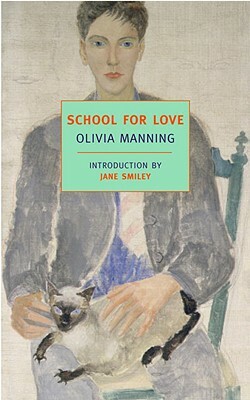
This year, I thought I’d try to pop some novellas into my October reading so that I could participate in Novellas in November, hosted by Bookish Beck and Cathy of 746 Books. I actually read School for Love for my Century of Books project, but was delighted to see that at 191 pages, it qualified for this one, too.

Felix Latimer arrives during a snowstorm in Jerusalem from Baghdad. He is newly orphaned, his father having been killed during the war (WW II) and his mother having recently died from typhoid. So, he is being taken in by a family connection, a woman named Miss Bohun who runs a boarding house, until he can get on a boat to England. The war is winding down, but at this point places are reserved for soldiers and government personnel.

Felix is in his mid-teens, but for a long time I took him for much younger. He has been taught by his mother to look for the good side of people, and he is disposed to be grateful to Miss Bohun, but readers see her another way right from the beginning. Although she runs a fringe religious organization and talks about good works, early on she sits down with Felix to figure his share of expenses and while adding up her household expenses, includes some things twice, then remarks that they should divide the costs in half even though she has another boarder (although admittedly, he is very poor and we don’t know how much he pays). Even so, his half of £36 mysteriously ends up at £21, leaving him pocket money of only a few pounds a month. (Later, she tries to raise the rent to take the full amount.) She also feeds the boarders poor and scant food.

At first, Miss Bohun confides in him and he is confusedly willing to take her part in her concerns. Although we learn that she has stolen Frau Leszno’s house and furnishings from her by putting the house into her own name to “protect” it, and actually uses Frau Leszno as a servant, Felix is ready to take Miss Bohun’s part because Frau Leszno seems so unpleasant. He likes Mr. Jewel, the other tenant who lives in the attic, but he still takes Miss Bohun’s part when she tells him he has to leave the next day, even though he has nowhere to go. (He ends up in the hospital.)

Miss Bohun is scheming, we find, to oust Mr. Jewel and move up into his attic herself so that she can rent her room to Mrs. Ellis, a young widow. Once Mrs. Ellis appears, Felix is smitten, and he begins to see the other side of Miss Bohun after taking in Mrs. Ellis’s sarcastic remarks. We eventually learn that Miss Bohun has promised Mrs. Ellis the whole house in the fall, a promise she has no intention of keeping. In fact, we realize all along that she has been trying to replace her tenants with more wealthy or prestigious ones, with the idea of getting more rent.

Although there is some action, most of the novel is concerned with the interactions among these characters and a few more. Felix begins to wake up to some realities.

The portrayal of Miss Bohun is a masterly one as we note her constant hypocrisies. As for love, although Felix begins with a crush on young Mrs. Ellis, it’s only really between Felix and a little cat, Faro.
Related Posts

The Great Fortune

The Spoilt City

Friends and Heroes

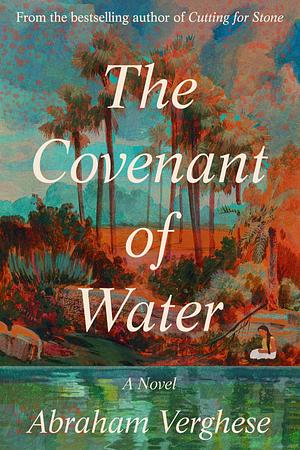
Review 2496: The Covenant of Water

In 1900, a 12-year-old girl, later known as Big Ammachi, travels to meet her future husband and marry him. Almost immediately after her father died, her uncle married her off. She is lucky, though, because her thirty-some husband makes no effort to consummate the marriage until she is 19. In the meantime, she acts as a mother to his little son Jo Jo and takes care of the house.

Although they live in southwestern India, on the Malabar Coast, an area where people are constantly in boats or on the water, she notices that her husband and Jo Jo avoid the water. It is not until Jo Jo dies in a tragic accident that she learns some members of her husband’s family suffer from the condition of disorientation in water that often results in drowning.

In 1933 Madras, Digby Kilgour, a Scottish surgeon, arrives to take up a position at the hospital. Although he was at the top of his class, he has found that his origins as a poor Glaswegian have kept him out of the positions where he can work with a more experienced surgeon. At the urging of one of his professors, he has applied for a position in India.

He finds fairly quickly that his superior, Claude Arnold, is incompetent, so he begins spending time at another hospital, working with an Indian surgeon. He falls in love, however, and this ultimately results in tragedy, turning his life toward a different direction.

Verghese takes his time, introducing many characters and stories and taking the reader through two more generations to the 1970s. He moves between these stories, eventually linking them.

Verghese is an enthralling story teller. Although on occasion he gets a little too deep into medical topics, for the most part, he gets us involved, depicts vivid sights and smells, and carries us along with his tale. Like those of some other writers of Indian descent that I’ve read, his tales loop and branch, but they eventually converge and resolve.

Related Posts

Cutting for Stone

Sea of Poppies

The Glass Palace

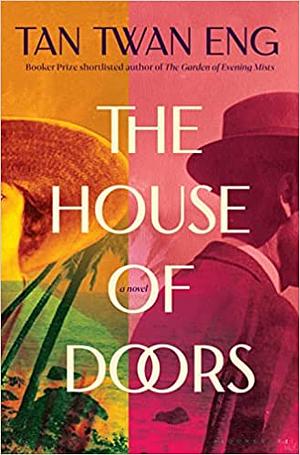
Review 2495: The House of Doors

In 1947 South Africa, shortly after her husband Robert’s death, Lesley Hamlyn receives a package that has come a long way, through circuitous routes, to find her. It has no note and does not say who sent it, but it is a book written by Somerset Maugham more than 20 years ago.

This gift returns her memories to 1921, when she and Robert lived on the island of Penang and were visited by Maugham. The point of view shifts to that of Maugham, who soon learns that his broker has gone under and lost all his money. Although he is dreading his wife’s reaction from England, he is more afraid that Gerald, his secretary and lover, will leave him if he is broke.

He and Lesley begin to get to know each other. Eventually, she tells him about her life 10 years before. On the same day that she heard her best friend, Ethel, had been arrested for murder, she also learned her husband was having an affair.

Tan skillfully weaves the story of Lesley’s relationship with Ethel and the trial with her experiences resulting from meeting Dr. Sun Yat Sen, who has been attempting the overthrow of the Manchu dynasty in China. Lesley begins helping his organization translate its brochure and eventually has an affair with a Chinese man. They meet in the House of Doors.

I was interested in all these stories and although I know very little about Maugham, I spotted the seeds of more than one of his stories in them. For example, Ethel’s story is very similar to that of The Letter, which I am familiar with because of the movie with Bette Davis.

As much as I enjoyed The Garden of Evening Mists, I think I liked this novel even more. Although I read it for my Walter Scott Prize project, I probably would have read it anyway.

Related Posts

The Garden of Evening Mists

The Ten Thousand Things

The Glass Palace

Review 2491: The Book of Lamentations

When I put this novel on my Classics Club list, I was looking for a few classics written originally in a foreign language. So, I chose this novel without knowing much about it.

It is set in Chiapas, a remote state in the far south of Mexico. At first, you might think it is set in the 19th century, but it is actually set in the 1930s, at a time when Mexico began to exact reforms that would return portions of the wealthy ranches to the native population.

One of the first images that indicates the treatment of the native population is that of travelers sitting in chairs that are strapped to Indians, who carry the people through the mountains. (I’m using the term “Indian” because the book does.) The Introduction says that Castellanos experienced this as a child.

I was confused at first, because the novel starts out with one group of people only to switch to another and another before bringing their stories together.

Although other characters are introduced first, the action starts with Marcela, a young native girl, traveling into the city of Cuidad Real to sell pots. She is told by a Ladina woman to bring the pots to her house. What she doesn’t know is that Doña Mercedes is a procuratress, and Mercela ends up being raped by Don Leonardo Cifuentes, who likes them young.

Returning home, she is rebuffed by her parents until she is taken under the wing of Catalina Díaz Puilgir, an ilol (sort of a sorceress) and her husband Pedro González Winiktón. She is made to marry Catalina’s brother Lorenzo, a man of limited intellect, and eventually has a child. And that’s all we see of her until much later.

Suddenly we switch to Cuidad Real and the lives of the Ladino characters. Leonardo Cifuentes, a wealthy rancher, is married to Isabel and probably murdered her first husband. Her daughter, Idolina, has taken to her bed since her father’s death. Leonardo has been courting a newcomer to town, Julia Acevedo, the supposed wife of Fernando Ulloa, the engineer who has been sent by the government to survey the ranches in preparation for the land reforms.

So far, Julia has avoided Cifuentes’s advances and made friends with his daughter. Her attempts, however, to be accepted by the rest of the Ladinas in the upper classes are unsuccessful. Instead of staying properly at home, she walks around town with her red hair flowing, earning her the nickname “La Alazana.”

The real issue in the novel is the land reform, which the ranchers oppose. However, an excuse for violent action comes when Catalina finds a cave with ancient stone figures in it. She gains a large following among the Indians by falling into trances in the cave and making utterances. The ranchers use the excuse of the large gatherings to claim that the Indians are planning a revolt. And violence eventually follows.

The novel is acerbically written, with no totally likable characters but with sympathy for the Mayan outcasts, who don’t really understand what is going on most of the time. They don’t understand the language or the mode of thought of the Ladinos, and when questioned later by authorities, since they don’t understand the questions, they just answer yes or no at random.

This novel was difficult to read. It wasn’t just the subject matter but more how the novel would jump to a new set of characters and tell a lot about them only to have them vanish for many pages. I may have also had problems because I was on vacation and then sick while trying to read it. But I was determined to finish it, and did. Although the novel is sympathetic to the native peoples of the area, to the modern eye it is also patronizing.

Related Posts

Mexican Gothic

The Bridge of the Gods

Black Narcissus

Review 2487: The Heaven and Earth Grocery Store

In 1930s Pottstown, Pennsylvania, the Jewish residents are beginning to move away from the Chicken Hill neighborhood where they’ve always lived with their Black neighbors. But Chona Ludlow refuses to leave the Heaven and Earth Grocery Store that her father established even though her husband Moshe would like to live in a neighborhood where the streets aren’t muddy and there is running water and sewage.

Chona is beloved by most of her neighbors for her kindness. She runs a tab for anyone who needs it and hands out marbles and small toys to the neighborhood children.

There is always some kind of trouble on Chicken Hill. Chona herself constantly writes letters to city officials complaining of unfairness to various Jewish or Black residents. But trouble from higher up arrives when Moshe’s trusted friend and employee, Nate Timblin, and his wife Addie take in his 12-year-old deaf nephew Dodo, whose parents have died. The trouble starts when Dodo stays out of school because he can’t hear the instruction and is being mocked. Officials decide to institutionalize him by placing him in a horrible insane asylum called Pennhurst under the assumption that since he can’t hear, he’s an idiot.

Nate, who is Black, asks Moshe if he will hide Dodo at the store. So Dodo moves in and helps out at the store and hides in the cellar if the authorities come by. But word gets out that Chona is hiding Dodo.

A combination of criminal and tragic events result in Dodo being caught. Can he be rescued from forces against him, including the racist Doc Roberts, a prominent member of society and also of the Ku Klux Klan?

McBride tells a great story, peopled with lots of colorful characters. There’s a lot going on in Chicken Hill, and it makes for fun and sometimes touching reading.

Related Posts

The Good Lord Bird

Kill ‘Em and Leave: Searching for James Brown and the American Soul

All Aunt Hagar’s Children

Review 2486: A Chelsea Concerto

A Chelsea Concerto is Frances Faviell’s memoir of the Blitz. Although I have now read several memoirs and novels set during this time, this one is remarkable for its integration of war news and its detailed descriptions of air attacks and their results. Faviell lived in Chelsea during the Blitz—an area that was very hard hit—and the book ends with a massive bombing of the area.

The book begins before the official war, with Faviell getting involved with working with Belgian refugees because of her ability to speak several languages. It continues to follow events of the war and the Blitz. It’s so detailed as to indicate that Faviell must have notes or diaries to refer to, as the memoir was not published until 1959. The descriptions of damage caused by the bombings is very vivid.

Unfortunately, Faviell often assumes knowledge on the part of readers that they may not have, either because it was common knowledge at the time or that it was so familiar to her that she didn’t think it needed explaining. This problem includes unexplained abbreviations, people identified only by name with little context, and at the end of the book, a mysterious reference to some event three years after the events of the memoir.

Also, there are lots of people mentioned in the book but characterization of only a few of them. This led me sometimes to be confused about who they were.

Related Posts

Table Two

The House Opposite

Spam Tomorrow

Review 2478: Village Story

Like Buckmaster’s Family Ties, Village Story presents us with lots of characters and we begin slowly to sort them out and differentiate them. Buckmaster, who frequently speaks directly to the reader, states that Mrs. Ethelburger is her heroine, but Mr. Noyce gets more attention.

The novel begins with the Darlingtons because they have the nicest garden in the village, but it’s only their daughter Linda who has a minor role in the story. Linda, we’re told, having been pronounced “gifted” in school, has been spoiled. Hoping to keep her out of trouble, Mrs. Darlington takes her up to the big house in the village, the Noyce’s house, and gets her a job as a housemaid. There, she proceeds to make trouble by telling everyone that Mr. Noyce has been making love to her in the drying cupboard. This is a lie. In fact, Mr. Noyce is hardly even polite to her. But from a 21st century viewpoint, this minor plot is troubling on lots of levels, not least of which is the author’s attitude toward girls’ education. We must try to view it in the context of its time, where these views were not unusual.

Next, we briefly meet Mr. Noyce, who led a cosmopolitan life before settling down in the village on the family estate after his father died. Mrs. Noyce is an artist, one whom Mr. Noyce believes could become great, so he encourages her to keep painting. Even though that’s what she wants to do, her relationship with Mr. Noyce is on edge, and she seems to be rude to everyone. Of course, the village thinks she shirks her household duties.

Mrs. Ethelburger isn’t much interested in household duties, either, and since she has several small children, her house shows it. We’re told she and Mr. Ethelburger love each other, but he isn’t much of a character in the novel, and she is just breaking off an affair with Mr. Browning, a young businessman who lives with his mother. Mrs. Ethelburger used to visit old Mr. Noyce, so one day she wanders onto the property—now much more private—and strikes up a friendship with Mr. Noyce.

Also in the village are the Sparks, the rector and his wife, an elderly couple. He tends to be studious while she has decided to become a Communist without really understanding anything about Communism.

The novel only has the suggestion of a plot, mostly about the party the Noyces decide to have and the fate of the Noyce’s marriage. But somehow Buckmaster ties it all in with the fate of the village itself. I was interested in the story but sometimes couldn’t remember who all the characters (many more than I described) were and wondered where it was going.

Related Posts

Family Ties

A House in the Country

Near Neighbors

Review 2477: The Time of Women

In 1950s Soviet Union, Antonina has a child out of wedlock. She is lucky to be allotted a room in a house with three old ladies, making a deal with them to cook and clean if they’ll take care of the baby while she’s at work at the factory. The deal becomes even more important when they realize Suzanna isn’t talking at the right time. They all become terrified that the girl will be institutionalized or at least that Antonina will be forced to take her from one doctor to another.

So, Suzanna stays out of school and the grannies teach her to read and write and even to understand French. She imbibes Russian fairy tales as well as some strange beliefs and superstitions, and the grannies sneak her to church to have her baptized.

All goes well until a man at work, Nicholai, starts paying attention to Antonina. Although they have done nothing but have tea, the union people at work assume they are having an affair and begin pressuring them to get married.

Then the situation turns serious. Antonina has cancer. How will the grannies be able to arrange to keep Suzanna after Antonina dies?

This novel effectively depicts the poor living conditions and the uncertainty of life in Soviet Russia, where the state can become involved in the details of anyone’s private life. The narration moves from person to person, and a lot of action is conveyed in somewhat elliptical dialogue, so I wasn’t always sure what was going on. Dreams and stories are also given a lot of importance.

I found the ending, which is another story, fairly unsatisfying, though.

Related Posts

A Mountain of Crumbs

A Train to Moscow

Sofia Petrovna

Review 2476: Hungry Ghosts

I feel safe in saying that if I wasn’t reading Hungry Ghosts for my Walter Scott project, I wouldn’t have read it at all. It is absolutely brutal.

In 1940s Trinidad, Krishna lives with his family in the Barracks, run-down ex-military barracks that are leaky and filthy, where five families live in each building, one to a room. Krishna’s father Hans has aspirations for better and insists that Krishna attend school in the village, but there he is mercilessly teased and bullied by other students as well as teachers. Krishna and his cousin Tarak have begun to hang with two twin brothers, Rudra and Rustrum, who have a bad reputation because their father was a murderer.

Hans works for Dalton Changon, a prosperous man. Changon’s wife Marlee has recently noticed some disturbing changes in his behavior—a heightened paranoia and a tendency to hallucinate. Then he disappears during a night when there’s a terrible storm.

Marlee receives a threatening note, so she offers Hans a large amount of money to stay on the property overnight as a guard. He accepts, thinking to save a down payment on a house. However, soon he is involved in a torrid affair with Marlee, not even returning to his home when his wife, Shiveta, is hospitalized for an infected foot.

Meanwhile, Krishna, defending himself from some village boys who try to drown Tarak’s dog, injures Dylan Badree. Because Dylan’s father is a policeman, Krishna is put in jail and is only released after Marlee’s intervention. But the boys’ feud begins to go in evermore dangerous directions.

This book contains graphic descriptions of drowned dogs and murdered dogs and the killing of a rabbit. Everyone in it who seems like a good person either becomes bad or is victimized. The language of the book is impressive, but sometimes Hosein uses such obscure words that it seems pretentious. Hosein certainly describes a vivid world, but it’s not a place I wanted to be in.

Related Posts

Fortune

A Brief History of Seven Killings

The Cold Millions

Review 2474: North Woods

In early colonial days, a couple flees one of the colonies into the wilderness of Massachusetts. There, they settle in a valley.

A settler with a baby is kidnapped by natives. When she becomes ill with fever, they leave her with an old white woman, who cares for her. But when white men come after her and plan to kill the natives—the old woman’s friends—she murders them. Before this happens, one of the men gives the captured woman an apple, and she drops the seeds on the ground.

An apple tree grows.

After the French and Indian Wars, Major Charles Osgood gives up his uniform and decides to grow apples. His friends think he has lost his mind. He searches all over until a child leads him to an apple tree near a ruined cabin in the wilderness. The apple is marvelous. He builds a house and takes cuttings from the tree to make an orchard, producing an apple called Osgood’s Wonder.

So Daniel Mason goes on relating the history of this plot of ground, from one owner to another. People die, are murdered, are conned, become ghosts, run mad, the wilderness recedes and then returns, the house is ruined and rebuilt, added to, ruined, rebuilt. Each section is linked to others by characters, coincidences, and place. Some of the incidents are funny, some fates are sad, some characters get what they deserve. Tales are punctuated by songs written from the grave.

I can’t really convey how much I enjoyed reading this unusual novel. It’s steeped in the beauty of the forest. It somehow manages to involve you despite some quite short (some longer) stories of its characters. You get worried about the fates of apple and chestnut trees! I loved this one. It did exactly what a book is supposed to do, pulled me into a different world and made me reluctant to leave it.

Related Posts

The Overstory

The Orchardist

Ulverton