Review 2473: My Father’s House

Helen of She Read Novels has posted a note about Readers Imbibing Peril (RIP XIX), which I always forget about but usually participate in. As somewhat of a suspense novel, My Father’s House qualifies, so let this be the start of my participation this year. Most of the action is on Instagram at @PerilReaders, but I am not a great user of that.

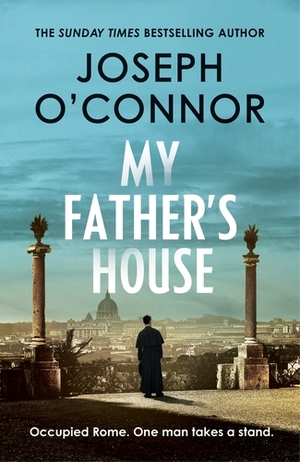
My Father’s House is a book I read for my Walter Scott project, and it is also the first in O’Connor’s Roman Escape Line trilogy. It is based on the true story of the Escape Line, a group of people who helped captured soldiers and others escape from the Nazi occupation of Rome. In particular, it focuses on Monsignor Hugh O’Flaherty, one of the group’s founders.

After Rome is overrun by the Nazis, the Vatican gives Monsignor O’Flaherty a duty of ministering to British soldiers in Nazi captivity. Being an Irishman, he isn’t eager to do this duty. However, when he sees the condition of the men and the ease with which the Nazis break the Geneva Conventions, his manner to the Germans is such that he is removed from the duty. In this way, he comes to the attention of Obersturmbannführer Paul Hauptmann.

O’Flaherty then decides to form a group to help soldiers escape from the Nazis. The group becomes successful enough that Hauptmann begins receiving threatening communications from Himmler.

Much of the novel centers around a Rendimento, as the Choir, the central group that runs the Escape Line, calls their missions. The group has planned its mission for Christmas Eve (1943), thinking that Hauptmann won’t expect it, but in the last few days, Sam Derry, an escaped British major who would normally run it, is incapacitated. They begin training Enzo Angelucci instead.

The main focus of the novel is whether the mission will be successful, but the narration travels around in time and person via transcripts of interviews of several of the participants. In some respects, this structure is interesting, helping you get to know the other characters, but they didn’t all have distinct voices, and you didn’t get to know them well. There is also the disadvantage that the approach tends to interrupt the building suspense.

I thought the novel was very interesting in its subject matter. I’d never heard of the Escape Line. However, as the first of a trilogy, I’m not sure how much more there is to say, even though no doubt there are many adventures to recount. I didn’t feel as if I got to know most of the characters in the novel, not even the Monsignor.
Related Posts

Ghost Light

Shadowplay

Munich

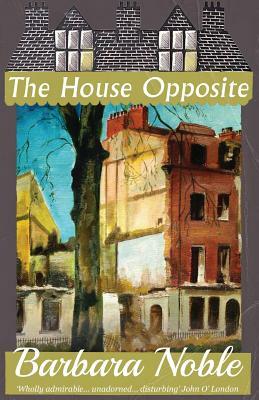
Review 2463: The House Opposite

I didn’t like the main character of The House Opposite at first. Elizabeth is having an affair with her boss, a married man with two children, and she sees his wife and children only as people who get in the way of her happiness. She’s dating a young serviceman, Bob, simply to hide her affair. She apparently referred to the boy across the street as a “pansy” in his hearing, and the remark has made him doubt his sexuality.

Nevertheless, she’s friendly to her coworkers and as she begins to help with the war—working as a warden and helping in the hospital—she begins to grow on me. As warden, she is partnered with Owen, that same boy she insulted, and it is the developing friendship between the two that is a focus of the novel—that and her own self-evolution.

One of the interests of this novel is the detailed descriptions of what it was like to live through the Blitz in London. Although other novels recount an incident or two, most of the characters in this novel have chosen to stay in London and sustain many attacks, most of them even staying in their homes and feeling a little superior to those who seek shelter.

Although Elizabeth takes a long time to recognize that her lover is a stinker, she otherwise shows herself to be quite likable. There are a lot of themes, involving Owen growing up, Elizabeth humanizing her lover’s wife and children, Owen’s father’s involvement in the black market, and so on.

Related Posts

The Midnight News

Company in the Evening

Spam Tomorrow

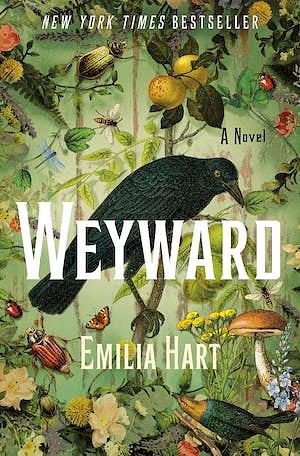
Review 2462: Weyward

Bookish Beck has a meme called “book serendipity” where she finds things in common between books she’s read recently, and I have a doozy. Not to give too much away, but this is the second book I’ve read in two weeks where women decide that the only way to deal with their abusive husbands is to murder them.

This novel is set in three time frames. In 1619, Altha is being tried for witchcraft. In 2019, Kate has discovered she is pregnant, so she has decided she must leave her abusive boyfriend, Simon. She has inherited a cottage from her Aunt Violet that he doesn’t know about and she has quietly saved some money, so she goes. In 1942, Violet has grown up isolated, not even allowed to go to the village and never told anything about her mother. At 16, she is jealous of her brother Graham, who is allowed to study interesting topics while she is forced into a traditional feminine role. She wants to travel the world and study bugs, but her father has apparently already chosen a husband for her.

Back at the cottage, Kate begins looking into her family history, into the women who called themselves the Weywards and have an unusual connection to animals.

This is an interesting novel with supernatural overtones that are fairly slight. I was interested in all three stories, although I found the outcomes of Altha’s and Kate’s stories fairly easy to guess. In this novel, I wasn’t as disturbed by the husband murder as I was in the other novel, in which I thought the wife could have easily gotten away. In any case, almost all the men in this novel are rotten to the core. So yes, I liked this novel fairly well.

Related Posts

Recipe for a Perfect Wife

The Harpy

The Family Upstairs

Review 2461: Agatha Christie: An Elusive Woman

I usually take much longer to read a work of nonfiction vs. fiction—up to a week as opposed to two or three days—but such was the power and readability of historian Lucy Worsley’s prose that I was astonished to finish this book one day after I started it. Of course, many people may want to know about the days Christie was missing, and she deals with that, but there is much more.

Christie lived an interesting life, and Worsley tells us about it, from the pampered, loved child of wealthy parents, to the loss of her father and the family fortune when she was 11, the World War I nursing and dispensary work, the ill-planned marriage to Archie Christie, and so on. Worsley’s main message is that Christie understood people to hide their actual selves and she presented her own masks, as well as evolved during her life into different personas. That was why she presented as shy when she had a lot of self-confidence, why she said little about her disappearance, why she told everyone she was a housewife rather than an author, and so on.

I’m fairly sure I have already read a biography of Christie, but this one was much more interesting. It is written in a lively style but looks thoughtfully at some of the problems posed by other writer’s remarks, and is thoroughly documented.

Related Posts

Agatha: The Real Life of Agatha Christie

Jane Austen at Home

The Secret Rooms

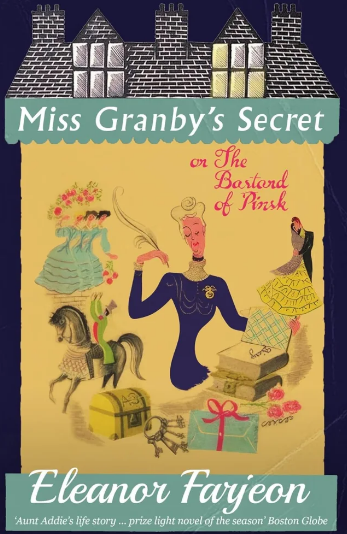
Review 2458: Miss Granby’s Secret or the Bastard of Pinsk

I was thrilled to learn that Dean Street Press was continuing its Furrowed Middlebrow imprint. This novel is an entertaining entry in that line.

In 1912, Pamela receives a bequest from her great-aunt Addie Granby of a house and a box of keepsakes and papers. Aunt Addie had been a well-known romance writer, but her modern great niece doubts that her spinster aunt ever understood the facts of life. Pamela finds hints that Addie had a romance when she was 16 with someone named Stanislaw. She also wrote her first novel.

The entirety of the novel, entitled The Bastard of Pinsk, is included within this novel. It begins with a conscientious list of terms that some polite young man has given her definitions for. As an example, “bastard” is given as “a very noble Hero of Royal Blood.”

The novel within the novel is made funny by the naïveté of its author, who writes in a Romantic, florid style and flings about words she doesn’t know the meaning or connotations of. Her Romantic upbringing and reading in the Gothic tradition are manifest in the ridiculous plot. If I have any criticism, it’s that it’s a bit too long. However, it picks up as it goes along.

Twenty years later Pamela learns that her friend Adey has been nursing an old man—her Aunt Addie’s Stanislaw! Now, she thinks, is her opportunity to find out about Aunt Addie’s past.

I received this book from the publisher in exchange for a free and fair review.

Related Posts

Beneath the Visiting Moon

Anne of Green Gables

My Brilliant Career

Review 2457: Westwood

Margaret Steggles is a girl who yearns for beauty in her life. She is a schoolteacher moving to London for a new job, and she has been taught by her mother not to expect marriage. She tends to drift into reveries when contemplating beautiful scenery, literature, or music.

A small accident brings her into the chaotic household of Hebe and Alex Nislund. She finds Hebe beautiful but rude and is disappointed by Alex, who is a famous painter, because he seems so ordinary. Their housekeeper, Grantey, learning where Margaret lives, walks her home, because Grantey is returning to her primary place of employment, where she is an old retainer of Hebe’s parents, the celebrated playwright Gerard Challis and his wife Seraphina. Grantey invites her to stop by to visit at their home, Westwood, which is just up the hill from Margaret’s Highgate neighborhood.

A famous playwright is heady stuff for Margaret, who loves Challis’s plays. Although she doesn’t drop in on Grantey, she meets Zita, a German refugee and servant from Westwood, in the hardware story trying to find someone to mend a fuse before a party begins. The store can’t help, but Margaret can. She meets Gerard Challis and is struck by hero worship.

But Gerard is a pompous, humorless, unaffectionate, and selfish man who delights in carrying on chaste affairs with beautiful young women until they become demanding, at which point he dumps them without ceremony. He has coincidentally set his eye on Hilda, who just happens to be Margaret’s best friend. Hilda has plenty of admirers, though, and isn’t impressed, even though he is clearly wealthy and has told her he is single and his name is Marcus. This rejection of course makes him more eager.

Margaret is accepted into the Challis household as a friend and visitor, especially after the Nislund house is bombed and they all move in, too. Margaret enjoys being there even though they mostly treat her as a convenient person for helping take care of Alex and Hebe’s three small children. Margaret’s friendship with Zita can also be difficult because Zita is volatile, but they go to beautiful concerts together.

Margaret has also started helping John, a coworker of her father. He has been struggling to care for his mentally challenged daughter while his housekeeper is ill.

This novel made me laugh out loud sometimes, especially at the descriptions of the plots of Challis’s plays. The introduction tells us that Challis is based on a real person. I’d like to know who! (It turns out to be some guy named Charles Morgan.) In other respects, I really enjoyed this novel about Margaret’s development in self-respect and her shedding of her romantic myopia. This is a good one!

Related Posts

A Pink Front Door

Nightingale Wood

The Swiss Summer

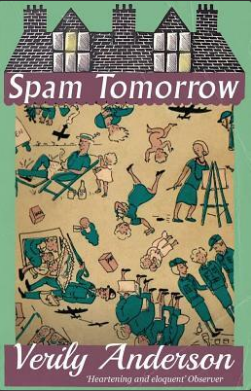
Review 2455: Spam Tomorrow

Spam Tomorrow is Verily Anderson’s memoir. Although it briefly hits other times of her life, it concentrates on the war years and ends shortly after D-Day.

The book begins with Anderson’s marriage to Donald, an event not encouraged by her parents because of his lack of wealth and an age difference that is unstated but I figure has to be at least 20 years.

At the beginning of the war, Verily, having already been warned off Donald , volunteers as an ambulance driver. At first, the drivers mostly just wait around to be dispatched, and later, she is erratic in her actual attendance at this job, getting very sick and later going off when she feels like it. She keeps running into Donald, though, who is found unfit for the military because of physical reasons and instead is working for the Ministry of Information. Finally, they decide to marry.

Most of the book has to do with the struggles—sometimes serious ones but related in a lighthearted manner—of living in London during the Blitz, of a difficult pregnancy, of motherhood, and of problems trying to find a suitable home to raise children when you’re not well off and being bombed.

Again, although sometimes concerned with serious problems, like Verily’s difficult first childbirth and subsequent illness, the memoir is related in a lighthearted manner and is often amusing. It provides yet another angle on British life during the war.

Related Posts

One Woman’s Year

Mrs. Tim Carries On

The Midnight News

Review 2454: The Shutter of Snow

The Shutter of Snow is a remarkable work. It is Emily Holmes Coleman’s only novel, written after she was interred in a mental hospital for postpartum psychosis. As you can imagine, therapy in the 1920s was not sophisticated.

Sometimes Marthe Gail believes she is God, sometimes Jesus Christ. She thinks her husband and the doctors are keeping her baby away from her, or maybe she didn’t have a baby. Or maybe he is dead.

She is injected in her spine, wrapped in sheets and submerged in water for hours. Imprisoned under a canvas sheet with only a hole for her face.

She makes improvements and is moved to a freer ward, gets in a fight with a patient or hangs like a monkey from pipes or dances naked through the ward and is moved back. She begs to see her husband but then is angry with him when he comes.

Her story is told from her own point of view, which is sometimes angry, sometimes hallucinogenic, sometimes filled with humor. The writing style does not break out speech from thought, so it is occasionally briefly confusing, but propels the reader along with it.

Related Posts

Down Below

Turtles All the Way Down

Zelda

Review 2443: After Sappho

I read After Sappho for my James Tait Black project. It is experimental, written in short vignettes that jump around in time and from person to person. It tells the stories of lesbian women, mostly literary figures, trying to make a place for themselves. It begins in the late 19th century with women fascinated by the poet Sappho. Some of them study Ancient Greek, some dress like ancient Greeks or re-enact ancient plays, some travel to Greece.

The novel is vividly written in first person plural or in third person, at times slyly ironic, sometimes engaged in word play, often invigorating and with lots of sexual metaphors. It is interesting, telling of repressive laws against women, particularly in Italy, and reporting actual aggressively misogynistic “scientific” or political statements by men. It goes on to tell of the accomplishments and tragedies and love affairs of its protagonists, largely ignoring the men in their lives. For example, from this novel, you wouldn’t know there was a Leonard Woolf, just a Vita Sackville-West.

Although I found the novel very interesting at first, there were so many characters that I couldn’t keep track of them or remember which events happened to which ones. I could only track the ones I was already familiar with. For example, the novel begins and ends with Lina Poletti, even though she disappears about halfway through, so she is obviously important to Schwartz, but by the end I couldn’t remember her. I felt like I needed a chart.

And yet, I feel that with more character definition, I might have remembered all of them, but these short vignettes that tell of an activity or something they said didn’t really provide a cohesive picture to me of what the women were like.

So, I applaud this novel’s daring devices, but they didn’t really work for me.

Related Posts

The Hours

Crudo

LOTE

Review 2434: Family Ties

The Monsoon family was once better off but now not so much. The family consists of Charles Monsoon, now an old man, and his younger wife, who seems to be always referred to as Mrs. Monsoon. They have two grown sons, George, who is a solicitor but prefers to work on a book about butterflies, and Stephen, who is a market gardener. Both sons live at home with their wives. Stephen’s is Vivienne, who helps Mrs. Monsoon keep the house, and George’s is Amy, who, now that her two boys are away at school, does nothing at all.

At first, the novel introduces so many characters that I kept confusing them. There are the Rockabys, whose daughter Lavinia is engaged to Mr. Swan, the doctor’s son, who has come to the village to handle his father’s estate. There are also the Tyces. Mrs. Tyce has become eccentric, so her son Rupert has been summoned to take care of some problems. Then there is the vicar and various other characters. However, the novel eventually settles down to being mostly about the Monsoons, particularly Amy.

Amy is finding herself dissatisfied, not wanting to be thought of as only a wife and mother. She wants some other identity but doesn’t really do anything about it except mope. The time period is not specified, but later it is clear that it’s 20 years or so before the time the novel was written in 1952, so there probably isn’t much she could do, and Mr. Monsoon and the other characters keep making remarks about a woman’s place. Then she meets Rupert Tyce, who is surprised to find her reading Baudelaire in French. Rupert fancies himself a cultured man about town, so they begin spending time together.

George and Amy drift apart, and eventually the question becomes whether the marriage will survive.

This isn’t a serious novel, though. The characters are eccentric, and most of them do very little. A lot of attention goes to a stinking ditch and the excess of pigeons on the property. Mr. Monsoon does less and less, and when he hands the household affairs to his sons, they are shocked at how he has mismanaged them. Mrs. Monsoon is unappreciated and keeps taking to her bed. It’s all fairly silly in an entertaining way.

Related Posts

A House in the Country

Much Dithering

Not at Home