Day 876: The Diary of a Provincial Lady

Cover for Diary of a Provincial LadyBest Book of the Week!
The Diary of a Provincial Lady was popular again quite a few years ago, but I didn’t read it then. Now that I have read it, I wish I’d read it earlier.

Considering that I have little in common with a 1930’s suburban upper-class English housewife and mother struggling with servant problems, I found this novel very funny.

The novel begins with a visit from Lady B., for whom the narrator’s husband Robert works as a land agent. Lady B. is in turn patronizing and demanding, first nearly sitting on the indoor bulbs, then questioning where the narrator got them and telling her where she should have got them, then telling her it’s too late to plant them anyway. The bulbs appear throughout the novel as a running joke. They get moved to the basement and then to the attic, are over-watered and under-watered, get stepped on by Robert when he is bringing down the suitcases, and are nibbled by mice. What they don’t do is bloom.

The house is made lively by a constant stream of visitors, including Our Vicar’s Wife, who always must be getting along but stays another hour. Another less pleasing visitor is the hearty Miss Pankerton, who barges her way into invitations and thinks nothing of bringing along an extra three people and two dogs on what was supposed to be a family picnic.

The narrator has two lively children—Robin, who makes frequent visits from prep school, and Vicky, who is at  home with a very French governess, Mademoiselle. I had to break out Google Translate for Mademoiselle, who continually manages to insult her employer and persists in being overly dramatic.

The narrator’s husband is taciturn except when complaining about expenses or the condition of the house, but he never denies her and is often kind. Many paragraphs, though, end with “Robert said nothing,” which begins to be very funny after a while. In fact, there is a lot that Robert finds nothing to say about. Meanwhile, the poor narrator is constantly scrambling for money, hocking her grandmother’s jewels and so on, to be able to keep up a decent appearance.

To some extent Delafield is depicting types but they also seem like real people, very funny real people. Delafield’s sense of humor is dry. Particularly amusing are her memos to herself and her queries. For example, after arguing with the children about washing up for tea:

(Mem: Have sometimes considered—though idly—writing letter to The Times to find out if any recorded instances exist of parents and children whose views on this subject coincide. Topic of far wider appeal than many of those so exhaustively dealt with.)

All I can say is, I can’t tell you how many times a page I chuckled, or just plain laughed out loud.

Related Posts

Where’d You Go, Bernadette?

Love in a Cold Climate

The Pursuit of Love

Day 868: Flight of Dreams

Cover for Flight of DreamsI liked Ariel Lawhon’s first book only moderately but enough so that I was willing to give her second book a try. Since the ending of the first book redeemed what I initially considered a mediocre novel, I was trying to hold out for the ending of this one. That being said, after more than 160 pages, I gave up on Flight of Dreams.

The novel is about the flight of the Hindenburg on its way from Germany to the U. S. on the trip that ends with its explosion. The novel has a large cast of characters, passengers and crew. Many of the characters have secrets, including a couple on some sort of mission, a thief who has deeper motives, and a Jewish woman attempting to leave Germany.

In what Lawhon was attempting, this novel reminded me of Dead Wake, Erik Larson’s nonfiction book about the sinking of the Lusitania. Frankly, Dead Wake built up a lot more suspense. The pace of this novel truly drags. At more than 400 pages, we follow practically every second of four days. By page 168, where I stopped, the book had only reached breakfast on the second day. Since the Hindenburg departed in the evening, I knew I was in trouble.

Perhaps there are too many characters in the novel. We see the actions from five points of view, but there is no distinct voice that differentiates them one from the other. Each narrative point of view sounds the same. Further distance is created by the chapter names, which continue to refer to the characters by their roles (the American, the Stewardess) even after we know their names.

What I’m trying to say is that I didn’t care about Max and Emilie’s romance or what was going on with the Adelts or what the American was up to. I keep making this complaint, but it seems as though some authors don’t know that part of their job is to get readers to care about what happens, not just put characters through their paces. The most notable novels I have read in recent years (or maybe ever) have all shared one trait—they have all had a distinctive voice.

link to NetgalleyFinally, some of the scenes between people play like TV melodrama. I’m thinking of the fight between the Adelts over Gertrud going to the bar and a scene where Emilie kisses a man she doesn’t care for in front of Max. These scenes seem like simply (hackneyed) devices to move the plot, not as if they are originating from the realistic behavior of a character. As far as I was concerned, the Hindenburg could have blown up 300 pages earlier.

Related Posts

The Wife, the Maid, and the Mistress

Dead Wake

Midnight in Europe

Day 867: The Squire

Cover for The SquireI don’t think I paid attention to what The Squire was about when I picked it up. Instead, I homed in on the author’s name when selecting it from a list of Persephone books. I’m not sure whether I would have picked it out if I had noticed, since it is about childbearing and motherhood, something I have no experience with. Further, some of the attitudes expressed, particularly about the role of men, are very out of date, although well in tune with the novel’s time.

The squire, who is known only as that through the novel, is a woman past 40 who is due to give birth. With her husband away, she is trying to run her household in the last days of her pregnancy, and there are quite a few crises, particularly with the servants. The squire already has four children, the youngest about four, and she spends a lot of time observing them and thinking about their characters.

There are some things about this novel that I found very foreign. One is how much time the squire spends thinking about death. First, I thought this was because she was about to give birth, but later she considers the same trait in her daughter Lucy, who is only 11 or 12. The other was my surprise at the role of the midwife, who is there more for after the birth than the birth itself. She keeps the squire almost totally isolated and quiet, trying to get her milk to come in correctly. What a contrast to today, when women are practically booted out the door of the hospital. But also, there is a strong class aspect to this and to all the squire’s problems. A woman from another class would have to take care of all her children during this time, unless she was lucky enough to have a neighbor or family member to help, and her biggest concern wouldn’t be hiring a new cook or nursemaid.

I found some aspects of this book interesting, but I didn’t really relate to the main character. But then again, I also felt some distance from The Happy Foreigner, so maybe my problem is with Bagnold as a writer rather than the subject matter of this novel.

Related Posts

The Happy Foreigner

The Land of Green Ginger

Someone at a Distance

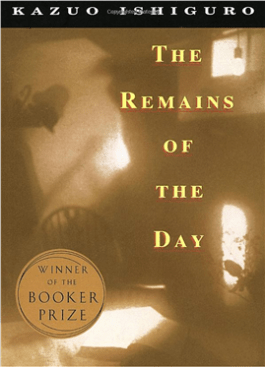
Day 862: The Remains of the Day

Cover for The Remains of the DayBest Book of the Week!
Having seen the movie The Remains of the Day years ago, I think it is just as well I waited so long to read it. Even so, some of the book’s scenes made me envision the movie, though I had forgotten most of it.

Stevens is the butler for Darlington House in the 1950’s. Lord Darlington, whom he served for 30 years, is gone, and now Stevens works for Mr. Farraday, an American. At Mr. Farraday’s suggestion, he has decided to take a holiday to visit the former Miss Keaton, who used to be the housekeeper in Darlington House. He surmises that her marriage is not altogether happy. She has split from her husband, and Stevens hopes she will agree to return to Darlington House as housekeeper. As he travels, he keeps a diary reflecting his thoughts on the journey.

To Stevens, his professional capabilities are the most important areas of his life. He reflects a great deal on such concepts as what dignity consists of. He has removed himself emotionally from the events of his own life, so much so that when his father is dying in the house, he won’t leave the dinner party he is serving. Stevens’ dedication is taken to such an extreme that when he sees in Mr. Farraday a disposition to banter with him, he, who has no sense of humor, begins to practice witticisms.

The Remains of the Day is the striking portrait of a unique individual as he comes to consider some of his life’s decisions. He has devoted his life to the service of Lord Darlington, whose political decisions before World War II left him a ruined man. Stevens thought he was helping Lord Darlington do important work, but later he had to re-evaluate that idea. In the meantime, Stevens ignored a possible other life for himself with Miss Keaton.

This novel tells a sad, sad story. Stevens is not always a reliable narrator for us, as his perceptions are as limited as his point of view. This is a novel of depth and brilliance, intricate as a puzzle box, as we delve the depth of Stevens’ psyche.

Related Posts

The Buried Giant

Life After Life

A God in Ruins

Day 859: They Knew Mr. Knight

Cover for They Knew Mr. KnightBest Book of the Week!
At the beginning of They Knew Mr. Knight, the Blakes are an ordinary, relatively happy middle-class family. Things are fairly tight for them financially, and their house is too small for the family. The two girls, Freda and Ruth, share a small room, and the boy Douglas lives up in the cold attic. Still, only two family members are discontented. Thomas Blake has always resented his feckless father having sold the family factory just as Thomas was old enough to work there and learn the business. He works there but only as an engineer, not as the owner. And his father left his mother and siblings penniless, so that Thomas and his wife Celia have had to support them ever since, his brother Edward being unable to hold down a job. The other discontented family member is Freda, the oldest girl, who dreams of leading a wealthy and fashionable life.

On the way to work one morning, Thomas saves Mr. Knight from falling on the stair to the train. Mr. Knight is a wealthy financier, and he immediately takes Thomas under his wing. He helps him buy back his family’s factory and gives him tips on investments. Soon, the family is doing enough better to move into a bigger house.

But Celia doesn’t like Mr. Knight or the effect he has on Thomas. She doesn’t like how Mr. Knight leaves Mrs. Knight alone all the time and flaunts his young mistress before her. She doesn’t like how Thomas has become a little self-important and doesn’t confide in her anymore or spend as much time with the family. She doesn’t like their new house and misses her old busy life.

As the Blakes’ fortunes improve, we get a growing sense that all will not be well for long. Celia finds herself in a big house with maids and nothing to do. Her new garden doesn’t inspire her, and the children are grown and going about their business. The two eldest have unhappy love affairs, both with charming but morally lax people they meet at Mr. Knight’s parties.

Through all this, Mr. Knight himself remains a shadowy figure, appearing seldom. He seems generous, but we already know he is restless and prone to losing interest in projects. We wonder what will happen when he loses interest in Thomas, who keeps trying to pay back the money he owes him, only to have Mr. Knight point him toward a new investment opportunity.

Celia is the main character in this novel, which manages to build up a fair amount of suspense over everyday concerns. Part of the novel touches on her spiritual needs, as she has sometimes felt she’s had a glimmer of the knowledge of God and wishes she could get closer to it.

I was completely gripped by this novel and its picture of the fleeting quality of happiness, the corroding effects of greed. Except for Mr. Knight, the main characters are mostly very human and likable. You want the Blakes to come through their acquaintance scatheless, but you know they will not. If it’s not telegraphing too much about the book to say so, this novel reminds me very much of The Way We Live Now by Anthony Trollope, only we are more attached to the characters.

Related Posts

Someone at a Distance

Greenbanks

A View of the Harbour

Day 856: A God in Every Stone

Cover for A God in Every StoneA God in Every Stone is a novel that seems to be trying to convey some profound truths. The trouble is, I couldn’t figure out what they were.

It begins in pre-World War I Turkey, where young Vivian Rose Spencer is on an archaeological dig. She is entranced by the thought of the history of artifacts, particularly by a story told her by Tahsin Bey, a friend of her father. He tells her of a circlet worn by the 5th century explorer Scylax, which he believes may be found in Peshawar, where the Persian King Darius sent him to explore the Indus. Viv’s visit is cut short by the start of the war, but by then she has promised herself to Tahsin Bey, who says he will fetch her in London after the war.

Viv begins the war nursing, but after a while she is unable to take the stress. Her mother agrees to allow her to journey to Peshawar as an archaeologist, but first she is drawn by patriotism and naiveté into a betrayal.

Qayyam Gul is a proud Pushtun soldier whose regiment is practically wiped out at Auber’s Ridge. He loses an eye, but it is his experience of being an Indian soldier in England that makes him begin rethinking his loyalties.

In Peshawar, Viv befriends a young Pathan boy, Najeeb, who becomes fascinated by the objects in the museum. She begins giving him lessons in the classics, but when his mother finds out, she makes him stop. Najeeb is Qayyam’s brother, and Qayyam accompanies Najeeb to Viv’s house to return her books. Not much later, Viv is forced to return to London.

Fourteen years later, Viv is enticed back to Peshawar by Najeeb’s letters. He is now employed by the Peshawar Museum and wants her to excavate the site that she hoped to explore years before. Qayyam has in the meantime become involved in the Congress, which wants to separate India from England. Viv arrives, but after violence has already begun.

Although I was interested in the characters and wanted to know what happened to them, I felt that Shamsie presents us with threads of different stories, all unexplored. We don’t learn very much about Qayyam’s experience at Auber’s Ridge or Viv’s nursing experiences, for example, or what’s going on in the Congress. We never find out what happened to Scylax’s circlet. It is almost a McGuffin. The best parts of the novel are her depictions of Peshawar. But even there, the readers’ experience seems fragmentary. In a dramatic portion of the end of the novel, a girl is introduced as an apparent partner for Najeeb, only to be killed within a few pages. The author’s intentions seem confused, as if she started with too many stories to tell and couldn’t decide between them.

Related Posts

An Atlas of Impossible Longing

The Lives of Others

The Daughters of Mars

Day 852: The Lake House

Cover for The Lake HouseThe Lake House is another of Kate Morton’s enthralling novels about family secrets. It is set in two time periods, 1933 and 2003.

In 1933 Cornwall, Alice Edevane is 16. She loves her life in the woods and gardens of the family estate, Loeanneth, and she spends her time writing stories of romance and mystery. She reads her stories to Ben Munro, an itinerant gardener whom she loves. Her newest one is about a kidnapping, set in her own home.

In 2003, Sadie Sparrow is a police officer on an enforced holiday. She got over-involved in a case, in her partner’s opinion, and went to the media when she thought it was mishandled. Her partner is trying to keep her name out of the subsequent investigation, but he wants her on vacation for a month.

Sadie chooses to visit her grandfather Bertie in Cornwall, where he recently moved after her grandmother’s death. In traipsing around the woods with the dogs, she comes upon the abandoned house at Loeanneth. When she tries to find out about the house, she learns that it was deserted after the disappearance of a little boy, Theo Edevane, who was never found.

Sadie decides she would like to look into the cold case with the help of retired officer Clive Robinson. She tracks down Alice Edevane, now a famous novelist, and writes asking for permission to enter the house. But she hears nothing back.

Alice has always believed she knew what happened to Theo and thinks it is her fault. She has no desire to reopen the investigation, however unofficial. But a frank conversation with her sister Deborah reveals something she didn’t know, which leads her to re-evaluate her belief in what happened long ago. When the persistent Sadie writes again, she agrees to see her.

The story alternates between the investigation in the present and the events leading up to Theo’s disappearance. We see the past events from the points of view of several different characters but mostly from that of Eleanor, Alice’s mother.

I absolutely loved this novel, with one caveat. It is intricately plotted and beautifully written, as are Morton’s other novels. I also found it completely absorbing.

However, the coincidence of what happened to Theo I found a bit much. I can’t explain more, but read it yourself and tell me what you think.

Related Posts

The Distant Hours

The Forgotten Garden

The Secret Keeper

Day 851: Straight On Till Morning

Cover for Straight on Till MorningWhen I read Circling the Sun a few months ago, I surmised that I wasn’t reading about the real Beryl Markham but someone who had been sanitized for popular consumption. Reading Straight on Till Morning has shown me that I was absolutely right. Markham was an unconventional woman who was difficult for others to understand. She had virtually no fear and didn’t care what people thought about her. Although she sometimes behaved without regard to others, she had some friends for life.

Straight on Till Morning is an extremely interesting biography of a fascinating woman. It follows Markham through her careers as horse trainer, flyer, and author. It also tells of her relationships with many well-known people, including Dennis Finch Hatton and Karen Blixen (Isak Dinesen), Ernest Hemingway, Prince Harry, and Lord Delamere, as well as her three husbands and some of her many lovers.

One subject it tackles brilliantly is the authorship of Beryl’s memoir West with the Night. Controversy occurred when Beryl’s third husband claimed to have written the book, and others asserted that she couldn’t have written it because she was almost illiterate. Lovell is able to show, first, that no one questioned Markham’s authorship until the book was republished in the 1980’s, second, that not only was Markham a voracious reader but she submitted hundreds of pages to her editor before she even met her husband. Her husband, Raoul Schumaker, was a writer of sorts (mostly pulp westerns), but it is Lovell’s opinion that his style is nothing like that of West with the Night but much more closely matches that of some short stories they collaborated on. Lovell states that Schumaker probably helped Markham edit West with the Night, but the remaining artifacts of that collaboration (comments and markups) indicate that his role was as editor.

If you are at all interested in this unusual woman who led such a colorful life, I think you’ll enjoy this biography. It is lively and well written and meticulous in research.

Related Posts

Circling the Sun

Hons and Rebels

The Happy Foreigner

Day 850: The Other Side of Midnight

Cover for The Other Side of MidnightEllie Winter has been living a retired life since her mother’s death. Her mother was a psychic called The Fantastique who delivered messages from people’s loved ones, and she was particularly busy since the onset of World War I. But a few years ago, the New Society, a psychic research institute, called her a fake. Her mother died soon after, her career ruined. Ellie took up her work but refuses to contact the dead. Instead, she specializes in finding lost objects. The thing is, neither Ellie nor her mother are fakes.

To her surprise, Ellie is contacted by George Sutter, the brother of Gloria Sutter, who used to be her good friend until she was involved in the New Society fiasco. Gloria was also a psychic, and she and Ellie became friends because they understood one another. At least, that’s what Ellie thought.

Now George tells her that Gloria was murdered, but before she went to the meeting where she died, she left George a message that said, “Tell Ellie Winter to find me.” Ellie is surprised to learn that Gloria agreed to attend a séance at the home of her clients, something she would usually not agree to do. She is also surprised to find George involved, because Gloria split from him years ago. Ellie is under the impression that George works for the government, perhaps for MI5.

In her investigations, Ellie soon encounters James Hawley. She was attracted to him a few years ago when she met him on the flapper scene with Gloria, but he was involved in the New Society tests that disgraced her mother. One of the people Ellie wants to interview is a psychic named Ramona, whom he is supposed to observe that night. James tells Ellie that he always felt there was something wrong about the tests Ellie and her mother were subjected to, designed with input from Gloria.

Ramona is clearly a fake; Ellie can easily spot her tricks. But she has something interesting to say. The clients who had supposedly summoned Gloria to their house for a séance were not pleased to have Ramona and Fitzroy Todd arrive with her. Also, they were not set up for a séance. When Gloria went out into the garden, she was strangled. Soon, Ramona is dead, too, and Ellie has had a close encounter with the murderer.

Simone St. James dedicates this book to Mary Stewart. I don’t think many romantic suspense writers can top Stewart, but St. James seems a worthy successor. Although she is more interested in the supernatural than Stewart (only one of Stewart’s romantic suspense novels had a supernatural element, although there is that Merlin series), she creates an atmospheric setting, builds plenty of suspense, and keeps the romance secondary to the mystery. I have really enjoyed the two novels I’ve read by her so far.

Related Posts

The Haunting of Maddy Clare

Touch Not the Cat

The Séance

Day 845: The Brief Wondrous Life of Oscar Wao

Cover for The Brief Wondrous Life of Oscar WaoEven after thinking about the novel for some time, I can’t decide whether I liked The Brief Wondrous Life of Oscar Wao. On the one hand, there’s the energy with which it is written and its inventiveness, wedging a portion of the narrative into footnotes that convey some of the most interesting information (a technique used also in The Sunken Cathedral and by such writers as David Foster Wallace). On the other hand, there’s the unrelenting sexism and objectification of women expressed by the principal narrator as well as by other characters. Okay, that’s an important part of the character’s personality rather than an attitude of the author, but I found it disturbing.

Oscar is a misfit. He is a fat, nerdy boy from the Dominican Republic, highly intelligent and well read but unable to interact normally with people, especially girls. He is interested in Star Trek and Tolkien, but even his other geeky friends eventually get girlfriends while he remains alone and still preoccupied with his obsessions. He dreams of being a science fiction writer.

In college at Rutgers he has one reluctant friend. Because Yunior (Díaz’s persona for much of his fiction) is in love with Oscar’s sister Lola, he agrees to be Oscar’s roommate. He tries to get Oscar to exercise and invites him out with friends. But his efforts aren’t sincere, or perhaps it’s more accurate to say that his intentions are mixed, so he eventually gives up on trying to make Oscar more normal.

Of course, Yunior’s perceptions are all colored by his own preoccupation, sex. Although he loves Lola, they break up several times because of his unfaithfulness. Yunior sees Oscar as a young man wanting to get laid. Well, of course he does, but what he really wants is love.

Oscar has grown up with the romance of his sci-fi and fantasy epics. Yes, they are also full of action, but they are in a sense the continuation of the chivalric romances that obsessed another famous character, Don Quixote, and that’s the book this novel reminds me of. Of course, we know from the title that Oscar will die, and we can guess he will die for love. Also like Don Quixote, although the story is ultimately tragic, its tone is comic.

What I found most interesting in this novel was the story of Oscar’s family, for this is an inter-generational saga about the fortunes of his family in the Dominican Republic. In a combination of narrative and footnotes, the novel tells the recent history of the Dominican Republic and especially of the Trujillo regime, where Oscar’s family ran aground.

This time period was also the focus of another book I’ve reviewed, In the Time of Butterflies, which this novel references, along with a lot of other pop culture. I complained of that book that it assumed its readers already understood all about the Trujillo dictatorship. The Brief Wondrous Life of Oscar Wao does a much better job of explaining Dominican history and exposing us to its culture.

Related Posts

In the Time of the Butterflies

Don Quixote

The Sunken Cathedral