Day 856: A God in Every Stone

Cover for A God in Every StoneA God in Every Stone is a novel that seems to be trying to convey some profound truths. The trouble is, I couldn’t figure out what they were.

It begins in pre-World War I Turkey, where young Vivian Rose Spencer is on an archaeological dig. She is entranced by the thought of the history of artifacts, particularly by a story told her by Tahsin Bey, a friend of her father. He tells her of a circlet worn by the 5th century explorer Scylax, which he believes may be found in Peshawar, where the Persian King Darius sent him to explore the Indus. Viv’s visit is cut short by the start of the war, but by then she has promised herself to Tahsin Bey, who says he will fetch her in London after the war.

Viv begins the war nursing, but after a while she is unable to take the stress. Her mother agrees to allow her to journey to Peshawar as an archaeologist, but first she is drawn by patriotism and naiveté into a betrayal.

Qayyam Gul is a proud Pushtun soldier whose regiment is practically wiped out at Auber’s Ridge. He loses an eye, but it is his experience of being an Indian soldier in England that makes him begin rethinking his loyalties.

In Peshawar, Viv befriends a young Pathan boy, Najeeb, who becomes fascinated by the objects in the museum. She begins giving him lessons in the classics, but when his mother finds out, she makes him stop. Najeeb is Qayyam’s brother, and Qayyam accompanies Najeeb to Viv’s house to return her books. Not much later, Viv is forced to return to London.

Fourteen years later, Viv is enticed back to Peshawar by Najeeb’s letters. He is now employed by the Peshawar Museum and wants her to excavate the site that she hoped to explore years before. Qayyam has in the meantime become involved in the Congress, which wants to separate India from England. Viv arrives, but after violence has already begun.

Although I was interested in the characters and wanted to know what happened to them, I felt that Shamsie presents us with threads of different stories, all unexplored. We don’t learn very much about Qayyam’s experience at Auber’s Ridge or Viv’s nursing experiences, for example, or what’s going on in the Congress. We never find out what happened to Scylax’s circlet. It is almost a McGuffin. The best parts of the novel are her depictions of Peshawar. But even there, the readers’ experience seems fragmentary. In a dramatic portion of the end of the novel, a girl is introduced as an apparent partner for Najeeb, only to be killed within a few pages. The author’s intentions seem confused, as if she started with too many stories to tell and couldn’t decide between them.

Related Posts

An Atlas of Impossible Longing

The Lives of Others

The Daughters of Mars

Day 852: The Lake House

Cover for The Lake HouseThe Lake House is another of Kate Morton’s enthralling novels about family secrets. It is set in two time periods, 1933 and 2003.

In 1933 Cornwall, Alice Edevane is 16. She loves her life in the woods and gardens of the family estate, Loeanneth, and she spends her time writing stories of romance and mystery. She reads her stories to Ben Munro, an itinerant gardener whom she loves. Her newest one is about a kidnapping, set in her own home.

In 2003, Sadie Sparrow is a police officer on an enforced holiday. She got over-involved in a case, in her partner’s opinion, and went to the media when she thought it was mishandled. Her partner is trying to keep her name out of the subsequent investigation, but he wants her on vacation for a month.

Sadie chooses to visit her grandfather Bertie in Cornwall, where he recently moved after her grandmother’s death. In traipsing around the woods with the dogs, she comes upon the abandoned house at Loeanneth. When she tries to find out about the house, she learns that it was deserted after the disappearance of a little boy, Theo Edevane, who was never found.

Sadie decides she would like to look into the cold case with the help of retired officer Clive Robinson. She tracks down Alice Edevane, now a famous novelist, and writes asking for permission to enter the house. But she hears nothing back.

Alice has always believed she knew what happened to Theo and thinks it is her fault. She has no desire to reopen the investigation, however unofficial. But a frank conversation with her sister Deborah reveals something she didn’t know, which leads her to re-evaluate her belief in what happened long ago. When the persistent Sadie writes again, she agrees to see her.

The story alternates between the investigation in the present and the events leading up to Theo’s disappearance. We see the past events from the points of view of several different characters but mostly from that of Eleanor, Alice’s mother.

I absolutely loved this novel, with one caveat. It is intricately plotted and beautifully written, as are Morton’s other novels. I also found it completely absorbing.

However, the coincidence of what happened to Theo I found a bit much. I can’t explain more, but read it yourself and tell me what you think.

Related Posts

The Distant Hours

The Forgotten Garden

The Secret Keeper

Day 851: Straight On Till Morning

Cover for Straight on Till MorningWhen I read Circling the Sun a few months ago, I surmised that I wasn’t reading about the real Beryl Markham but someone who had been sanitized for popular consumption. Reading Straight on Till Morning has shown me that I was absolutely right. Markham was an unconventional woman who was difficult for others to understand. She had virtually no fear and didn’t care what people thought about her. Although she sometimes behaved without regard to others, she had some friends for life.

Straight on Till Morning is an extremely interesting biography of a fascinating woman. It follows Markham through her careers as horse trainer, flyer, and author. It also tells of her relationships with many well-known people, including Dennis Finch Hatton and Karen Blixen (Isak Dinesen), Ernest Hemingway, Prince Harry, and Lord Delamere, as well as her three husbands and some of her many lovers.

One subject it tackles brilliantly is the authorship of Beryl’s memoir West with the Night. Controversy occurred when Beryl’s third husband claimed to have written the book, and others asserted that she couldn’t have written it because she was almost illiterate. Lovell is able to show, first, that no one questioned Markham’s authorship until the book was republished in the 1980’s, second, that not only was Markham a voracious reader but she submitted hundreds of pages to her editor before she even met her husband. Her husband, Raoul Schumaker, was a writer of sorts (mostly pulp westerns), but it is Lovell’s opinion that his style is nothing like that of West with the Night but much more closely matches that of some short stories they collaborated on. Lovell states that Schumaker probably helped Markham edit West with the Night, but the remaining artifacts of that collaboration (comments and markups) indicate that his role was as editor.

If you are at all interested in this unusual woman who led such a colorful life, I think you’ll enjoy this biography. It is lively and well written and meticulous in research.

Related Posts

Circling the Sun

Hons and Rebels

The Happy Foreigner

Day 850: The Other Side of Midnight

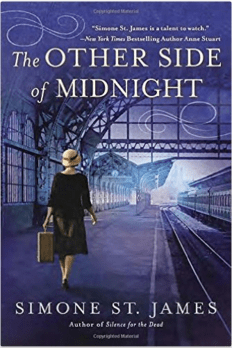
Cover for The Other Side of MidnightEllie Winter has been living a retired life since her mother’s death. Her mother was a psychic called The Fantastique who delivered messages from people’s loved ones, and she was particularly busy since the onset of World War I. But a few years ago, the New Society, a psychic research institute, called her a fake. Her mother died soon after, her career ruined. Ellie took up her work but refuses to contact the dead. Instead, she specializes in finding lost objects. The thing is, neither Ellie nor her mother are fakes.

To her surprise, Ellie is contacted by George Sutter, the brother of Gloria Sutter, who used to be her good friend until she was involved in the New Society fiasco. Gloria was also a psychic, and she and Ellie became friends because they understood one another. At least, that’s what Ellie thought.

Now George tells her that Gloria was murdered, but before she went to the meeting where she died, she left George a message that said, “Tell Ellie Winter to find me.” Ellie is surprised to learn that Gloria agreed to attend a séance at the home of her clients, something she would usually not agree to do. She is also surprised to find George involved, because Gloria split from him years ago. Ellie is under the impression that George works for the government, perhaps for MI5.

In her investigations, Ellie soon encounters James Hawley. She was attracted to him a few years ago when she met him on the flapper scene with Gloria, but he was involved in the New Society tests that disgraced her mother. One of the people Ellie wants to interview is a psychic named Ramona, whom he is supposed to observe that night. James tells Ellie that he always felt there was something wrong about the tests Ellie and her mother were subjected to, designed with input from Gloria.

Ramona is clearly a fake; Ellie can easily spot her tricks. But she has something interesting to say. The clients who had supposedly summoned Gloria to their house for a séance were not pleased to have Ramona and Fitzroy Todd arrive with her. Also, they were not set up for a séance. When Gloria went out into the garden, she was strangled. Soon, Ramona is dead, too, and Ellie has had a close encounter with the murderer.

Simone St. James dedicates this book to Mary Stewart. I don’t think many romantic suspense writers can top Stewart, but St. James seems a worthy successor. Although she is more interested in the supernatural than Stewart (only one of Stewart’s romantic suspense novels had a supernatural element, although there is that Merlin series), she creates an atmospheric setting, builds plenty of suspense, and keeps the romance secondary to the mystery. I have really enjoyed the two novels I’ve read by her so far.

Related Posts

The Haunting of Maddy Clare

Touch Not the Cat

The Séance

Day 845: The Brief Wondrous Life of Oscar Wao

Cover for The Brief Wondrous Life of Oscar WaoEven after thinking about the novel for some time, I can’t decide whether I liked The Brief Wondrous Life of Oscar Wao. On the one hand, there’s the energy with which it is written and its inventiveness, wedging a portion of the narrative into footnotes that convey some of the most interesting information (a technique used also in The Sunken Cathedral and by such writers as David Foster Wallace). On the other hand, there’s the unrelenting sexism and objectification of women expressed by the principal narrator as well as by other characters. Okay, that’s an important part of the character’s personality rather than an attitude of the author, but I found it disturbing.

Oscar is a misfit. He is a fat, nerdy boy from the Dominican Republic, highly intelligent and well read but unable to interact normally with people, especially girls. He is interested in Star Trek and Tolkien, but even his other geeky friends eventually get girlfriends while he remains alone and still preoccupied with his obsessions. He dreams of being a science fiction writer.

In college at Rutgers he has one reluctant friend. Because Yunior (Díaz’s persona for much of his fiction) is in love with Oscar’s sister Lola, he agrees to be Oscar’s roommate. He tries to get Oscar to exercise and invites him out with friends. But his efforts aren’t sincere, or perhaps it’s more accurate to say that his intentions are mixed, so he eventually gives up on trying to make Oscar more normal.

Of course, Yunior’s perceptions are all colored by his own preoccupation, sex. Although he loves Lola, they break up several times because of his unfaithfulness. Yunior sees Oscar as a young man wanting to get laid. Well, of course he does, but what he really wants is love.

Oscar has grown up with the romance of his sci-fi and fantasy epics. Yes, they are also full of action, but they are in a sense the continuation of the chivalric romances that obsessed another famous character, Don Quixote, and that’s the book this novel reminds me of. Of course, we know from the title that Oscar will die, and we can guess he will die for love. Also like Don Quixote, although the story is ultimately tragic, its tone is comic.

What I found most interesting in this novel was the story of Oscar’s family, for this is an inter-generational saga about the fortunes of his family in the Dominican Republic. In a combination of narrative and footnotes, the novel tells the recent history of the Dominican Republic and especially of the Trujillo regime, where Oscar’s family ran aground.

This time period was also the focus of another book I’ve reviewed, In the Time of Butterflies, which this novel references, along with a lot of other pop culture. I complained of that book that it assumed its readers already understood all about the Trujillo dictatorship. The Brief Wondrous Life of Oscar Wao does a much better job of explaining Dominican history and exposing us to its culture.

Related Posts

In the Time of the Butterflies

Don Quixote

The Sunken Cathedral

Day 841: Night

Cover for NightHere is my review of my Classics Club spin choice for Spin #11!

Night is Elie Wiesel’s spare and harrowing description of his and his father’s time spent in a series of concentration camps during World War II. He begins his story in 1944, where in the town of Sighet, Transylvania, the war did not seem to have touched the Jewish population. They had heard of problems in Budapest, but they knew nothing of the larger Nazi activities aimed at their people.

The first indications came from Moishe the Beadle, a man with whom Elie has been studying the Kabbalah. As a foreign Jew, Moishe was deported to a work camp. But he came back to tell everyone that all of the deportees were driven to Poland where they were forced to dig trenches and then shot. Moishe was wounded but managed to get away and returned to warn them. No one believed him, however. They naively refused to believe the Germans could behave that way. Elie and his family could have gotten a visa out of the country, even at that late date, but they stayed.

Next, all the Jews were rounded up into two ghettos, and not much longer after that, they were shipped out to Auschwitz. Once the women and girls were separated from the men and boys at the camp, Wiesel never saw his mother or sister again. He was 15 and probably only lived because an inmate told him to say he was 18.

At only 120 pages, this is a short but affecting description of his experiences in the camps. It does not dwell overly much on the horrific conditions, but we understand how terrible it was. The book also deals with Wiesel’s spiritual landscape, as he changed from a devout boy to a man who no longer believes.

This book is not a testament to human fortitude, for Wiesel makes it clear that humans under evil conditions behave badly. Instead, it is an important documentation of a black time in human history.

Related Posts

The Narrow Road to the Deep North

Unbroken: A World War II Story of Survival, Resilience, and Redemption

The Book Thief

Day 838: The Forgotten Room

Cover for The Forgotten RoomThe Forgotten Room is a romance novel, which is not my genre, but it has enough of a focus on family secrets to keep my interest. The novel relates the stories of three romances, set at different times in the same mansion in New York. Written by three romance authors, I suspect that each one wrote one of the stories.

In 1892, Olive Van Allen is employed in the house as a servant, but she is there under false pretenses. The owner of the house, a nouveau-riche businessman named Pratt, hired her father as an architect for the house but then ruined him by refusing to pay him. Olive hopes to find paperwork to prove Pratt owed her father money, but she is distracted by falling madly in love with one of the sons of the house, the artistic Harry Pratt, and stealing meetings with him in his attic studio.

In 1920, Lucy Young takes a job as a secretary at the office of Cromwell, Polk, and Moore, a law office that handles the affairs of the Pratt family. She also takes a room in a boarding house that used to be the Pratt mansion. In addition to the desire for advancement, Lucy hopes to discover in the Pratt papers the connection between the Pratts and her mother and perhaps learn why her mother whispered “Harry” on her death bed. Lucy is also soon torn between two men, her boss, Philip Schuyler, and a handsome art dealer from Charleston, South Carolina, John Ravenel.

In 1944, Kate Schuyler is a doctor serving in a hospital that used to be the Pratt mansion. She gives one of her patients, Captain Cooper Ravenel, her own room in the top of the hospital because the hospital is overcrowded. But she is surprised when Captain Ravenel seems to recognize her and calls her Victorine.

The pleasures in this novel came from trying to figure out how these people are related and what happens to Kate’s mother and grandmother. The tension is supposed to come from whether Kate will be parted from Captain Ravenel, who is engaged to be married to someone else. There’s not much doubt about that, though, and it’s more interesting to find out what secrets kept the other lovers apart.

link to NetgalleyUnfortunately, Olive’s story is based on something a few words could have cleared up and the spitefulness of Prunella Pratt, Harry’s sister. Lucy’s is a little more understandable. What I found unlikely was Prunella’s conversion at the end of the novel to an old lady who regrets her actions and encourages Kate to follow her heart. Yeah.

Related Posts

The Other Daughter

At the Water’s Edge

Beautiful Ruins


Day 824: The Optimist’s Daughter

Cover for The Optimist's DaughterLaurel McKelva Hand, a widow from Mississippi who now designs fabrics in Chicago, is called to New Orleans, where her elderly father is undergoing an eye operation. Laurel is anxious. Her experiences with the health issues of her mother were not good; there is a sense that something about her mother’s final illness wasn’t handled well.

Judge McKelva’s new wife, Fay, younger than Laurel, is vulgar, frivolous, and stupid. She objects to the procedure. But the judge has a cataract in his other eye, and without the operation at this time, he would end up blind. Dr. Courland thinks the operation will save the judge’s sight, so it is performed.

While the judge struggles to recover, Fay complains about missing Mardi Gras and goes shopping. Unfortunately, as they say, the operation is successful but the patient dies. Although the judge is ordered not to move, his wife shakes him, later saying she was trying to “shake him into life.”

Back home for the funeral in the small town of Mount Salus, Mississippi, Laurel is greeted by old friends who are preparing for the funeral. Fay arrives later and is obviously upset at what she views as an intrusion. It soon appears that Becky, Judge McKelva’s first wife, is the elephant in the room, along with the genteel friends’ incomprehension of what led the judge to marry Fay.

Since Fay has told everyone she has no family, they are surprised when the Chisoms arrive from Texas for the funeral. They are obliviously and cheerfully vulgar, and they add a good deal of macabre humor to the funeral. Fay is so determined that the judge will not be buried next to Becky that she buries him in the unpleasant newer part of the cemetery, right next to the new interstate.

When Fay leaves briefly for a visit with her family, she makes it clear that she expects Laurel to be out of her house when she returns a few days later. Laurel must reconcile herself to the loss of all her parents’ belongings and her childhood home as well as residual pain about both her parents’ and her husband’s death.

This very short novel, written in 1972, is considered Welty’s best, although I confess to a preference for the more lovable The Ponder Heart. The Optimist’s Daughter compresses a lot in just a few pages. At times, the Southern darkness almost reminds me of the grotesque humor of Flannery O’Connor, who is a bit too much for me, but Welty is kinder to her characters.

Related Posts

Wise Blood

The Mansion

The Collected Stories of Carson McCullers

Day 822: Miss Pettigrew Lives for a Day

Cover for Miss PettigrewBest book of the week!
This novel is a confection. It is absolutely delightful.

Miss Pettigrew is a poor, middle-aged governess with no family who has been haunting an employment agency hoping for a job. This morning she is in luck. The agency has two openings, one for a maid and one for a nursery maid. The agency sends her off to interview with Miss La Fosse (by mistake).

Miss Pettigrew is received by a beautiful young woman in a negligee. She is clearly entertaining a young man. Miss Pettigrew has been brought up to be a proper lady, but instead of being shocked, she is entranced by this glimpse of an exotic lifestyle.

Without even inquiring who Miss Pettigrew is, Miss La Fosse asks her to find a way of getting her friend Phil to leave before her other friend Nick arrives. Miss Pettigrew is successful in doing this and begins to discover in herself an untapped capacity for organization. Soon, she is responding to Miss La Fosse’s pleas to stay with her during Nick’s visit. Miss Pettigrew sees that Nick is an attractive but dangerous man.

Over the period of a day, Miss La Fosse and her friends involve Miss Pettigrew deeper in their affairs. She is fascinated by this view into a more Bohemian existence, even though her mother would have considered her new friends vulgar. Attracted by their affectionate natures and their colorful lives, she decides that for one day she will enjoy herself and worry about the future tomorrow.

I thoroughly enjoyed this lovely novel about a timid spinster who learns to unfurl her petals. It is a Cinderella story with a 1930’s edge.

Related Posts

The Making of a Marchioness

Nightingale Wood

Love in a Cold Climate

Day 820: Enter Sir Robert

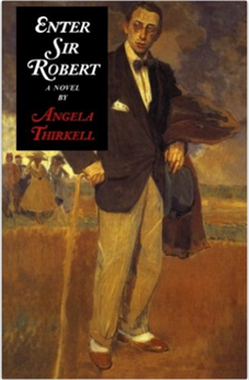
Cover of Enter Sir RobertLady Graham and her youngest daughter Edith are the main characters of Enter Sir Robert, set in post-World War II Barsetshire. Thirkell relates her novels as if she’s personally telling you a story, and although all the novels are set in Barsetshire, this one seems a little more rural than the others I’ve read recently. People are always running off to look at the pigs.

Lady Graham is a charming woman whom everyone loves, although she is a little scatter-brained. With most of her children married and her husband, Sir Robert, almost always away on some vital service to the nation, she has only Edith, who is 18, left at home.

Mrs. Halliday has an invitation for Edith. Her daughter Sylvia, who is expecting, is coming for a visit. Mrs. Halliday would like Edith to stay for a while to be company for Sylvia. Mrs. Halliday is taken up with Mr. Halliday, who is not well, and her son George has been working the farm as best he can alone. Meanwhile, Lady Graham is preparing a small memorial service for the anniversary of her own mother’s death.

Edith enjoys herself very much at the Halliday’s, visiting with Sylvia, entertaining Mr. Halliday, and viewing the farm with George, who seems to like her company. When the Hallidays all go to view the Old Manor House, which they have been leasing to a bank, they meet Mr. Cross, son of Lord Cross and also a delightful young man.

Like Thirkell’s other novels, Enter Sir Robert depicts the everyday life of the people of a certain social station with wit and humor. Her characters are mostly nice people, with only a few barbs directed at the bishop. The countryside is lovingly described, and there is always a little light romance. They are a pleasure to read. Oh, and if you care to read this one, you’ll find that the title is Thirkell’s little joke.

Related Posts

Happy Returns

Miss Bunting

Barchester Towers