Day 816: Literary Wives! The Kitchen God’s Wife

Literary Wives logoToday is another review for the Literary Wives blogging club in which we discuss the depiction of wives in modern fiction. Be sure to read the reviews and comments of the other wives! If you have read the book, please participate by leaving comments on any of our blogs.

Emily of The Bookshelf of Emily J.
Lynn of Smoke and Mirrors
Naomi of Consumed By Ink

My Review

Cover for The Kitchen God's WifePearl has been keeping a secret from her mother, Winnie. She was diagnosed with muscular dystrophy and is trying to avoid the fuss she is sure her mother will make by not telling her as long as she is mobile. She is dismayed, then, to learn that her cousin Mary has told her own mother, Helen, Winnie’s best friend.

At a family engagement party, Helen tells Pearl that she has a brain tumor. She says she’s sure she is going to die and doesn’t want to go keeping secrets, so she will tell Winnie Pearl’s secret unless Pearl does.

When the two women sit down to talk, it turns out Winnie has secrets, too—a whole life before she came to San Francisco from China and another marriage before her marriage to Jimmie Louie. Winnie’s story makes up the bulk of the novel.

Winnie’s unhappy life begins when she is six and her mother leaves. She never finds out what became of her mother, but Winnie herself is banished from her wealthy father’s house to be raised by aunts. In her aunts’ home, she is given a lower status than her cousins. This even applies to her marriage. She acts as a go-between for her cousin Peanut and Peanut’s suitor, Wen Fu, and then is surprised when Wen Fu asks for her own hand. But she learns later that her aunts have deemed Wen Fu’s family not good enough for Peanut.

And they are not good. They strip Winnie of all her possessions and sell them. Once she sees what they are, she manages to hide away a dozen sets of silver chopsticks. Those are the only things she is able to keep. Worse, Wen Fu is physically and sexually brutal. Along with these difficulties and Winnie’s lack of rights are the hardships imposed by the Second Sino-Japanese War and World War II.

The difficulties between Winnie and Pearl and those between Winnie and Helen serve as the framing of the story set in the past. It is this story that is most interesting, even though I never really warmed up to Winnie. What I found most interesting in this novel were the ways of thinking and the customs of pre-revolutionary China.

What does this book say about wives or the experience of being a wife?

Three marriages are described in this novel, but the most time is that spent on Winnie and Wen Fu. This is a classic abusive relationship, where Wen Fu rapes and terrorizes Winnie, including putting a gun to her head, and Winnie thinks it is her fault. The novel focuses on Winnie’s growth of understanding—that her marriage is different than others’ marriages, that she can stand up for herself by leaving. (Her other attempts to stand up for herself are disastrous.)

There is much less focus on the marriage of Pearl and Phil. We learn that they have tacitly taken the easy way on things, that is, not much confrontation or arguing, partially because of Pearl’s disease. Pearl knows, for example, that Phil disapproves of how easy she is on her girls, but it is important for her to avoid stress. All-in-all, they seem to have a good marriage with the usual minor disagreements, like whether they have to attend her cousin’s engagement party.

The marriage between Winnie and Jimmie is the least explored, as Jimmie is long dead in the present-day story, but it seems to have been a happy one. At the beginning of the novel, Winnie is hurt that Pearl has never seemed to grieve for Jimmy. She doesn’t realize that Pearl’s teenage anger was an expression of her grief. Winnie seems to nearly hero-worship Jimmie, but of course compared to Wen Fu he was an angel.

In what way does this woman define “wife”—or in what way is she defined by “wife”?

This is always the hardest question for me, because unless an author is writing an allegory, nothing about a character should define a whole category of people. Maybe we can say here that as a young girl and according to her culture, Winnie believes that a wife is ruled by her husband. She is naive enough about sex to not realize that some of the things Wen Fu wants to do are not normal practices. So, Winnie suffers, I think, because of a lack of rights for women in China at the time but also because of what her culture and upbringing have taught her—and have not taught her.

The title of the novel speaks to this question. The Kitchen God was a man who left his wife for another woman and then lost everything. When he was a poor, sick man, his wife took him in. After his death, he was rewarded for repenting by being made a minor god. Winnie expresses her disgust for the notion that the husband was rewarded for his bad behavior while the wife’s name was not even passed down in the legend. This is a notion she has had to develop as her notions of marriage change and she develops her own ideas of how women should live.

Related Posts

Shanghai Girls

Snow Flower and the Secret Fan

The Ten Thousand Things


Day 812: Shirley

Cover for ShirleyBest Book of the Week!
Shirley is both an homage to Shirley Jackson, dealing with some of her own themes and preoccupations, and a novel about her. It works well on both counts. Don’t be mislead by how it is being marketed, though. It is not a thriller, even though its main character becomes obsessed with a disappearance that may be a crime.

Young, pregnant Rose Nemser and her husband Fred travel to Bennington, Vermont, in the fall of 1964. Fred is a graduate student working on his dissertation who has taken a position as teaching assistant with Shirley Jackson’s husband, Stanley Edgar Hyman. The Hymans welcome the  young couple and offer them a place to stay in their spare bedroom.

Rose is a shy and unconfident 19. Because of her poverty-stricken upbringing and meager education, she feels inferior to her husband and his family. Surprised at this invitation, she is delighted to stay. She is a fan of Jackson’s work and hopes to become her friend.

Soon Rose believes she has made a friend of Shirley, but Rose is naive and can’t begin to understand the demons that haunt her hostess. Shirley’s husband is a professor at Bennington who is known for having affairs with his students. Shirley, too, is jealous of male colleagues whose work has received more recognition than hers.

Rose begins delving into Shirley’s books on witchcraft and also becomes fascinated by stories of Paula Welden, a Bennington student who disappeared years ago while on a hike in the mountains. She begins having fancies about the house, similar to the ones held by Eleanor in The Haunting of Hill House.

So, the novel develops that mixture of the mundane and the off-kilter that characterizes much of Jackson’s fiction. Shirley is a deeply interesting and atmospheric novel that causes you to sympathize with the fictional Rose while feeling that you learn something about the actual Shirley Jackson. Like some other recent fiction I have read (Miss Emily comes to mind), it combines a completely made-up plot, aggravated by Rose’s fantasies, with biographical details of Shirley’s life.

Related Posts

Let Me Tell You

A Good Hard Look

Miss Emily

Day 793: The Lives of Others

Cover for The Lives of OthersI probably haven’t read enough contemporary Indian novels, or maybe I wouldn’t be surprised that two of them are partially about the Naxilite rebellion of the 60’s and 70’s. Apparently, a good deal has been written about it without my being aware of it before.

The Lives of Others deals with the rebellion on the one hand and the lives of an upper-class family, the Ghoshes, on the other. Prafullanath Ghosh is a member of the wealthy Ghosh family, owners of an expensive jewelry store in Calcutta. But Prafullanath was robbed of his inheritance by his older brother when he was a young man. So, he has worked his way up to become the owner of several paper factories.

His family, however, is not so much interested in the business as in the benefits that accrue from it. His two oldest sons are dilatorily employed by the business while the third son wastes money through a publishing concern. The poor economic climate and Prafullanath’s ill-advised business decisions as an old man threaten the business, and then a strike shuts down the most productive factory.

But the family’s floundering fortunes aren’t so much the focus of the novel as the decadence of the family itself. With nothing much to occupy themselves, some of the wives and the sister bicker endlessly. The four-floor house is occupied according to prestige, with the more important family members living higher, away from the noise and dust. Purba, the widow of the youngest son, and her two children have one room on the ground floor while each other family has a whole floor. Purba is treated worse than the servants.

Although Prafullanath has been ill since his youngest son’s death, his other sons have their vices. Adinath is alcoholic, Priyo is subject to sexual obsessions, and Bhola practically throws money away. At first, Adinath’s son Supratik seems to have escaped the family decadence. He has left home and school without warning to work among the poor farmers and instruct them in Mao’s teachings. He is a Naxilite.

About a third of the novel consists of Supratik’s letters, written to someone who for a long time is not identified. He writes about the plight of the farmers, who are being plundered by large landowners in league with the police. He also writes about the activities of his small cadre.

Even though his deeds eventually become savage, for a long time Supratik seems to be the only Ghosh with praiseworthy motives, but this account is more nuanced than to paint anyone as simply good or evil. Almost all the adults in the novel are in some way corrupt.

Although set mostly in the 60’s and early 70’s with flashbacks to earlier times, an epilogue shows that the same kind of corruption is going on today. The Lives of Others is a novel that is powerful but difficult to read. It is an indictment of class and caste divides, corruption, and the imbalance between the rich and the poor.

Related Posts

The Lowland

The Circle of Reason

An Atlas of Impossible Longing

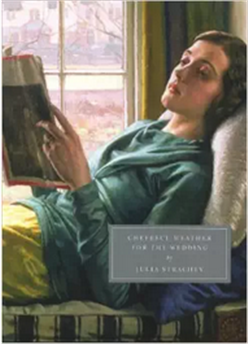
Day 792: Cheerful Weather for the Wedding

Cover for Cheerful WeatherBest Book of the Week!
The house is in chaos on this morning of the wedding of Mrs. Thatcham’s daughter Dolly. Her two sons are arguing about the socks Robert has on and Kitty, the younger daughter, is screaming at the top of her lungs for her maid to find her brooch.

Breakfast has not been served after Mrs. Thatcham’s contradictory commands, and Mrs. Thatcham has just come in from a bitterly cold gale. Still, she thinks the weather is cheerful, as we find that her only criterion for cheerful weather is visibility.

Upstairs, Dolly is putting on her bridal garb with a bottle of rum in her hand. Downstairs, one of the guests, Joseph, has been asking if he can see the bride before the wedding.

At a little more than 100 pages, this novel by Julia Strachey (Lytton Strachey’s niece) is astonishingly rich. Upon its publication in 1932, it was regarded as nearly perfect. And so I find it.

Related Posts

Greenbanks

Someone at a Distance

Mrs. Dalloway

Day 791: Moloka’i

Cover for Moloka'iIn late 19th century Honolulu, Rachel Kalama is only seven years old when she develops leprosy. It starts out as just a pink spot on her leg, but as soon as authorities spot it, she is examined and exiled to the leper colony on Moloka’i. Even though her beloved Uncle Pons is already on the island, she is not allowed to stay with him but must live in the girls’ dormitory at least until she is 16. The facilities on the island are primitive and the rules rigid. She is the youngest resident of the island. It’s tough for a little girl.

Although Rachel’s father Henry writes regularly to her from his travels as a seaman, she soon has her letters to her mother returned to her. She never sees her mother again. The novel tells the story of Rachel’s life from the time she is admitted to the colony until she is an older woman.

I have to admit that I hesitated to read a novel about lepers, thinking it might be too gruesome. But Rachel’s story isn’t depressing. Aside from lightly covering a great deal of the recent history of Hawaii, beginning with the deposing of the queen by the United States, the novel depicts a life in a tough environment that slowly becomes a community. If anything, at times the novel seems to depict a rosier environment than seems possible.

Owing to lack of characterization and the prevalence of description versus action and dialogue, I was not captured by this novel until almost the end. I was interested to see what would happen, but I didn’t find the characters very involving. Still, I found the end of the novel touching, and I enjoyed learning about the history and customs of Hawaii.

Related Posts

The Descendants

Shanghai Girls

The Known World

Day 785: All Aunt Hagar’s Children

Cover for All Aunt Hagar's ChildrenAs in his wonderful novel, The Known World, Edward P. Jones attempts to depict an entire community in the short stories included in All Aunt Hagar’s Children. This goal is more difficult to accomplish, because the community is a much larger one—the African-American citizens of Washington, D.C.—and the stories take place over much of the 20th century.

Several of the stories have to do with the migration of the characters from the rural South to the city. In “In the Blink of God’s Eye,” Ruth and Aubrey Patterson are a hopeful young couple from across the river in Virginia at the turn of the 20th century. Ruth, though, is homesick, and when she finds a baby boy in a tree one night, Aubrey becomes jealous. This story is first in the collection, but the last story echoes it. Anne Perry, of rural Mississippi, meets George Carter, a sleeping car porter, and moves with him to Washington. In the story “Tapestry,” Jones uses a technique he also employed in The Known World where he breaks off to tell Anne’s entire life. But he twice tells what her life might have been had she married a different man.

The emphasis on rural roots is also important in “Root Worker.” Dr. Glynnis Holloway’s mother has been treated for mental illness for years until her care worker, Maddie Williams, talks the reluctant doctor into consulting a root worker, a wise woman. In the rural North Carolina setting under the care of Dr. Imogene, her mother improves, and Dr. Holloway surprises herself by apprenticing herself to Dr. Imogene.

Another strong theme is that of moving into the middle class. It pervades many of the stories but particularly “Bad Neighbors.” When Sharon is in high school, her family has made it to the middle class, but they are disturbed when the Staggs move in across the street, for they are not considered respectable enough. Sharon’s father is responsible for encouraging the neighbors to club together to buy the Staggs’ house so they can evict the family. Years later, Sharon realizes some truths when she is saved by Terrance Stagg.

Perhaps the thread I least identified with was the presence of folk lore as if it were real, a sort of magical realism. For example, in “The Devil Swims Across the Anacostia River,” Laverne spends a lively afternoon at the grocery store fending off the devil. Years ago, her grandmother got away from him by wading into the Atlantic Ocean to go to heaven.

Although overall, the stories are not as effective as the novel The Known World, they are compassionate to even the lowest of their characters. I particularly found touching “Adam Robinson Acquires Grandparents and a Little Sister,” about Noah Robinson, whose grandson Adam was lost after his drug addict parents abandoned him. The little boy is found, illiterate and frightened, and Noah faces a future of raising his grandchildren instead of the carefree retirement he envisioned.

Related Posts

The Known World

Family Furnishings

Unaccustomed Earth

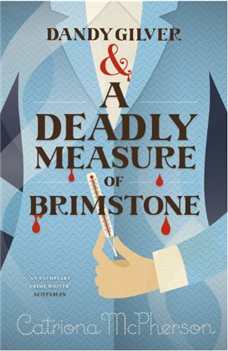
Day 781: Dandy Gilver and A Deadly Measure of Brimstone

Cover for A Deadly Measure of BrimstoneThings have been fairly stressful in the Gilver household. Dandy’s husband Hugh and both boys, Donald and Teddy, are recovering from a serious illness. Just as they begin to improve, Pallister, the butler, and Mrs. Tilling, the cook, are also felled. Dandy and her partner, Alec Osborne, haven’t had a case in months, and when Alec announces it’s time he looked for a wife, Dandy is afraid their detecting days will soon be over. Then, she has a letter from Mr. Addie and Mrs. Bowie, asking them to make an inquiry.

The job turns out to be helpful for all parties. Mr. Addie and Mrs. Bowie are upset about their mother, who died recently on a visit to a spa in Moffat. She reportedly died of a heart attack, but her children insist she had no heart trouble. Dandy thinks everyone will be served by renting a house in Moffat and enrolling the invalids at the spa. Alec goes early, pretending to have a bad back.

Once they begin investigating Mrs. Addie’s death, something seems suspicious. The police sergeant says she was scared by a ghost. He also says that although Dr. Laidlaw was there at the spa, they called in Dr. Ramsay from the village to sign the death certificate. That Dr. Laidlaw apparently refused to sign the death certificate seems suspicious to Dandy, and when she questions Dr. Ramsay, he proves to be an idiot who says that everyone dies of a heart attack. Dr. Laidlaw herself has a violent reaction to mentions of Mrs. Addie.

On her investigations of the spa, Dandy finds the attendant who prepared Mrs. Addie for burial. She says that Mrs. Addie was dirty, even under her fingernails, so Dandy begins to think she may have died outside. In the meantime Alec determines that Mrs. Addie did not believe in ghosts so would be unlikely to have been scared to death by one. Mr. Laidlaw, Dr. Laidlaw’s brother, also seems a shifty sort of person. Dandy is a little worried, because Alec seems protective of Dr. Laidlaw, a scattered young woman.

Dandy and Alec soon believe something odd is going on at the spa. For one thing, Hugh has stopped being grumpy! The arrival of a bunch of mediums makes everything even stranger.

Dandy Gilver mysteries, set in post-World War I Scotland, are light-hearted, funny, and entertaining. I am always happy to see another one coming out.

Related Posts

Dandy Gilver and a Bothersome Number of Corpses

The Child Garden

Sidney Chambers and the Shadow of Death


Day 776: Patrick Leigh Fermor: An Adventure

Cover for Patrick Leigh FermorWhile reading Patrick Leigh Fermor’s retrospective trilogy about the journey he made in his teens, walking from Holland to Istanbul and then Greece, I was struck by the references to what seemed to be an exciting and unusual subsequent life. So, I soon looked for a biography and found this one, by British writer Artemis Cooper, the granddaughter of Leigh Fermor’s good friends and a woman who knew him from when she was a child.

Cooper goes into a little more detail than Leigh Fermor (known by his friends as Paddy) about his childhood, making clear there was a split between his parents and a good deal of neglect from both. Still, he had a happy childhood growing up in a rural setting, and his problems only began with the regimentation of school. Having failed in an academic setting and with the army, Paddy got the idea to go on his fabled walk.

Cooper summarizes the route of this walk, only she reveals the true names of the people he met (he used pseudonyms) and tells us when the stories are invented or conflated. When I read the trilogy I wasn’t aware that any events were invented or conflated, but I should have known that the level of scholarship reflected in the writing was not that of an eighteen-year-old. (Well, I did know, but he wrote the books much later in his life.)

picture of Princess Balasha
Princess Balasha

After his journey, Paddy settled in Athens and then Rumania with Princess Balasha Cantacuzene, a fascinating older woman separated from her husband. However, after World War II broke out, he hurried back to England, not realizing how long it would be until he saw her again.

Paddy spent most of the war in Crete working with the resistance. He is famous for kidnapping a German general and removing him to Egypt, an act meant to improve Cretan morale. (A movie, Ill Met by Moonlight starring Dirk Bogarde as Paddy, was made about this feat, but Paddy was unhappy with how far it drifted from the facts.) For the rest of his life, despite the unfortunate political differences that evolved between England and Greece after the war, Paddy was beloved in Crete.

picture of Joan Fermor
Joan

After the war, Paddy lived a gadabout life with many famous friends, only settling down in Greece with his wife Joan in his late middle age. He and Joan had been together 27 years before they married and for many of those years, had an open relationship.

Paddy chose the profession of writer and wrote several books about his travels and adventures. He was a raconteur who demonstrated an impressive range of knowledge and was interested in everything. Apparently very charming and loved by many people, he was not always sensitive to the feelings of others.

This biography is a well written, fascinating, and occasionally funny portrait of a remarkable man. At times, the sheer number of people mentioned made me unsure of who they all were, and there was certainly an assumption that readers would know who was meant. I didn’t always, which made the book a little more difficult to follow, but that was only on occasion.

Related Posts

A Time of Gifts: On Foot to Constantinople: From the Hook of Holland to the Middle Danube

Between the Woods and the Water: On Foot to Constantinople: From the Middle Danube to the Iron Gates

The Broken Road: From the Iron Gates to Mount Athos

Day 772: The Haunting of Maddy Clare

Cover for The Haunting of Maddy ClareBest Book of the Week!
The Haunting of Maddy Clare has been on my reading list for a while. I’ve finally read it, and my first reaction is to immediately look for another book by Simone St. James. It’s not often I encounter a good ghost story. This one is really good.

It’s just after World War I, and Sarah Piper has been living a safe but impoverished and lonely life in London taking temporary secretarial jobs, when her agency sends her to Alastair Gellis. Gellis has an unusual request. He is a wealthy young man who can afford to turn his interests into employment, and his interest is in ghosts.

Alastair’s regular assistant is away, and he has been summoned to the site of a haunting. Sarah’s job is to assist him in recording evidence of a ghost.

Maddy and Alastair travel to Falmouth House and an interview with Mrs. Clare, an elderly woman. She explains that Maddy came to her doorstep years ago as a child. She had been beaten and was barely dressed and covered with mud. She could hardly speak. The Clares took her in and tried to find her people, with no success. She was obviously of the servant class, so they employed her as a maid. She was with them for several years, always frightened and never leaving the house. Then one day she hanged herself in the barn.

Maddy haunts the barn, and Mrs. Clare wants Alastair to get her to leave. She already tried an exorcism, with terrible results. But Mrs. Clare says that Maddy hated men, which is why she asked Alastair to bring a woman.

Sarah learns she is expected to go into the barn accompanied only by a wire recorder and a camera. She finds the experience terrifying. Although she does not see Maddy, Maddy plants images in her mind and asks Sarah to find someone. What she wants is not clear, but Sarah decides to continue.

Shortly thereafter, Alastair’s partner Matthew Ryder arrives. Although he is badly scarred from the war, Sarah is immediately attracted to him. Matthew, on the other hand, thinks Sarah is too fragile for the work and should be dismissed. In the meantime, Sarah has sensed a threatening presence in the village.

This novel drags you in from its first sentences. It also tells a deliciously creepy yet heart-rending story about why Maddy is haunting the barn. If you like ghost stories and enjoy some romance in  your historical fiction as well, you’ll like this novel.

Related Posts

This House Is Haunted

The Uninvited Guests

The Greatcoat


Day 769: Dandy Gilver and a Bothersome Number of Corpses

Cover for Dandy GilverDandy Gilver has only the fondest memories of a summer spent with the Lipscotts when she was a girl, especially of the winsome, creative youngest, whom they all called Darling Fleur. Dandy only met Fleur once as an adult and she had changed. She was then a flirty, noisy, but beautiful flapper.

Dandy is surprised to be contacted by Pearl Lipscott, asking her for help with Fleur. Pearl says Fleur has been teaching at a girls’ school and she’s afraid all is not well. She hints at breakdowns in the past and tells Dandy that she and her sister Aurora are not welcome at the school. She wants Dandy and her partner Alec Osborne to go to the school to see if Fleur is all right.

Alec isn’t pleased to be visiting a girls’ school as it limits his own participation in the investigation, but almost as soon as they arrive in Portpatrick, he finds himself another client, an Italian fish and chips shop owner named Joe Aldo. His wife has left with a lover, and he wants to find her and make sure she’s okay.

When Dandy arrives at St. Columba’s, she is mistaken for the replacement for the French teacher, who has left without notice. Dandy goes along, feeling she can learn more from inside the school. But when she sees Fleur, she is shocked. The beautiful, vibrant girl has been replaced by a pale, beige woman. Moreover, when Fleur recognizes Dandy, she flees. Dandy is only able to get her to say that she’s killed four people before she runs away.

The next day the police arrive because a woman’s body was found on the beach and they want someone to see if it is Jean Beauclerc, the French teacher. Fleur volunteers to go but only if Dandy comes with her. At the dreadful sight of the drowned body, Fleur says it is not Miss Beauclerc but then utters the word “five” and runs away again.

Dandy soon realizes Fleur is missing but also that something odd is going on at the school. Even after Dandy is shown up as a fraud by the arrival of the actual French teacher, the headmistress Miss Shank takes her on as an English mistress. In fact, it turns out that Miss Shank was the housekeeper before she took over as headmistress upon the original headmistress’s death, a situation that is odd in itself. The girls seem to spend a lot of time lolling around, with short school hours and little work, while the teachers work feverishly. Five teachers have either died or left the school, and Dandy wonders if these are the five Fleur mentioned.

Joe has been to see the body and says it is not his wife. A witness saw his wife with a man on a cliff the night she disappeared. So, Dandy and Alec are left with three missing women, a mention of five murders, and some kind of wrong-doing at the school.

The Dandy Gilver series set in post-World War I Scotland is always fun. The dialogue is lively, and Dandy is always ready to leave her dull husband and farm to detect with Alec. In this case I thought it takes Dandy and Alec far too long to figure out what Fleur’s comment means, but there is still plenty I didn’t figure out.

Related Posts

The Child Garden

The Return of Captain John Emmett

As Chimney Sweepers Come to Dust