Day 747: Literary Wives! The Astronaut Wives Club

Cover for The Astronaut Wives ClubToday is another review for the Literary Wives blogging club. Be sure to read the reviews and comments of the other wives! If you have read the book, please participate by leaving comments on any of our blogs.

Emily of The Bookshelf of Emily J.
Lynn of Smoke and Mirrors
Naomi of Consumed By Ink

* * *

The Astronaut Wives Club just plain irritated me. I don’t know why such a potentially interesting story had to be written as if it was chick lit. If I had had to read one more description of an outfit before the end of the book, I would have screamed.

The book tells the stories of the wives of the astronauts from the beginning of the space program in the 1960’s until the manned exploration program was cancelled in the early 70’s. It keeps its focus on the wives with admirable intention but sometimes unfortunate results, as its determination not to focus on their husbands’ activities, even in moments important in history, sometimes sucks any potential drama right out of the book. For example, anyone who has seen Apollo 13 knows what a stressful bunch of hours those must have been for the families. Yet, the mission gets a bare few paragraphs in the book.

Since the wives were determined to keep their family lives private and their upper lips stiff, what are we left with? Well, basically the kinds of things Life magazine wrote about in the 60’s, the glitz, the perks, the outfits, the parades, the parties. We get so little insight into the wives’ characters that well into the book, I was still unable to connect very many wives’ first names with their last names or remember which one was the pilot. Although we learn a little more about their home lives than the public did in the 60’s, for example, whose husbands were unfaithful or the pressures the wives were under from NASA to present the front of a perfect family, we still get to know very little about the individual women. I recently saw a one-hour TV program about the Apollo wives that told more about what they were feeling than this entire book did!

I believe I was also handicapped by getting an electronic copy from Netgalley that did not have any photos in it. It may have been easier for me to keep the wives apart if I could have had photos to refer to as the other Literary Wives did. All I had was the cover of the book showing the first group of wives, in such a small size that I couldn’t see their faces.

link to NetgalleyThe level of information presented sometimes reminds me of the horrors of watching Entertainment Tonight! For example, at the beginning of Chapter 8 about the parties in Houston, Koppel tells us that a society person she mentions was played by Julia Roberts in a recent movie, a completely gratuitous comment. On the other hand, Koppel is so determined not to get technical in her approach to a general audience that she describes almost nothing of the missions. In a relatively lengthy description of Apollo 8, she twice mentions a maneuver called a trans-earth injection that Susan Gorman was worried about without once explaining what it is. I would like to see this subject handled again by someone who is willing to do more research than thumbing through old Life articles.

Literary Wives logoWhat does this book say about wives or the experience of being a wife? In what way does this woman define “wife”—or in what way is she defined by “wife”?

NASA pretty much defined what wives were in their concern that the astronauts’ families appear to be perfect representatives of America. This definition was strictly by the standards of the 1950’s. Wives were housewives who got up at 5 AM to make steak and eggs for their husbands’ breakfasts. The wives were expected to show support for their husbands no matter what was going on in their marriages, to ignore infidelities, and to do everything possible to keep stress away. They also weren’t supposed to show any stress during their husbands’ missions. NASA controlled them to the point of telling them what to wear before their first photo shoot.

Being a wife also had a lot to do with protecting your privacy and that of your family. This habit extended so far that Koppel didn’t really get much more out of them in her recent interviews than they were willing to say in the 50’s and 60’s.

Related Posts

Death by Black Hole and Other Cosmic Quandaries

The Life and Times of the Thunderbolt Kid

Nora Webster

Day 743: Happy Returns

Cover for Happy ReturnsHappy Returns is one of Angela Thirkell’s books set in Barsetshire, the setting also of Anthony Trollope’s novels. Thirkell’s novels were written in the 1930’s-50’s and feature, in large part, pleasant and well-meaning characters, gentle romances, and problems bravely dealt with, particularly during and after the war.

Happy Returns is set in 1951 and 1952, just before and after Winston Churchill’s ascension to the office of Prime Minister. Much of the conversation at the beginning of the novel is about the government, called Them, the depredations its taxes have made to the neighborhood, and the characters’ hope that there will be an election that will bring Churchill into office.

The situation of Lady Lufton is one of the focuses of this novel. Her husband is recently dead at an early age, and she is struggling with grief and apathy. The family fortunes have suffered so from death taxes that she is forced to lease half her house to a tenant, Mr. MacFadyen of Amalgamated Vedge. She is concerned because her son, the young Lord Lufton, can’t afford to rent a better place when he goes up to London for Parliament and has to stay with a miserly relative, who does not feed him well in exchange for his ration card. Frankly, the gentle Lord Lufton fears he is too poor to marry.

Charles Belton is another important character. He has been engaged for a year to Clarissa Graham, but they show no sign of marrying. Clarissa has been behaving petulantly, so that Charles has begun to doubt that she wants to marry him. It takes his friend Eric Swan to notice that Clarissa is actually madly in love with Charles and fears he doesn’t love her back.

Swan, a schoolteacher, doesn’t seem very ambitious, but he is actually considering trying for a place at Oxford. But then he meets Grace Grantly and falls in love with her. At this time, fellows at Oxford couldn’t be married, so he decides to put his plans on hold and see what develops.

The whole neighborhood notices that Francis Brandon hasn’t been treating his nice wife Peggy very well lately. She, along with several other women in the novel, is very pregnant and despite her husband’s behavior keeps her good humor.

As an example of the flavor of this book, Lady Lufton and Lord Lufton are having a conversation when Mr. MacFadyen comes in. Mr. MacFadyen observes sympathetically that some of Lady Lufton’s comments are of the type to make a young man impatient, but Lord Lufton always replies gently and patiently.

Most of the characters in Happy Returns are nice people, except maybe the Bishop, who never actually appears. Throughout the entire novel, Mrs. Joram is planning a party but is waiting for the Bishop and his wife to depart for Madeira so she won’t have to invite them. The Bishop is apparently so disliked by many people that when he finally leaves for Madeira and his ship is overtaken by a storm, almost every character wishes for a shipwreck.

I enjoyed this novel with its depiction of the hardships of post-World War II Britain. My only problem with it was the plethora of characters, for I could not keep track of who they all were and what their relationships were. Probably someone following the series from the beginning would not have this problem. I have read several of the books, but that was a long time ago.

There are also quite a few cultural and literary references I didn’t get—and probably many jokes. For the tone of the novel, although it has touching moments, is one of humor, with many funny asides addressed directly to the reader about what will or will not be further explained. I think a fair comparison for someone who is not familiar with Thirkell’s work would be the novels of Nancy Mitford, although they are more obviously unrealistic and caricatured.

Related Posts

The Warden

The Pursuit of Love

Love in a Cold Climate

Day 739: Sisters by a River

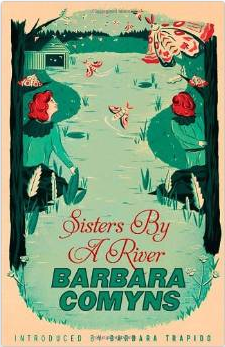
Cover for Sisters by a RiverBest Book of the Week!
In trying to characterize the tone and atmosphere of the autobiographical Sisters by a River, I have to say that it reminds me a bit of Shirley Jackson’s We Have Always Lived in the Castle, minus the murder. As reported in the introduction by Barbara Trapido, this novel did not fit the 40’s vogue for fond and touching memories of childhood, so it was not published for six years after Comyns began looking for a publisher. Comyns wrote it as a private recollection.

It is difficult to explain just how gripping this novel is. It is an unordered collection of fictionalized memories written by Barbara about the life of her family. Barbara and her sisters suffer a combination of abuse and neglect. Her father, known as Daddy, met her mother, called Mammy, when Mammy was a young child and arranged with her mother to marry her. She began having children when she was eighteen and only stopped after her sixth childbirth made her deaf. She also seems to be insane, periodically rampaging around or talking to invented lovers. Aside from cooking delicious meals, she completely neglects her children.

Granny is a dark and unpleasant presence. She does not allow anyone to clean her room, which is filthy, the floor caked with spilled substances. There she spends most of her time brewing up potions. When Daddy leaves the house, he has to lock up the billiard room to keep her out of the booze.

Daddy is prone to attacks of rage and cruelty. He throws Beatrix downstairs when she is a baby because she is crying. He blackens Mammy’s eye right before they are to host a big party. Yes, both of them are conscious of their social position. Mammy tells her semi-illiterate, poorly dressed, neglected daughters how cultured they are while Daddy takes pride in his hundreds of pairs of polished boots and shoes and takes three hours to prepare for a monthly meeting in town. Meanwhile, the girls’ teeth go bad and one governess after another is fired for some silly infringement or because her feet smell.

The oldest sister Mary has learned bullying from her father. She won’t allow the younger girls to read any of the books she likes, and she chooses what color clothes they may wear. Barbara must always wear brown, which she hates.

I could go on and on about this violent and eccentric family. But what really stands out about the book is its style. All of these events, and many that are worse, are related in a completely matter-of-fact way, no pathos or complaining. The writing style is that of a very young person, including many spelling errors, and this air of innocence and matter-of-face quality give the novel its charm. It’s hard to figure out how old the narrator is. The novel moves back and forth in time, and it seems that at her oldest, she is about sixteen. But there are references to her husband, so it’s hard to tell. My guess is the book was written at different ages.

If you care to try this novel, prepare yourself for something truly unconventional. It sounds dreadfully harrowing, I know, but it actually is not.

Related Posts

The Pursuit of Love

Brother of the More Famous Jack

The Death of Bees

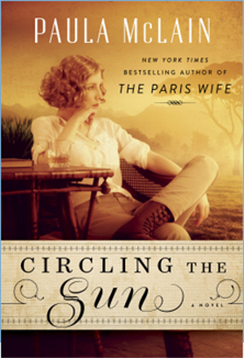
Day 736: Circling the Sun

Cover for Circling the SunPaula McClain’s novel about Beryl Markham begins with her historic flight over the Atlantic from east to west—and then flashes back to cover her life until then. Of course, the story of her life is interesting because she was a fascinating person.

Beryl is raised in Kenya, and after her mother leaves the family to return to England when Beryl is four, Beryl is allowed to run around freely for years. She befriends the local natives and plays with the boys until she is almost a teenager. At that point, her father hires a series of governesses in an attempt to civilize her, an effort not entirely successful.

Beryl’s father is a horse trainer, and she works with him up to the point where her last governess, by then her father’s mistress, decides she should prepare for husband-hunting. She makes a marriage of convenience when her father is forced to sell their farm and take a job in Capetown, but soon she is separated from her husband and seeking a job as a horse trainer. She becomes the first woman licensed horse trainer.

The novel follows Beryl through her introduction to the Happy Valley set, her friendships with Karen Blixen (Isak Dinesen) and Denys Finch-Hatton, and her second marriage to Mansfield Markham.

Although this material is certainly interesting, I was never convinced that the character McLain presents us with is the true Beryl. This interpretation of Beryl’s character doesn’t match the one presented by other sources. My feelings made me wish I had read a biography of Markham before reading this novel, so I could be surer of these statements.

link to NetgalleyI feel as if Beryl’s character and other facts are somehow sanitized for our easier acceptance. Although some expression is given to her impatience of convention and yearning for freedom, McLean still portrays her as a woman who wants acceptance and love. I’m guessing, for example, that her abandonment by her mother at a young age left her with few mothering skills and her lifestyle left her with little desire to be a mother. Some sources I consulted said she willingly abandoned her son to her mother-in-law, but in McLain’s book, she is grief-stricken when the child is taken away from her. That tells me that McLain can’t imagine a different reaction to motherhood than the typical one. I think McLean mentions the qualities that made Markham different without really understanding them.

As another example of what I called sanitization, let’s not forget Karen Blixen’s illness, referred to briefly a couple of times, but never explained as syphilis, given to her by her husband Bror.

Related Posts

Love in a Cold Climate

The Signature of All Things

Savage Beauty: The Life of Edna St. Vincent Millay

Day 734: The Sun Is God

Cover for The Sun Is GodI have just become aware of the work of Adrian McKinty, said to be one of the best Irish crime novelists. The Sun Is God is set in New Guinea in 1906 and is based on an unsolved true crime.

Will Prior is a failing plantation owner in German New Guinea when his friend Lieutenant Kessler comes to request his assistance. Will is a former British military police officer who left the service after a massacre of rioting prisoners in South Africa. Kessler has come to ask him to help investigate a possible murder on a nearby island.

The island is occupied by a cult of mostly German nudists who call themselves Cocovores. They eat only coconuts and bananas and are sun worshippers. The pilot who brought Max Lutzow’s body back to Herbertshöhe, the regional capital, was told Lutzow died of malaria. But an autopsy reveals that he drowned.

Prior and Kessler are dismayed to find that they are expected to take a woman along with them on the investigation, Bessy Pullen-Burry, a travel writer. She is coming as a representative for Queen Emma.

The investigation seems to go nowhere almost immediately. Although the autopsy indicates otherwise, all the Cocovores tell the same story of malaria. The only discrepancy is whether Ann Schwab was with Lutzow right until he died. Yes, the investigators are surprised to find three women among the nudists, whom they had understood were all men.

Even though the investigation seems to stall, hampered by the islanders’ consumption of high-grade Bayer heroin, which they believe to be nonaddictive, Will grows worried about his party’s safety. They are not finding any evidence, but something is wrong, and they only have one opportunity a day to leave the island.

This novel is very well written and compelling, although it suffers from the feeling that no investigation is going on. So many men are on the island that I had difficulty keeping track of them and didn’t get much of a sense of their personalities. Still, the setting and situation are atmospheric and there’s a surprising shift of point of view at the end.

Related Posts

The Luminaries

The Bone People

Arcadia

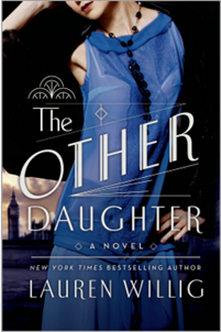
Day 726: The Other Daughter

Cover for The Other DaughterRachel Woodley has been working in France as a governess when she receives a telegram informing her that her mother is ill. Although she returns home immediately, the telegram was delayed, and she finds her mother dead, the funeral over, and the landlord giving her two weeks to vacate her home.

While she is going through her mother’s things, she finds a recent newspaper photo of the Earl of Ardmore with his daughter, Lady Olivia Standish. The Earl looks exactly like her father would have looked had he not died on a botanical expedition when she was four. But it’s not just a resemblance. He is the same man, with the same scar on his face.

Rachel goes to Oxford to see her Cousin David, who she’s sure would know the truth. David explains that her father was the second son and that he and her mother were forced to part after her father’s older brother died and her father became heir to the estate.

Rachel is furious to hear that her father left them, that she has been lied to, and that she is illegitimate. The thought of all the times she missed her father also makes her angry. She is expressing her displeasure when they are interrupted by Simon Montfort, Cousin David’s neighbor in rooms. He takes Rachel away to calm her down.

link to NetgalleyAlthough Simon is a social columnist for the Daily Yell, he promises to keep private what he has overheard. Soon, he is helping her get an opportunity to meet her father. After a makeover of a new haircut and his sister’s fashionable clothes, he lends her his mother’s apartment and presents her to young London society as the chic Vera Merton, his cousin. Rachel is not entirely sure of her own motives but is soon positive that Simon is doing this for his own purposes, especially when she learns her sister Olivia was once his fiancée.

This novel is sheer frivolity, set as it is in the 1920s among the wild young things. It is certainly a bit predictable—soon we guess Rachel will end up with either her sister’s current fiancé or her previous one. But it has lots of snappy dialogue and enough twists to keep things interesting. Although I’m not generally fond of this genre, I enjoyed The Other Daughter.

Related Posts

Lucky Us

Empire Girls

The Secret Keeper

Day 723: Greenbanks

Cover for GreenbanksBest Book of the Week!
This novel begins with a large family Christmas dinner at Greenbanks, the home of Robert and Louise Ashton. It is around 1910. Louise is in her late middle age, a quiet, kind woman who delights in her housekeeping skills and her garden. Her husband, a serial philanderer, has proved a source of pain and humiliation, but she has tried to live it down.

Although the Ashtons are grandparents, three of their grown children live at home. Jim works at the family business, allowing his father to devote little time to it. Charles also purportedly works there, but he prefers to spend time fiddling with inventions, tinkling the piano, and entertaining his adoring mother. Laura is just about to engage herself to Cecil Bradfield. Rachel, the five-year-old daughter of Letty and Ambrose, is Louise’s favorite grandchild.

Robert soon dies in embarrassing circumstances. But even though the novel follows the fortunes of the family over roughly 15 years, it concentrates on the relationship between Louise and Rachel. Rachel, with a self-absorbed mother and an officious father, loves spending as much time as possible at Greenbanks with her grandmother.

The novel has overtones that are feminist for the time, as Rachel finds she has a gift for scholarship. Her father’s rigid and old-fashioned ideas about the place of an education in the lives of young women cost her a scholarship at Oxford, but she manages to continue her education despite him.

Inside cover
The cover at the top is really plain, but for some reason Amazon shows this picture, which is actually the inside of the cover!

One source of disagreement in the family is Louise’s choice of companion. Louise always felt sorry for Kate Barlow when she was a child and tried to include her in family activities. When Kate was a young woman, it was rumored she became pregnant by a married man and had his child, then was thrown off by her parents. Louise meets her in town one day and begins a correspondence with the reluctant woman. After Charles leaves for South Africa and her other two children marry, she invites Kate to become her companion. But Kate never really accepts Louise’s kindness.

The story of the Ashtons is told in spare, matter-of-fact prose that makes no attempt to influence the reader. Many of the characters are flawed and some are unlikable, but there are no heroes and villains here, just a set of ordinary middle-class people. It’s difficult, then, to explain why I so much enjoyed reading this novel. Whipple is a master of style and shows us her characters in the fullness of their lives.

Related Posts

Someone at a Distance

A View of the Harbour

Mrs. Palfrey at the Claremont

Day 718: A God in Ruins

Cover for A God in RuinsBest Book of the Week!
In my opinion, Kate Atkinson’s Life After Life was absolutely the best book I read in 2013. It is the story of Ursula Todd, who dies and comes back to life until she accomplishes her goals. A God in Ruins is about her beloved brother Teddy. Atkinson describes it as a companion piece rather than a sequel.

Like Life After Life, Teddy’s story dwells on the effects on his life of World War II, during which Teddy is an RAF bomber pilot. Although the novel covers his entire life in a nonsequential, rambling order, clearly the events of the war are a major focus to which he keeps returning.

During the war he makes himself a promise that if he lives through it, he will always be kind. And he is, to his sisters, his matter-of-fact scientist wife, and his unlikable daughter Viola. When his daughter fails spectacularly at child-rearing, his home is a harbor for his two grandchildren.

Although Teddy does not have Ursula’s ability to shape her own future, during the war he flies so many missions without being killed that his comrades deem him invincible. And in later life his daughter comes to fear he will live forever.

I can’t explain why A God in Ruins is such a wonderful follow-up to Life After Life without giving too much away. Its focus is on the bombing campaign against Germany, and it explores the ethical issues of that campaign, which killed many German civilians. It also shows the waste of the  young men sent to pursue it, sometimes in conditions almost guaranteeing they won’t return. And the terror of these young men.

Atkinson is deft in her depiction of believable characters and is also a beautiful, inventive writer. It’s quite possible that A God in Ruins may be my favorite book of 2015.

Related Posts

Life After Life

Started Early, Took My Dog

The Greatcoat

Day 708: At the Water’s Edge

Cover for At the Water's EdgeMaddy, Ellis, and Hank make a riotous threesome as they party and caper their way through Philadelphia high society. It is World War II, but both Ellis and Hank are classified 4F. In any case, taking upon any adult responsibility doesn’t seem to be in their plans. Maddy and Ellis Hyde are married, but they live with Ellis’ parents. Hank has a girlfriend but has shown no interest in marrying Violet.

After a particularly drunken New Year’s Eve, Ellis’ father throws Ellis and Maddy out of the house to fend for themselves and cuts Ellis’ allowance. To get back into the good graces of Mr. Hyde, Ellis and Hank come up with a hare-brained scheme. Long ago, Mr. Hyde went to Loch Ness to look for the monster. He claimed to have found it and circulated photos. But they were revealed as fakes. Ellis thinks if they can find the monster and take legitimate pictures of it, he can revive the family name and make his family proud.

But getting to Scotland during wartime poses problems. Hank finally gets them on a freighter, but when their ship rescues some men whose vessel was torpedoed, Maddy begins to understand the horrors of war. Arriving at their destination, she is the only one of the three who seems to understand how ridiculous their presence as tourists is during this difficult time. The three know nothing of ration cards, air raids, or war casualties. And the men’s boorish attitude about the lack of conveniences at the inn doesn’t help.

Maddy settles in and gets to know the villagers, but she is soon disturbed by how much Ellis and Hank are drinking and how many of Maddy’s “nerve pills” Ellis takes. Maddy herself has only ever taken one.

link to NetgalleyAlthough dealing with another period and setting, Gruen is covering some of the same ground as in Water for Elephants. She clearly enjoys the wives in distress theme. Still, after I experienced an initial distaste for all three main characters, Maddy grew on me with her evolving sensitivity and efforts to help the villagers. I enjoyed this novel and think it makes a good light historical romance. Gruen periodically gives us details of the war and does a fair job of evoking the atmosphere of a small pub, where everyone nightly listens to the war news.

Related Posts

The Postmistress

Studio St.-Ex

Rules of Civility

Day 703: The Tilted World

Cover for The Tilted WorldBest Book of the Week!
On Good Friday 1927 after months of rain, the levee on the Mississippi near Greenville, Mississippi, collapsed, causing a gigantic flood that swamped 27,000 square acres of land in the Delta, made many people homeless, and killed an untold number of people. The Tilted World is a fictional account of the days before and after the flood.

Dixie Clay has been married for six years. Although her husband Jesse was a fur trader when she married him, it has taken years for her to realize he’s a bootlegger or to see him for the kind of person he is. After her baby died, she started making liquor herself, but she has come to hate her husband. At the beginning of the novel she helps him capture two revenue officers, thinking he will bribe them to make them go away. But she hasn’t heard of them since and is worried that he killed them.

Ingersoll and his partner Ham Johnson are revenuers who have been dispatched by Secretary Herbert Hoover to Hobnob to find out what happened to the other two officers. On their way, in the sodden territory along the river, they find a dying store clerk who has shot two looters. The looters were a couple with a baby, and Ingersoll can’t bring himself to leave the baby there alone. So, Ham goes on ahead to Hobnob while Ingersoll takes the baby to the orphanage in Greenville. But he is an orphan himself, so he turns around and brings the baby back to Hobnob to inquire for someone who would like to take him. He ends up giving the baby to Dixie Clay.

Later, he is disturbed to realize that Dixie’s husband is probably the bootlegger. But he and Ham don’t have time to look for the bootleggers. They have represented themselves as engineers and find that the levee needs to be guarded. There are rumors that rich bankers are planning to sabotage the levee at Hobnob so that the flood will be lessened in urban areas.

This novel is full of energy and action. There is a growing attraction between Dixie and Ingersoll, but their differences seem too large to overcome. I really enjoyed the characters and setting as well as learning about this massive flood that we have all forgotten.

Related Posts

The Known World

The Hamlet

The Johnstown Flood