Review 2457: Westwood

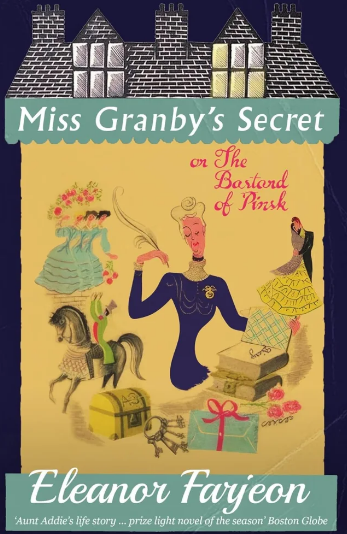
Margaret Steggles is a girl who yearns for beauty in her life. She is a schoolteacher moving to London for a new job, and she has been taught by her mother not to expect marriage. She tends to drift into reveries when contemplating beautiful scenery, literature, or music.

A small accident brings her into the chaotic household of Hebe and Alex Nislund. She finds Hebe beautiful but rude and is disappointed by Alex, who is a famous painter, because he seems so ordinary. Their housekeeper, Grantey, learning where Margaret lives, walks her home, because Grantey is returning to her primary place of employment, where she is an old retainer of Hebe’s parents, the celebrated playwright Gerard Challis and his wife Seraphina. Grantey invites her to stop by to visit at their home, Westwood, which is just up the hill from Margaret’s Highgate neighborhood.

A famous playwright is heady stuff for Margaret, who loves Challis’s plays. Although she doesn’t drop in on Grantey, she meets Zita, a German refugee and servant from Westwood, in the hardware story trying to find someone to mend a fuse before a party begins. The store can’t help, but Margaret can. She meets Gerard Challis and is struck by hero worship.

But Gerard is a pompous, humorless, unaffectionate, and selfish man who delights in carrying on chaste affairs with beautiful young women until they become demanding, at which point he dumps them without ceremony. He has coincidentally set his eye on Hilda, who just happens to be Margaret’s best friend. Hilda has plenty of admirers, though, and isn’t impressed, even though he is clearly wealthy and has told her he is single and his name is Marcus. This rejection of course makes him more eager.

Margaret is accepted into the Challis household as a friend and visitor, especially after the Nislund house is bombed and they all move in, too. Margaret enjoys being there even though they mostly treat her as a convenient person for helping take care of Alex and Hebe’s three small children. Margaret’s friendship with Zita can also be difficult because Zita is volatile, but they go to beautiful concerts together.

Margaret has also started helping John, a coworker of her father. He has been struggling to care for his mentally challenged daughter while his housekeeper is ill.

This novel made me laugh out loud sometimes, especially at the descriptions of the plots of Challis’s plays. The introduction tells us that Challis is based on a real person. I’d like to know who! (It turns out to be some guy named Charles Morgan.) In other respects, I really enjoyed this novel about Margaret’s development in self-respect and her shedding of her romantic myopia. This is a good one!

Related Posts

A Pink Front Door

Nightingale Wood

The Swiss Summer

Review 2455: Spam Tomorrow

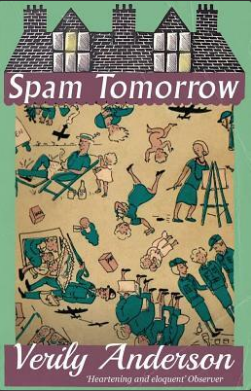
Spam Tomorrow is Verily Anderson’s memoir. Although it briefly hits other times of her life, it concentrates on the war years and ends shortly after D-Day.

The book begins with Anderson’s marriage to Donald, an event not encouraged by her parents because of his lack of wealth and an age difference that is unstated but I figure has to be at least 20 years.

At the beginning of the war, Verily, having already been warned off Donald , volunteers as an ambulance driver. At first, the drivers mostly just wait around to be dispatched, and later, she is erratic in her actual attendance at this job, getting very sick and later going off when she feels like it. She keeps running into Donald, though, who is found unfit for the military because of physical reasons and instead is working for the Ministry of Information. Finally, they decide to marry.

Most of the book has to do with the struggles—sometimes serious ones but related in a lighthearted manner—of living in London during the Blitz, of a difficult pregnancy, of motherhood, and of problems trying to find a suitable home to raise children when you’re not well off and being bombed.

Again, although sometimes concerned with serious problems, like Verily’s difficult first childbirth and subsequent illness, the memoir is related in a lighthearted manner and is often amusing. It provides yet another angle on British life during the war.

Related Posts

One Woman’s Year

Mrs. Tim Carries On

The Midnight News

Review 2454: The Shutter of Snow

The Shutter of Snow is a remarkable work. It is Emily Holmes Coleman’s only novel, written after she was interred in a mental hospital for postpartum psychosis. As you can imagine, therapy in the 1920s was not sophisticated.

Sometimes Marthe Gail believes she is God, sometimes Jesus Christ. She thinks her husband and the doctors are keeping her baby away from her, or maybe she didn’t have a baby. Or maybe he is dead.

She is injected in her spine, wrapped in sheets and submerged in water for hours. Imprisoned under a canvas sheet with only a hole for her face.

She makes improvements and is moved to a freer ward, gets in a fight with a patient or hangs like a monkey from pipes or dances naked through the ward and is moved back. She begs to see her husband but then is angry with him when he comes.

Her story is told from her own point of view, which is sometimes angry, sometimes hallucinogenic, sometimes filled with humor. The writing style does not break out speech from thought, so it is occasionally briefly confusing, but propels the reader along with it.

Related Posts

Down Below

Turtles All the Way Down

Zelda

Review 2443: After Sappho

I read After Sappho for my James Tait Black project. It is experimental, written in short vignettes that jump around in time and from person to person. It tells the stories of lesbian women, mostly literary figures, trying to make a place for themselves. It begins in the late 19th century with women fascinated by the poet Sappho. Some of them study Ancient Greek, some dress like ancient Greeks or re-enact ancient plays, some travel to Greece.

The novel is vividly written in first person plural or in third person, at times slyly ironic, sometimes engaged in word play, often invigorating and with lots of sexual metaphors. It is interesting, telling of repressive laws against women, particularly in Italy, and reporting actual aggressively misogynistic “scientific” or political statements by men. It goes on to tell of the accomplishments and tragedies and love affairs of its protagonists, largely ignoring the men in their lives. For example, from this novel, you wouldn’t know there was a Leonard Woolf, just a Vita Sackville-West.

Although I found the novel very interesting at first, there were so many characters that I couldn’t keep track of them or remember which events happened to which ones. I could only track the ones I was already familiar with. For example, the novel begins and ends with Lina Poletti, even though she disappears about halfway through, so she is obviously important to Schwartz, but by the end I couldn’t remember her. I felt like I needed a chart.

And yet, I feel that with more character definition, I might have remembered all of them, but these short vignettes that tell of an activity or something they said didn’t really provide a cohesive picture to me of what the women were like.

So, I applaud this novel’s daring devices, but they didn’t really work for me.

Related Posts

The Hours

Crudo

LOTE

Review 2434: Family Ties

The Monsoon family was once better off but now not so much. The family consists of Charles Monsoon, now an old man, and his younger wife, who seems to be always referred to as Mrs. Monsoon. They have two grown sons, George, who is a solicitor but prefers to work on a book about butterflies, and Stephen, who is a market gardener. Both sons live at home with their wives. Stephen’s is Vivienne, who helps Mrs. Monsoon keep the house, and George’s is Amy, who, now that her two boys are away at school, does nothing at all.

At first, the novel introduces so many characters that I kept confusing them. There are the Rockabys, whose daughter Lavinia is engaged to Mr. Swan, the doctor’s son, who has come to the village to handle his father’s estate. There are also the Tyces. Mrs. Tyce has become eccentric, so her son Rupert has been summoned to take care of some problems. Then there is the vicar and various other characters. However, the novel eventually settles down to being mostly about the Monsoons, particularly Amy.

Amy is finding herself dissatisfied, not wanting to be thought of as only a wife and mother. She wants some other identity but doesn’t really do anything about it except mope. The time period is not specified, but later it is clear that it’s 20 years or so before the time the novel was written in 1952, so there probably isn’t much she could do, and Mr. Monsoon and the other characters keep making remarks about a woman’s place. Then she meets Rupert Tyce, who is surprised to find her reading Baudelaire in French. Rupert fancies himself a cultured man about town, so they begin spending time together.

George and Amy drift apart, and eventually the question becomes whether the marriage will survive.

This isn’t a serious novel, though. The characters are eccentric, and most of them do very little. A lot of attention goes to a stinking ditch and the excess of pigeons on the property. Mr. Monsoon does less and less, and when he hands the household affairs to his sons, they are shocked at how he has mismanaged them. Mrs. Monsoon is unappreciated and keeps taking to her bed. It’s all fairly silly in an entertaining way.

Related Posts

A House in the Country

Much Dithering

Not at Home

Review 2431: Forest Silver

Forest Silver is a love story but not the kind you might expect. It is steeped in the love of the Lake District, particularly Grasmere.

It’s early in World War II, but Wing-Commander Richard Blunt has already been invalided out. He has received the Victorian Cross but been told his heart is not up to much. He has also broken off his engagement. Aware that the engagement news will be published soon, he jumps on a train to the Lake District to get away from everything.

Arriving in Grasmere, he finds it stuffed with evacuees as well as vacationers. He manages to get a room, but noting an island in the lake, he decides he’d like to live there and asks who owns it. He is directed to Bonfire Hall to speak to Miss de Bainriggs.

Much to his astonishment, he finds his prospective landlord is a tall teenaged girl who dresses like a boy. She agrees to lease him the island, which is occupied by a sort of barn called a hogg-house. However, there is some unpleasantness because a Gypsy woman named Jownie Wife has been living there and has to be evicted.

Corys de Bainriggs takes seriously her ownership of the estate and is determined not to sell an inch of it even though she is broke and a wealthy evacuee is offering large sums, foreseeing that the local hotels will be commandeered. However, Jownie Wife takes her revenge on Corys by burning down the house of one of her dependents, Old John. Old John refuses to live anywhere but his own home, and because she’s afraid he will die, she sells some lake acreage to Mr. Lovely so that she can rebuild Old John’s house.

Blunt befriends Corys and eventually understands himself to be in love with her. But Corys is much too young for such things. Things are made more complicated by the appearance on the scene of Gerald Lovely, a university student, and of Maimie Ozzard, Richard’s ex-fianceé, whose parents have been killed by a bomb and has no one to turn to.

The descriptions of the area are beautiful and the picture of wartime life in a place that has to adjust to so many new people is interesting and different than the wartime stories I have read. Ward is an evocative writer and storyteller.

I received this book from the publishers in exchange for a free and fair review.

Related Posts

Tom Tiddler’s Ground

Cheerfulness Breaks In

Good Evening, Mrs. Craven

Review 2426: Mrs. Martell

Mrs. Martell is not a nice person. She is beautiful and ambitious. Her goal has always been to marry a wealthy, influential man. She’s always had plenty of attention from men, but somehow she has not been lucky. Mr. Martell was a mistake, of course.

Cathie Martell never paid much attention to her cousin Laura until Laura married Edward West, wealthy and with great connections. Since then, she has made it her business to befriend Laura and has almost succeeded in detaching Edward for herself, but somehow he stays married to Laura.

Just in case Edward doesn’t come up to scratch, Cathie has encouraged the attentions of Mr. Hardy, a young newspaper reporter, who is able to get free tickets for shows. He is madly in love with her, but she doesn’t want Edward to find out.

This darkish social satire rivals the story of Becky Sharp, only Becky is more likable. Eliot’s prose is sharp and biting, although she tends to shift point of view without warning, sometimes in the middle of a paragraph, which I found confusing at times. Still, I was driven to find out if Cathie would succeed or get her comeuppance.

Related Posts

Alice

Burmese Days

The Eustace Diamonds

Review 2425: Murder Road

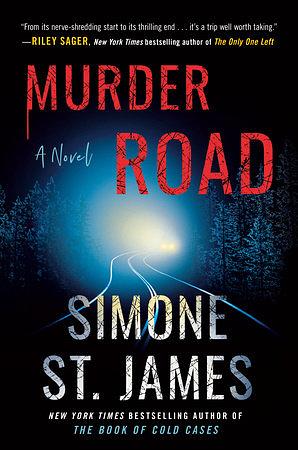
If you like a good ghost story, there’s no one to beat Simone St. James. Her last two books were especially excellent.

It’s July 1995. April and her new husband Eddie are on their honeymoon on the way to a motel on Lake Michigan when they get lost. Something about the road they are on, Atticus Line, feels wrong. April sees a light blinking in the woods and then they see a figure in the road, a girl who seems to have something wrong with her. Her name is Rhonda Jean, and once they realize she’s bleeding, they rush her to the hospital in Coldlake Falls.

Rhonda Jean has been stabbed, and she dies in the hospital. April and Eddie are covered with blood, as is their car, and they suddenly realize they look like murderers. And that’s how the cops see them.

April and Eddie soon realize that they need to try to solve the murder themselves. They learn that there had been a series of murders on the Atticus Line, mostly of hitchhikers on the way to a beach, starting in 1976 with an unidentified woman. There is also a story of a ghost who haunts the road. Once you see her, you die. April sees her when they return to the road, and the ghost tries to pull Eddie from the car, but they don’t die. What does the ghost want?

As far as the plot goes, and sympathy for the main characters, this one is right up there with St. James’s best. Unfortunately for me, Michigan native, it turned into What It Gets Wrong about Michigan, especially Midland, one of the novel’s settings and my home town.

Never mind me. If you like ghost stories, you’re going to love this one. No need to continue reading. However, if you like accuracy . . .

First, it was the weather. This is minor, but the characters experience a series of really hot days. Sure, it can be hot in Michigan, but in the northern lower peninsula, which is where the book is set, it’s usually not that hot in July. Mornings are usually cool and nights cold. There’s a bit about a flannel shirt that Eddie brought along in case it was cold. He would know it would be cold. Of course, weather in 2024 could be different, but I looked up the weather in that area in July 1995. They had one day in the 90s and a low in the 80s. Most days were in the 60s or 70s. But again, this is minor.

Then she shocked me by saying Midland was in the south, almost to the Indiana border, proving she never even looked at a map. Midland, as its name suggests, is smack dab in the middle of the lower peninsula, maybe a bit east of the middle. It’s a five-hour drive from Ohio. Indiana is further away. The main characters are from Ann Arbor, which is almost two hours further south than Midland, so they wouldn’t make that mistake.

I’m no Midland booster—I got out of there as soon as I could—but St. James depicts it as a sad little town. It’s actually quite prosperous as the home of Dow Chemical, which has pumped a lot of money into it, and it has a large percentage of people with PhDs. The characters think they are in a sad downtown area when they go to the library, but they are not, and in fact never get there. The downtown of MIdland was quite vibrant in the 90s, much more so than when I left in the 80s. The library is actually on a long main street that is commercial at both ends but middle- to upper-class residential in the middle where the library is, with the botanical gardens behind it and the performing arts center next to it. April is surprised that the library is surrounded by greenery, but most of Midland is quite green, although it gets a little seedy a few long blocks away, closer to downtown. Finally, there is no bank across the street from the library.

Just a little more research, even if she couldn’t make a visit, would have got these facts right. It’s kind of interesting that she didn’t do it or make up a different town, as she did with the setting farther north.

Related Posts

The Book of Cold Cases

The Sun Down Motel

The Broken Girls

Review 2424: The Bookbinder

Pip Williams revisits the Oxford University Press and the themes of World War I and rights for women in The Bookbinder. Again, she shows her skill as a storyteller.

Peg Jones has grown up around the Oxford University Press, but she’s a representative of town rather than gown. She works at the press as a bookbinder, but she has always yearned for more education and an opportunity to attend Somerset, the women’s college. Aside from the social and educational restrictions, she has been held back by a feeling of responsibility for her special needs identical twin sister Maude.

World War I has just started, and Peg gets an opportunity to apply for one of the positions on the men’s side, but she doesn’t take it. In a link back to The Dictionary of Lost Words, Peg helps Esme’s lover bind a printed copy of her collection of women’s words.

After the invasion of Belgium, Belgian women come to work at the press, and Maude becomes close to one of them, Lotte. Peg goes to volunteer at the hospital and is teamed a reader/letter writer with Gwen Lumley, an upper-class girl who becomes her friend.

Peg is torn between her feeling of responsibility for Maude and her resentment of it. She is both grateful to Lotte for helping with Maude and jealous.

Her contact with Gwen along with the help of her supervisor, Mrs. Stoddard, leads her to an opportunity to apply for a scholarship to Somerset. But she must pass two series of exams.

Williams is skillful at involving readers with her characters’ ups and downs as well as their self-development. I enjoyed this novel very much.

Related Posts

The Dictionary of Lost Words

High Wages

Weatherley Parade

Review 2333: The Halt During the Chase

Sophie is an intelligent, vivacious young woman who is in love with Philip, whom she considers perfect. It’s clear, however, that she is subduing her personality and dressing to please him. She, her mother, and friends have been waiting for a proposal of marriage, but none has been forthcoming. Then, during a romantic tryst in a hotel room, he says something that she finds unforgivable, and it becomes clear to her that, although he loves her, he wants a wife with money.

Sophie realizes she needs to be more independent of her mother, too. After attending some “spiritual” lectures that sound like they are about self-realization, she realizes that their relationship as it is, with her coddling and reassuring her mother, is bad for them both.

Sophie decides to split from Philip, although it is difficult to do so because she still loves him. But she wants to live her own life. Her elderly friend Pussy has told her that once she tries to leave, he will try to get her back, and he does.

This novel is intelligent and funny. It contains unusual turns of phrase and vividly conveys emotions. Sophie is a sparkling heroine. I just loved this novel.

Related Posts

Sing Me Who You Are

Sally on the Rocks

Beneath the Visiting Moon