Review 2328: Tom Tiddler’s Ground

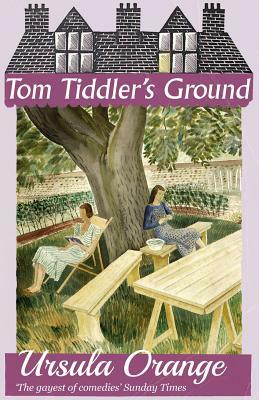
At the beginning of World War II, socialite Caroline Cameron takes her baby daughter to stay in a country village with her old school mate, Constance Smith. Caroline is witty but spoiled, and she has begun to feel that her husband John is coddling her too much. She thinks that Constance is nice but naïve, and her husband Alfred, who married up, is a social climbing bounder.

Caroline is surprised by how involved she gets with the lives around her. Constance also has an evacuee mother and baby staying with her. The mother is a sullen girl who pays little attention to the badly underweight baby. Once Nurse and Caroline change his food, he begins to gain weight and Constance begins to care for him.

Alfred is embarrassed because his half sister Mary moved to town as the grocer’s wife. He tries to avoid her, but Constance welcomes her.

Caroline, however, is being tempted into an affair with Vernon, an actor friend. She is displeased with her husband because he doesn’t want to discuss his first marriage, which she’s heard conflicting stories about. When she is in town with Vernon’s friends, she finds herself telling stories about her country friends and then feeling a little disloyal to them.

Although it deals with some serious issues, this is a charming novel about growing to understand other people.

Related Posts

Company in the Evening

Begin Again

Which Way?

Review 2325: Homestead

In her research for Homestead, Melinda Moustakis incorporated her grandparents’ stories of homesteading in Alaska. Yes, in 1956, you could still receive a homesteading grant in exchange for working and making a home on the land. That was a surprise to me, too.

Lawrence Beringer is a withdrawn and hard man who has just filed homesteading documents for 150 acres of land when he meets Marie. Marie has traveled from Texas to stay with her sister Sheila and Sheila’s husband Sly with the plan of finding a husband so that she never has to return home. Within hours of meeting each other, Lawrence and Marie are engaged.

The couple live on a bus the first year while Lawrence clears land, plants a crop, and finally builds a cabin. Life is difficult, but for Marie, most difficult is understanding Lawrence, who is very withdrawn. For Lawrence has found he cares too much and must stay away to keep himself together. A miscarriage when Marie is almost at term doesn’t help, especially because Marie understands that her part of the bargain is providing children.

Conditions begin to improve, but even when things are good between them, Lawrence is aware that he’s keeping a secret from Marie.

I felt some distance from both of these characters but found the story fascinating nonetheless. It is written telegraphically, in short, sometimes partial sentences. Despite the descriptions of such activities as plowing, building a cabin, or planting potatoes, this novel is mostly a study of two distinct characters.

Related Posts

Coming into the Country

The Horseman

The Orchardist

Review 2321: Classics Club Spin Result! Weatherley Parade

Note: the name on this cover image is misspelled. The cover on the book I have looks the same but is spelled correctly.

In Weatherley Parade, Richmal Crompton takes a look at changes in society through the lens of one upper-class family, the Weatherleys. Her novel begins with the return of Arthur Weatherley from the Boer War in 1902 and ends in the midst of World War II in 1940.

The novel is written in vignettes, chapters that take up a few hours, a few days, or a few months. What with children, grandchildren, and other relatives, there are many characters. No one is completely lovable or unlikeable. They are shown with their good points and flaws.

During the years, there are many events—happy and unhappy marriages, separations, a divorce, and deaths. Among these events, there is one treatment of a child that is hard to forgive.

Among some of the characters is Aunt Lilian, a young woman in 1902 of whom her brother Arthur despairs. He can’t understand why she keeps jilting one fiancé after another. She runs with a fast crowd and seems restless and bored. At first, I thought she was just ahead of her time, dissatisfied with traditional women’s roles, but I liked her less as time went on, and she eventually turns to alcoholism.

Arthur’s two children are Clive and Anthea. Clive is a boy who thinks everything should be done properly and by the rules, which doesn’t make him a popular schoolboy or, later, schoolmaster or father, even though his intentions are good. Anthea likes to have people’s attention, which works well when she is the mother of many children but isn’t so successful when they begin leaving the nest.

The novel stops in to visit these characters and their descendants at key periods of their lives. The scope here is broad rather than particular, so we don’t get to know any characters extremely well. I thought the depiction of changing times and attitudes was interesting, but I felt fairly neutral about most of the characters.

Related Posts

Family Roundabout

The Old Man’s Birthday

Greenbanks

Review 2320: The Haunting of Alma Fielding

The two previous books I’ve read by Kate Summerscale were Victorian true crime stories. In The Haunting of Alma Fielding she changes genres (slightly) and periods to write about the spate of supernatural cases, and one in particular, that hit England when World War II was threatening in 1938.

The principal figure in the book is Nandor Fodor, a Hungarian emigré who studied the supernatural but also had an interest in Freudian psychology. When the Fielding case cropped up, he was in a difficult position, because although his mission was to prove whether there were legitimate supernatural occurrences, when he tried to use somewhat scientific methods of observation, he was accused of being unfriendly to mediums. His role at the Society for Psychical Research was contradictory at best and his notion of the scientific not very well developed.

The Fielding case began with a frightened family haunted by a poltergeist that hurled dishes and toppled furniture. Fairly quickly, it became clear that the activity centered around Alma, who lived in the house with her husband and lodger, and the spirits began to branch out by producing objects from her clothes at séances.

Fodor seemed so happy to have found what looked like legitimate supernatural activity that he believed everything he was told and actually encouraged the “spirits.” When later he found evidence that Alma deceived him, he still believed that some of the events were real and continued his investigation.

I found this book less interesting than the true crime books because I became so impatient with the gullibility of the investigators. And the medium tricks! After all, even if a spirit could produce small objects (called apports) from a person’s body, why would it want to? Obviously, because it’s an effect that can be faked.

Related Posts

The Suspicions of Mr. Whicher

The Wicked Boy: The Mystery of a Victorian Child Murderer

The Burning of Bridget Cleary

Review 2317: William

William Nesbitt is a successful ship builder and owner, and at the beginning of this novel, he is contemplating the successes of his life. The only thing he feels he has missed is some romance in life, his wife Kate being a very practical woman. But he experiences romance vicariously, through his favorite daughter, Lydia, whom he views as a source of light.

Kate Nesbitt is a worrier, and she has a sense of impending doom. She also is extremely conventional and I think old-fashioned, even for the time (1925). For example, she disapproves of her daughter Dora going to visit Lydia in London without her husband. Kate has a sense that something is going to go wrong with what she sees as her family’s happy and content existence.

Of course, she is being almost willfully blind. Their son Walter and his wife Violet are content, but their daughter Dora is increasingly discontented with her husband Herbert. Their daughter Mabel and her husband John are self-righteous, and Mabel likes to complain and pretend they are poor when John’s business is going well. Janet, the youngest, unmarried daughter is silent and unhappy. Later, it becomes obvious that she thinks she’s in love with Oliver, Lydia’s husband.

Then, something bad does happen: Lydia leaves Oliver for Henry Wyatt, a writer. William is still accepting of Lydia, thinking she is trying to live her life honestly, but he begins to see that Kate is more rigid and unaccepting than he realized.

This novel is an insightful and nuanced study of how a crisis can affect a family. Since Young ran off with a married man, it’s interesting to speculate how autobiographical this novel may be. I found the novel deeply interesting, with complex characters.

Related Posts

The Misses Mallett

Chatterton Square

The Curate’s Wife

Review 2315: #ReadingOrwell24: Burmese Days

I picked out Burmese Days to read for Brona’s Reading Orwell event. It may be the only Orwell I read, though, unless one comes up in one of the biannual year reads hosted by Stuck in a Book.

There is nothing politically correct about Burmese Days, published in 1934 and probably set 10 years or so earlier. So, if bigotry bothers you, best stay away. Also, a warning for animal lovers—this book contains the murder of a dog.

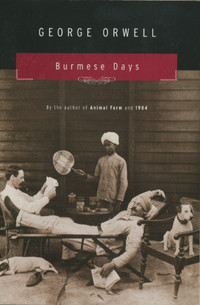
John Flory is stationed in North Burma working for a timber concern. He hates most of the English people who live in Burma and spend their nights drinking and complaining about the natives. He wants to talk about books and more intellectual concerns, so his only friend is Dr. Veraswami, an educated Indian. However, when the subject of admitting an Asian to the European Club comes up, Flory doesn’t have the gumption to support the doctor’s admission.

He learns later that this admission is more important than he thinks, because Dr. Veraswami has offended U Po Kyin, a corrupt magistrate who is determined to ruin him. Membership in the club would make the doctor impregnable.

Flory doesn’t want to leave Burma, which he loves, but he is desperately lonely. He decides the only option is to find a woman who loves Burma too and is interested in intellectual discussion.

On the scene comes Elizabeth Lackersteen, a young woman who has been left penniless and has come to Burma to find a husband. Because she came from Paris, Flory immediately imagines her hanging out with artists and thinks he’s met his soulmate. He doesn’t even notice how she hates being among the Burmese and is exactly the type of woman he dislikes.

After Flory take Elizabeth on a hunting expedition, she seems inclined toward him, especially as her uncle has been approaching her inappropriately. But then the dashing Lieutenant Verrall appears, and Mrs. Lackersteen discovers he is an Honourable. In the meantime, U Po Kyin has expanded his efforts to disgrace the doctor to include his friend Flory.

This is a bitter satire against the British Raj with few likable characters and a dark ending. I’m sure it is meticulously observed, even though many of its characters seem like caricatures.

Related Posts

The Glass Palace

The Siege of Krishnapur

The Singapore Grip

Review 2313: Kate Hardy

I usually like D. E. Stevenson’s novels for very light reading, but Kate Hardy seemed all over the place.

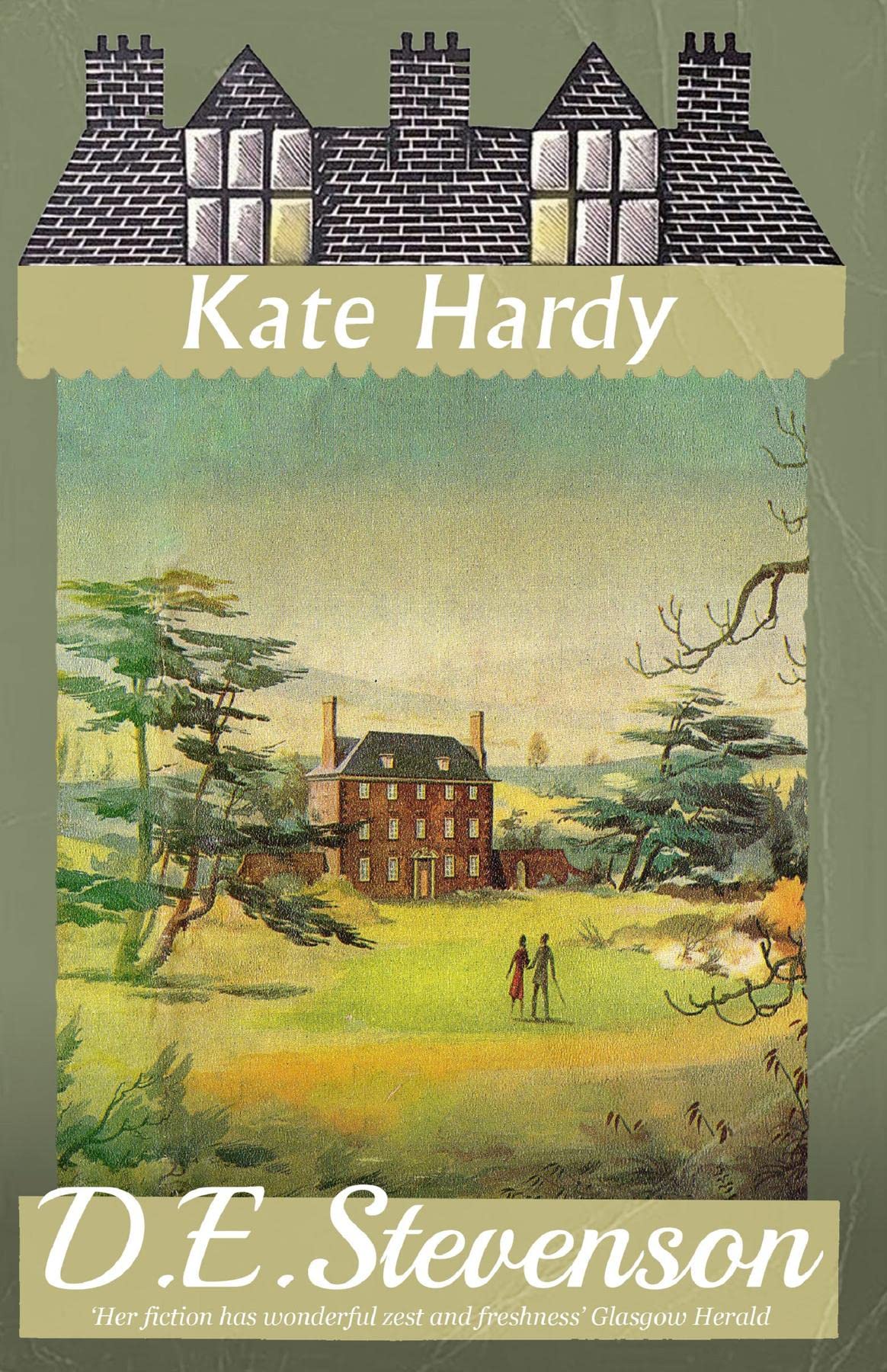
Old Quinings is a village that has been left in the past, and the residents like it that way. They are interested to learn, though, that Mr. Morven has sold the Dower House. The new owner is Kate Hardy, a writer of adventure stories who has been yearning to get out of London and away from her selfish sister and spoiled niece.

Kate has bought the Dower House sight unseen, but she loves it as soon as she sees it, even the resident ghost. She meets Mr. Morven early on, but he is careful to visit only rarely because he is old-fashioned and married, although he and his wife live apart.

Kate doesn’t mean to be a recluse even though she needs time to write, and she gets involved in all kinds of things. When she barely knows Mr. Morven, she receives an anonymous letter alleging an improper relationship between them. Another letter goes to Mrs. Morven, who comes back from America hoping her husband wants a divorce. Then Kate arranges to take care of the couple’s nine-year-old daughter Susan, which is an odd offer to a stranger and even odder for the stranger to accept. Susan arrives, but we hardly spend any time with her.

In a gesture that seems sweepingly condescending, Kate also gives a party to welcome back Mrs. Stack’s son Walter from his service in India even though she has just met Mrs. Stack and doesn’t know Walter. There’s a class issue here, not only because of the invitation but because Walter has bettered himself in the service but is stubbornly insisting on keeping his promise to take back his old job and take care of his mother. His old mates are resentful of his getting his job back, although that was promised when he went to war, and his mother and Kate think he could do better.

Then there is the witch plot, which is just silly.

I think there is too much going on in this novel. Maybe the whole thing with the witches was meant to give atmosphere, but it just seemed sort of thrown in, as does the presence of Mr. Morven’s daughter. Also, Kate ends up with two suitors without us having much of a sense of what they are like. I noticed in addition a couple of occasions when Stevenson tells us what people talked about without recounting the dialogue—and the dialogue gives us a better sense of what people are like. Its not very convincing to be told a character’s views are interesting instead of learning what they are or hearing the character say them.

So, I don’t think that this was one of Stevenson’s best.

On the old subject of mistakes in the Furrowed Middlebrow series, which we haven’t encountered in a while, Mrs. Stack is called Mrs. Stark on the back cover of the book, and there is a section after the novel ends that was apparently written by Stevenson but in my copy appears to be missing pages, because it has no heading and starts in the middle of a sentence.

Related Posts

The Baker’s Daughter

The Blue Sapphire

Vittoria Cottage

Review 2309: The Curate’s Wife

When I reviewed E. H. Young’s Jenny Wren, I remarked that I preferred Jenny’s sister Dahlia to Jenny. So, I was delighted to find that The Curate’s Wife is about Dahlia (although Jenny’s romantic fate is also involved).

Dahlia has married the curate, Cecil Sproat, on the basis of a friendship in which she feels she can say anything. But very soon, she finds that’s not true when it applies to religion, which has not formed part of her upbringing and which she finds silly. For his part, Cecil is rigid and has been unthinking in his religious beliefs. There is also the problem that Cecil is in love with Dahlia, but the reverse is not true.

Another issue is created by Mrs. Doubleday, the wife of Rector Doubleday, Cecil’s boss. She is an unpleasant woman who already dislikes Cecil and takes a strong dislike to Dahlia. She makes it her business to listen to gossip about the girls’ mother’s inferior social standing and her affair during the war. Their mother foolishly married farmer Thomas Grimshaw at the end of Jenny Wren, hoping that would remove a bar to Jenny’s marriage with Cyril Merriman, but that only made the situation more hopeless. Jenny has gone off to live with Mr. Cumming’s sisters and father and learn about the antique business.

Dahlia begins to feel as if she missed out. After school, she was first isolated on the farm and now is living with a dedicated man doing good works. She has never even been to a party or enjoyed other types of amusements. She begins to fancy herself in love with Simon Tothill, a young man she met at a theater rehearsal.

Just as Dahlia and Cecil are beginning to understand each other, Jenny arrives without warning. She has left the Cummings and expects to live with Dahlia and Cecil. Although Dahlia is happy to see Jenny, she begins to realize just how selfish her sister can be. For his part, Cecil is a little jealous of how close the sisters are.

Dahlia’s problems with Cecil have an interesting parallel in the relationship between the Doubledays. Mr. Doubleday is easy going and tries to avoid trouble but is afraid of his ill-natured wife. Their son is returning after three years of service in Africa, and Mrs. Doubleday wants him all to herself. But she soon makes a mistake in a remark that frees Mr. Doubleday from trying to please her.

This novel takes a complex look at new marriage and the lack of preparation people have for its problems. I didn’t like Jenny any better, but I have been impressed by how far below the surface Young’s novels go.

Related Posts

Jenny Wren

The Misses Mallett

Chatterton Square

Review 2306: The Midnight News

Is The Midnight News a love story? a murder mystery? an espionage tale? a story about a dysfunctional family? an exploration of how the stress of war affects people psychologically? I’m not telling.

Charlotte is the daughter of privilege. Her father is a peer and a member of Parliament with an important war job. But Charlotte has chosen to work as a typist in a government office and live in a respectable but middle class boarding house.

It is the Blitz, and Charlotte’s home is in a dangerous area south of the Thames. She and the other residents of the house have been spending their nights on the lowest level of the house.

The novel starts slowly. Charlotte spends a day with her best friend, El, who has been elusive lately. Then El is killed in the Blitz. Charlotte goes to visit her godmother, Saskia, after she hears that a well-known actress, a schoolmate, has also been killed. Then Saskia dies, too. Charlotte has noticed a square gray man in several different places and comes to believe he is following her and killing people she is close to. This may seem like a wild idea, and since Charlotte has begun hearing the voices of her dead friends and has a history of mental illness, we begin to worry about her.

Then there is Tom, the son of an undertaker whom Charlotte has noticed feeding the birds. He is waiting to hear about a scholarship and a place at King’s College, but notifications are delayed because King’s has been hit in the Blitz. He is in love with Charlotte but thinks she is above him.

Is Charlotte being followed or is she paranoid? Is there something else going on? This novel eventually because a fast-moving, tightly plotted, and satisfying tale.

Related Posts

The Body Lies

A Country Road, A Tree

Longbourn

Review 2305: The Fawn

The Fawn is an unusual novel, narrated as it is by Eszter, who through the entire novel is speaking to another person. Eventually, we understand this is her lover, whose identity is not confirmed until the last half of the book.

The novel moves among scenes from the present and the past, sometimes with no transition, so that I was briefly confused about the when. Eszter grows up very poor. Her parents are from more prosperous roots, her father’s perhaps aristocratic, but his family has thrown them off. Her father is a lawyer but he takes few cases. He is more interested in horticulture and in fact is ailing for most of her life. So, her mother teaches endless piano lessons to support them, and Eszter earns money by tutoring other students and sometimes by stealing. Her life is made harder by her parents’ sufficiency for each other. She feels that they pay no attention to her.

Although Eszter becomes a famous actress with a good income and a nice flat in Budapest, she never forgets or forgives the slights of her childhood. In particular, she hates Angéla, a schoolmate who is beautiful and kind, but whose way is made easy by everyone because she is rich and beautiful. Her bad grades are corrected by the school after visits from her parents. Eszter is happy to see her family leave town after it is disgraced, but Angéla re-emerges after the war, married to the man who becomes Eszter’s lover.

Eszter is a complex character, not likable but someone who still keeps our sympathy. This novel explores the complexity of human relationships. Eszter laments that no one has ever loved her for herself, but she has turned herself into a chameleon—a famous actress who so submerges herself in her roles that on the street no one recognizes her. The Party members refuse to believe her true story when she submits her CV for approval to work at the theater, so she has to reinvent her life to make herself into a reformed aristocrat. Her lover loves her but doesn’t understand her at all.

I found this novel a little difficult at first because it just seemed to be rambling, but the narrative is compelling. Once I really got going, I just wanted to see how it ended.

Related Posts

Iza’s Ballad

Abigail

Nightwood