Review 2249: Murmur

When the cover of a book calls it “hallucinatory,” I know it’s not going to be a good fit for me. However, since Murmur is part of my James Tait Black project, I felt compelled to read it.

The novel aims to portray the mindset of an Alan Turing-like scientist named Alec Pryor after he is undergoing chemical castration because of a homosexual encounter. Aside from making his body more feminine, the chemical makes him dream and eventually induces wakened dream states, including ones where he fantasizes letters from his friend June, whom he hasn’t seen in years, and relives events of his boyhood.

Those who have been reading my reviews know how much I hate reading about dreams. Since it is difficult to know some of the time whether he is dreaming or remembering, this was a novel I found it hard to stick with, despite it being very short.

The rest of the novel is filled with philosophical musings about whether machines could have consciousness and other subjects. I felt that either I didn’t want to follow his thoughts or they were too hard for me to grasp. The journal section at the end is the most accessible part of the novel.

Related Posts

Crudo

Umbrella

Outline

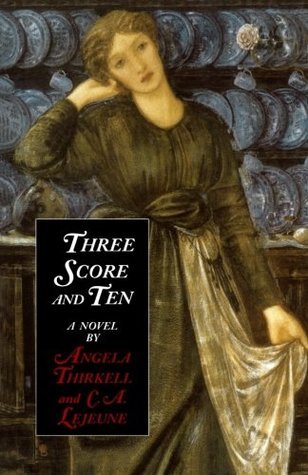
Reading Thirkell’s Barsetshire Series in Order: #29 Three Score and Ten + #28 Love at All Ages Wrap-Up

Thanks to everyone who is keeping up at least with comments for Love at All Ages. One more to go!

I see now why some of the lists of the Barsetshire series include Three Score and Ten, and some do not. It’s because Three Score and Ten was finished posthumously by a friend. It should be interesting to see what difference there is. I will be posting my review of this novel on Tuesday, October 31.

Review 2246: One Year’s Time

Liza, a “bachelor girl” in 1930s London, has a job as a secretary in an office where she likes all the people and a basic flat that she’s fixing up. It’s January 2 and she’s painting the floor and feeling lonely when she gets a call from Walter, a young man she met at a party. She invites him over and they quickly become lovers.

Everything is smooth at first, and she quickly falls in love, but she is always trying to match his mood and to appease him. When he disappoints her, she thinks it is her fault for being disappointed. She madly wants to marry him, but he doesn’t ask.

In April, he decides to spend the summer in the country. He asks her to go, and with very little planning, she quits her job and gives up her flat.

Liza is the type of person who’s either very happy or in the depths of despair. She has high expectations for this trip, but we already know it won’t go as planned.

I hope girls have gained more self-confidence, but I’ve known girls like this who spent a lot of time waiting by the phone (which you presumably don’t have to do anymore, because you carry it with you), and even when I was young, quite a few decades after this book is set, I knew girls who were focused only on marriage. It was interesting but sometimes excruciating to observe what’s going on in Liza’s mind. When will she realize she always puts Walter first and so does he, charming as he may be?

This is an unusual novel for the 30s, showing how things have opened up a little for women sexually but not too much, as her fretting over her fake wedding ring shows. I felt both impatient with and sympathetic to Liza for most of the book.

I received this book from the publishers in exchange for a free and fair review.

Related Posts

Grand Hotel

Which Way?

Sally on the Rocks

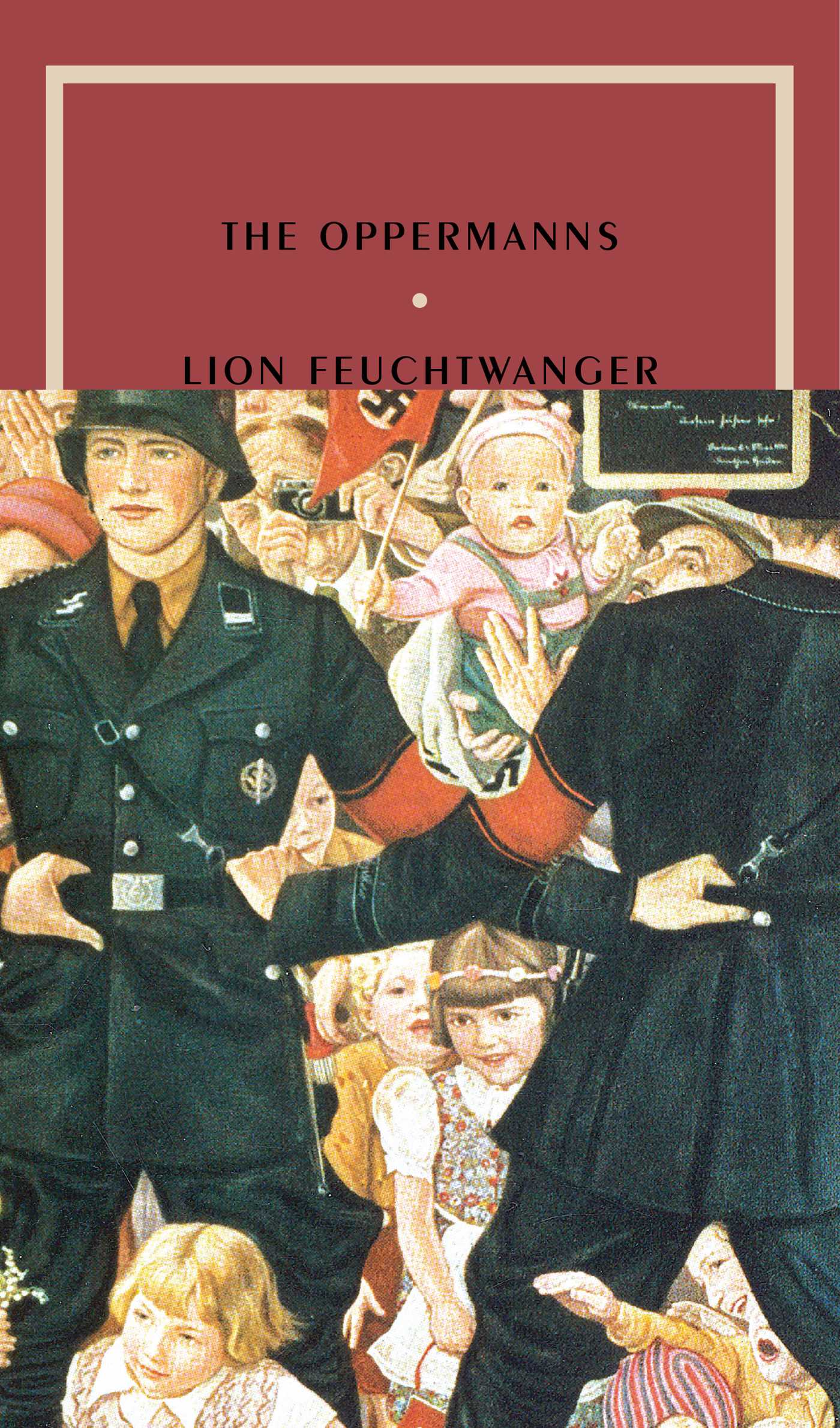
Review 2242: The Oppermanns

One of my brothers and I have gotten into the habit of buying each other books that we think are excellent. The Oppermanns was his Christmas present to me, and I just got around to reading it.

The novel is astounding because it was written concurrently with the events it describes, That is, it begins late in 1932 and ends in the summer of 1933 and was written during that time period. It tells the story of a wealthy German Jewish family. It’s considered the last masterpiece of the German-Jewish literary movement.

The Oppermanns are wealthy well-known residents of Berlin whose family owns a chain of furniture stores. Martin runs the stores. Gustav is an intellectual who spends most of his time enjoying art, literature, and music. Edgar is a world-famous scientist and surgeon. At the beginning of the novel, all three are happy with their lives, and although Martin has half-heartedly sought a merger with a competitor to mask the Jewish ownership of the family store, he has muffed it and doesn’t much care. The Nationalists, as the Nazis are referred to throughout the novel, seem to be on the wane.

However, within weeks the Leader (his name is never mentioned) has been made Chancellor because foolish landowners and big business, having drained the country dry, think they can use the Nationalists. Things begin to turn bad. One of Gustav’s friends emigrates to Palestine, but Gustav thinks he is being alarmist. After all, this kind of thing has happened before, and it always dies down.

This novel documents the slow horror of the Nationalist take-over (not so slow, really) and shows how easy it is to fool oneself and stay in one’s comfort zone even when it becomes uncomfortable.

The novel is all the more chilling because of how early it is written, because readers today know more about what will happen than Feuchtwanger did. It has a slightly optimistic ending, implying that the German people—whom he always differentiates from the Nazis—would not put up with brutality forever, but of course we know the German people didn’t stop anything.

Related Posts

The Postcard

The Invisible Bridge

Night

Review 2239: Love Comes Home

Jane Cranstoun is enjoying her stay in London with friends George and Kitty Mariner when she is summoned home by her mother because of the return from finishing school of her sister, Love. Jane is not really looking forward to going home, where she is expected to take charge of numerous commitments made by her mother, but also because she has begun to hope for a proposal of marriage from John Marsh, a young naval officer.

At her farewell party, Jane gets her proposal and accepts it but asks John to keep it a secret until her parents get to know him better. He has recently accepted a post that is nearer to her parents’ house in Scotland, so he agrees.

On the train north Jane meets Peregrine Gilbert, whom she takes to be shy and uninteresting, not realize he has become her neighbor. Then she meets him again the next morning and tries to send him off for trespassing.

When John appears, Love begins monopolizing him and throwing Jane together with Peregrine. In fact, there was a scene before he appears when I was certain Love already knew John. But that turns out not to be the case, even though it’s clear Love means to marry him before she even meets him. Silly misunderstandings lead to a broken engagement, and this situation was clumsily handled, I thought. In fact, although Love explains later that she thinks Jane and John are not well suited, she has decided this before she ever meets John.

I have enjoyed reading Clavering, but this one, I think, is the closest to a standard pattern romance than the others. I didn’t like Love, who takes over the story gradually until it is more about her. I also didn’t like John or later Kitty when she reappears. The only characters I liked were Jane and Peregrine and the girls’ brother, Meggie. Love is supposed to be 19, but she acts more like 14. I was a little disappointed in this one.

Related Posts

Susan Settles Down

Touch Not the Nettle

Yoked with a Lamb

Review 2235: News of the Dead

One of the things I like about my shortlist projects is that they bring me into contact with books and authors I probably wouldn’t encounter otherwise. Certainly, I would never have run into News of the Dead if not for my Walter Scott Historical Fiction Prize project.

News of the Dead tells the story of one remote, secluded place—fictional Glen Conach—over the ages, mostly through a set of documents. The oldest is a book written in the middle ages about a Christian hermit the locals call St. Conach even though he’s not recognized as such by any authority. The Book of Conach tells the stories of lessons and miracles performed by the man, who died around 770 AD.

Another narrative is set in 1809 from the diary of Charles Gibb. Gibb is an antiquarian who has wangled himself an invitation to Glen Conach House ostensibly to study and translate The Book of Conach. His real goal, however, is to sponge off the Milnes, the current owners of Glen Conach House, for the summer. He rather cynically observes Glen Conach and his lady and daughter as they do him, at first. But slowly the situation changes.

The third narrative begins slightly pre-Covid and mostly concerns an elderly woman named Maja and her eight-year-old neighbor, Lachie, who likes to visit her. When Covid sets in, she decides to write him a letter telling the story of a girl who came to the glen as a child after World War II.

I did not have much patience for the stories about St. Conach, although it was clever how Robertson used variations of the stories to show how they change. It also, frankly, doesn’t reveal much about daily life except for superstition and wildness.

The other two narratives were a lot more interesting. Gibbs’s began at a fairly cynical level yet what we learn after it stops is surprisingly touching. And Maja’s story had me on the edge of my seat.

There were times when I wondered where this novel was going, but ultimately I found it a lovely examination of refuge. I also want to point out that all three narratives sound like they were written by different people, which they should in good fiction, and which is too often not the case.

Related Posts

Rose Nicolson

Luckenbooth

Ulverton

Review 2234: The Shadow King

All I can say is, this is a powerful and eloquent book. It took me a while to get into it, but it was worth the wait.

In 1975, Hirut, an older Ethiopian woman, is on the way to meet a former enemy, Ettore, an Italian photographer who was part of Mussolini’s invading army in 1935.

In 1935, the great Ethiopian warrior Kidane has taken orphaned Hirut into his household. However, his wife Aster is almost insane with jealousy of her and thinks Hirut has stolen a necklace Aster gave Kidane at their marriage. In searching for it, she finds Hirut’s rifle, the only possession she still has of her father’s. Kidane, coming upon the incident, confiscates it for the poorly equipped Ethiopian army, for they know the Italians will soon invade, eager to be avenged for their 19th century humiliation.

Although Hirut’s personal situation worsens, all of them are caught up in the war. The household flees to the highlands, where Kidane and his men carry on guerilla attacks against the army of Colonel Fucelli.

Meanwhile Emperor Haile Selassi is ineffective, spending most of his time listening to the opera Aida. When he finally leaves the country, his troops are discouraged until Hirut notices how much the musician Minim looks like the Emperor. Kidane sets him up as a shadow king to help inspire his people, and his guards are the warrior girls Hirut and Aster.

In the Italian camp, Fucelli forces the photographer Ettore to record his cruelties, including the innocent people he has hurled off the cliffs. At the same time, Ettore is worried about what he is hearing about the treatment of Jews in Italy, as his father is Jewish.

I was a little confused about the women warrior theme, as at first it doesn’t look like Hirut is going to do much actual fighting. Also, it seems to be the fashion now to write about war from both sides, as though some sides hadn’t done things that were unforgivable, and I don’t have much sympathy with that. However, ultimately I was carried along by this novel and felt it was powerful. I was unaware before that the behavior of the Italians in Ethiopia was so brutal.

This was a novel I read for my Booker Prize project.

Related Posts

Cutting for Stone

Life and Fate

The Invisible Bridge

Review 2226: Dust Tracks on a Road

Dust Tracks on a Road is Zora Neale Hurston’s lively memoir, which I read for my Classics Club list.

Hurston was raised in what was essentially in the wilderness at the time in Eatonville, Florida, the first town in the country, she alleges, founded and run by Black people. She was an energetic and imaginative child, and though her family was poor, she seemed to have an idyllic childhood (if you don’t count being whipped, and she didn’t) until her mother died when she was nine. (Other accounts say four, but she says nine.) Not long thereafter, her father remarried and her stepmother soon ran her and her older brother out of the house. (If, when I read Their Eyes Were Watching God, I had realized she was writing about the founding of Eatonville, I think I would have paid more attention to the information about the town.)

I found it interesting that Hurston had a series of visions as a child and that all of them came true. The first was her mother’s death, the second years of wandering from home to home. Having to go to work at an early age cut into her schooling, but such was her determination to get it that after trying to earn enough at various jobs, she finally just returned to high school, ending up with degrees in anthropology and ethnography from Howard and Barnard Universities.

Hurston relates her life in a lively way with lots of anecdotes, folk stories, and even songs and poetry. Although many of the recollections of her earlier life are very particular, the closer the memoir gets to when she was writing it, the more general it becomes, so we don’t find out much after her first ethnographic studies and novels are completed. Instead, Hurston finishes with a series of discursions on her opinions, which I found less interesting than the story of her childhood and young adulthood.

Related Posts

I Know Why the Caged Bird Sings

Kill ‘Em and Leave: Searching for James Brown and the American Soul

The Yellow House

Review 2225: The Postcard

Although sold as fiction, I believe that The Postcard is very much autobiographical and historical, the story of the fates of Berest’s relatives and her own search for an identity.

The search begins with a postcard, one that arrived years before but that Anne’s mother Lélia shows her much later. It is an old postcard containing only the names of Anne’s grandmother’s parents, sister, and brother. All of them died in Auschwitz. The postcard is addressed by another hand to Lélia’s mother Myriam, but at Lélia’s address, where Myriam did not live. It is a mystery. Is it a threat? A reminder?

Myriam has never spoken about their family’s past and now she is dead, so both Lélia and Anne have grown up knowing very little about their family, Ephraïm and Emma Rabinovitch and their children, Noémie and Jacques. Since receiving the postcard, though, Lélia has built up an archive of documents about the history of the family up to when they were deported by the French government. The first part of the novel covers this history.

The further sections of the novel are about Anne’s attempts to discover who sent the postcard and what happened to Myriam. Why was she the only one missed, and what did she do during the war? And finally, how has her family’s experience affected Anne’s own life?

This is a deeply engaging story and an important one, I think. Although the Holocaust is long past, its effects are still reverberating.

Related Posts

Night

The Invisible Bridge

The Zone of Interest

Review 2222: Bitter Orange Tree

As Omani university student Zuhour pursues studies and friendships in England, she is haunted by thoughts about the woman she considered her grandmother, whom she neglected and avoided before her death. She revisits her family history, from the time when Bint Aamir, an impoverished relative taken in by her grandfather, was ejected, along with her young brother, from their father’s house at the urging of his new wife.

Back in England, Zuhour befriends Suvoor, a wealthy girl of Pakistani heritage brought up in England. Suvoor is devastated because her sister, Kuhl, has chosen a young man who she deems socially unworthy of their family. But Zuhour grows closer to Kuhl instead of Suvoor.

This novel is a poetic examination of the past and future of this character, where her contemplation of Bint Aamir’s life—in which her father did not permit the only marriage she was asked for—seems to predetermine her own—in which she is in love with her friend’s husband. The most interesting parts for me were the historical ones. The novel refers often to Zuhour’s dreams and sometimes seems dreamlike itself, but I didn’t feel touched by it. I read this book for my James Tait Black project.

Related Posts

A Thousand Splendid Suns

And the Mountains Echoed

In the Shadow of the Crescent Moon