The Best Book for this period is A Pale View of the Hills by Kazuo Ishiguro!
Tag: book lists
WWW Wednesday!
It’s the first Wednesday of the month, so it’s time for WWW Wednesday, an idea I borrowed from David Chazan, The Chocolate Lady, who borrowed it from someone else. For this feature, I report
- What I am reading now
- What I just finished reading
- What I intend to read next
This is something you can participate in, too, if you want, by leaving comments about what you’ve been reading or plan to read.
What I am reading now
I am reading The Deepening Stream by Dorothy Canfield Fisher, which I’ve had sitting on my nightstand for a few weeks but was avoiding during Nonfiction November and Novellas in November because it is 600+ pages long. However, it is perfect for Doorstoppers in December, so I signed it up for that. I originally chose it because it’s on my Classics Club list, so reading it serves two purposes. So far, the novel may be autobiographical, and it is covering the main character’s childhood. It was published in 1930.
What I just finished reading
I just finished a really entertaining early mystery, Enter Sir John, by two authors I have never heard of, Clemence Dane and Helen Simpson. Well, actually, I think I have heard of Clemence Dane, but not in terms of mystery novels. It turns out both were successful writers, Dane mostly as a screenwriter and Simpson as a novelist. This mystery is from 1928.
What I will probably read next
The next book in my stack is Wild Dark Shore by Charlotte McConaghy, which has shown up here and there a lot this year. I have forgotten what it’s about since I ordered it, but that just makes it more fun to dig in!
What about you? What are you reading?
Wrap-Up for My James Tait Black Project
Announcement of a Review-Along!
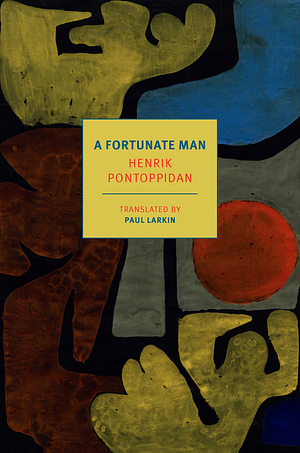
Before I plunge into my topic, FictionFan and I are announcing a Review-Along of the works of Henrik Pontoppidan, the Danish Nobel Prize for Literature winner (1917). We both chose his most famous book to read, A Fortunate Man (also known as Lucky Per), but readers are welcome to choose any of his works that are available. We’re aiming for March, as A Fortunate Man is a real doorstopper! See the details at FictionFan’s announcement post here!
James Tait Black Fiction Prize Wrap-Up
A few years ago, I decided to add the James Tait Black Fiction Prize to my shortlist projects. However, after a while I felt like I was reading too much British fiction as opposed to American or fiction from other countries, since all my prize projects were Brit-based and I also read a lot of reprinted British fiction. So, I dropped the James Tait in 2023 and added the Pulitzer Prize for Fiction. For the James Tait, I started my list back a few years, at 2010.
When I was just trying to wrap up this project by finishing the few books I had left to read, some fellow bloggers asked me if I would provide a wrap-up post for my reading. So, here it is, for the shortlisted books from 2010-2023, I know I’m finishing a few years later, but many of the books for this project were never available from my library, so I waited to see if they would become available and at the end, had to buy them. That hasn’t been a problem with my Booker or Pulitzer projects, although it has sometimes affected my Walter Scott Fiction Prize project.
The Data
Thanks to a request by FictionFan, I am providing data about my project. I am not a data person, so bear with me.
I began this project October 6, 2017, and decided to wrap it up in 2023. I finished reading on October 4, 2025, but it’s taken me this long to schedule the final two reviews. I posted my last review last Thursday, November 20, 2025.
Number of books read for project: 57
Ratings in The StoryGraph
Keep in mind that until 2025, I stored this data in Goodreads, which does not allow fractional ratings. There were only two books in the list that had fractional ratings, so I rounded them down. I am not really happy with 1-5 ratings, because to me, a 3.25 rating (a little bit better than 3, which is my meh rating), for example, is a lot different than a 3.75 rating (almost a 4).
Yes, I made some charts! It’s been a long time since I used Excel, so pardon me for any awkwardness. As you can see below, most of the books were rated either 3 (green) or 4 (blue).
Author Information
Number of female authors: 34; Number of male authors: 22
Note that one author made the shortlist twice.
I made a chart for author nationality. This chart is off by one because Sarah Hall is listed twice in my data, and I couldn’t figure out how to exclude one of her from this chart. So, there is one extra count for “English.” I used nationality as listed in Wikipedia, which for some authors listed two. Where are the Canadian authors, guys?
Settings
This answer was difficult, because some settings were unspecified while other books were set in several places, and one was just “Europe.” The chart I generated was unpleasing, so here is the data entered by hand for number of books in a setting:
U. S.: 17
England: 13
Ireland: 2
Scotland: 2
Multiple countries: 9
Unspecified: 5
Only one novel is set in each of the following countries: Kosovo, Bulgaria, Italy, Spain, Nigeria, Russia, Japan, Uganda, and Vietnam.
Genres
This section is problematic, I know, but I decided to add it at the last moment. The problem is that genres are so fluidly described these days that I could have a different list for each book! I tried for broader categories and used a search when I needed to, but sometimes I got as definitive a genre as “novel.” I also realize that short fiction could also fit into one or more of these genres, but I didn’t go there. I didn’t want to deal with specifying more than one genre per book. So, I did my best. Here is the genre breakdown I came up with. I was surprised by how many of the novels were historical, although I know it has recently become a very popular genre.
How Much I Liked Them
I wasn’t sure how to organize this section, so I decided to break it up into categories by how much I enjoyed the book. So, with no more adieu . . . These books are ordered by year of the prize, with the earliest first. For the most part, you will see that the category I put a book in has no relationship to whether it won that year or not. Winners are marked in red.
Books I Loved
- Wolf Hall by Hillary Mantel (2010)
- The Thousand Autumns of Jacob de Zoet by David Mitchell (2011)
- The Invisible Bridge by Julie Orringer (2011)
- All the Birds, Singing by Evie Wyld (2014)
Books I Highly Recommend
- The Children’s Book by A. S. Byatt (2010)
- Solace by Belinda McKeon (2012)
- Snowdrops by A. D. Miller (2012)
- The Panopticon by Jenni Fagan (2013)
- Benediction by Kent Haruf (2014)
- Dear Thief by Samantha Harvey (2015)
- Fourth of July Creek by Smith Henderson (2015)
- The Wolf Border by Sarah Hall (2016)
- The First Bad Man by Miranda July (2016)
- The Lesser Bohemians by Eimer McBride (2017)
- American War by Omar El Akkad (2018)
- White Tears by Hari Kunzru (2018)
- Demon Copperhead by Barbara Kingsolver (2023)
Books I Moderately Recommend
- The Selected Works of T. S. Spivett by Reif Larsen (2010)
- There But for the by Ali Smith (2012)
- The Big Music by Kirsty Gun (2013)
- The Deadman’s Pedal by Alan Warner (2013)
- Harvest by Jim Crace (2014)
- In the Light of What We Know by Zai Haider Rahman (2015)
- We Are Not Ourselves by Matthew Thomas (2015)
- A Country Road, A Tree by Jo Baker (2017)
- Attrib. and Other Stories by Eley Williams (2018)
- Heads of the Colored People by Nafissa Thompson-Spires (2019)
- Sight by Jessie Greengrass (2019)
- Ducks, Newburyport by Lucy Ellman (2020)
- Sudden Traveler by Sarah Hall (2020)
- Travelers by Helon Habila (2020)
- Girl by Edna O’Brien (2020)
- Alligator & Other Stories by Dimi Alzayat (2021)
- A Children’s Bible by Lydia Millet (2021)
- LOTE by Shola von Reinholdt (2021)
- Memorial by Bryan Washington (2022)
- Bitter Orange Tree by Jokha Alharthi (2023)
So-So or Even Meh or Some Good Stuff
- Strangers by Anita Brookner (2010)
- Nocturnes by Kazuo Ishiguro (2010)
- The Lotus Eaters by Tatjana Soli (2011)
- Leaving the Atocha Station by Ben Lerner (2013)
- The Flame Throwers by Rachel Kushner (2014)
- You Don’t Have to Live Like This by Benjamin Markovits (2016)
- Beatlebone by Kevin Barry (2016)
- What Belongs to You by Garth Greenwell (2017)
- First Love by Gwendolyn Riley (2018)
- The First Woman by Jennifer Nunsubuga Makumbi (2021)
- English Magic by Uschi Gatward (2022)
- Libertie by Kaitlin Greenidge (2022)
- A Shock by Keith Ridgway (2022)
- Bolla by Pajtim Statovci (2023)
- After Saphho by Shelby Wynn Schwartz (2023)
Books I Actively Disliked or That Annoyed Me
- La Rochelle by Michael Nath (2011)
- You & Me by Padgett Powell (2012)
- The Sport of Kings by C. E. Morgan (2017)
- Murmur by Will Eaves (2019)
- Crudo by Olivia Laing (2019)
Best and Worst
The best book choice is tough, but I pick Wolf Hall by Hilary Mantel. It captured me every second and was minutely researched.
The worst book choice is easy, the only one I didn’t finish, You & Me by Padgett Powell. Who needs to rewrite Waiting for Godot anyway? And so unfunny.
Nonfiction November 2025! Week Five: New to My TBR
Welcome to the last week of Nonfiction November 2025. This week the host is Deb at Readerbuzz, and the prompt is New to My TBR: It’s been a month full of amazing nonfiction books! Which ones have made it onto your TBR? Be sure to link back to the original blogger who posted about that book!
In her roundup for the year, Shoe’s Seeds & Stories reminded me of Amy Tan’s Backyard Bird Chronicles. I must have read about that book on her blog last year, but I also listened to an NPR interview with her about the book. I still have that book in my pile, but Shoe also mentioned her memoir, The Opposite of Fate. I think I would like to read that.
In her roundup, Kate of Books Are My Favourite and Best mentioned Hannah Kent’s memoir, Always Home, Always Homesick, about falling in love with Iceland. I’m kind of fascinated by Iceland, and I loved Kent’s book set there, so I’m putting that one on my list.
On Books Please, I read about Islands of Abandonment by Cal Flynn, about what happens to places when they are abandoned by people. Sounds fascinating!
I noticed that Say Nothing: A True Story of Memory and Murder in Northern Ireland by Patrick Radden O’Keefe is mentioned by Anne in My Head Is Full of Books. This is another book in my pile that I think I read about last year but have not gotten to yet. So, not new to my TBR but waiting.
A memoir that looked interesting on Fanda Classic Lit was Notes from an Island by Tove Jansson & Tuulikki Pietilä, and it has a map on the cover! I love maps!
This book isn’t nonfiction, but Michelle Paver’s name has been popping up all over the place lately, so when Olivia of Bemused and Bookish paired it with a nonfiction book of exploration, I put Rainforest on my reading list. I didn’t put the nonfiction book on my list because I already read a similar book called The Lost City of Z by David Grann. Also, it has a great cover.
Also from Olivia’s post for book pairings is Uncredited: Women’s Overlooked, Misattributed & Stolen Work by Allison Tyra. As a woman whose work has been overlooked and misattributed, I think this will be interesting.
I think the Franklin Expedition is fascinating, and I have already read several books that are either about it or reference it, so when Aj Sterkel of Read All the Things posted Ice Ghosts by Paul Watson, I had to add it to my list.
Aj Sterkel also brought up Stiff by Mary Roach, which made me remember how much I enjoyed her book about space exploration, Packing for Mars. Learning what people have done with corpses throughout time sounds interesting. So, I put that on my list. And, by the way, Read All the Things also reminded me that I have not yet read Sapiens by Yuval Noah Harari, which I put on my list last year.
Joy of Joy’s Book Blog mentions The Warmth of Other Suns by Isabel Wilkerson, a book I read in 2015. This reminds me that I have not yet read Caste, by the same author, a book that I have had on my list since it came out. And she also reminded me of another book that I’ve had on my list for a while, Fever in the Heartland by Timothy Egan.
So, I’m cheating a little bit by mentioning some books that are on my TBR, but I have added quite a few this week.
Some Book Serendipity of My Own
When Bookish Beck posts her lists of what she calls “Book Serendipity,” that is, coincidences she notices across books, I am always impressed by how many things she lists and the level of detail she notices. So, last summer, I noticed a few things and jotted them down, thinking I would create a book serendipity list of my own. Then I had to flip the page in my notebook for some reason and forgot all about it. So, this is the paltry number of things I wrote down, plus one that is more recent.
- Frail older woman interferes with a much younger man’s life: The Sweet Dove Died by Barbara Pym and Cecil by Elizabeth Eliot.
- Women are married to much older men: Cecil by Elizabeth Eliot and The Musgraves by D. E. Stevenson.
- Feudalism is a good thing: The Secret of Chimneys by Agatha Christie and The Portuguese Escape by Ann Bridge.
- Empire is a good thing: The Portuguese Escape and The Lighthearted Quest by Ann Bridge
Boy, Ann, you’re not doing too well here.
The other things I noticed were actually cross-media serendipities that happened almost exactly at the same time:
- Reference to Burgess and Maclean in The Portuguese Escape by Ann Bridge while watching a TV series about Kim Philby, also with references to Burgess and Maclean (A Spy Among Friends, starring Guy Pearce and Damian Lewis)
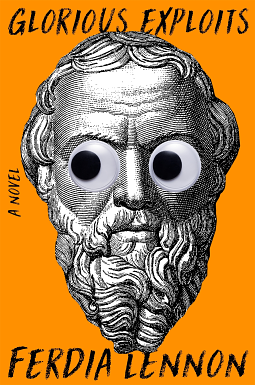
- References to or setting in Ancient Syracuse in Indian Jones and the Dial of Destiny, on Jeopardy, and in Glorious Exploits by Ferdia Lennon
I guess maybe I’m not so much a details person as a big picture person, because I’m sure there have been more than these.
Nonfiction November 2025! Week Four: Diverse Perspectives
This week the host is Rebekah of She Seeks Nonfiction. The prompt is Diverse Perspectives. Nonfiction books are one of the best tools for seeing the world through someone else’s eyes. They allow us to get an idea of the experiences of people of all different ages, races, genders, abilities, religions, socioeconomic backgrounds, or even just people with different opinions than ours. Is there a book you read this year from a diverse author, or a book that opened your eyes to a perspective that you hadn’t considered? How did it challenge you to think differently?
I think the book I read that most reflected a perspective that was different from my own was Life Among the Qallunaat by Mini Aodla Freeman, a memoir by an Inuit woman whose life, even in the 1950s, was so different from my own, growing up at the same time. In the memoir, she portrays herself as a very naïve young girl, but at the same time there is lurking in her writing a little bit of humor as she explains the differences between her people’s ways of thinking and behaving and our own.
Another book that reflected a different kind of “modern” life was Fenwomen: A Portrait of Women in an English Village. What struck me about this book is that the lives of the people were so remote from those of everyday English people in the 1970s even though their village was located only about 30 miles from Cambridge. The fact that for years there was no easy transportation between the village and larger towns and even between the fen dwellers and the village made the villagers’ lives a lot more primitive than others’, and the situation, although it has improved with many people having cars, has only gotten worse for the poor with transportation issues such as the removal of bus routes.
I don’t feel as if this topic works that well for the books that I read this year, though.
Best of Ten!
The Best Book for this period is Uncle Paul by Celia Fremlin!
Nonfiction November 2025! Week Three: Book Pairings
This week, the host for Nonfiction November is Liz at Adventures in Reading, Running and Working from Home, and the prompt is book pairings: This week, pair up a nonfiction book with a fiction title. Maybe it’s a historical novel and the real history in a nonfiction version, or a memoir and a novel, or a fiction book you’ve read and you would like recommendations for background reading. Or maybe it’s just two books you feel have a link, whatever they might be. You can be as creative as you like!
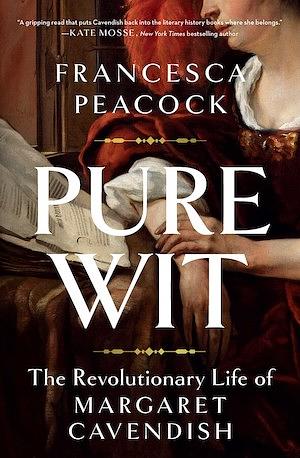
This year, I thought of several pairings, some of which aren’t that original, but maybe some of them show a little more thought. My first pairing is really obvious. I’m pairing the nonfiction Mad Madge by Katie Whitaker with its fictional counterpoint, Margaret the First by Danielle Dutton. Both are about Margaret Cavendish, Duchess of Newcastle. I read Margaret the First last year during Novellas in November!
Next, I’m bringing up the Pocket Atlas of Remote Islands by Judith Schalansky again, and I’m pairing it with Island, a book of short stories by Alastair MacLeod. One is about the geography of islands, and the other is about living on one. (I also might have paired the Pocket Atlas with The Islandman by Tomás O’Crohan, a memoir by one of the last inhabitants of the Blasket Islands in Ireland, but then both would be nonfiction.)
Next, we have the memoir Girl Interrupted by Susan Kaysen, about a young woman who is incarcerated in a mental hospital for very little reason, and A Girl Is a Half-Formed Thing by Eimear McBride, about a girl being subjected to other kinds of violence.
Finally, I thought of two books by Barbara Kingsolver that kind of complement each other. One is the nonfiction memoir/food book, Animal, Vegetable, Miracle: A Year in Food Life, and the other is Demon Copperhead, her acclaimed novel about the difficulties of a life of poverty in Appalachia, the same setting for her farm in the nonfiction book (but a lot more prosperous).
WWW Wednesday!
It’s the first Wednesday of the month, so it’s time for WWW Wednesday, an idea I borrowed from David Chazan, The Chocolate Lady, who borrowed it from someone else. For this feature, I report
- What I am reading now
- What I just finished reading
- What I intend to read next
This is something you can participate in, too, if you want, by leaving comments about what you’ve been reading or plan to read.
What I am reading now
I am reading What Happened to Nina? by Dervla McTiernan. It’s a departure from the other books I’ve read by her, because it’s set in Vermont, U. S., instead of Ireland. It’s billed as a thriller, although so far (I’m two-thirds of the way through), it’s not showing any evidence of that. It’s more of a psychological novel about what happens when a young woman goes missing.
What I just finished reading
My last book was one I read for Literary Wives, review coming up December 1. It’s The Soul of Kindness by Elizabeth Taylor. It’s more of a community novel, like Middlemarch, even though it has a main character. It’s about the effect of a woman’s actions on the people around her.
What I will read next
I just got this book out of the library, so I’ll probably read it next. It’s Jane Austen in 41 Objects, yes, nonfiction by Kathryn Sutherland. I read about it on another blog, and it sounded fascinating. I would say it is right in time for Nonfiction November, except that I probably won’t be posting my review until January or February.
How about you? What have you been or are reading?
Nonfiction November 25! Week Two: Choosing Nonfiction
For week two of Nonfiction November, the host is Frances at Volatile Rune. The prompt is Choosing Nonfiction: There are many topics to choose from when looking for a nonfiction book. For example: Biography, Autobiography, Memoire, Travel, Health, Politics, History, Religion and Spirituality, Science, Art, Medicine, Gardening, Food, Business, Education, Music. Maybe use this week to challenge yourself to pick a genre you wouldn’t normally read? Or stick to what you usually like is also fine. If you are a nonfiction genre newbie, did your choice encourage you to read more?
I’m not actively reading nonfiction this month unless something comes up in my pile. I usually use this month to read other people’s entries and get ideas for books to read in the future. I put a bunch of books on my To Read list last year, but so far, I have only managed to read a few of them. That doesn’t mean I don’t intend to read them.
As far as genres, although I tend to read mostly history and biography, particularly of literary figures, and a bit of true crime, I will read any topic if it seems interesting, even science, which in general I don’t have much interest in. About the only topics I won’t read are self-help and health, because I’m really uninterested in those topics. But psychology, for example, which is related, I find interesting. (I also won’t read business books, especially the “Ten Traits” type, because they are based on very little research and are generally stupidly thought through—and thank goodness, I’m no longer working.)
I thought I’d use this week to talk about some of the more unusual, for me, nonfiction books I read during the year. Unfortunately, I have only posted reviews of one of them so far.
Although I don’t tend to read about health, this year I read Animal, Vegetable, Miracle: A Year of Food Life by Barbara Kingsolver. Now, granted, this book is partially memoir, but it also has lots of information on food topics and the importance of eating fresh food. I actually read this book because it filled a hole in my A Century of Books project that I was trying to get done last year. (It came over into this year by four months!) That’s because, although I tend to like Kingsolver and think she has written wonderful books, she can also be preachy. And she is, a bit, in this book. But it also has lots of information about food topics I hadn’t thought about, includes a bit of memoir, and has tasty sounding recipes!
Now, I like books about maps and mapmaking. I don’t often see one, but I think books about mapmaking and the related subjects, geography and geology, can be interesting. I haven’t reviewed it on my blog yet, but one of my best books, whenever it comes up (it may not make it until next year) will be Pocket Atlas of Remote Islands: Fifty Islands I Have Not Visited and Never Will by Judith Schalansky. This is a lovely book that I read about on someone else’s blog. I’d like to give them credit, but I can’t remember who they are. (I did a quick search hoping a familiar blog name would pop up, but it didn’t, although I saw lots of copies for sale on eBay, surprisingly.) This book is interesting not just because of the islands Schalanksy chooses to talk about but also because of the things she chooses to tell about them, including a topographical map, one story about each place, and the distance from other locations. This is probably the most unusual book about maps I have ever read.
Finally, another as yet unreviewed book for me is Fenwomen: A Portrait of Women in an English Village by Mary Chamberlain. This is a sociology study from the 1970s, when feminism was just starting to make inroads in academia, but it was also the very first book published by Virago, and its reception was fairly astonishing, at least it would probably seem so to people nowadays. It simply interviews as many women in a small village in the fens as it can about their lives, their work, and so on. The updated version that I got includes an Introduction from 2010 that talks about what happened when it was published and includes about twenty pages of beautiful photos at the end.
I’m looking forward to getting new ideas for nonfiction this year.