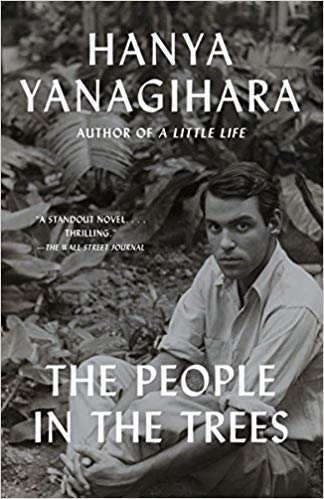
 The Best Book for this period is The People in the Trees by Hanya Yanagihara!
An extra fun recommendation is The Talisman Ring by Georgette Heyer!
Reviews, reviews, and more reviews

The Best Book for this period is The People in the Trees by Hanya Yanagihara!
An extra fun recommendation is The Talisman Ring by Georgette Heyer!
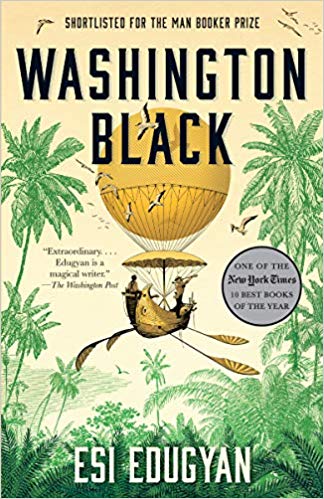 The Best Book for this period is Washington Black by Esi Edugyan!
 The Best Book for this period is Mothering Sunday by Graham Swift!
The Classics Club is having another spin. For that, we post a list of twenty of the books from our Classics Club lists, and then Classics Club picks a number, and that’s the book we read next. The goal is to read the book by October 31st.
 So, here is my list for Spin #21:
 The Best Book for this period is The Miniaturist by Jessie Burton!
Highly recommended: Educated by Tara Westover!
 As I just reviewed End Games in Bordeaux, the final shortlisted book for 2016 that I read for my Walter Scott Fiction Prize project, it is time for my feature where I decide whether the judges got it right. Since Simon Mawer’s Tightrope was the winner, I’m guessing anyone that follows my blog will know that I don’t think they did.
The Walter Scott Prize judges have done it again by choosing both a sequel and the fourth in a series for their shortlist. I don’t know what it is with this prize. They seem to love books that don’t stand very well alone. Tightrope is the sequel, about Marian Sutro, an agent during World War II who is considered a perfect choice to continue as an agent during the Cold War. In this book, at least, Sutro is an unknowable quantity, and I also thought she was an adolescent male’s dream of the perfect woman. I also wasn’t thrilled to revisit Mawer’s fascination with the female labia. I will not be willingly reading anymore Mawer.
The fourth book of the series was End Games in Bordeaux by Allan Massie, which introduced so many unexplained characters and provided so little background in its terse little chunks that I could hardly understand what was going on. And, I think for this prize, another important consideration is how well the book handles the historical background. Is there a real feel for the time and place? I didn’t think so for either book, although both do a good job of portraying the paranoia of their respective times.
Nineteenth century Australia was better portrayed in Lucy Treloar’s Salt Creek. This novel was an occasionally harrowing picture of a hapless family, appalled by their rustic surroundings. However, I found its plaintive tone a bit hard to take at times.
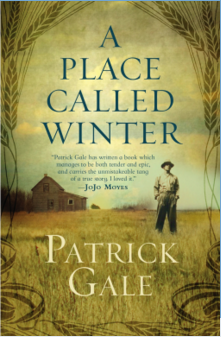
I liked A Place Called Winter by Patrick Gale better, although it took a long time to get the main character to 19th century Saskatchewan, where it was most interesting. I most liked finding out about the details of early homesteading and the treatment of mental illness.
 William Boyd takes a more global view in his novels. His most recent ones cover large swaths of time and lots of historical events. That includes Sweet Caress, a novel about the life of a woman photographer, beginning in 1908 and ending in 1975. I found this novel so convincing in one way (it might have been the photographs) that I kept googling the main character, thinking this was a work of biographical fiction. She’s fictional, but I was not always sure I was hearing a female voice.
This decision was difficult, because no one book stands out above the others, although I definitely like some more than others. But I finally selected Mrs. Engels by Gavin McCrea for its lively narrative voice, its humor, and its look into the private lives of Karl Marx and Frederick Engels.
 My British blogging friend Simon of Stuck in a Book just featured me along with another blogger (Ruthiella of Booked For Life) in his series “My Life in Books.” If you’re at all remotely interested, here is the link for the interview. This was quite a lot of fun, although I found the question where you try to guess what a person is like from the books they mentioned a little intimidating. You hate to be wrong! I also found it hard to recommend a book just based on this information.
 I just reviewed The Sport of Kings, which was the last book I read of the shortlisted books for the 2017 James Tait Black Fiction Prize. This means that it’s time for my regular feature, where I give my opinion of whether the judges got it right.
If you were paying attention to my last review, you probably already know that The Sport of Kings by C. E. Morgan doesn’t get my vote. I found it overblown and rambling, as well as depicting a bunch of detestable characters. Of course, I’m not a big fan of Southern Gothic.
Similarly, although I liked What Belongs to You by Garth Greenwell better, I wasn’t that interested in the all too familiar story of a man falling in love with a prostitute nor in the explicit sexuality. The section about the narrator’s relationship with his father was more interesting.
 Now, let’s get to the good stuff. I thought that A Country Road, A Tree was a fascinating biographical depiction of the life of Samuel Beckett during World War II. It wasn’t very venturesome in other respects, though.
That’s why, I’m guessing, the winner for 2017 was Eimer McBride’s The Lesser Bohemians. And I have to say, although I thought that A Country Road, A Tree was a great novel, I enjoyed the quirky, inventive narrative style of The Lesser Bohemians. It’s a toss-up for me, so we’ll say the James Tait Black people got it right.
 The Best Book for this period is The Greenlanders by Jane Smiley!
 The Best Book of this period is The Witch Elm by Tana French!
Highly recommended: See What I Have Done by Sarah Schmidt
Writer and Historian
There is nothing more satisfying than reading a book while sipping a hot cup of tea.
A historical fiction book blog
Emerging as an artist
Liz Dexter muses on freelancing, reading, and running ...
For mostly adult, literary, fiction; focusing on Historical, Biographical, and Women's Fiction.
"Well, there’s so much to read, and I’m so far behind." Wallace Stegner
Read to live and live to read
A bookish blog (mostly) about women writers of the nineteenth and twentieth centuries
A Celebration of Russian Literature
Reading: it's personal
Based in Romania, reading all over the world. Mostly fiction, some memoires and a little bit of poetry.
Adam Burgess
"Vivre le livre!"
"History is a vast early warning system." Norman Cousins
Scottish Book Blogger
"She had read novels while other people perused the Sunday papers" - Mary Elizabeth Braddon
A word after a word after a word is power. --Margaret Atwood
Books • Opera • Art • History
FOR DISCERNING READERS
Your online source for Jane Austen and her legacy
A Community of Classics Lovers
A blog about Irish books, writers, writing and everything in between.
A suggestion a day from the Williamsburg Regional Library

