 The Best Book for this period is Transcription by Kate Atkinson!
Highly recommended: Solace by Brenda McKeon
Reviews, reviews, and more reviews

The Best Book for this period is Transcription by Kate Atkinson!
Highly recommended: Solace by Brenda McKeon
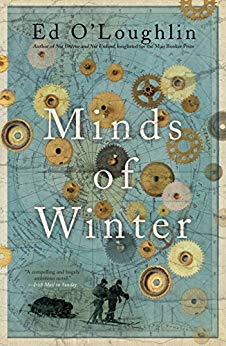 The Best Book for this period is Minds of Winter by Ed O’Loughlin!
Highly recommended: After You’d Gone by Maggie O’Farrell and Frederica by Georgette Heyer.
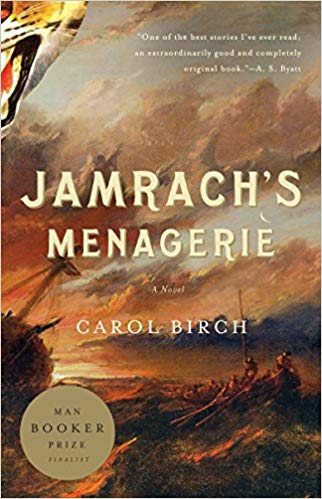 The Best Book of the last ten is Jamrach’s Menagerie by Carol Birch!
Highly recommended: Killers of the Flower Moon by David Grann!
 Classics Club has announced another spin, in which we post 20 books from our Classics Club lists. On April 22, the club will pick a number, and that will determine the book we read for our spin by May 31. So, with no further ado, here is the list for my spin.
Yesterday, I posted my review of the last of the 2011 shortlisted books for the Man Booker Prize, so it’s time for my feature where I decide whether the judges got it right. The 2011 shortlist offers a lot to like, although I found a bit to dislike in it, too.
It’s easy for me to dismiss one of the books. I did not like Patrick DeWitt’s The Sisters Brothers, an ironic, superviolent Western, at all.
I was a little more interested in Half-Blood Blues, Esi Edugyan’s dual time-frame story about how jealousy affects an American blues band hiding in Nazi-occupied Germany and Paris. However, I didn’t really like most of the characters and I wasn’t in love with the vernacular used to narrate the novel, which I believed was probably not historically accurate.
Snowdrops by A. D. Miller paints a chilling picture of life in post-Cold War Russia. I felt this was an engaging thriller and character study with a narrator made unreliable by his willful ignorance.
I was enchanted by the narrator of Stephen Kelman’s Pigeon English, a naive 11-year-old boy from Ghana, and the novel invoked in me a growing dread. However, I felt that the role of the pigeon didn’t really work.
 Jamrach’s Menagerie just plain tells a fascinating story, about a 19th century boy who is rescued from poverty by a menagerie owner and who sails off on a mission to find a dragon. This novel features wonderful storytelling.
The winning novel was Julian Barnes’s The Sense of an Ending. Barnes is a master of the unreliable narrator, and this novel is no exception. Through reading the diary of a friend who committed suicide, the narrator learns that everything he remembers about the key relationships in his life is wrong.
Although this time it was a tough decision, I have to agree with the judges. Barnes’s book is short but psychologically fascinating and complex. I would also pose that it is the novel that is the most literary of the shortlisted books. I strongly recommend some of the other books, however, particularly Jamrach’s Menagerie.
 The Best Book for this period is Golden Hill by Francis Spufford!
Highly recommended: Samuel Pepys: The Unequalled Self by Claire Tomalin and Brief Lives by John Aubrey.
 The Best Book for this period is Famous Trials, edited by Harry Hodge and James H. Hodge.
Highly recommended: They Were Sisters by Dorothy Whipple (on last year’s top ten!) and The Lesser Bohemians by Eimear McBride!
 Starting with my 1300th review, I decided to do my Best Book series differently. Because I have gone to three postings a week, the Best of Five post came roughly every other week. Now, I plan to do this post every ten books instead, permitting me to post a few more reviews in the same period of time. So, this post will appear roughly once a month but may mention more books.
The Best Book for this period is Crow Lake by Mary Lawson!
Also recommended: Our Spoons Came from Woolworths by Barbara Comyns and To the Lighthouse by Virginia Woolf!
 Since it is my blog anniversary today, I follow my tradition of posting my top ten books that I reviewed during the previous year. This year was a difficult one, because I had three books by Dorothy Whipple appearing in my Best of Five series, and my rule is to select only one book by an author in my year’s top ten.
As usual, this is a mixed bag of books, combining one nonfiction and one short story collection with several classic books and only one contemporary one (if you don’t count multigenerational sagas). Historical novels feature quite heavily this year.
So, with no further ado except a comment that this year I decided to list them in backwards order from when they were posted, here are my top ten books for this year:

The Best Book for this period is The Weight of Ink by Rachel Kadish!
Writer and Historian
There is nothing more satisfying than reading a book while sipping a hot cup of tea.
A historical fiction book blog
Emerging as an artist
Liz Dexter muses on freelancing, reading, and running ...
For mostly adult, literary, fiction; focusing on Historical, Biographical, and Women's Fiction.
"Well, there’s so much to read, and I’m so far behind." Wallace Stegner
Read to live and live to read
A bookish blog (mostly) about women writers of the nineteenth and twentieth centuries
A Celebration of Russian Literature
Reading: it's personal
Based in Romania, reading all over the world. Mostly fiction, some memoires and a little bit of poetry.
Adam Burgess
"Vivre le livre!"
"History is a vast early warning system." Norman Cousins
Scottish Book Blogger
"She had read novels while other people perused the Sunday papers" - Mary Elizabeth Braddon
A word after a word after a word is power. --Margaret Atwood
Books • Opera • Art • History
FOR DISCERNING READERS
Your online source for Jane Austen and her legacy
A Community of Classics Lovers
A blog about Irish books, writers, writing and everything in between.
A suggestion a day from the Williamsburg Regional Library

