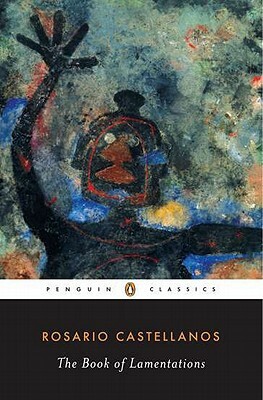
When I put this novel on my Classics Club list, I was looking for a few classics written originally in a foreign language. So, I chose this novel without knowing much about it.
It is set in Chiapas, a remote state in the far south of Mexico. At first, you might think it is set in the 19th century, but it is actually set in the 1930s, at a time when Mexico began to exact reforms that would return portions of the wealthy ranches to the native population.
One of the first images that indicates the treatment of the native population is that of travelers sitting in chairs that are strapped to Indians, who carry the people through the mountains. (I’m using the term “Indian” because the book does.) The Introduction says that Castellanos experienced this as a child.
I was confused at first, because the novel starts out with one group of people only to switch to another and another before bringing their stories together.
Although other characters are introduced first, the action starts with Marcela, a young native girl, traveling into the city of Cuidad Real to sell pots. She is told by a Ladina woman to bring the pots to her house. What she doesn’t know is that Doña Mercedes is a procuratress, and Mercela ends up being raped by Don Leonardo Cifuentes, who likes them young.
Returning home, she is rebuffed by her parents until she is taken under the wing of Catalina Díaz Puilgir, an ilol (sort of a sorceress) and her husband Pedro González Winiktón. She is made to marry Catalina’s brother Lorenzo, a man of limited intellect, and eventually has a child. And that’s all we see of her until much later.
Suddenly we switch to Cuidad Real and the lives of the Ladino characters. Leonardo Cifuentes, a wealthy rancher, is married to Isabel and probably murdered her first husband. Her daughter, Idolina, has taken to her bed since her father’s death. Leonardo has been courting a newcomer to town, Julia Acevedo, the supposed wife of Fernando Ulloa, the engineer who has been sent by the government to survey the ranches in preparation for the land reforms.
So far, Julia has avoided Cifuentes’s advances and made friends with his daughter. Her attempts, however, to be accepted by the rest of the Ladinas in the upper classes are unsuccessful. Instead of staying properly at home, she walks around town with her red hair flowing, earning her the nickname “La Alazana.”
The real issue in the novel is the land reform, which the ranchers oppose. However, an excuse for violent action comes when Catalina finds a cave with ancient stone figures in it. She gains a large following among the Indians by falling into trances in the cave and making utterances. The ranchers use the excuse of the large gatherings to claim that the Indians are planning a revolt. And violence eventually follows.
The novel is acerbically written, with no totally likable characters but with sympathy for the Mayan outcasts, who don’t really understand what is going on most of the time. They don’t understand the language or the mode of thought of the Ladinos, and when questioned later by authorities, since they don’t understand the questions, they just answer yes or no at random.
This novel was difficult to read. It wasn’t just the subject matter but more how the novel would jump to a new set of characters and tell a lot about them only to have them vanish for many pages. I may have also had problems because I was on vacation and then sick while trying to read it. But I was determined to finish it, and did. Although the novel is sympathetic to the native peoples of the area, to the modern eye it is also patronizing.
Related Posts
Mexican Gothic
The Bridge of the Gods
Black Narcissus







 What? Me Read?