Day 897: That Lady

Cover for That LadyThat Lady is another book I’ve read for my Classics Club list, and a good one it is, too. In the Preface to the novel, Kate O’Brien states that it is not a historical novel because, although all of the events are real, the scenes between characters are wholly imagined. But I would argue that this is the very definition of a historical novel, with the proviso that the author attempt to preserve the true nature of the peoples’ characters, if they are known. That Lady is based on a curious interaction between Philip II of Spain and Ana de Mendoza, Princess of Eboli, that historians are still struggling to understand.

The novel begins in 1576, when Ana is a 36-year-old widow. Her husband was Ruy Gomez de Silva, Philip’s secretary of state. But Ruy has been dead for several years, and Ana has been living a retired life with her children on her country estate of Pastrana.

Philip comes to visit, however, and tells her he wishes her to return to Madrid. He and Ana have enjoyed friendship and a mild flirtation, and he misses her company.

Ana does not return to Madrid immediately, but she eventually does in the fall of 1577. There, she becomes reacquainted with Don Antonio Perez, her husband’s former protégé and friend, who is Philip’s current secretary of state.

Although Ana has heretofore been a virtuous woman, she begins an affair with Perez, partially because she realizes she has done nothing of her own volition for years. This relationship eventually becomes a complication in a political battle.

This novel is primarily a character study of a fascinating woman and to a lesser extent of Philip II, whose poor government of Spain has stricken with poverty the inhabitants of what was at the time the wealthiest country in the world. It is also a very interesting study of the politics of the region of Castille.

At first, I found it difficult to grasp Ana’s character, but the novel centers on her strong sense of principle and protection of her privacy. It is also about the tension between her religious beliefs and her principles. That is, having committed herself, she refuses to abandon her lover when he is in trouble, even to save her soul or her life.

That Lady is a powerful novel about an unusual, strong woman who struggles against the restrictions of her life based on sex and station. I highly recommend it. By the way, the picture on the cover above is of a painting of the actual lady.

Related Posts

La Reine Margot

People of the Book

The Marriage Game

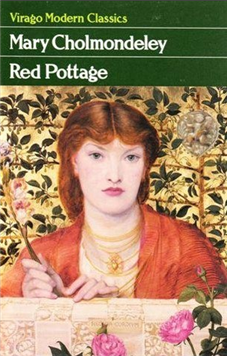
Day 895: Red Pottage

red-pottageBest Book of the Week!
Red Pottage is another find for me this year of a novel by a terrific classic author. I can include Mrs. Oliphant, Dorothy Whipple, and Julia Strachey in this list of classic authors I have not read before that I really enjoyed. My Doughty Library edition says the novel contains “every ingredient for a Victorian bestseller” and mentions wickedness and greed.

Hugh Scarlett has been having an affair with a married woman, Lady Newhaven. At first he thought he was in love with her, but now he has recognized her for who she is—a shallow and stupid beauty. He has already decided to break with her when he meets Rachel West at a party. At one glance he decides that Rachel is the woman to make a better man of him.

Rachel has also attracted the attention of Dick Vernon, a wine grower from Australia who is visiting his friends and family. Rachel likes him, but she is thinking of others.

Rachel has an unhappy past. Once the daughter of a wealthy man, she lost her fortune with her father’s death. For seven years she struggled to support herself, living in London’s East End and working as a typist. At that time, she fell deeply in love with an artist, Mr. Tristram, and was devastated when she realized he had no intention of marrying her. At the beginning of the novel, she has inherited another fortune and still believes herself in love with Mr. Tristram. Now that she has a fortune, though, she is looking like a much better prospect to him.

Another important character is Hester Gresley, an author who has been Rachel’s friend since childhood. Although Hester is better born than Rachel, her fortunes have suffered as Rachel’s have improved. She lives with her brother James, a rector who disregards her talent as a novelist and can only see his own point of view. James’s wife is jealous of Hester, and the children lovable but noisy. Hester finds herself unable to work during the daytime, so she stays up into the morning working, only to be accused by her sister-in-law of laziness.

Red Pottage is a story about morals and manners. That sounds boring, but it is quite satirical at times, while at other times it brought me to tears. The central conflict begins shortly after Hugh meets Rachel, when Lord Newhaven confronts him about Hugh’s affair with his wife. He makes Hugh a challenge, that they draw “lighters” (matches? straws?) and whoever draws the short one must take his own life within four months.

To complicate matters, Lady Newhaven eavesdrops on this conversation but does not learn who drew the short lighter. Then foolish, self-centered Lady Newhaven confides in Rachel, along with her assumption that if her husband dies, she will marry Hugh.

The story turned out just about how I thought it would, but I found the journey completely gripping. Another success from my Classics Club list!

Related Posts

Salem Chapel

Cheerful Weather for the Wedding

Someone at a Distance

Day 893: Classics Club Spin! A Wreath of Roses

wreath-of-rosesToday is another Classics Club Spin, and the book that was chosen for me from my Classics Club list is A Wreath of Roses by Elizabeth Taylor. Compared to the other two books I’ve read by Elizabeth Taylor, this novel seems less blighted in its setting. It takes place in a countryside that is lushly described. But before we get there, a shocking event occurs in the railway station that foreshadows the atmosphere and events to come.

Camilla is on her way for her annual holiday, which she has spent for years with her closest friend Liz and Liz’s former governess, Frances. Frances has become a famous painter, and they stay with her in her home. But this year things are different. First, Camilla has met a man, Richard Elton, on the train. Although she ordinarily wouldn’t have even spoken to him, categorizing him as a certain type, the incident at the train station has shocked them both. Then, Liz has brought along her baby Henry. Liz’s marriage to Arthur, whom Camilla dislikes, has created distance between the two women, and Camilla isn’t interested in the baby. Finally, Frances is looking like an old woman. She has difficulty painting, and has radically changed her style.

But the focus of the novel is on Camilla’s relationship with Richard Elton. When we see him on his own, we realize he is a liar who has difficulty telling his own lies from the truth. He may also be dangerous. He has told Camilla stories about violent activities during the war, but they seem unlikely. And he keeps reading in the paper about the murder of a woman.

Camilla is both repelled by and attracted to Richard. At first, she agrees to see him only to irritate Liz, but then she begins to feel sorry for him. Also, she sees herself drawing ever closer to a sort of dried-up spinsterhood, while Liz is positively blooming in her fecundity.

Although some of Taylor’s other novels are depressing in their realism, A Wreath of Roses is much darker. It juxtaposes the heat and lushness of its country setting with Camilla’s feelings of sterility and the themes of murder and suicide. The novel is disturbing yet compelling.

Related Posts

Mrs. Palfrey at the Claremont

A View of the Harbour

The Moviegoer

Day 882: Rebecca

logo for the 1938 clubBest Book of the Week!
Since Rebecca is a book that qualifies for The 1938 Club and is also on my Classics Club list, I thought this was a good time to reread it. I must say that during this reread, I noticed things I’d never noticed before.

Some years after the time of the novel’s action, the narrator recollects the events at Manderley from a life of exile. As a young, naive woman working as a companion for the vulgar Mrs. Van Hopper, the narrator meets the older, sophisticated Maxim de Winter one spring on the Riviera. When Mrs. Van Hopper becomes ill, the narrator spends some time each day with him, driving through the countryside. Mrs. Van Hopper recovers and decides abruptly to return to the States. When the narrator tells Maxim, he proposes.

Cover for RebeccaThe narrator, whose first name we never learn, is an immature girl who is prone to imagining what people are saying about her or what may happen, usually in exaggerated terms. The wedding is not the romantic event that she imagined, but she goes along with whatever Maxim suggests.

Finally, they come home to Maxim’s family home of Manderley, and that’s where the novel really gets going. For the narrator is already haunted by the thought of Rebecca, Maxim’s first wife. Rebecca was beautiful, assured, accomplished—everything the narrator believes she is not. Everyone assures her that Maxim adored Rebecca and was shattered when she died in a sailing accident. Everyone tells her she isn’t at all like Rebecca. The decor of the house reflects Rebecca’s taste, her name is scrawled inside books, her monogrammed handkerchiefs are in the pockets of coats, and the servants tell her, when she timidly makes a request, “Mrs. de Winter used this vase,” or “Mrs. de Winter sat in this room in the morning.”

Further, there is the terrifying Mrs. Danvers, the housekeeper, from whom the new Mrs. de Winter senses actual hostility. Mrs. Danvers was devoted to Rebecca and resents a new wife taking her place, especially one so much Rebecca’s inferior.

The narrator was not brought up to a life with servants, running a big house, and she has no idea how to behave. Maxim gives her little help in this regard, just expecting her to adapt. She makes mistakes, and his moods become more erratic until she thinks he regrets their marriage. As she becomes more unhappy, events build to a climax on the night of a big costume ball.

This is an extremely powerful novel that, I think, hits you differently depending upon the age you are when you read it. When I was young, I thought it was romantic and scary. Now, I think it’s more of a study of some very maladjusted characters. But this is the first reading where it made me think of Mr. Rochester.

Even though I love Jane Eyre, I’ve never been much of a fan of Mr. Rochester. But what does he do? He yearns for a young, innocent girl and is prepared to commit a crime to get her. We can say this for Jane, though, she has a strong sense of herself.

I don’t want to say much more about Rebecca in case you haven’t read it. But let’s keep it at this. Maxim de Winter also yearns for a young innocent girl, but his choice has such a weak sense of self that we don’t even learn her name. He takes her to a life for which she is completely unsuited and untrained, with a servant he might predict would be hostile, and just leaves her to make the best of things. And this comment doesn’t even touch on the darker secrets of the novel.

Do these observations make me love the novel less? No, this is a great novel. Rebecca is one of Daphne du Maurier’s most atmospheric novels, in a career with many atmospheric novels. I believe she modeled Manderley after the house where she lived in Cornwall, and its description is detailed and loving. Du Maurier was interested in aberrant personalities, in which she probably counted her own. This is a dark novel that fully draws you in. It is very well written, an excellent character study and a masterful suspense novel.

Related Posts

Castle Dor

The Poison Tree

Daphne du Maurier: The Secret Life of a Renowned Storyteller

Classics Club Spin #12!

Cover for The MoonstoneHere is my list for the next Classics Club Spin. As I mentioned last time, I have fewer than 20 books left on my list, so I am having to repeat books to make up a list of 20. We are to read the book corresponding to the number chosen and post a review by May 2.

  1. Henry VI, Part II by William Shakespeare
  2. The True Heart by Sylvia Townsend Warner
  3. The Moonstone by Wilkie Collins
  4. Ada by Vladimir Nabokov
  5. Bleak House by Charles Dickens
  6. The Vicar of Wakefield by Oliver Goldsmith
  7. Far From the Madding Crowd by Thomas Hardy
  8. A Wreath of Roses by Elizabeth Taylor
  9. Bleak House by Charles Dickens
  10. The Idiot by Fyodor Dostoevsky
  11. Troy Chimneys by Margaret Kennedy
  12. The Moonstone by Wilkie Collins
  13. Middlemarch by George Eliot
  14. Vanity Fair by William Makepeace Thackeray
  15. Beloved by Toni Morrison
  16. The Beggar Maid by Alice Munro
  17. The True Heart by Sylvia Townsend Warner
  18. Troy Chimneys by Margaret Kennedy
  19. Vanity Fair by William Makepeace Thackeray
  20. Far From the Madding Crowd by Thomas Hardy

Classics Club Spin 11!

Cover for Far From the Madding CrowdClassics Club has announced another spin. This time I have exactly 20 items left on my Classics Club list. But I don’t want to end up with Henry VI Pt. III before Pt. II, so I’ve done some creative listing, picking an entry to list twice. Classics Club will pick a number on Monday, and that’s the book I’ll read. (Although to be honest, I’ve read some of these already and just haven’t posted my review yet.)

I do wish the Classics Club would stop making their spin deadline be the first of the month, because I can’t tell you how many times it has ended up being the same day as Literary Wives, which is the case this time. The reviews are to be posted by February 1, so I’ll have to post mine earlier. Anyway, can’t wait to find out one of the books I’m reading in December and January!

  1. Henry VI Pt. II by William Shakespeare
  2. The Vicar of Wakefield by Oliver Goldsmith
  3. The Moonstone by Wilkie Collins
  4. Red Pottage by Mary Cholmondeley
  5. Bleak House by Charles Dickens
  6. The Idiot by Fyodor Dostoevsky
  7. Middlemarch by George Eliot
  8. Far from the Madding Crowd by Thomas Hardy
  9. Vanity Fair by William Makepeace Thackeray
  10. Rebecca by Daphne du Maurier
  11. The Remains of the Day by Kazuo Ishiguro
  12. Troy Chimneys by Margaret Kennedy
  13. Beloved by Toni Morrison
  14. The Beggar Maid by Alice Munro
  15. Ada by Vladimir Nabokov
  16. That Lady by Kate O’Brien
  17. A Wreath of Roses by Elizabeth Taylor
  18. The True Heart by Sylvia Townsend Warner
  19. Night by Elie Wiesel
  20. Far from the Madding Crowd by Thomas Hardy

Day 794: Classic Club Spin #10! Selected Poems of Robert Frost

Cover for Selected PoemsMy book for Classics Club Spin #10 is Selected Poems of Robert Frost. I have to confess to not having quite succeeded in finishing my selection this time, but more than 300 pages of poetry is a lot of poetry to read. I got about halfway through the book.

Poetry is just not my thing, I guess. I did enjoy many of the poems in this book, but they were the same ones I’ve enjoyed before, so it was like visiting old friends—“Mowing,” “Mending Wall,” “After Apple-Picking,” “The Road Not Taken,” “Acquainted with the Night,” “Stopping by Woods on a Snowy Evening.” Most of these, I notice, are devoted to observations about nature or are about rural work.

I do not so much enjoy what Robert Graves refers to in the introduction as his “poignant country dramas,” like “The Death of the Hired Man.” They seem more like prose to me, which is ironic, since I am generally more comfortable with prose. But they are not what I come to Frost for. I come to him for things like this:

My long two-pointed ladder’s sticking through a tree
Toward heaven still,
And there’s a barrel that I didn’t fill
Beside it, and there may be two or three
Apples I didn’t pick upon some bough.
But I am done with apple-picking now.

Related Posts

The Bees

The Selected Poetry of Edna St. Vincent Millay

Goodbye to All That


Day 787: The Hunchback of Notre Dame

Cover for The Hunchback of Notre DameWhen I was making my list for Classics Club, I thought I should finally read something by Victor Hugo. The obvious choices were Les Miserables or The Hunchback of Notre Dame, but I had tried Les Mis some years ago only to put it down in disgust when Jean Valjean hits the priest who has tried to help him over the head with the candlesticks he wants to steal. So, it was Hunchback for me.

I was interested to read in the Introduction that the French title of this novel was Notre-Dame de Paris and that Hugo hated the English title. And truly, the focus of the novel is more on Notre Dame and 15th century Paris than it is on the story we’re familiar with. In fact, one entire chapter just describes Paris as it looks from the tower of the cathedral in 1482, street by street. I have to say, though, that the chapter was almost meaningless to me, since I found myself unable to visualize what he describes, at least not in that detail.

The novel has many characters, not just the three emphasized in all the movies. It begins with Pierre Gringoire, a hapless poet who is attempting to put on a play he wrote in celebration of Epiphany and the Festival of Fools. This great (and long) production is supposed to pay tribute to the betrothal of the Dauphin with Margaret of Flanders. The problem is that the people have been waiting since dawn to see it. It is past noon, when the play is supposed to have started, but the Cardinal and the Flemish ambassadors haven’t arrived yet. The crowd, egged on by the student Jehan Frollo du Moilin and his buddies, is getting disruptive.

Gringoire decides to start the play, and the crowd settles down, but the actors are still reciting the prologue when the Cardinal and the Flemish arrive, making a lot of noise. The students turn their attention to making rude remarks. Soon the crowd begins trying to select the Pope of Fools instead of watching the play. They choose the hideously deformed hunchback Quasimodo, the bellringer at Notre Dame, and everyone leaves. Poor Gringoire will not be paid, so will not be able to pay his lodging, and he goes off homeless to wander the street.

So, we meet Quasimodo, who was taken in as a child by Claude Frollo, the severe Archdeacon of Josas and older brother of Jehan Frollo. Claude Frollo is obsessed by his studies of alchemy until his eye lights on Esmeralda, a young gypsy dancer and street performer. He becomes infatuated and lustful and so (with the typical logic of zealotry) decides she must be a witch who has enchanted him. On the other hand, when Quasimodo is sentenced to the stocks simply because he is too deaf to hear the judge, the only person who is kind to him is the gypsy dancer. So are sewn the seeds of tragedy.

And make no mistake, there is tragedy in store for most of the characters in this novel. Justice is solely dependent upon the whims of powerful men, and the more powerful they are, the more scathingly Hugo treats them. We even spend some time with the king, Louis XI, who is depicted as grasping, arbitrary, and vicious. Hugo pretty much skewers everyone except Quasimodo and the gypsy girl, who are basically cardboard figures.

Hugo is interested in many things in this novel—the cathedral itself, its own architecture, and the architecture of Paris are strong presences. The transmission of culture from century to century is a preoccupation, as are the themes of the nature of love, loyalty, and not judging by appearances. As a son of the revolution, he also has an axe to grind about the aristocracy and the corruption in the church.

I have to confess, though, that I only mildly enjoyed this gothic novel. The only highly developed character is Claude Frollo, and he is a sickening person.

Related Posts

La Reine Margot

The Lily and the Lion

The Rhetoric of Death


Day 762: The Call of the Wild

Cover for The Call of the WildThe Call of the Wild is no boys’ tale. It’s rough, embodying as it does Jack London’s ideas about the survival of the fittest. It is also London’s classic tale about the relationship between dog and man.

Buck is a large, pampered dog, the pet of a rich judge in California. But the Alaska gold rush is on, and all large dogs on the west coast are at risk. A gardener’s assistant with debts kidnaps Buck and sells him.

Buck is beaten with a club and then taken up to Alaska to work as a sled dog. But Buck never becomes submissive. Through intelligence, cunning, and brute strength he survives in brutal conditions. Eventually, he begins to feel the urge of his wild heritage.

Although London has the dog have fairly ridiculous “racial memories” of tree-living humans, they are probably about on par with what was believed at the time about evolution. London’s short novel is typical of the school of naturalism, which endeavoured to show the worst of reality. This is not really my favorite of my Classics Club list books so far.

Related Posts

Robinson Crusoe

The Devil’s Backbone

Kim

Classics Club Spin #10!

Cover for The Remains of the DayJust announced was the first Classics Club Spin since April. For the spin, we pick 20 entries from our Classics Club list, and then the Classics Club picks a number. We read the book corresponding to that number and post a review on October 23.

Unfortunately, since I always enjoy the spin, this may be the last in which I can participate with my current list, because I have so diligently read my classics that even though I have more than 20 still on my list, that is only because I have read them but not yet posted my reviews. I have exactly 20 unread books left, so I will be short for the next spin. If I want to participate, I will have to leave off some numbers and hope they’re not picked, or post the same books twice, or something. Any suggestions? I don’t want to change my list until I finish it.

Here is my list for Spin #10! My last 20 books! (My goal was to read all 50 by February 13, 2019. I think I’m going to make it.)

  1. The Vicar of Wakefield
  2. Henry VI Pt. II
  3. Night
  4. A Wreath of Roses
  5. Selected Poems by Robert Frost
  6. The Idiot
  7. Ada
  8. That Lady
  9. Beloved
  10. The Remains of the Day
  11. The True Heart
  12. The Beggar Maid
  13. Troy Chimneys
  14. Red Pottage
  15. Rebecca
  16. The Moonstone
  17. Far From the Madding Crowd
  18. Vanity Fair
  19. Bleak House
  20. Henry VI Pt III (I hope they don’t pick this number, because if they do, I’ll have to read Henry VI Pt II, too!)

Update: The selected number was #5, aargh!