Review 1621: Bewildering Cares

Camilla Lacely has been asked by a friend to tell her more about her life in a letter, so she decides to keep a diary for a week. Aside from daily entries, though, this diary reads more like a first-person narrative.

Camilla is the wife of a vicar running a household on very little money, attempting to attend numerous meetings every day, and trying to help parishioners so they don’t all bother her husband with concerns as silly as what the railroad schedule is. Her cares range from how to afford a new hat to how to provide dinner for an unexpected visit by the archdeacon to how to be more attentive to her religious thoughts and prayers.

This novel is touching and amusing, although I occasionally found it bewildering. As an unreligious American from another time, I didn’t always understand the references or jokes. Because of its focus on religion, I had more difficulty with it than with other novels from this period.

The novel does have a plot. It concerns the furor of the village residents when the unbending, self-righteous curate gives a sermon preaching pacifism. Since this novel takes place in the early days of World War II and many villagers have relatives in the war, this sermon causes an uproar.

Related Posts

Chatterton Square

Somewhere in England

The Splendid and the Vile

Review 1614: A Pink Front Door

Stella Gibbons’s books always start out seeming to be froth, but there is an edge to them, I’ve found. Still, she handles her characters’ foibles with compassion.

In A Pink Front Door, her heroine, Daisy Muir, is engaging, but she has one big flaw. She tends to make the problems of a set of misfits her own, much to the discomfort of her husband, James. At the beginning of the novel, she’s trying to keep one silly friend, Molly, from running after men, in particular an Eastern European refugee named Tibbs, who keeps losing both jobs and his lodging. Lodging is difficult to find in post-war London, and the next thing Daisy knows, she has Don, a man she barely remembers from Oxford, at her front door. Don and Katie and their three young children have just lost their lodgings, and Don hopes Daisy can help.

Daisy remembers “little Katie” from university, the most promising student of her year. Later, Katie reflects that she became stupid with love and made only a poor third. Don, however, is only a few months from finally taking his exams to qualify as a chemist, and Katie hopes to find a quiet place where he can work. If he passes, he can take a good job and they can begin a better life, but until now, they have been living in cramped, noisy, unpleasant quarters.

Daisy thinks of a former neighbor and friend of her father, Mrs. Cavendish, a horrible snob who has an entire upper floor free. Mrs. Cavendish, like many of the upper classes, has fallen on comparatively hard times and has lost her last servant. She agrees that the family can move in but insists that the hard-pressed Katie spend some time every day cleaning in exchange for the low rent that is all they can afford. The house is inconvenient. Katie must haul all their water and coal upstairs. It is also not laid out for children. But it is quiet, and Don is finally able to work.

While Daisy is embroiled in the difficulties of her friends’ lives, Molly has homed in on James and has begun dropping by Daisy’s house especially when Daisy isn’t there, making tea for James and babysitting James Too. James himself, usually tolerant of Daisy’s projects, has begun to lose his patience.

Gibbons has an eye for social follies and foibles, and she employs it here with effect. I enjoyed this novel and was touched by its conclusion.

I received this book from the publisher in exchange for a free and fair review.

Related Posts

Nightingale Wood

Not at Home

Miss Buncle’s Book

Review 1613: O, The Brave Music

Seven-year-old Ruan Ashley leads a bleak existence. Her unhappy mother seems to care little for her, preferring her sister Sylvia. Her father is a dour nonconformist minister. They have little money and live in a poor area of a Yorkshire factory town. Ruan is misunderstood, a dreamer who loves reading, especially poetry, and thirsts for beauty.

Things look up when Rosie, the daughter of a wealthy factory owner, comes to visit with David, a boy Rosie’s father has adopted. They take her for a visit to their home up in the moors, where she and David run wild. Family illness calls for her to remain there for the summer.

Ruan’s life becomes one of loss, but it is also mixed with some times of great contentment. Daring it all, she remains herself, a person who refuses to conform to expectation.

This novel is touching as well as lyrical. It is a true ode to life, written in 1940 and looking back 40 years.

I received this book from the publishers in exchange for a free and fair review.

Related Posts

Lolly Willowes

Stoner

They Were Sisters

Review 1612: Abigail

Gina is a fourteen-year-old girl who is adored by her father, General Vitaly, and has led a carefree life in Budapest. Then some changes occur. Her adored governess, Marcelle, must leave home because she is French and thus on the opposite side of World War II. Then, her father enters her into Matula, a school for girls in the provinces. He does this with no warning, and Gina is at a loss to understand why he has chosen a cheerless, strict Calvinist school.

Upon arrival, Gina is stripped of her possessions and given charmless garments to wear. Her hair is cut off. The other girls in her class seem friendly at first, but after a horrible first day, she has a melt-down and blurts out a class secret. After that, no one will speak to her.

One of the school traditions, at least among the girls, is that if you write a note asking for help and put it in the vase held by a statue named Abigail in the garden, she will help you. This tradition is one of the things Gina finds ridiculous in her first days, but after a while, she comes to believe that someone, perhaps one of the staff, probably is helping.

When Gina becomes so miserable at school that she can’t take it, she plots to run away. She is prevented by one of the teachers, König, whom she despises. Soon, her father comes to see her and tells her a secret, something that requires her to stay in the school. She realizes she must try to make peace with her classmates.

This may sound like a standard novel about life in school, but it is an adventure novel that actually becomes quite suspenseful. The identity of Abigail wasn’t very hard to guess. It is Gina who is oblivious to all the clues until the last sentence of the novel. There is certainly a cast to pick from, including Susanna, the beautiful and strict prefect; Mr. Kalmár, the handsome young teacher who is in love with her; and Gedeon Torma, the director, the source of the cheerlessness and strictness. This is also Mitsi Horn, a former student who is a legend at the school.

Despite knowing who Abigail was almost from minute one, I really enjoyed this novel. Gina, headstrong and oblivious, is still appealing, and the plot is an interesting one.

Related Posts

Salt to the Sea

The Book Thief

The Nightingale

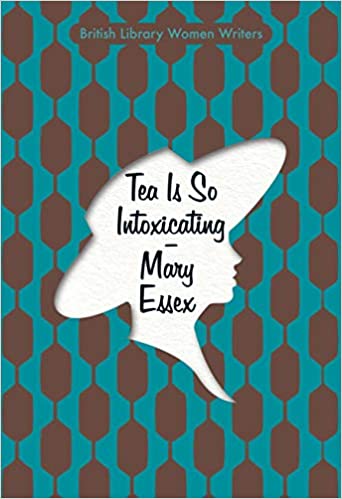
Review 1608: Tea Is So Intoxicating

Tea Is So Intoxicating is a froth of a novel with silly characters but comments to make about marriage, snobbery, and class. No one here is very likable, but quite a bit is funny.

Retired Commander David Tompkins has purchased a picturesque but inconvenient thatched cottage and decides to run a tea shop from it. His wife Germayne thinks it’s a terrible idea, but nothing can dissuade him. He thinks he is a wonderful cook and has visions of a first-class tea shop; however, his pilot meal, meant to induce an investment from his friend George, is a disaster. In fact, David can’t cook, but he is convinced that he can produce his estimated 240 delicious teas a day.

There is some hope for the cooking, because a friend at his previous job sends along Mimi, a Viennese cake baker. Mimi does know how to bake a delicious cake, but she is the type of woman whom all men want to protect and all woman distrust on sight, apparently with cause.

Mrs. Arbroath used to run the village in 1910 and thinks it is still 1910, not 1950. She is determined to keep the tea shop from opening, claiming it will attract lots of riffraff. In addition, the owner of the local pub, who has opened a small tea garden (also opposed by Mrs. Arbroath), thinks they’ll be too much competition so has barred the Tompkins from his pub.

As all this becomes (I can’t help it) a tempest in a teapot, Charmayne begins to wonder if she shouldn’t have stayed with her first husband, Nigel.

I received a copy of this book from the publishers in exchange for a free and fair review.

Related Posts

The Diary of a Provincial Lady

Nightingale Wood

The Bookshop

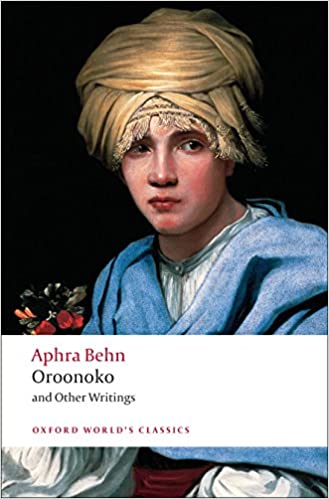
Review 1607: Classic Club Spin Result! Oroonoko

Oroonoko was the book I read for the most recent Classics Club Spin.

There are a few issues with Oroonoko, written in 1688, that might make it difficult for modern audiences. One is its acceptance of slavery (although the novel is viewed as an anti-slavery work), which in the 17th century was common. The other is its graphic violence, albeit off-stage, that has caused it to vary in popularity over time. (Apparently, even the publishers of the edition I read disagree about that, because the introduction says it was Behn’s most popular work, while the cover says it was not popular because of its violence.)

Oroonoko has been considered a novella rather than a biography, because there is no proof that such a man as Oroonoko existed. However, Behn writes the story in first person as herself, and she is known to have traveled to Suriname, where it is set, shortly before the country was ceded to the Dutch. So, you have to wonder.

Oroonoko is the prince of Coramantien, an area of present-day Ghana, the grandson of the king and a great warrior. He falls in love with a beautiful girl named Imoinda, and she becomes his betrothed. However, his grandfather sends her the veil, which means she is to join his harem, even though because of her betrothal that is a break in custom. Oroonoko must accept this or die, so he accepts it with the thought that the king cannot live long. However, the king regrets his actions and sees no way to recover the situation except if Imoinda was dead. He is unable to have her killed, though, so he sells her into slavery and tells Oroonoko she is dead.

Next, an English slave trader whom Oroonoko has sold slaves to invites him for a party. When he and his men have passed out from drink, the trader enslaves them and puts them on a ship for Suriname. It is when Oroonoko arrives there that he meets Behn and her traveling companions and they learn his tale and witness the rest of the action.

Oroonoko might be the first anti-slavery novel, although it is subtle about it, showing some of its abuses while not really commenting on the institution. Behn reveals the dastardly behavior of a series of Europeans, either slavers or owners, and contrasts it with the image she builds up of a handsome, brave, forthright black hero and his beautiful and virtuous lady. The novel was interesting, but I found what happened to Imoinda through Oroonoko’s hands distressing and the reflection of a type of thinking I did not find admirable—and the ending was just plain gruesome.

Related Posts

Merivel: A Man of His Time

Washington Black

Sugar Money

Review 1604: The Stone of Chastity

The Stone of Chastity is a bit of comic froth, poking fun at small village life. It is a farrago of nonsense populated by eccentric characters.

Nicholas Pounce is a recent Oxford graduate who has yet to find a purpose in life and isn’t trying very hard to find one. So, his uncle, Professor Pounce, announces that Nicholas can be his unpaid research assistant in a special project.

Professor Pounce has found an intriguing reference to folklore in an old diary. It asserts that there is a stone in a brook in the village of Gillenham, the Stone of Chastity. If a chaste woman steps on it, she can get across the brook, but if an unchaste woman steps on it, she will fall into the water. Note that no one seems to be testing the men.

When Nicholas and his mother arrive at the Old Manor in Gillenham, the house the professor has taken, they find Professor Pounce already in residence along with a sultry beauty, Carmen Smith, whose presence is unexplained.

The first thing Professor Pounce does is make up a questionnaire and have Nicholas distribute it throughout the village. Although the professor asks if people have heard about the stone, he also asks about the recipients’ chastity and seems unable to understand that the villagers may be offended.

They are, and a lot of resentment begins to build, especially among the cohorts of Mrs. Pye, an angry and fanatical Nonconformist. Also offended is the vicar’s wife, who has the Boy Scouts collect all the surveys and destroy them. The professor only gets one back, but it contains electrifying information: not only has the recipient heard of the Stone of Chastity, she has it in her scullery!

I have to admit this novel is funny, although much of its humor is slightly politically incorrect these days. It is funny enough that even this recap is making me laugh. Aside from the silly subject matter, it pokes fun at the rustic villagers as well as the researchers, although it bases a lot of its humor on class.

Full disclosure: I received a copy of this book from the publishers in exchange for a free and fair review.

Related Posts

All Done by Kindness

Not at Home

Love in a Cold Climate

Review 1601: Chatterton Square

Two very different families live across the road from each other on Chatterton Square. Mr. Blackett is self-satisfied and judgmental. He thinks Mrs. Fraser across the way is no better than she should be and is trying to attract him. He doesn’t understand that Rosamund Fraser is teasing him because of his conceit.

Rosamund Fraser is separated from her husband and supporting a household that contains her three sons and two daughters as well as Miss Spanner, a single friend and boarder. She runs her household loosely, and their warm home contrasts starkly with the Blacketts’, where Mr. Blackett is always picking on someone, particularly his daughter, Rhoda.

This novel is about more than two families or even about the three statuses available to women at the time. For, it is set shortly before World War II, when the British government was for appeasement. Mr. Blackett, who somehow managed to avoid serving in the First World War, is all for appeasement. Across the road, Rosamund Fraser believes appeasement is shameful, that you don’t make deals with criminals. Despite her fears for her sons, she feels war is the only honorable way forward.

There is finally the state of Rosamund’s marriage as well as Bertha Blackett’s. Rosamund, having been deserted by Fergus and assented to divorce, feels free to fall in love again, with Piers Lindsay, Bertha Blackett’s cousin. But having asked for a divorce, Fergus fall silent. Bertha has for years been hiding her contempt for her husband by pretending complete subservience to him. But eventually her true self must emerge.

This is an absorbing and ultimately touching novel about a particular time and place. The characters are believable and the women and most of the children sympathetic.

Disclosure: I received a copy of this book from the publishers in exchange for a free and fair review.

Related Posts

The Squire

Family Roundabout

Nothing to Report

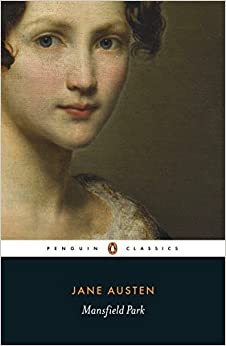
Review 1595: Mansfield Park

I was having difficulty reading another book, so I decided to take a break by rereading Mansfield Park, which is on my Classics Club list. In these days, Austen’s heroine, Fanny Price, is not admired, but she is a true and admirable product of her environment and circumstances.

At nine, Fanny is brought to live at Mansfield Park as an act of charity, for she is a poor relation. She is taught to be grateful for this charity and to have no expectations for herself. Sir Thomas Bertram is an upright, stern man whom she and her cousins fear. Lady Bertram is languid. Fanny’s Aunt Norris, who suggested they give her a home in the first place, actively dislikes her and favors her female cousins, particularly Maria.

Fanny is very shy and miserable at first, but the younger son of the house, Edmund, takes her under his wing, is her friend and educator.

As a young lady, Fanny is happy to be of service and not used to her needs or inclinations being attended to. Then two things happen at about the same time. Sir Thomas goes away on a lengthy business trip, and Mary and Henry Crawford arrive to stay with the Grants at the parsonage. Edmund, whom Fanny loves, is immediately attracted to Mary, but Fanny is dismayed by the sister and brother’s lack of principles. Maria Bertram is engaged by then to a rich but stupid young man, but Henry Crawford flirts with both Bertram sisters, playing one off the other. Mary’s behavior is more or less impeccable, but she expresses unprincipled ideas. Edmund seems blind to her faults.

Fanny is one of Austen’s more thoughtful heroines. Will she ever be appreciated for her qualities of affection, duty, and principle? Will Edmund marry Mary or recognize Fanny’s superior qualities? Well, we can all probably answer that, but the journey there is wonderful, as Austen’s novels tend to be.

Related Posts

Persuasion

The Making of a Marchioness

Murder at Mansfield Park

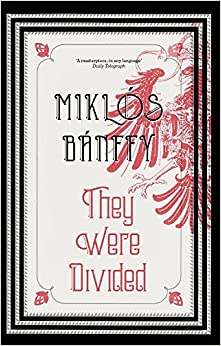
Review 1594: They Were Divided

They Were Divided is the third book in Míklos Bánffy’s Transylvanian Trilogy about the fortunes of Hungary and its leaders coming up to the First World War. It again follows two young noblemen, Laszlo Gyeroffy and Balint Abady, but it is mostly about Balint.

I got a little bogged down in They Were Found Wanting, the second volume of this series. I think that was because I wasn’t particularly interested in Balint’s affair with the married Adrienne, which occupied much of that volume. In that book (small spoiler for the second book), Adrienne kept delaying her request for a divorce from her husband out of fear of a man who was becoming more and more unstable. Now, he has been consigned to a mental hospital, which means that Adrienne cannot legally divorce him. So, Balint and Adrienne are forced to discreetly continue their affair.

On the political front, the Budapest legislature continues its obstructive techniques, not allowing any legislation relating to modernization. But Balint is more and more concerned about the events in other countries that he fears are leading to war. The Hungarian politicians continue to behave as if nothing outside their country affects them.

As for Laszlo, having gambled away most of his inheritance and been cheated of the rest, he has settled down in a small cottage on his estate to drink himself to death.

This novel has some amusing moments and is full of eccentric characters, but it is essentially serious. It depicts a society that has ceased to take care of its property and obligations, including its obligations in government, and spends all its time in frivolous activities. It does have one conversation that made me wince, where Balint insists that historically, nobles did not abuse their serfs because it would be against their own interests. It’s hard to tell whether this is supposed to show Balint’s own naïveté or whether Bánffy really believed this, or perhaps the novel is trying to show what a particular type of Hungarian believes (although I am fairly sure that Balint is Bánffy’s alter ego). Obviously, Balint, anyway, doesn’t compare that thought with his own observations of the Hungarian nobles gambling away their inheritances and mismanaging their government.

Did I enjoy this series? It provided me with a window into a time and place I knew very little about. It was more interesting than not. It was evocative in describing scenery, settings, and characters. At times the series went slowly, but this book clipped along pretty well until the last few pages, when Bánffy was trying hard to get the moral in.

Related Posts

They Were Counted

They Were Found Wanting

Between the Woods and the Water: On Foot to Constantinople: From the Middle Danube to the Iron Gates