Day 902: Who Was Changed and Who Was Dead

Cover for Who Was Changed and Who Was DeadWho Was Changed and Who Was Dead is another eccentric and original novel by Barbara Comyns. With its characters and plots, it contains more than a slight touch of the bizarre.

We meet the Willoweed family after the nearby river has flooded. Some of the family are wading on the lower floor of the house, and Ebin Willoweed has taken the girls out in the boat, from which they are observing the dead animals floating by.

The novel is almost entirely concerned with the Willoweeds. Ebin is a writer who lost his newspaper job years ago and hasn’t worked since. He lives in his mother’s ramshackle but enormous house with his three children, the entire household terrorized by his tyrannical mother.

The Willoweeds seem stuck in a monotonous existence. Ebin occupies some of his time by having an affair with the wife of the village baker. Emma, the oldest daughter, yearns for pretty clothes and shoes but has to be content with clumsy ones made in the village. Dennis and Hattie love playing in the river.

Then a mysterious malady strikes the village. People begin to run mad and commit suicide. No one knows who will die next.

Who Was Changed and Who Was Dead is narrated with the same innocent simplicity of Comyns’ other novels, which deal with similar grotesque situations and characters. It’s one of the things that makes them so readable, yet so eerie.

Related Posts

Sisters by a River

The Vet’s Daughter

Let Me Tell You

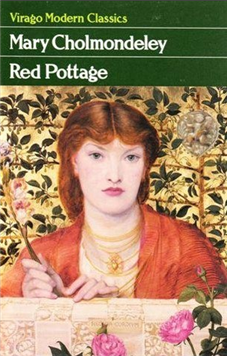
Day 895: Red Pottage

red-pottageBest Book of the Week!
Red Pottage is another find for me this year of a novel by a terrific classic author. I can include Mrs. Oliphant, Dorothy Whipple, and Julia Strachey in this list of classic authors I have not read before that I really enjoyed. My Doughty Library edition says the novel contains “every ingredient for a Victorian bestseller” and mentions wickedness and greed.

Hugh Scarlett has been having an affair with a married woman, Lady Newhaven. At first he thought he was in love with her, but now he has recognized her for who she is—a shallow and stupid beauty. He has already decided to break with her when he meets Rachel West at a party. At one glance he decides that Rachel is the woman to make a better man of him.

Rachel has also attracted the attention of Dick Vernon, a wine grower from Australia who is visiting his friends and family. Rachel likes him, but she is thinking of others.

Rachel has an unhappy past. Once the daughter of a wealthy man, she lost her fortune with her father’s death. For seven years she struggled to support herself, living in London’s East End and working as a typist. At that time, she fell deeply in love with an artist, Mr. Tristram, and was devastated when she realized he had no intention of marrying her. At the beginning of the novel, she has inherited another fortune and still believes herself in love with Mr. Tristram. Now that she has a fortune, though, she is looking like a much better prospect to him.

Another important character is Hester Gresley, an author who has been Rachel’s friend since childhood. Although Hester is better born than Rachel, her fortunes have suffered as Rachel’s have improved. She lives with her brother James, a rector who disregards her talent as a novelist and can only see his own point of view. James’s wife is jealous of Hester, and the children lovable but noisy. Hester finds herself unable to work during the daytime, so she stays up into the morning working, only to be accused by her sister-in-law of laziness.

Red Pottage is a story about morals and manners. That sounds boring, but it is quite satirical at times, while at other times it brought me to tears. The central conflict begins shortly after Hugh meets Rachel, when Lord Newhaven confronts him about Hugh’s affair with his wife. He makes Hugh a challenge, that they draw “lighters” (matches? straws?) and whoever draws the short one must take his own life within four months.

To complicate matters, Lady Newhaven eavesdrops on this conversation but does not learn who drew the short lighter. Then foolish, self-centered Lady Newhaven confides in Rachel, along with her assumption that if her husband dies, she will marry Hugh.

The story turned out just about how I thought it would, but I found the journey completely gripping. Another success from my Classics Club list!

Related Posts

Salem Chapel

Cheerful Weather for the Wedding

Someone at a Distance

Day 893: Classics Club Spin! A Wreath of Roses

wreath-of-rosesToday is another Classics Club Spin, and the book that was chosen for me from my Classics Club list is A Wreath of Roses by Elizabeth Taylor. Compared to the other two books I’ve read by Elizabeth Taylor, this novel seems less blighted in its setting. It takes place in a countryside that is lushly described. But before we get there, a shocking event occurs in the railway station that foreshadows the atmosphere and events to come.

Camilla is on her way for her annual holiday, which she has spent for years with her closest friend Liz and Liz’s former governess, Frances. Frances has become a famous painter, and they stay with her in her home. But this year things are different. First, Camilla has met a man, Richard Elton, on the train. Although she ordinarily wouldn’t have even spoken to him, categorizing him as a certain type, the incident at the train station has shocked them both. Then, Liz has brought along her baby Henry. Liz’s marriage to Arthur, whom Camilla dislikes, has created distance between the two women, and Camilla isn’t interested in the baby. Finally, Frances is looking like an old woman. She has difficulty painting, and has radically changed her style.

But the focus of the novel is on Camilla’s relationship with Richard Elton. When we see him on his own, we realize he is a liar who has difficulty telling his own lies from the truth. He may also be dangerous. He has told Camilla stories about violent activities during the war, but they seem unlikely. And he keeps reading in the paper about the murder of a woman.

Camilla is both repelled by and attracted to Richard. At first, she agrees to see him only to irritate Liz, but then she begins to feel sorry for him. Also, she sees herself drawing ever closer to a sort of dried-up spinsterhood, while Liz is positively blooming in her fecundity.

Although some of Taylor’s other novels are depressing in their realism, A Wreath of Roses is much darker. It juxtaposes the heat and lushness of its country setting with Camilla’s feelings of sterility and the themes of murder and suicide. The novel is disturbing yet compelling.

Related Posts

Mrs. Palfrey at the Claremont

A View of the Harbour

The Moviegoer

Day 892: Wild Strawberries

Cover for Wild StrawberriesThis title does not refer to the Ingmar Bergman film but to the second (or third, depending on where you look) Barsetshire novel by Angela Thirkell. Unlike the others I’ve reviewed lately, Wild Strawberries was written before World War II. It is a delightful and gentle comedy with a romantic triangle.

Wild Strawberries is about a summer with the Leslies. Lady Emily is universally adored, a vague woman always leaving a trail of her possessions behind. She is also a managing type whose attempts to arrange things that are already decided repeatedly throw the family into chaos. The novel opens with a hilarious scene in which the family is late for service and disrupts the sermon while Lady Emily tries to tell everyone where to sit. Lady Emily is the mother whose passing is much lamented in Enter Sir Robert, which I reviewed a few months ago.

And if I am not mistaken, Agnes, a daughter of the house, is the same Lady Graham who is a major character in Enter Sir Robert, and as in that novel, Robert is continually referred to but not present. Agnes is a young mother with three children, kind but silly, and entirely obsessed with the children.

Other members of the household are Mr. Leslie, gruff but kind, sons John and David, and grandson Martin. Martin is the son of the Leslies’ deceased oldest son. John is a widower who has been mourning his wife Gay. David is a charming but selfish playboy.

The Leslies have invited Mary Preston to spend the summer with them while her mother recuperates at a spa on the Continent. Mary is Agnes’s niece by marriage, and her affections play a major part in the plot. She is a young, naive girl who is immediately charmed by David. John, on the other hand, falls in love with her when he hears her singing. We find ourselves rooting for John, but in Thirkell’s novels, the characters we like best are not always successful in love.

Providing humor are a visit from Mr. Holt, a toady to the upper class and expert on gardens, who invites himself to visit the Leslies, and the establishment at the vicarage of a French family. Seventeen-year-old Martin gets himself embroiled in a demonstration to restore the French monarchy, and Mr. Holt finds himself rewarded for his gate-crashing by being entertained by Agnes and her children.

This is a delightful novel with sympathetic and engaging characters and a great deal of humor. I enjoyed it very much.

I have to say that my Moyer Bell edition (not the one pictured above) was riddled with typographical errors, including a chapter that literally ended in the middle of a word, to be completed after the next chapter title. I just picked this up at a used bookstore, but next time I buy Thirkell, I will look for a Virago edition.

Related Posts

Enter Sir Robert

Miss Bunting

Happy Returns

Day 882: Rebecca

logo for the 1938 clubBest Book of the Week!
Since Rebecca is a book that qualifies for The 1938 Club and is also on my Classics Club list, I thought this was a good time to reread it. I must say that during this reread, I noticed things I’d never noticed before.

Some years after the time of the novel’s action, the narrator recollects the events at Manderley from a life of exile. As a young, naive woman working as a companion for the vulgar Mrs. Van Hopper, the narrator meets the older, sophisticated Maxim de Winter one spring on the Riviera. When Mrs. Van Hopper becomes ill, the narrator spends some time each day with him, driving through the countryside. Mrs. Van Hopper recovers and decides abruptly to return to the States. When the narrator tells Maxim, he proposes.

Cover for RebeccaThe narrator, whose first name we never learn, is an immature girl who is prone to imagining what people are saying about her or what may happen, usually in exaggerated terms. The wedding is not the romantic event that she imagined, but she goes along with whatever Maxim suggests.

Finally, they come home to Maxim’s family home of Manderley, and that’s where the novel really gets going. For the narrator is already haunted by the thought of Rebecca, Maxim’s first wife. Rebecca was beautiful, assured, accomplished—everything the narrator believes she is not. Everyone assures her that Maxim adored Rebecca and was shattered when she died in a sailing accident. Everyone tells her she isn’t at all like Rebecca. The decor of the house reflects Rebecca’s taste, her name is scrawled inside books, her monogrammed handkerchiefs are in the pockets of coats, and the servants tell her, when she timidly makes a request, “Mrs. de Winter used this vase,” or “Mrs. de Winter sat in this room in the morning.”

Further, there is the terrifying Mrs. Danvers, the housekeeper, from whom the new Mrs. de Winter senses actual hostility. Mrs. Danvers was devoted to Rebecca and resents a new wife taking her place, especially one so much Rebecca’s inferior.

The narrator was not brought up to a life with servants, running a big house, and she has no idea how to behave. Maxim gives her little help in this regard, just expecting her to adapt. She makes mistakes, and his moods become more erratic until she thinks he regrets their marriage. As she becomes more unhappy, events build to a climax on the night of a big costume ball.

This is an extremely powerful novel that, I think, hits you differently depending upon the age you are when you read it. When I was young, I thought it was romantic and scary. Now, I think it’s more of a study of some very maladjusted characters. But this is the first reading where it made me think of Mr. Rochester.

Even though I love Jane Eyre, I’ve never been much of a fan of Mr. Rochester. But what does he do? He yearns for a young, innocent girl and is prepared to commit a crime to get her. We can say this for Jane, though, she has a strong sense of herself.

I don’t want to say much more about Rebecca in case you haven’t read it. But let’s keep it at this. Maxim de Winter also yearns for a young innocent girl, but his choice has such a weak sense of self that we don’t even learn her name. He takes her to a life for which she is completely unsuited and untrained, with a servant he might predict would be hostile, and just leaves her to make the best of things. And this comment doesn’t even touch on the darker secrets of the novel.

Do these observations make me love the novel less? No, this is a great novel. Rebecca is one of Daphne du Maurier’s most atmospheric novels, in a career with many atmospheric novels. I believe she modeled Manderley after the house where she lived in Cornwall, and its description is detailed and loving. Du Maurier was interested in aberrant personalities, in which she probably counted her own. This is a dark novel that fully draws you in. It is very well written, an excellent character study and a masterful suspense novel.

Related Posts

Castle Dor

The Poison Tree

Daphne du Maurier: The Secret Life of a Renowned Storyteller

Day 876: The Diary of a Provincial Lady

Cover for Diary of a Provincial LadyBest Book of the Week!
The Diary of a Provincial Lady was popular again quite a few years ago, but I didn’t read it then. Now that I have read it, I wish I’d read it earlier.

Considering that I have little in common with a 1930’s suburban upper-class English housewife and mother struggling with servant problems, I found this novel very funny.

The novel begins with a visit from Lady B., for whom the narrator’s husband Robert works as a land agent. Lady B. is in turn patronizing and demanding, first nearly sitting on the indoor bulbs, then questioning where the narrator got them and telling her where she should have got them, then telling her it’s too late to plant them anyway. The bulbs appear throughout the novel as a running joke. They get moved to the basement and then to the attic, are over-watered and under-watered, get stepped on by Robert when he is bringing down the suitcases, and are nibbled by mice. What they don’t do is bloom.

The house is made lively by a constant stream of visitors, including Our Vicar’s Wife, who always must be getting along but stays another hour. Another less pleasing visitor is the hearty Miss Pankerton, who barges her way into invitations and thinks nothing of bringing along an extra three people and two dogs on what was supposed to be a family picnic.

The narrator has two lively children—Robin, who makes frequent visits from prep school, and Vicky, who is at  home with a very French governess, Mademoiselle. I had to break out Google Translate for Mademoiselle, who continually manages to insult her employer and persists in being overly dramatic.

The narrator’s husband is taciturn except when complaining about expenses or the condition of the house, but he never denies her and is often kind. Many paragraphs, though, end with “Robert said nothing,” which begins to be very funny after a while. In fact, there is a lot that Robert finds nothing to say about. Meanwhile, the poor narrator is constantly scrambling for money, hocking her grandmother’s jewels and so on, to be able to keep up a decent appearance.

To some extent Delafield is depicting types but they also seem like real people, very funny real people. Delafield’s sense of humor is dry. Particularly amusing are her memos to herself and her queries. For example, after arguing with the children about washing up for tea:

(Mem: Have sometimes considered—though idly—writing letter to The Times to find out if any recorded instances exist of parents and children whose views on this subject coincide. Topic of far wider appeal than many of those so exhaustively dealt with.)

All I can say is, I can’t tell you how many times a page I chuckled, or just plain laughed out loud.

Related Posts

Where’d You Go, Bernadette?

Love in a Cold Climate

The Pursuit of Love

Day 873: Fidelity

Cover for FidelityBest Book of the Week!
Fidelity begins in 1913 with the return of Ruth Holland to her home town in Iowa after an absence of ten years. As a naive young woman from a privileged background, Ruth fell in love with a married man. When he was diagnosed with tuberculosis a few years later, Ruth left town to join him in Arizona.

Ruth’s good friend, Dr. Deane Franklin, would like to see Ruth’s old friends welcome her back as she returns to her father’s deathbed. He knows that Ruth’s life has been difficult, both emotionally and economically, and would like people to show some sympathy. He wants to introduce Ruth to his new wife Amy. But Amy thinks this suggestion is shocking and can’t imagine why Deane would want her to know this scandalous woman.

Eventually, the novel returns in time to show how the affair started and progressed. It is not until Ruth returns that she learns how difficult things also were for her family after she left.

The plot of Fidelity, which was written in 1915, closely mirrors a situation in Glaspell’s own life, in which she ran off with a married man and later married him. She wrote the novel to answer the question “Was it worth it?”

During Ruth’s visit back home, she meets a woman who teaches her to recognize another type of fidelity—to herself. Although we don’t know where this fidelity will take her, we know that she will keep to it.

Of course, the novel is also meant as a condemnation of the small minds in Ruth’s home town. Even though they have known her from a child, most of her former friends misinterpret her actions in terms of her new reputation. Only her youngest brother Ted and a few friends see her for the person she has always been.

I found this novel completely fascinating from beginning to end, even though I’m not sure I would answer the question the same way Ruth did. The novel is particularly insightful about its characters, making readers understand and sympathize with even some of its unlikable ones.

Related Posts

A View of the Harbour

Someone at a Distance

Greenbanks


Day 867: The Squire

Cover for The SquireI don’t think I paid attention to what The Squire was about when I picked it up. Instead, I homed in on the author’s name when selecting it from a list of Persephone books. I’m not sure whether I would have picked it out if I had noticed, since it is about childbearing and motherhood, something I have no experience with. Further, some of the attitudes expressed, particularly about the role of men, are very out of date, although well in tune with the novel’s time.

The squire, who is known only as that through the novel, is a woman past 40 who is due to give birth. With her husband away, she is trying to run her household in the last days of her pregnancy, and there are quite a few crises, particularly with the servants. The squire already has four children, the youngest about four, and she spends a lot of time observing them and thinking about their characters.

There are some things about this novel that I found very foreign. One is how much time the squire spends thinking about death. First, I thought this was because she was about to give birth, but later she considers the same trait in her daughter Lucy, who is only 11 or 12. The other was my surprise at the role of the midwife, who is there more for after the birth than the birth itself. She keeps the squire almost totally isolated and quiet, trying to get her milk to come in correctly. What a contrast to today, when women are practically booted out the door of the hospital. But also, there is a strong class aspect to this and to all the squire’s problems. A woman from another class would have to take care of all her children during this time, unless she was lucky enough to have a neighbor or family member to help, and her biggest concern wouldn’t be hiring a new cook or nursemaid.

I found some aspects of this book interesting, but I didn’t really relate to the main character. But then again, I also felt some distance from The Happy Foreigner, so maybe my problem is with Bagnold as a writer rather than the subject matter of this novel.

Related Posts

The Happy Foreigner

The Land of Green Ginger

Someone at a Distance

Day 859: They Knew Mr. Knight

Cover for They Knew Mr. KnightBest Book of the Week!
At the beginning of They Knew Mr. Knight, the Blakes are an ordinary, relatively happy middle-class family. Things are fairly tight for them financially, and their house is too small for the family. The two girls, Freda and Ruth, share a small room, and the boy Douglas lives up in the cold attic. Still, only two family members are discontented. Thomas Blake has always resented his feckless father having sold the family factory just as Thomas was old enough to work there and learn the business. He works there but only as an engineer, not as the owner. And his father left his mother and siblings penniless, so that Thomas and his wife Celia have had to support them ever since, his brother Edward being unable to hold down a job. The other discontented family member is Freda, the oldest girl, who dreams of leading a wealthy and fashionable life.

On the way to work one morning, Thomas saves Mr. Knight from falling on the stair to the train. Mr. Knight is a wealthy financier, and he immediately takes Thomas under his wing. He helps him buy back his family’s factory and gives him tips on investments. Soon, the family is doing enough better to move into a bigger house.

But Celia doesn’t like Mr. Knight or the effect he has on Thomas. She doesn’t like how Mr. Knight leaves Mrs. Knight alone all the time and flaunts his young mistress before her. She doesn’t like how Thomas has become a little self-important and doesn’t confide in her anymore or spend as much time with the family. She doesn’t like their new house and misses her old busy life.

As the Blakes’ fortunes improve, we get a growing sense that all will not be well for long. Celia finds herself in a big house with maids and nothing to do. Her new garden doesn’t inspire her, and the children are grown and going about their business. The two eldest have unhappy love affairs, both with charming but morally lax people they meet at Mr. Knight’s parties.

Through all this, Mr. Knight himself remains a shadowy figure, appearing seldom. He seems generous, but we already know he is restless and prone to losing interest in projects. We wonder what will happen when he loses interest in Thomas, who keeps trying to pay back the money he owes him, only to have Mr. Knight point him toward a new investment opportunity.

Celia is the main character in this novel, which manages to build up a fair amount of suspense over everyday concerns. Part of the novel touches on her spiritual needs, as she has sometimes felt she’s had a glimmer of the knowledge of God and wishes she could get closer to it.

I was completely gripped by this novel and its picture of the fleeting quality of happiness, the corroding effects of greed. Except for Mr. Knight, the main characters are mostly very human and likable. You want the Blakes to come through their acquaintance scatheless, but you know they will not. If it’s not telegraphing too much about the book to say so, this novel reminds me very much of The Way We Live Now by Anthony Trollope, only we are more attached to the characters.

Related Posts

Someone at a Distance

Greenbanks

A View of the Harbour

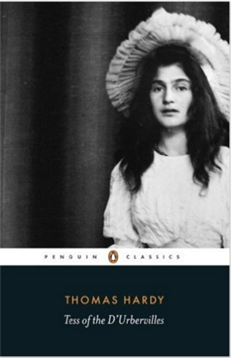
Day 844: Tess of the D’Urbervilles

Cover for Tess of the D'UrbervillesBest Book of the Week!
I love Thomas Hardy’s rural novels set in southwest England, and one of the highlights of a trip to England years ago was visiting his cottage in Dorset. My favorite of his novels has long been Tess of the D’Urbervilles, which I recently reread. I don’t mind admitting that in this reread, I was picturing scenes from Roman Polanski’s wonderful movie Tess, which follows the novel carefully and envisions it beautifully.

There is no doubt about it, Tess is a real tear-jerker, so if you prefer novels with happy endings, this is not the one for you. Still, in its own way, the novel ends hopefully.

The novel spans about five or six years, and we meet Tess as a naive young country girl attending a club dance. There she first sees a young man who will be important to her, Angel Clare, but he does not dance with her.

Hardy can be quite the fatalist, though, and Tess’ fate is sealed already, when her father John Durbeyfield meets a clergyman who dabbles in genealogy. Parson Tringham ironically addresses him as “Sir John” and tells him his family is the remains of the once-powerful D’Urbervilles. Her father immediately sets off to celebrate.

Tess’ foolish and feckless parents learn there is a rich old lady by the name of D’Urberville some counties away, so when Tess is partially responsible for the death of her father’s horse (because her father was too drunk to take the bees to town), they push her to go visit the old lady and claim kinship with her in hope of financial benefit. There she meets the charming wastrel Alec D’Urberville, who knows perfectly well they are not related, his family having bought the name and titles.

Tess gets a job from Mrs. D’Urberville as a poultry keeper, but Alec is always pursing her with his attentions. Tess finds these attentions unpleasant, but she is too naive to know what they mean or what she might fear.

Tess returns home with a past that is obvious to everyone and heartache ahead of her. Eventually, she gets another chance, as a dairymaid. There she meets Angel Clare, a gentleman studying to be a farmer, and finally falls deeply in love. But Angel is an idealist who has fantasized her into the embodiment of a pure child of nature. So, he is the last person to forgive her past.

Tess of the D’Urbervilles was a controversial book when it was published in 1891, because Hardy subtitled it “A Pure Woman.” This subtitle caused an uproar with the Victorians. Hardy’s message is strongly against the societal and religious laws that would condemn Tess.

Another aspect of the novel that I found more interesting this time through is that it depicts a rural way of life that is long gone. Although many of Hardy’s novels are rurally based, this one has more about the customs, work, and lifestyle as we follow Tess from one workplace to another than any of his novels except Far from the Madding Crowd. Tess’ father is a freeholder, a step up from a migrant farm worker, one whose family has leased the same land for generations. But when John Durbeyfield dies, the lease is up, and his widow and family are abruptly evicted so that the landlord can make room for someone who works for him. Such activities, Hardy makes clear, are the root cause of people migrating from the country to towns and cities, not that they were unsatisfied with country life.

Years after reading this novel last, I still became thoroughly engrossed in the story. It is a powerful one, poetically written, with gorgeous descriptions of the countryside and vivid imagery. I just love this novel.

Related Posts

The Land of Green Ginger

Independent People

The Warmth of Other Suns: The Epic Story of America’s Great Migration